Cookware for frying needs a broad cooking surface, responsive heat control, and enough thermal mass to maintain browning, while cookware for boiling needs tall sides, liquid capacity, a secure lid, and stable handles for draining. Frying pans expose food to concentrated heat and allow moisture to escape; boiling pots surround food with temperature-limited water or broth. Material matters differently too: rapid response helps prevent frying oil from overheating, whereas even bases and durable interiors help pots withstand repeated heating, stirring, and salted water. Choose around the primary method, because a vessel that can technically perform both tasks may handle either one poorly.
How Does Cookware Shape Change Cooking Performance?
Cookware geometry determines how much food touches the heated surface, how quickly moisture escapes, and how safely liquid can be contained. A frying pan is generally shallow and wide because frying depends on direct contact between food and a hot surface. A stockpot or saucepan is deeper because boiling depends on holding enough liquid to submerge or circulate around food without splashing over the rim.
Some suggestions to consider!
Now retrieving an image set.
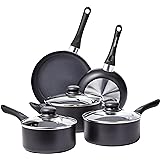
Amazon Basics Non-Stick Kitchen Cookware 8-Piece Set, Non-Induction, Includes Pots and Pans, Black
$63.99 (as of October 23, 2026 19:19 GMT +00:00 - More infoProduct prices and availability are accurate as of the date/time indicated and are subject to change. Any price and availability information displayed on [relevant Amazon Site(s), as applicable] at the time of purchase will apply to the purchase of this product.)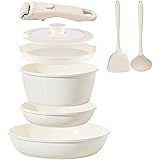
Now retrieving an image set.
Ceramic Cookware Set Non Stick 8Pcs Pots and Pans Set Detachable Handle Induction Kitchen Cooking Set with Frying Pans Oven Dishwasher Safe, PFAS/PFOA Free, Cream White
$39.98 (as of October 23, 2026 19:19 GMT +00:00 - More infoProduct prices and availability are accurate as of the date/time indicated and are subject to change. Any price and availability information displayed on [relevant Amazon Site(s), as applicable] at the time of purchase will apply to the purchase of this product.)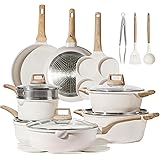
Now retrieving an image set.
CAROTE 21pcs Pots and Pans Set, Nonstick Cookware Sets, with Egg Pan | Induction Kitchen Cooking Set, Durable, Easy Food Release, Fast & Even Heating, with Frying Pan
$129.98 (as of October 23, 2026 19:19 GMT +00:00 - More infoProduct prices and availability are accurate as of the date/time indicated and are subject to change. Any price and availability information displayed on [relevant Amazon Site(s), as applicable] at the time of purchase will apply to the purchase of this product.)Surface area is especially valuable for frying. When mushrooms, chicken pieces, or sliced potatoes are spread in a single layer, escaping steam can leave the pan rather than collect around the food. That supports browning and crisp edges. Crowding the same ingredients into a narrow pot traps more vapor and lowers the surface temperature, so the food is more likely to soften or release liquid before it browns.
Boiling creates the opposite design priority. Water moves as it heats, and foods such as pasta can foam or expand. Tall sides provide headspace above the liquid, limiting spills while giving noodles, vegetables, or dumplings room to move. A fitted lid reduces evaporation and usually brings water to a boil with less wasted heat. The lid may need to be offset or removed once starchy foods begin foaming.
Side shape also affects handling. Sloped frying-pan walls make it easier to slide a spatula beneath an egg or toss cut vegetables. Straight pot walls preserve usable volume and reduce the chance that liquid will wash over a low edge during stirring. A sauté pan sits between the two: it has a broad base for browning but straight, moderately high walls that can hold a pan sauce or shallow braising liquid.
A common mistake is treating diameter as the only meaningful measurement. The bottom cooking diameter of a frying pan can be much smaller than its rim measurement, while pot capacity says little about burner compatibility. Check the flat base, side height, total filled weight, and available headspace. Those details reveal whether the vessel will actually fit the burner, hold the intended batch, and remain manageable when hot.
| Design feature | Frying priority | Boiling priority |
|---|---|---|
| Base | Wide contact area | Stable, even heating |
| Sides | Low or moderately high | Tall and spill-resistant |
| Lid | Optional for most frying | Useful for heating and simmering |
| Capacity | Single-layer food spacing | Liquid, food, and headspace |
Which Materials Work Best for Frying and Boiling?
Material selection matters most in frying because the cooking surface must manage concentrated burner heat without severe hot spots or uncontrolled temperature swings. Aluminum responds quickly and conducts heat well, which makes it useful in clad stainless pans and many nonstick pans. Cast iron heats more slowly but stores substantial heat, helping it recover after a steak, burger, or batch of potatoes is added.
Stainless steel is durable and suitable for browning, but stainless alone is not an especially effective heat conductor. Better-performing stainless pans usually pair the cooking surface with an aluminum or copper layer in the base or body. Food may initially stick to uncoated stainless; appropriate preheating, enough fat, and patience while a browned crust forms make release easier. Excessive preheating can burn oil and discolor the pan, so responsiveness remains valuable.
Nonstick cookware suits eggs, pancakes, delicate fish, and other foods that benefit from easy release at low to medium heat. Its limitation is high-temperature searing: sustained excessive heat can shorten coating life, and metal tools can damage many finishes. Cast iron and carbon steel tolerate stronger heat and can develop a low-stick seasoned surface, but both require drying and appropriate care after washing. Acidic ingredients can also affect newer or poorly maintained seasoning.
Boiling is less demanding at the food-contact surface because liquid distributes heat and normally stays near its boiling point rather than reaching frying temperatures. Stainless steel is therefore a practical pot interior: it resists routine stirring, does not require seasoning, and handles tomato sauce or other acidic liquids without the care associated with bare reactive metal. An aluminum layer in the base helps spread burner heat and reduces localized scorching when soups or thick sauces replace plain water.
A heavy pot is not automatically better. Added mass can smooth heat delivery, but a large cast-iron pot filled with water becomes cumbersome to lift and slow to adjust. For pasta, potatoes, or blanching vegetables, a moderately weighted stainless pot with a conductive base is usually easier to carry and drain. Enameled cast iron makes more sense when boiling leads into a long simmer, stew, or braise where steady heat retention is useful.
The weak assumption is that one premium material excels at every task. The useful comparison is construction plus intended temperature: choose responsive or heat-retentive frying cookware according to the food, and favor manageable weight, corrosion resistance, capacity, and an even base for water-based cooking.
Heat Control, Capacity, and Safety Priorities
Frying and boiling place different demands on burner control. Frying oil and exposed pan surfaces can become much hotter than boiling water, so changes in burner output directly affect browning and burning. A pan that is too thin may develop a hot center over a small burner, while an oversized pan may leave its outer cooking area comparatively cool. Matching the base to the burner improves consistency.
Watch the food rather than relying only on a dial position. Weak sizzling, pale surfaces, and accumulating liquid suggest that the pan cooled too far or was overcrowded. Fast smoking, blackened residue, or browning before the center can cook indicate excessive heat. The corrective move may be lowering the burner, using a heavier pan, frying in smaller batches, or choosing smaller pieces that cook through before the exterior burns.
Boiling requires enough heat to establish circulation, but maximum burner power is rarely needed after the liquid reaches the desired state. A rolling boil suits tasks such as cooking pasta, while fragile dumplings, broth, or beans may fare better at a gentler boil or simmer. Continuing at full power increases evaporation and splashing without raising the temperature of the water meaningfully under normal kitchen conditions.
Capacity should be judged conservatively. Filling a pot close to its rim leaves little room for ingredients, stirring, or foam. Pasta water can rise abruptly after noodles and starch enter; deep-frying creates an even more serious expansion risk when food displaces oil and releases moisture. A vessel’s advertised capacity is its near-full volume, not necessarily its comfortable working capacity.
Handle layout becomes critical once weight and hot liquid are involved. A frying pan commonly uses one long handle for leverage, sometimes with a helper handle on larger models. A boiling pot benefits from two short, secure side handles so the load can be lifted evenly. Handles should remain firmly attached and provide enough clearance for protected hands. A lid that fits securely is useful, but it should not be clamped in place on ordinary cookware.
Before cooking, use a short operational check:
- Confirm that the base sits flat and matches the burner reasonably well.
- Leave space for boiling, foaming, food displacement, or oil expansion.
- Turn handles away from traffic without positioning them over another hot burner.
- Prepare a dry landing area before moving a hot pan or heavy pot.
For draining, a colander placed securely in the sink is generally easier to control than holding a partly opened lid against a heavy pot. Frying failures tend to announce themselves through smoke and uneven color; boiling failures more often appear as rattling lids, foam near the rim, unstable lifting, or excessive evaporation. Respond to those signs before the vessel becomes difficult to manage.
How Should You Choose the Right Pan or Pot?
Choose cookware by the dominant cooking process, batch size, and handling burden rather than by the largest number of advertised uses. For regular frying, prioritize usable base area, predictable temperature response, a comfortable handle, and a surface compatible with the foods you prepare. For boiling, prioritize working volume, side handles, a fitted lid, and a weight you can safely move when the pot is full.
A 10- or 12-inch skillet can cover many everyday frying tasks, but the useful size depends on its flat interior and the number of portions. Two chicken cutlets may fit comfortably where four would overlap and steam. A smaller skillet is easier to heat evenly on a compact burner and wastes less cooking fat for one serving. A larger model earns its space when it can remain properly supported and food can still be arranged in one layer.
For boiling, think in terms of the finished load rather than dry ingredients alone. Soup needs stirring room; pasta needs water and headspace; corn on the cob requires suitable length or depth. A saucepan is efficient for eggs, grains, sauces, and small vegetable portions. A larger pot is more appropriate for pasta or stock, but buying the biggest available vessel can create storage, burner-fit, and lifting problems.
Multipurpose cookware is worthwhile when its compromises match the menu. A straight-sided sauté pan can brown meat, reduce sauce, shallow-fry cutlets, and boil a modest amount of pasta. It will not offer the tossing access of a sloped skillet or the volume and spill protection of a stockpot. A Dutch oven can fry and boil, yet its mass makes it slower to respond and harder to drain. Those are functional tradeoffs, not signs of poor quality.
Inspect construction before paying for decorative features. A flat base should not rock, handles should feel secure, and the lid should seat without excessive wobble. On induction, confirm that the base is compatible and broad enough to engage the cooking zone. On any cooktop, very thin bases may warp or scorch food, while extremely thick cookware may feel sluggish for delicate temperature changes.
A practical minimal setup is one skillet suited to the household’s common frying temperature, one medium saucepan, and one pot large enough for the usual boiling batch. Add specialized pieces only when a recurring limitation appears—for example, persistent crowding during searing, inadequate pasta headspace, or a full pot that is too heavy to drain. Evidence from repeated meals is a better purchasing signal than the theoretical versatility of a large cookware set.
Frequently Asked Questions
Can I fry food in a saucepan?
Yes, particularly for small portions or shallow frying, but the narrow base limits food spacing and the tall walls retain more steam. A skillet usually provides better access and browning.
Can I boil water in a frying pan?
Yes, if the quantity is modest. Low sides increase evaporation and spill risk, however, so a saucepan or pot is safer and more efficient for larger volumes.
Is cast iron better for frying than boiling?
Cast iron is well suited to high-heat frying because it retains heat. It can boil water, but its weight, slow response, and need for careful drying make stainless cookware more convenient for routine boiling.
Why do frying pans usually have long handles?
A long handle provides leverage for lifting, tilting, and tossing a relatively shallow pan. Large pots use two side handles because their water-filled weight is easier to balance with both hands.
What is the most versatile vessel for frying and boiling?
A stainless sauté pan with a conductive core and fitted lid handles browning, shallow frying, sauces, and modest boiling tasks. A separate stockpot remains preferable for large pasta or soup batches.
Conclusion
Base the choice on what heat and moisture must do during the meal. Frying rewards open surface area, controllable heat, effective browning, and enough room to avoid steaming. Boiling rewards depth, usable volume, stable lifting points, and headspace above moving or foaming liquid. Material should support those requirements rather than drive the decision by itself.
Check the flat cooking area, burner fit, handle security, filled weight, and comfortable working capacity before buying. If one vessel must cover both methods, a lidded sauté pan offers a practical middle ground, but it cannot fully replace a roomy pot for large-volume boiling. Start with a well-matched skillet, saucepan, and pot, then add another piece only when repeated cooking reveals a specific limitation.