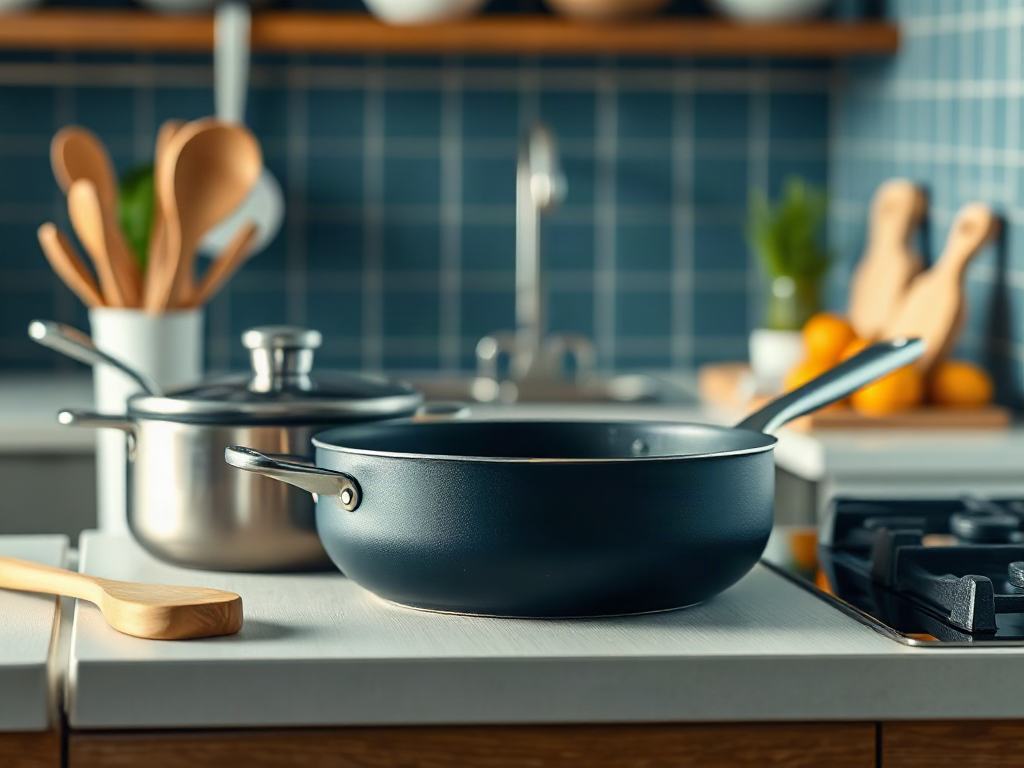
Common misconceptions about nonstick cookware often confuse normal coating wear with immediate danger, assume high heat improves results, and treat every utensil or cleaning method as harmless. Modern nonstick pans are designed for controlled stovetop cooking, but overheating an empty pan, using metal tools, abrasive cleaners, or a damaged surface can shorten its useful life. A nonstick coating is not permanent, and its safety and performance depend on the pan’s condition and the manufacturer’s instructions. Use low to medium heat, add food or fat before extended heating, choose silicone or wooden utensils, wash gently, and replace cookware when the surface is peeling, deeply scratched, or no longer releases food reliably.
Nonstick Coating Safety: What the Common Warnings Really Mean
Nonstick cookware is usually made from a metal body covered by a low-friction polymer coating. That coating keeps eggs, fish, and delicate pancakes from bonding tightly to the cooking surface, but it is not indestructible and should not be treated like bare stainless steel or cast iron. The most useful distinction is between normal use, misuse that damages performance, and severe overheating that can degrade the coating or produce unpleasant fumes.
A frequent misconception is that any scratched or aging nonstick pan becomes instantly hazardous. Visible wear is a clear reason to reassess the pan, but a small cosmetic mark does not explain every safety question by itself. The practical concern is that a damaged surface may shed flakes, expose the underlying metal, stick more readily, and encourage the owner to scrape harder or cook at excessive temperatures. A pan with widespread peeling, bubbling, or deep gouges belongs in replacement service rather than continued daily use.
Some suggestions to consider!
Now retrieving an image set.
CAROTE 21pcs Pots and Pans Set, Nonstick Cookware Sets | Titanium Reinforced Coating, Scratch-Resistant, Easy to Clean, Even Heating, Induction Compatible, with Frying Pans Set
$89.99 (as of October 14, 2026 19:08 GMT +00:00 - More infoProduct prices and availability are accurate as of the date/time indicated and are subject to change. Any price and availability information displayed on [relevant Amazon Site(s), as applicable] at the time of purchase will apply to the purchase of this product.)
Now retrieving an image set.
Umite Chef 21Pcs Pots and Pans Set Non Stick, Nonstick Ceramic Cookware Sets Detachable Handle, Non Toxic Healthy Induction Cookware, Kitchen Cooking Set, with Frying Pans Set, Dishwasher/Oven Safe
$57.99 (as of October 14, 2026 19:08 GMT +00:00 - More infoProduct prices and availability are accurate as of the date/time indicated and are subject to change. Any price and availability information displayed on [relevant Amazon Site(s), as applicable] at the time of purchase will apply to the purchase of this product.)


SENSARTE Nonstick Ceramic Cookware Set, 13-pcs Non-toxic Pots and Pans Set | Healthy Kitchen Cooking Set with Stay-Cool Handles, Silicone Tools and Pot Protectors, PFAS Free
$65.94 (as of October 14, 2026 19:08 GMT +00:00 - More infoProduct prices and availability are accurate as of the date/time indicated and are subject to change. Any price and availability information displayed on [relevant Amazon Site(s), as applicable] at the time of purchase will apply to the purchase of this product.)The opposite assumption is equally misleading: because a pan is sold as nonstick, every temperature and cooking method must be suitable. Product instructions vary by coating, handle, lid, and oven rating. Some pans are intended only for stovetop use, while others have a stated oven limit. The label and manufacturer’s care information are more useful than a blanket claim that all nonstick cookware is either completely risk-free or inherently unsafe.
For everyday cooking, prioritize condition and temperature control. Do not leave an empty pan over a powerful burner while answering a phone call, and do not use a nonstick skillet as a broiler pan unless its instructions specifically allow that use. Readers comparing options through common misconceptions about nonstick cookware should separate coating chemistry from careless operating conditions.
Heat, Preheating, and the Myth of High-Temperature Cooking
High heat is not a shortcut to better results in a coated skillet. Nonstick surfaces are valued for release, not for the intense thermal treatment used to build a dark crust on a steak. Excessive burner power can heat the pan faster than the food can absorb energy, especially when the pan is empty. That creates a poor trade: little improvement in release or browning, but more stress on the coating and greater risk of smoking oil.
Controlled preheating is different from careless overheating. A short period on low or medium heat can bring the cooking surface to a useful temperature before ingredients arrive. Adding oil, butter, or food early provides a practical visual and sensory check: fat may shimmer, while butter can signal excessive heat by browning rapidly or smoking. If the pan begins smoking before food is added, remove it from the burner and let it cool instead of continuing to increase the setting.
Consider two common scenarios. An omelet needs gentle, even heat so the eggs set without toughening or sticking. A steak may need stronger browning, but a well-seasoned stainless-steel, carbon-steel, or cast-iron pan is generally a more suitable tool for that job. Choosing the right surface matters more than forcing a nonstick pan to imitate a searing pan.
Induction and gas burners create different handling challenges. A powerful induction zone can raise pan temperature quickly, while a gas flame that extends beyond the base can heat sidewalls and handles. Match the burner to the pan’s base, keep flames under the cooking area, and follow the stated temperature limit. A helpful part of common misconceptions about nonstick cookware is recognizing that “nonstick” describes food release, not unlimited heat tolerance.
Scratches, Utensils, and Cleaning Damage
Utensils and cleaning tools influence the life of a nonstick surface because repeated abrasion can create defects that heat and food residue make worse. Metal utensils are often blamed as though one accidental touch ruins a pan immediately. The more accurate view is cumulative: dragging a metal turner across the same area, cutting food in the pan, or stacking rough cookware can gradually mark the coating.
Wood, silicone, and manufacturer-approved plastic utensils reduce that risk. Silicone is particularly useful for folding eggs or scraping sauce because it flexes around the curve of the pan without acting like a rigid edge. Avoid using the pan as a chopping board. Even when a mark appears shallow, cutting directly on the surface combines pressure with a sharp edge and creates damage that ordinary stirring would not.
Dishwasher claims also need careful interpretation. A pan may technically tolerate a dishwasher cycle while still lasting longer with gentle hand washing. Strong detergents, high water temperatures, contact with other utensils, and repeated drying cycles can dull exterior finishes, loosen handles, or accelerate wear around the cooking surface. Use warm water, a soft sponge, and a mild detergent after the pan has cooled. Soaking is useful for softening residue; abrasive powder and scouring pads are not.
Stacking creates a less obvious failure mode. A heavier pot placed inside a coated skillet can concentrate pressure on one rim or scratch point. If storage space is limited, use a soft separator or hang the pan. A common mistake is blaming poor food release on the coating alone when residue buildup, excessive heat, or a warped base is the real cause. Cleaning gently and cooking with moderate heat may restore performance when the surface is dirty, but it cannot repair peeling or exposed coating.
Durability, Performance, and When Replacement Makes Sense
Nonstick cookware has a finite working life because release depends on a surface layer that experiences heat, friction, fat, moisture, and repeated washing. “Nonstick forever” is a marketing-style expectation, not a realistic maintenance plan. A higher-priced pan may have a stronger body, better heat distribution, or a more durable coating, but price alone does not make the surface immune to misuse.
Performance usually declines in recognizable stages. Food may begin leaving a thin film, delicate items may need more fat, and cleaning may take longer. These changes can result from polymer wear, cooked-on residue, or burner damage. Before discarding a pan for mild sticking, wash it with a soft sponge and inspect the base for distortion. A pan that rocks on a flat surface may heat unevenly, causing one area to brown while another remains undercooked.
Replacement becomes the sensible choice when the coating is visibly peeling, bubbling, flaking, or deeply gouged; when the cooking surface has exposed patches; or when the pan’s base is warped enough to affect stability. A minor exterior scuff is not equivalent to a damaged interior. The decision should focus on the food-contact surface and whether the pan can still be used without scraping, overheating, or compensating with excessive oil.
Use different cookware for different jobs rather than demanding one pan do everything. A nonstick skillet is convenient for eggs, crepes, reheating sticky foods, and low-fat sautéing. Stainless steel is more adaptable for fond and high-heat browning, while cast iron may suit tasks requiring strong heat retention. The tradeoff is convenience versus versatility: replacing a worn nonstick pan may be wiser than trying to extend it through aggressive cleaning or extreme temperatures.
Choosing and Using a Pan Without Guesswork
The best way to avoid misleading assumptions is to evaluate a pan by its construction, instructions, and intended cooking tasks. Look for a stable base, a comfortable handle that remains secure, a cooking diameter suited to the burner, and clear information about stovetop, oven, dishwasher, and utensil compatibility. A very thin pan may respond quickly but can develop hot spots; a heavier pan may distribute heat more evenly while taking longer to warm.
Match the pan to the meal. For eggs or pancakes, a broad, low-sided skillet makes turning easier and allows moderate heat across the surface. For a saucy dish, taller sides reduce splatter, but a lid or handle may impose separate temperature limits. If an oven finish is part of the recipe, check the entire assembly rather than assuming the pan body’s rating covers a silicone grip, glass lid, or detachable handle.
A simple operating routine prevents many failures:
- Inspect the interior before cooking and retire pans with peeling or bubbling coating.
- Use low to medium heat unless the manufacturer specifies another range.
- Add ingredients promptly instead of heating an empty pan for an extended period.
- Use wood or silicone tools and lift food rather than cutting or scraping forcefully.
- Cool the pan before washing, then clean it with a soft sponge and mild detergent.
Signs of good use include even release, little residue after washing, and no need to force a spatula beneath food. Signs of failure include smoke during ordinary cooking, sudden sticking across most of the surface, instability on the burner, or visible coating loss. A reader researching common misconceptions about nonstick cookware should treat manufacturer instructions as the primary reference and general internet rules as secondary context.
For product-specific temperature limits, oven use, cleaning instructions, and replacement guidance, consult the cookware manufacturer’s official care documentation. Consumer safety organizations and government food-safety resources can provide broader context, but they cannot replace the instructions for a particular coating and pan design.
Frequently Asked Questions
Is a scratched nonstick pan automatically dangerous?
Not every light mark means immediate danger, but deep scratches, peeling, bubbling, or exposed areas are reasons to stop using the pan and replace it.
Can nonstick cookware go in the oven?
Only when the manufacturer permits it and the stated temperature limit covers the pan, handle, lid, and any attached components.
Should a nonstick pan be preheated?
A brief preheat on low or medium heat may be appropriate, but avoid leaving the pan empty over high heat. Add fat or food promptly.
Are metal utensils safe for nonstick cookware?
Some manufacturers permit limited metal-utensil use, but wood and silicone reduce cumulative scratching and are the safer default for extending coating life.
Why does my nonstick pan stick after cleaning?
Cooked-on residue, excessive heat, coating wear, or a warped base may be responsible. Clean gently and inspect the surface before increasing oil or burner power.
Conclusion
Nonstick cookware works well when its limits are treated as part of the design rather than as inconveniences. Moderate heat, prompt loading, soft utensils, gentle washing, and careful storage protect the release surface better than expensive add-ons or extra oil. Separate cosmetic marks from serious interior damage, but do not keep using a pan with peeling, bubbling, deep gouges, or a badly warped base. Reserve high-heat browning for cookware built for that task, and check official instructions before using a pan in the oven or dishwasher. Replacing a worn skillet is a practical safety and performance decision, not proof that all nonstick cookware is defective.