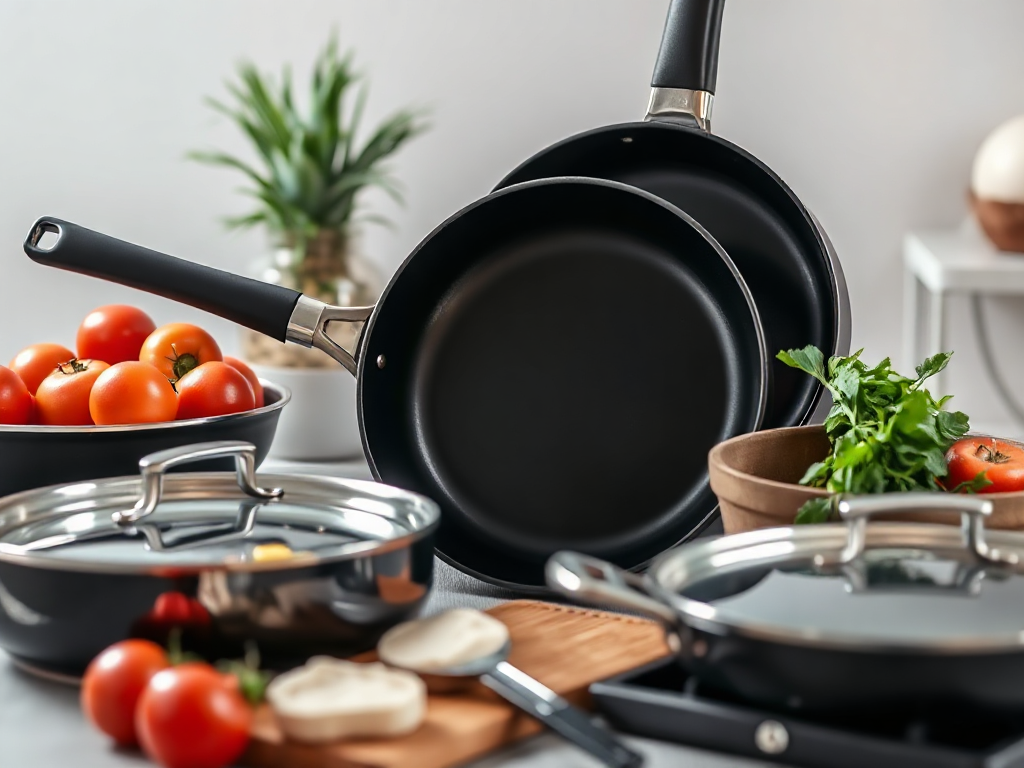
Nonstick cookware is generally safest for health when its coating remains intact, the pan is used over low to medium heat, and the manufacturer’s care instructions are followed. The main safeguards are avoiding severe overheating, preventing scratches from metal utensils, replacing pans with peeling or badly damaged surfaces, and buying products from identifiable manufacturers with clear material and use guidance. Modern nonstick coatings are designed for ordinary stovetop cooking, but an empty pan left on high heat can become far hotter than food-filled cookware. Good ventilation, gentle cleaning, and avoiding broiler or oven settings beyond the stated limit further reduce misuse-related concerns.
What Makes a Nonstick Surface Suitable for Everyday Use
A nonstick pan is suitable for routine cooking when its food-contact coating is intact, stable under the temperatures listed by the manufacturer, and supported by clear care instructions. The coating is designed to create a low-friction surface, so eggs, pancakes, fish, and delicate vegetables can release with less oil and less force. That convenience can be useful, but it should not be confused with a guarantee that every pan is safe under every condition.
The construction matters as much as the label. A reputable product should identify the manufacturer, provide a stated oven-temperature limit, explain whether it is dishwasher-safe, and describe appropriate utensils. Product information cannot prove perfect performance, but missing or vague instructions make it harder to judge how the pan is intended to be used. The safest choice is usually a pan whose instructions are specific rather than one promoted only with broad claims such as “healthy” or “chemical-free.”
Some suggestions to consider!
Now retrieving an image set.
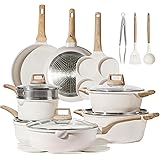
CAROTE 21pcs Pots and Pans Set, Nonstick Cookware Sets, with Egg Pan | Induction Kitchen Cooking Set, Durable, Easy Food Release, Fast & Even Heating, with Frying Pan
$129.98 (as of October 14, 2026 19:08 GMT +00:00 - More infoProduct prices and availability are accurate as of the date/time indicated and are subject to change. Any price and availability information displayed on [relevant Amazon Site(s), as applicable] at the time of purchase will apply to the purchase of this product.)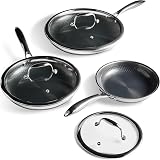
Now retrieving an image set.
HexClad 6pc Hybrid Nonstick Frying Pans Set with Lids, 8, 10 & 12" Pans | Stay-Cool Handles, Dishwasher and Oven Safe up to 900°F, Compatible with All Cooktops
$389.00 (as of October 14, 2026 19:08 GMT +00:00 - More infoProduct prices and availability are accurate as of the date/time indicated and are subject to change. Any price and availability information displayed on [relevant Amazon Site(s), as applicable] at the time of purchase will apply to the purchase of this product.)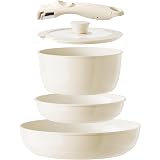
Now retrieving an image set.
Redchef Ceramic Pots and Pans Set Non Stick, Detachable Cookware Set 5 Pcs | Non Toxic Induction Compatible, Dishwasher & Oven Safe, Space Saving, PTFE Free, Camping/RV/Traveling, Reliable Gift
$39.99 (as of October 14, 2026 19:08 GMT +00:00 - More infoProduct prices and availability are accurate as of the date/time indicated and are subject to change. Any price and availability information displayed on [relevant Amazon Site(s), as applicable] at the time of purchase will apply to the purchase of this product.)Most household concerns focus on fluoropolymer-style coatings, often associated with PTFE, and on ceramic-based nonstick surfaces. These categories behave differently, so “nonstick” is not a complete material description. A PTFE-coated pan may offer durable release at ordinary cooking temperatures, while a ceramic-coated pan may have different wear patterns and care requirements. Neither label removes the need to control heat or inspect the cooking surface.
Reduced sticking can also change how a meal is prepared. A cook may need less added fat for an omelet or sautéed vegetables, although the nutritional effect depends on the entire recipe and portion. It is reasonable to view nonstick as a cooking tool that may simplify low-fat preparation, not as a health product. Readers comparing options can also review what makes nonstick cookware safe for health alongside information about stainless steel, cast iron, or enameled cookware.
A common mistake is judging safety by the pan’s appearance alone. A glossy finish does not reveal the coating chemistry, and a premium price does not guarantee correct use. Check the documentation, use the pan within its stated limits, and treat surface condition as a continuing safety and performance issue.
Heat, Cooking Methods, and the Main Safety Mistake
Heat control is the most important day-to-day safeguard because an empty nonstick pan can heat much faster than a pan containing water, sauce, or food. Normal frying, simmering, and sautéing generally keep the surface within its intended working range when the burner is managed sensibly. Severe overheating is more likely when a pan is preheated empty on high, left unattended, or placed under a broiler without approval.
Cooking with food in the pan provides a practical buffer: moisture and ingredients absorb energy, and the pan reaches temperature more gradually. That does not mean food-filled cookware can never become too hot. Oil smoking, scorched residue, a rapidly darkening surface, or an unusual odor indicates that the burner should be reduced or turned off. Ventilation is sensible whenever cooking produces smoke, regardless of the pan material.
Use the lowest setting that delivers the intended result. Eggs usually need gentle heat; pancakes need enough heat to brown without burning the coating or exterior; fish can cook successfully over moderate heat with a suitable silicone or wooden turner. High heat is rarely necessary for nonstick cooking because the surface is valued for release rather than intense searing. Stainless steel or cast iron may be more appropriate when a recipe depends on very high heat and aggressive browning.
Oven use requires a separate check. Handles, lids, exterior finishes, and coatings may have different limits, and a pan marked oven-safe is not automatically broiler-safe. A recipe that moves from stovetop to oven should be matched to the lowest rated component. Induction burners can also heat compatible pans efficiently, so gradual heating and attention during preheating remain worthwhile.
The misleading assumption is that “safe at normal temperatures” means “safe if accidentally overheated.” Those are different statements. If an empty pan is forgotten on a powerful burner and begins smoking, turn off the heat, ventilate the room, and let it cool without adding water to a very hot pan. Do not continue cooking until the surface and pan condition have been checked.
Scratches, Peeling, and When Replacement Makes Sense
An intact nonstick coating provides the performance the pan was designed to deliver. Scratches, chips, bubbling, and peeling are signs that the surface is no longer in its intended condition and that food release may deteriorate. Small flakes accidentally swallowed are not the same issue as exposure to overheated fumes, but damaged cookware is still a poor tool for predictable cooking and should not be kept indefinitely.
Utensil choice directly affects wear. Metal spatulas, forks, knives, abrasive scrubbers, and stacking pans without protection can create grooves or remove sections of coating. Silicone, wood, nylon, or other utensils approved by the manufacturer are gentler alternatives. Cleaning with warm water, mild dish soap, and a soft sponge usually removes ordinary residue without the aggressive friction that shortens coating life.
Dishwashers may be permitted, restricted, or discouraged depending on the product. Detergent, heat, and contact with other items can accelerate cosmetic wear even when a manufacturer allows occasional dishwasher cleaning. Hand washing is often the more conservative option when preserving release performance matters. Allow the pan to cool before washing; thermal shock and abrupt temperature changes can contribute to warping.
Replacement decisions should be based on condition, not an arbitrary age. Retire a pan when the cooking surface is visibly peeling, flaking, bubbling, deeply scratched, or no longer cleanable without force. A slight change in color or a few superficial marks may affect appearance more than function, but any uncertainty about exposed substrate, loose fragments, or repeated sticking favors replacement. Do not sand, recoat, or repair the surface at home.
Consider the cooking task when deciding whether to replace one pan or change materials altogether. A person who mainly cooks eggs and oatmeal may benefit from a new gentle-use nonstick skillet. Someone who regularly sears steaks, cooks over open flame, or uses the broiler may be better served by stainless steel, carbon steel, or cast iron for those jobs, keeping nonstick for lower-temperature foods. The practical goal is matching the pan to the heat and technique rather than demanding one surface handle everything.
A Practical Checklist for Choosing and Using a Safer Pan
Health-conscious cookware decisions become clearer when product quality, cooking behavior, and maintenance are evaluated together. A well-made pan can still be misused, while careful cooking cannot fully compensate for a surface that is already failing. Use this sequence before buying or continuing to use a nonstick skillet.
- Confirm the product identity. Look for a manufacturer, model information, care instructions, and a reachable source for replacement or warranty questions. Avoid relying on an unexplained marketplace listing.
- Read temperature and appliance limits. Check stovetop compatibility, maximum oven temperature, lid and handle restrictions, and whether broiling is prohibited.
- Match the pan to the recipe. Choose nonstick for foods such as eggs, crepes, tofu, or flaky fish that benefit from easy release. Choose another material when the recipe calls for extreme heat or a hard sear.
- Control preheating. Use low or medium heat and avoid leaving the empty pan unattended. Add ingredients once the pan is ready rather than heating it aggressively for a long period.
- Protect the surface. Use compatible utensils, avoid stacking without a separator, and clean with a soft sponge instead of abrasive tools.
- Inspect before use. Replace cookware showing peeling, bubbling, deep scratches, or loose coating rather than trying to extend its life through repair.
These steps also clarify the tradeoff between convenience and durability. Nonstick often makes delicate cooking easier and cleanup quicker, but it usually demands more restraint than uncoated metal. A household that uses one pan for every task may wear it out quickly; a small collection used according to temperature and food demands can last longer. The signs that the approach is working are even heating, easy release, intact coating, and cleaning that requires little pressure. Frequent sticking, visible damage, smoke during ordinary use, or uncertainty about the pan’s limits signals that the routine or the cookware needs to change.
Packaging claims deserve careful interpretation. “PFOA-free,” “stone,” “granite,” and “natural” may describe a formulation or marketing position, but they do not tell you how the pan performs after years of heating and washing. Ask what the surface is, what temperatures it can tolerate, and what the maker says about damage. For more context, compare what makes nonstick cookware safe for health with the maintenance needs of uncoated alternatives before purchasing a complete set.
People with unusual sensitivity to cooking fumes, respiratory symptoms after smoke exposure, or concerns about a specific product should seek individualized advice from a qualified health professional or contact the manufacturer for material information. General cookware guidance cannot diagnose symptoms or assess a particular exposure.
Where Nonstick Fits Among Other Cooking Surfaces
Nonstick cookware is not automatically the safest choice for every cooking method; it is a sensible choice for a defined group of tasks. Its low-friction surface can reduce the need for added oil and make delicate foods easier to turn. Stainless steel tolerates high heat and metal utensils but may require more fat, preheating skill, and cleanup. Cast iron and carbon steel can handle demanding stovetop work, yet they require seasoning or drying routines that some cooks will not maintain consistently.
A practical kitchen may use several materials rather than searching for one universal pan. Use nonstick for a morning omelet, stainless steel for a pan sauce, and cast iron for a high-heat sear. That division reduces the temptation to overheat the nonstick skillet or scrape it with a metal tool. It also makes replacement easier because each pan has a narrower, more realistic job.
Budget changes the decision. Replacing a badly worn inexpensive pan may be more sensible than trying to preserve it, while a costly pan still deserves replacement when its surface fails. Buying fewer pieces with clear instructions can be wiser than purchasing a large set whose coating quality, temperature limits, and warranty are unclear. The relevant benefit is reliable use under stated conditions, not the number of pieces in the cupboard.
One weak assumption is that an alternative material eliminates all cooking-related concerns. Any cookware can be misused, overheated, poorly cleaned, or damaged. Nonstick safety therefore rests on a combination of material information, moderate heat, intact surfaces, and habits that fit the pan’s design. The best material is the one the cook can use correctly for the intended recipe.
For nutrition and health context, consult consumer information from government health agencies and recognized medical libraries. For cookware-specific questions, prioritize the manufacturer’s current care manual and temperature limits rather than relying on an unlabeled product description.
Frequently Asked Questions
Is nonstick cookware safe for everyday cooking?
It may be suitable for everyday use when the coating is intact and the pan is used within the manufacturer’s heat and appliance limits. Avoid severe overheating and replace badly damaged cookware.
What temperature is unsafe for a nonstick pan?
Limits vary by coating and product, so use the stated maximum rather than a universal number. Avoid high-heat empty preheating, broiling unless specifically approved, and any use that produces smoke.
Should I throw away a scratched nonstick pan?
Deep scratches, peeling, bubbling, or loose coating justify replacement. Minor superficial marks may not require immediate disposal, but they indicate that gentler utensils and cleaning are needed.
Are ceramic nonstick pans healthier than PTFE pans?
Neither label alone establishes a universal health advantage. Compare construction, temperature limits, durability, care instructions, and the manufacturer’s material disclosures, then choose the surface that fits your cooking habits.
Can I use metal utensils with nonstick cookware?
Unless the manufacturer expressly permits them, avoid metal utensils. Silicone, wood, and approved nylon tools reduce scratching and help preserve the coating.
Conclusion
Safe nonstick cooking depends less on a reassuring label than on the condition of the coating and the way the pan is used. Choose products with identifiable manufacturers and clear temperature instructions, keep burners at low or moderate settings, and never leave an empty pan heating unattended. Protect the surface with suitable utensils and gentle cleaning, then replace cookware that peels, bubbles, flakes, or develops deep scratches. Reserve stainless steel, cast iron, or carbon steel for jobs that demand intense heat or metal tools. A nonstick pan can be a practical part of a health-conscious kitchen when its strengths are respected and its limits are treated as real operating instructions. Readers can also compare what makes nonstick cookware safe for health with the care requirements of other cookware materials before their next purchase.