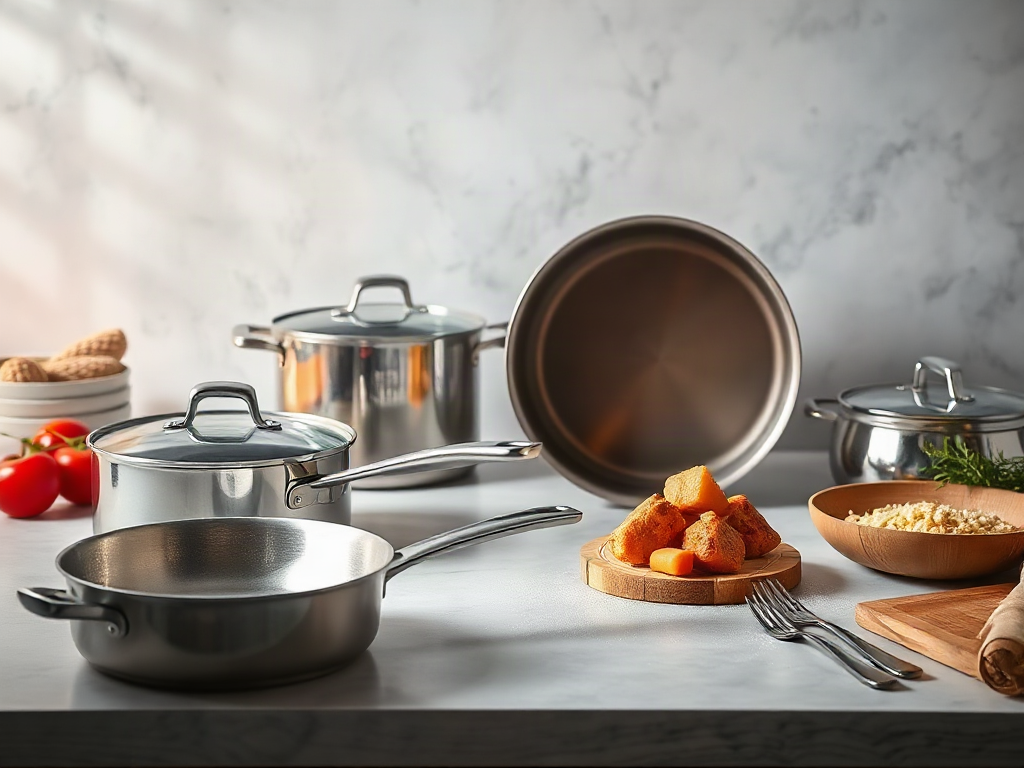
Recognize quality in cookware design by examining material construction, base flatness, handle attachment, rim finish, lid fit, and weight distribution before buying. A well-made pan should sit level, resist twisting, feel balanced when lifted, and show smooth joints without sharp edges or gaps. Match the construction to its purpose: layered metal suits responsive stovetop cooking, while heavy cast cookware favors heat retention. Do not judge by weight, price, or appearance alone; an unnecessarily heavy body, decorative finish, or thick base can hide poor balance, weak hardware, and uneven heating.
What Does the Construction Reveal About Quality?
Construction quality begins with how the cooking surface, conductive core, exterior, and base work together. Stainless steel alone is durable but conducts heat relatively slowly, so many stainless pans place aluminum or another conductive material between steel layers. That core may extend across the base or continue up the sidewalls. Neither format is automatically better: a full-body layered pan usually responds more evenly along its walls, while a well-attached base disc can perform effectively for boiling, stock making, and other tasks centered over the burner.
Some suggestions to consider!
Now retrieving an image set.
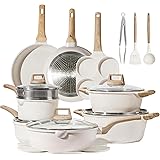
CAROTE 21pcs Pots and Pans Set, Nonstick Cookware Sets, with Egg Pan | Induction Kitchen Cooking Set, Durable, Easy Food Release, Fast & Even Heating, with Frying Pan
$123.48 (as of November 24, 2026 19:47 GMT +00:00 - More infoProduct prices and availability are accurate as of the date/time indicated and are subject to change. Any price and availability information displayed on [relevant Amazon Site(s), as applicable] at the time of purchase will apply to the purchase of this product.)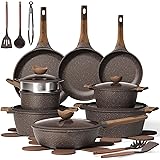
Now retrieving an image set.
CAROTE 26pcs Pots and Pans Set Non Stick Cookware Sets | Induction Kitchen Cooking Set, Special Texture Design, Ultra Durable, Easy Food Release, Even Heating, with Frying Pans Set
$129.96 (as of November 24, 2026 19:47 GMT +00:00 - More infoProduct prices and availability are accurate as of the date/time indicated and are subject to change. Any price and availability information displayed on [relevant Amazon Site(s), as applicable] at the time of purchase will apply to the purchase of this product.)
Now retrieving an image set.
Calphalon Classic Stainless Steel Cookware Set, 10-Piece, Impact-Bonded Aluminum Base, Stay-Cool Handles, Oven Safe 450F, Silver
$126.34 (as of November 24, 2026 19:47 GMT +00:00 - More infoProduct prices and availability are accurate as of the date/time indicated and are subject to change. Any price and availability information displayed on [relevant Amazon Site(s), as applicable] at the time of purchase will apply to the purchase of this product.)Look for a clear description of the construction rather than relying on terms such as “premium,” “professional,” or “heavy duty.” Useful product information identifies the cooking-surface material, core material, number or arrangement of layers, and induction compatibility. More layers do not guarantee better results. Core thickness, manufacturing consistency, and the bond between metals matter more than a large layer count printed on the package.
A disc-bottom pan deserves close inspection where the plate meets the vessel. The transition should appear even around the circumference, without visible lifting, irregular gaps, or a base that seems noticeably smaller than the usable cooking area. An undersized disc may leave a cooler perimeter and create an abrupt heating boundary. With fully clad cookware, examine the rim for cleanly joined layers. Exposed layer lines can be normal, but roughness, separation, or an unfinished edge is not.
Cast iron and carbon steel require different judgment. Their quality is not determined by a bright polish or perfectly smooth surface. Check whether the vessel sits flat, whether wall and base thickness appear reasonably consistent, and whether the handle and helper grip are shaped for control. Minor casting texture is usually cosmetic; rocking on a level surface or a visibly twisted body affects actual use.
Coated cookware should have a uniform interior without bubbles, bare spots, pinholes, or coating that runs over a rough rim. A coating is a wear component, even when applied well, so replaceability and realistic service life may matter more than an elaborate exterior. The common mistake is treating one material as universally superior. Quality is better assessed by whether the material arrangement delivers the heat response, durability, maintenance, and weight required for the pan’s intended job.
How Do Shape, Balance, and Finish Affect Performance?
Geometry determines how easily a pan browns, tosses, pours, evaporates, and fits on a burner. A skillet intended for searing needs enough flat cooking area to hold food without crowding. Strongly flared sides make turning food easier but reduce the usable base relative to the advertised diameter. A 12-inch skillet measured across its rim may therefore offer considerably less flat space than its name suggests. Compare the interior base, not just the top measurement.
Set the vessel on a known flat surface and press gently near several points around the rim. It should not rock. A deliberate slight concavity in some metal bases may flatten as the pan heats, but a pronounced wobble, twisted rim, or unevenly attached disc is a warning sign. Flat contact is particularly relevant on smooth electric and induction cooktops, where movement and reduced contact can make the pan frustrating to use.
Balance becomes apparent when the empty pan is lifted naturally. The handle should give enough leverage to control the body without forcing the wrist sharply downward. Add a little imagined load to the test: a sauté pan that feels barely manageable when empty may become awkward with sauce or food inside. Conversely, very light cookware can shift when stirred or develop hot spots if its conductive layer is too thin. Quality is not maximum weight; it is useful mass placed where it supports stable, predictable cooking.
Finish provides clues about manufacturing discipline, although shine itself proves little. Run a finger carefully along the exterior, rim, handle junction, and underside. Edges should feel deliberate rather than sharp, stamped surfaces should be even, and brushed grain should not conceal deep scratches or dents. Check that the pan is symmetrical when viewed from above and that the handle aligns with the center of the body.
A practical comparison is a thick, attractive pan with a short rounded handle versus a moderately weighted pan with a longer, better-contoured grip. The first may look more substantial, yet the second can be safer and easier to control during pouring. Buyers often mistake visual heft for structural refinement. Prioritize flatness, usable cooking area, controlled movement, and clean finishing over decorative polish or an imposing profile.
Which Handle, Lid, and Rim Details Matter?
Handles, lids, and rims reveal whether a design has been considered as a complete tool rather than only as a cooking vessel. A main handle should provide clearance for fingers, resist rotation, and remain controllable with dry hands or an oven mitt. Rivets, welds, and screws can all work when properly executed. The relevant questions are whether the connection is rigid, whether it creates difficult cleaning crevices, and whether replacement or tightening is possible if the design uses removable hardware.
Test a display model by holding the body steady and applying gentle side-to-side pressure to the handle. There should be no clicking or visible movement at the joint. Rivet heads inside the pan should sit evenly and lack rough gaps that trap residue. Welded handles create a smoother interior, but small or poorly finished weld points can be less reassuring than substantial, neatly seated rivets. Construction method alone does not establish quality; execution does.
A helper handle becomes valuable on wide sauté pans, Dutch ovens, and stockpots that will be heavy when full. It should be large enough to grasp with protection and positioned so both wrists can lift evenly. Small decorative loops may look tidy but become hard to use when the vessel contains hot liquid. Check the manufacturer’s stated oven limits for the body, handles, lid, knobs, and coating because the lowest-rated component determines practical oven use.
Lids should sit securely without requiring an airtight seal. A small amount of movement is common, especially with metal lids, but the lid should not slide toward the interior or leave an obviously uneven gap. Glass allows viewing but adds weight and can limit oven use depending on its knob and specifications. Metal is usually lighter and less vulnerable to impact, though it hides the food. A steam vent is useful for some simmering tasks but may release moisture when greater retention is desired.
Rim design affects both durability and pouring. A rolled or reinforced rim can resist distortion, while a shaped pouring edge helps liquid leave cleanly. Test pouring geometry visually on both sides; some pans are shaped only for right- or left-handed use. A common failure is buying for the pan body while ignoring the contact points used every day. Loose hardware, cramped grips, heat-prone knobs, and dribbling rims can make otherwise capable cookware unpleasant to own.
A Practical Cookware Quality Inspection
A short physical inspection can separate meaningful design details from packaging claims. Perform the checks in a consistent order so a polished finish or familiar brand name does not dominate the decision. When shopping online, apply the same sequence to specifications, dimension drawings, close-up photographs, warranty terms, and well-documented owner reports.
- Confirm the construction. Identify the cooking surface, heat-conducting layer, exterior, coating if present, and whether the base or entire body is layered.
- Check the base and body. Place the piece on a flat surface, look for rocking, and inspect disc edges or clad rims for separation and rough finishing.
- Evaluate capacity honestly. Compare flat cooking diameter, wall height, and filled weight rather than relying only on the nominal size.
- Test the grip. Lift, tilt, and mimic pouring. Check finger clearance, wrist angle, helper-handle access, and attachment rigidity.
- Fit the lid and inspect the rim. Look for stable seating, practical knob clearance, smooth edges, and controlled pouring geometry.
- Verify use limits. Confirm cooktop compatibility, oven-temperature limits, utensil restrictions, cleaning instructions, and warranty exclusions.
Price should enter the comparison after these functional checks. Higher cost may pay for thicker conductive material, tighter manufacturing tolerances, better finishing, or a stronger warranty, but it may also reflect branding, decorative treatments, or an oversized set. Compare pieces that serve the same role. A responsive saucepan and a heat-retaining Dutch oven should not feel or behave alike, even if both are well made.
Sets require additional discipline. Count only the vessels that fit your cooking habits, not lids or accessories used to inflate the piece total. Repeated small saucepans or an enormous stockpot may offer less value than one excellent skillet and one appropriately sized saucepan. Examine every piece if possible; quality can vary across shapes within a line because bases, handles, and balance change with diameter.
Warning signs include missing material details, vague oven claims, a handle that moves on a new sample, visible coating defects, a rocking base, sharp unfinished edges, and no clear care instructions. None of these tests can predict lifetime perfectly, and showroom handling cannot reveal heat distribution by itself. Still, the process identifies design problems that specifications and marketing photographs often hide.
Does the Design Match the Intended Cooking Method?
Quality only has practical meaning when the design suits the cooking method. For fast temperature changes, sauces, and sautéing, a responsive conductive core and manageable weight deserve priority. For braising, deep frying, or steady simmering, heat retention, wall height, capacity, and secure two-handed lifting may matter more. A pan can be beautifully manufactured yet remain a poor choice for the task performed most often.
Consider searing two portions of food on a home stovetop. A broad skillet with a sufficiently thick conductive body can spread burner heat across its cooking area and recover after cool ingredients are added. A thin pan may respond quickly but develop concentrated hot zones and lose stability. An extremely heavy pan retains heat well, yet it can be slow to adjust when the burner is reduced. The useful choice depends on whether the cook values rapid control, sustained heat, or a compromise between them.
Induction adds another constraint: the base must contain a compatible magnetic material, but compatibility does not guarantee even heating. A magnetic exterior over a well-proportioned conductive core generally offers broader heat distribution than a thin magnetic plate alone. The base also needs to suit the cooking zone. A pan much larger than the active zone may heat slowly at the perimeter, regardless of its overall build quality.
For acidic sauces, stainless steel or an intact suitable coating is often easier to manage than reactive bare metal. Carbon steel and cast iron reward users who accept seasoning, drying, and weight in exchange for durability and heat retention. Nonstick interiors suit eggs and delicate foods at moderate temperatures, but buyers should expect the surface to wear and follow the maker’s heat, utensil, and cleaning limits. The mistake is paying for a material’s celebrated strength while disregarding its maintenance burden or limitations.
Write down the three dishes or techniques the vessel will handle most often, then assess each feature against those uses. Include burner size, storage space, hand strength, dishwasher expectations, and the likelihood of oven transfer. Signs of a good match appear during ordinary work: the vessel remains stable, responds predictably, pours without excessive dripping, and can be lifted safely when loaded. If its weight discourages use, its base exceeds the burner, or its care needs conflict with the household routine, technical excellence will not make it a successful purchase.
Frequently Asked Questions
Does heavier cookware always indicate higher quality?
No. Added mass can improve heat retention and stability, but excessive weight may come from inefficient construction and can make a loaded pan unsafe to handle. Judge weight together with balance, conductive material, and intended use.
Is fully clad cookware better than a disc-bottom design?
Fully clad construction is useful when even heating up the sidewalls matters. A well-made disc base can be effective for boiling and other burner-centered tasks, provided the disc is securely bonded and covers most of the bottom.
How can I check a pan for warping before purchase?
Place it on a known flat surface and press gently around the rim. Avoid a pan that rocks noticeably, spins unevenly, or shows a visibly twisted rim or separated base plate.
Are riveted handles more durable than welded handles?
Either can be durable. Inspect rivets for tight, even seating and welds for substantial, clean attachment. Any movement, clicking, rough gap, or misalignment on a new piece is a concern.
What should I prioritize when buying cookware online?
Look for disclosed materials, base and interior dimensions, filled or product weight, cooktop compatibility, oven limits, care instructions, warranty terms, and close photographs of handles, rims, and construction joints.
Conclusion
Good cookware design is visible in the relationship between construction and daily use. Examine how the metals or coatings are assembled, whether the base sits flat, how much usable cooking area the shape provides, and whether the handles remain comfortable when the vessel is loaded. Treat lids, rims, joints, and care limits as functional components rather than minor accessories.
Before purchasing, compare the piece with the burner, cooking method, storage space, and lifting demands it will encounter at home. Reject obvious defects and vague specifications, but avoid assuming that greater weight, more layers, or a higher price automatically delivers better performance. A focused inspection of one pan you will use frequently is more valuable than choosing a large set by piece count. The best next step is to test balance and hardware in person when possible, then verify the material construction and operating limits in the manufacturer’s documentation.