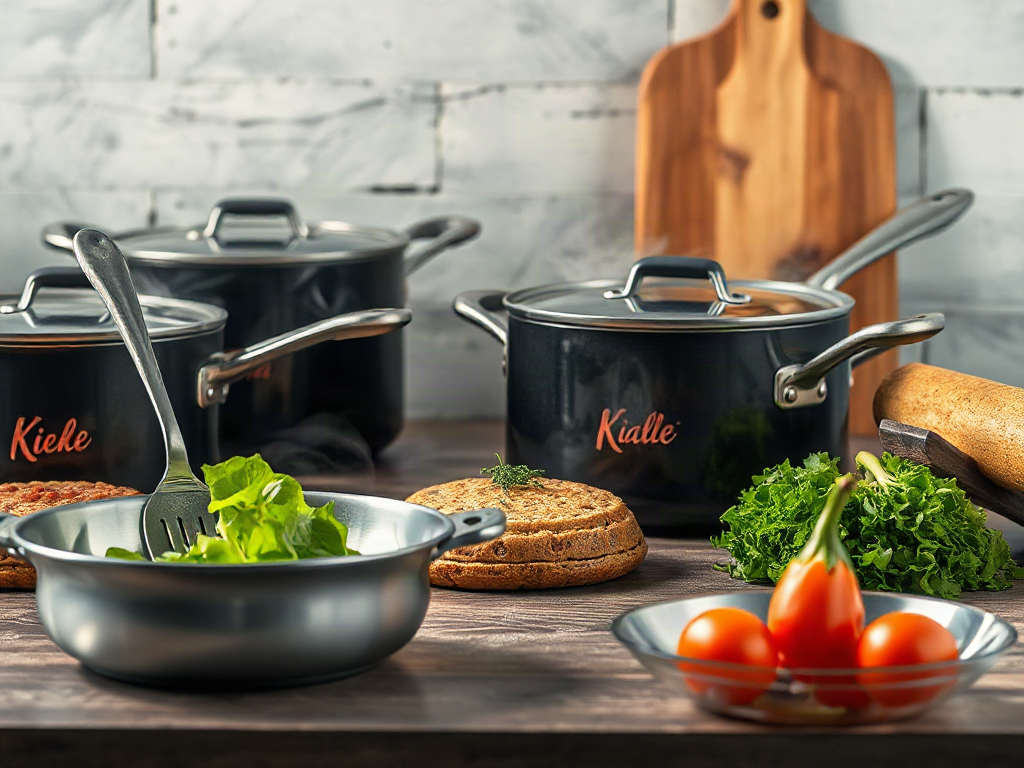
Cookware design shapes the user experience by determining how evenly heat spreads, how securely a vessel can be lifted, how easily food releases, and how much effort cleanup requires. Material thickness and base construction influence temperature control, while handle geometry, balance, rim shape, and lid fit affect comfort and precision. A well-designed pan should suit its intended task rather than maximize every feature; a heavy searing pan and a light sauté pan solve different handling needs. Buyers should assess cooking performance and physical interaction together, because excellent heat retention offers limited value if the vessel is awkward to pour, unstable on the burner, or difficult to maintain.
How Does Design Shape Cooking Performance?
Cooking performance begins with the relationship among material, thickness, shape, and heat source. Material alone does not predict how a pan will behave. A thin stainless steel vessel may react quickly but develop pronounced hot spots, while a stainless pan built around a conductive aluminum core can distribute energy more evenly. Thick cast iron stores substantial heat and recovers well after cold food is added, yet it changes temperature slowly. Those differences determine how much attention and burner adjustment a cook must provide.
Some suggestions to consider!
Now retrieving an image set.
Caraway 12-Piece Non-Stick Ceramic Cookware Set | Pots, Pans, Lids and Kitchen Storage, PFAS and PFOA Free, Oven Safe Pan Set and Compatible with All Stovetops, Cream
$445.00 (as of October 15, 2026 19:09 GMT +00:00 - More infoProduct prices and availability are accurate as of the date/time indicated and are subject to change. Any price and availability information displayed on [relevant Amazon Site(s), as applicable] at the time of purchase will apply to the purchase of this product.)


CAROTE 21pcs Pots and Pans Set Non Stick, Detachable Handle Cookware Sets | Stackable Cooking Set, Dishwasher & Oven Safe, Induction Ready, for Kitchen/Apartment/Camping/RV, House Warming Gift
$59.99 (as of October 15, 2026 19:09 GMT +00:00 - More infoProduct prices and availability are accurate as of the date/time indicated and are subject to change. Any price and availability information displayed on [relevant Amazon Site(s), as applicable] at the time of purchase will apply to the purchase of this product.)
Now retrieving an image set.
Redchef Ceramic Pots and Pans Set Non Stick, Detachable Cookware Set 5 Pcs | Non Toxic Induction Compatible, Dishwasher & Oven Safe, Space Saving, PTFE Free, Camping/RV/Traveling, Reliable Gift
$39.99 (as of October 15, 2026 19:09 GMT +00:00 - More infoProduct prices and availability are accurate as of the date/time indicated and are subject to change. Any price and availability information displayed on [relevant Amazon Site(s), as applicable] at the time of purchase will apply to the purchase of this product.)Geometry matters just as much as construction. A broad skillet gives moisture room to escape, helping mushrooms brown instead of steaming. A saucepan with tall, relatively straight walls reduces exposed surface area and suits simmering liquids. Sloped sauté-pan sides make it easier to turn or toss food but reduce usable flat cooking area compared with more vertical walls. The design therefore influences both the result and the technique that feels natural.
Base design affects burner contact and stability. A flat, rigid base should sit without rocking, because uneven contact can make stirring less predictable and may reduce effective heat transfer on smooth electric surfaces. Induction cooking adds another constraint: the base must contain a sufficiently magnetic layer and should correspond reasonably well with the active cooking zone. An oversized vessel may still function, but heating can be less uniform if the energized area covers only its center.
A frequent mistake is treating maximum thickness or weight as proof of quality. More mass can steady temperature during searing, but it also lengthens preheating and makes rapid corrections difficult. For eggs, delicate sauces, or a fast weeknight sauté, responsiveness may be more useful than stored heat. For browning steaks or baking cornbread, greater thermal mass may be welcome. Neither behavior is universally better.
Assess performance according to the food most often prepared. Look for a wide surface and suitable heat retention when browning is the priority. Favor responsive construction when burner changes need to take effect quickly. Signs of a good match include predictable browning, manageable preheat times, and fewer emergency temperature adjustments. Persistent scorching in one area, a center that runs much hotter than the perimeter, or delayed response after lowering the burner suggests that the vessel, heat source, and task are poorly matched.
Handles, Balance, and Physical Control
Handles and weight distribution determine whether strong thermal performance remains usable once the pan contains food. A skillet that feels acceptable when empty may become front-heavy after receiving oil, vegetables, or several portions of meat. If the handle is narrow, sharply edged, slippery, or positioned at an uncomfortable angle, the wrist must work harder to stabilize the load. That strain becomes especially apparent when moving the vessel from burner to oven or pouring hot contents.
Balance can be checked before purchase when the cookware is available in person. Hold the empty pan in the normal cooking position, then apply gentle downward pressure inside the far edge with the other hand to approximate a load. The handle should provide enough room for the whole hand without forcing the knuckles against the pan wall. A helper handle is valuable on large sauté pans, Dutch ovens, and stockpots because it converts an awkward one-handed lift into a controlled two-handed movement.
Handle attachment introduces tradeoffs. Riveted handles are mechanically secure, but exposed rivet heads can trap residue inside the vessel. Welded attachment creates a smoother interior, although quality depends on the execution of the weld and the surrounding metal. Removable handles save cabinet space and can simplify storage, but their locking mechanisms require correct engagement and periodic inspection. A mechanism that feels loose, resists full closure, or collects debris should not be treated as a minor inconvenience.
Heat transfer through handles also affects confidence. Long metal handles can become hot, particularly during oven use or extended stovetop cooking. Hollow construction, a heat break, and sufficient length may slow heat movement, but no metal handle should be assumed to remain cool in every situation. Silicone or polymer grips may feel cooler on the stovetop, yet their oven-temperature limits and susceptibility to direct flame must be respected according to the manufacturer’s instructions.
The strongest choice is not necessarily the lightest pan. Very light cookware can shift while stirring, especially on slick grates or smooth cooktops. Excessively heavy cookware, however, may discourage regular use or make draining pasta unsafe for someone with limited grip strength. Test the complete action rather than the static weight: lift, tilt, mimic stirring, and imagine the vessel full. Stable placement, neutral wrist position, controlled pouring, and comfortable two-handed lifting are better user-experience indicators than weight alone.
Why Do Lids, Rims, and Small Details Matter?
Small components shape repeated interactions more than their modest appearance suggests. A lid controls evaporation, contains splatter, and affects how readily a cook can inspect food. A rim determines whether soup pours cleanly or runs down the outside wall. Interior transitions influence whether a whisk reaches every part of a saucepan. These details do not replace sound materials, but they often decide which piece a person reaches for each day.
Lid fit should match the cooking purpose. A reasonably close-fitting lid retains moisture for rice, braises, and covered simmering, while a vented lid releases some steam and may reduce rattling. Glass allows visual checks but adds weight and can become obscured by condensation. Metal is generally lighter and less vulnerable to impact, although the food must be checked by lifting it. An extremely tight seal is not automatically desirable; ordinary cookware is not pressure cookware, and steam must be able to escape safely as intended by the design.
Rim construction becomes obvious during pouring. A defined flared or rolled edge helps separate liquid from the wall, reducing drips when transferring sauce or draining rendered fat. A straight, blunt edge may be adequate for dry cooking but frustrating for soups and custards. Pouring lips can improve aim, especially for small quantities, although a single-sided spout may favor right- or left-handed use. A continuous pouring rim is more flexible for households with different dominant hands.
Interior corners deserve attention in saucepans and sauciers. Rounded transitions let a whisk follow the contour and reduce pockets where flour, dairy, or sugar can collect and scorch. Sharp corners provide slightly more flat base area but require more deliberate scraping. Measurement markings can help with rough liquid quantities, yet they should not be assumed to equal laboratory measuring tools. Their real value is reducing extra utensils during routine preparation.
Cleanup is another design outcome rather than a separate concern. Exposed fasteners, rolled edges with gaps, intricate lid knobs, and rough exterior finishes create places where grease can remain. Dishwasher compatibility may be convenient, but it does not guarantee that finishes, exposed aluminum edges, seasoning, or nonstick coatings will retain their appearance or performance indefinitely. A useful inspection is simple: trace every food-contact surface with your eyes and consider whether a sponge or brush can reach it. If cleaning requires special maneuvering after every meal, the feature may impose more friction than it removes.
Matching Cookware Design to the User and Task
The best design is the one that aligns with the cook’s common tasks, physical comfort, heat source, storage, and willingness to maintain it. A restaurant-style pan designed for high heat and frequent tossing may be inconvenient for someone who cooks smaller portions and prefers low-effort cleanup. Conversely, a lightweight coated skillet may be pleasant for breakfast but poorly suited to repeated high-temperature searing. Evaluating use cases prevents a single impressive feature from dominating the decision.
Start with the tasks that occur every week. Eggs and pancakes favor easy release, moderate weight, and low sidewalls that admit a spatula. Pan sauces benefit from responsive heating and an interior that accepts a whisk. Stews call for capacity, stable handles, a suitable lid, and manageable loaded weight. High-heat browning rewards a broad cooking surface and construction that does not lose too much temperature when food is added.
A compact decision check keeps these requirements visible:
- Define the main task: identify the foods and techniques the vessel must handle most often.
- Confirm compatibility: check burner size, induction suitability where relevant, and stated oven limits.
- Test handling: evaluate grip, balance, helper-handle access, and safe clearance from nearby burners.
- Inspect food contact points: examine the cooking surface, corners, fasteners, rim, and lid fit.
- Accept the maintenance burden: consider seasoning, coating care, hand-washing, polishing, and storage protection.
User needs can change the priority order. A person with reduced hand strength may benefit more from moderate weight and two secure handles than from exceptional heat retention. A household with limited storage may prefer nesting pieces, provided stacked surfaces can be protected from scratching. Someone using a small sink should check whether a broad sauté pan can be washed and turned comfortably. These are functional constraints, not secondary preferences.
Marketing often presents versatility as the ability to perform every task, but genuine versatility involves acceptable compromises. Stainless clad cookware handles browning, deglazing, and acidic foods well, though sticky foods require temperature and fat control. Enameled cast iron offers heat retention without seasoning the cooking surface, but it remains heavy and can chip if struck. Nonstick construction reduces adhesion and cleanup effort, yet it requires gentler utensils and heat management and will not remain unchanged forever.
Signs of a successful choice appear during ordinary use: the vessel stays stable, responds predictably, pours without drama, and can be cleaned without avoiding difficult crevices. Failure signs include leaving the piece in the cabinet because it is too heavy, gripping it with tension, repeatedly burning food at the center, or damaging the surface through techniques the design cannot tolerate. When those patterns persist, changing the vessel for that task is often more effective than forcing a poor fit.
Frequently Asked Questions
Does heavier cookware provide a better user experience?
Not automatically. Greater mass can stabilize temperature and aid searing, but it slows heat adjustments and increases lifting effort. The useful weight is one the cook can safely control when the vessel is full.
Which cookware design details are easiest to overlook?
Loaded balance, handle edges, helper-handle clearance, rim shape, interior corners, lid-knob clearance, and exposed fasteners are commonly missed. Each affects routine lifting, pouring, stirring, or cleaning.
Are glass lids better than metal lids?
Glass provides visibility but adds weight and often fogs during cooking. Metal is typically lighter and more impact-resistant. Lid fit, handle comfort, and the intended cooking method matter more than visibility alone.
How can cookware ergonomics be tested before buying?
Grip the handle, mimic stirring and pouring, and estimate how the piece will feel when loaded. Check wrist position, knuckle clearance, helper-handle access, base stability, and whether the cookware fits the sink and storage space.
Can attractive cookware still have poor functional design?
Yes. Finish and color do not reveal heat distribution, balance, grip comfort, pouring control, or cleaning difficulty. Appearance should be assessed after the vessel meets its cooking and handling requirements.
Conclusion
Cookware should be judged as an interface between the cook, the food, and the heat source. Begin with recurring meals, then evaluate thermal behavior, loaded balance, handle geometry, base stability, rim control, lid function, and cleaning access. Treat weight, responsiveness, and heat retention as tradeoffs rather than universal measures of quality.
Before buying, reproduce the motions the vessel will require: lift it, tilt it, reach for the helper handle, and consider where steam, grease, and food residue will travel. Confirm cooktop and oven compatibility from the manufacturer’s documentation. A useful design feels predictable throughout preparation, cooking, serving, and cleanup. If a feature improves one stage while making another unsafe or needlessly awkward, choose the compromise that fits the task performed most often.