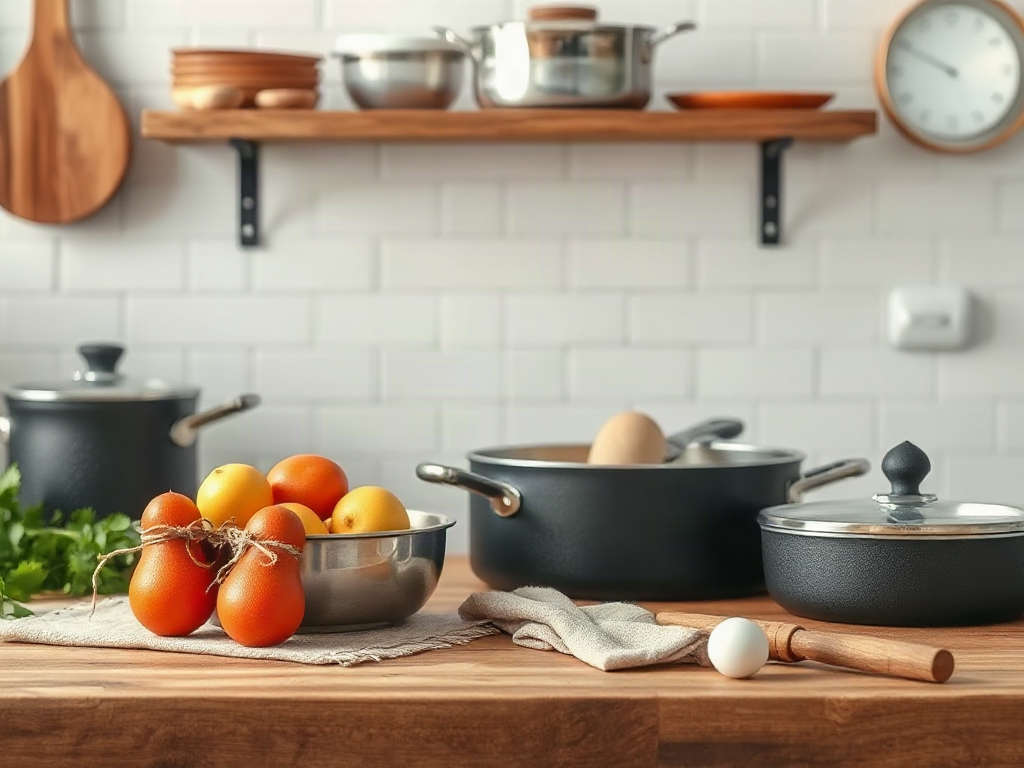
When buying cookware for gifts, match the piece to the recipient’s cooktop, cooking habits, storage space, and willingness to follow material-specific care instructions. Confirm induction compatibility, useful capacity, handle comfort, oven limits, and whether the weight is manageable before comparing colors or bundled accessories. A versatile skillet, saucepan, Dutch oven, or small coordinated set is usually safer than a large collection filled with duplicate sizes. Avoid assuming that premium pricing, heavy construction, or a nonstick label automatically makes cookware suitable; the best gift is practical for the recipient’s meals, safe on their appliances, and realistic to maintain.
Which Cookware Fits the Recipient’s Daily Routine?
A useful cookware gift should solve a task the recipient performs regularly rather than introduce a specialized pan they may rarely use. Consider what they prepare, how many people they feed, and which existing pan causes frustration. Someone who makes eggs and reheats individual portions may appreciate a compact skillet, while a household that cooks pasta, soups, or grains needs a saucepan or stockpot with adequate capacity. A Dutch oven can suit a cook who braises, bakes bread, or serves one-pot meals, but it may be excessive for someone who mainly prepares quick stovetop dishes.
Some suggestions to consider!
Now retrieving an image set.
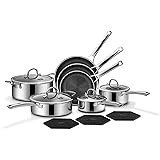
SNOWCLAD Pots and Pans Set Non Stick | Stainless Steel Kitchen Cookware | 14 Pcs | PFOA Free | Hybrid | Induction Compatible | Frying Skillet, Saucepans, Saute Pan & Stock Pot
$189.98 (as of October 6, 2026 19:04 GMT +00:00 - More infoProduct prices and availability are accurate as of the date/time indicated and are subject to change. Any price and availability information displayed on [relevant Amazon Site(s), as applicable] at the time of purchase will apply to the purchase of this product.)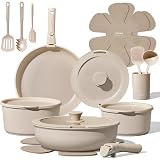


CAROTE 21pcs Pots and Pans Set Non Stick, Detachable Handle Cookware Sets | Ultra Nonstick, Space Saving, Dishwasher & Oven Safe, Non-Toxic Kitchen/Apartment/Camping/RV/ Traveling, Taupe
$56.97 (as of October 7, 2026 10:24 GMT +00:00 - More infoProduct prices and availability are accurate as of the date/time indicated and are subject to change. Any price and availability information displayed on [relevant Amazon Site(s), as applicable] at the time of purchase will apply to the purchase of this product.)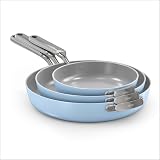
Now retrieving an image set.
Ninja NeverQuit 3-Piece Ceramic Fry Pan Set, Iceland Blue, CQ13000BL4 | Nontoxic¹, nonstick ceramic-coated cookware set; 12”, 10.25", and 8” fry pans, easy storage, 3-year guarantee
$249.99 (as of October 6, 2026 19:04 GMT +00:00 - More infoProduct prices and availability are accurate as of the date/time indicated and are subject to change. Any price and availability information displayed on [relevant Amazon Site(s), as applicable] at the time of purchase will apply to the purchase of this product.)Experience level matters less than cooking style. A beginner often benefits from one forgiving, multipurpose piece rather than a broad set that occupies an entire cabinet. An experienced cook may value a more specialized item, but only if it fills a known gap. For example, a sauté pan with straight sides can be more useful than another frying pan when the recipient reduces sauces or cooks meals with substantial liquid. Conversely, a wok is a poor surprise if the person lacks a suitable burner, storage space, or interest in the techniques it supports.
Look at household size through the lens of actual portions, not marketing labels. A small saucepan can be ideal for sauces and oatmeal but frustrating as the only pot for a family. An oversized skillet offers more surface area, yet it may heat unevenly on a small burner and feel awkward when full. If you cannot inspect the kitchen, ask a discreet question about the recipient’s most-used pan, favorite meals, or cabinet limitations. A gift receipt is still worthwhile because personal preferences such as handle angle and pan balance are difficult to infer.
Presentation should remain secondary to fit. Matching colors and elaborate packaging create an immediate impression, but practical use determines whether the gift stays in rotation. A common mistake is buying a large boxed set because it appears more generous. Sets can contain undersized pots, repeated functions, or lids that consume more space than expected. Choose a set only when the recipient is establishing a kitchen or replacing several worn pieces. Otherwise, one well-chosen pan with a compatible lid is often the more thoughtful option.
Will It Work With the Recipient’s Cooktop and Oven?
Appliance compatibility is a pass-or-fail requirement for gifted cookware. Gas and conventional electric cooktops accept most flat-bottomed pans, while induction cooking requires a magnetic base. Product packaging or manufacturer specifications should state induction compatibility; a magnet adhering firmly to the bottom is a useful check when examining an unboxed pan, but the documented specification remains the better purchasing reference. Glass and ceramic surfaces also favor smooth, flat bases that sit steadily without rough edges that could trap debris.
Base diameter deserves attention because a technically compatible pan may still perform poorly on the available burner. A wide pan placed over a much smaller heating zone can develop a hot center and cool perimeter. Large cookware may also crowd nearby controls or burners. This is especially relevant in apartments, compact kitchens, recreational vehicles, and homes with narrow ranges. If the recipient uses a portable induction unit, verify both base size and any weight limit stated in the appliance documentation.
Oven use introduces separate constraints. Check the maximum temperature for the complete piece, including handles, knobs, coatings, and lid. A metal pan may tolerate oven heat while a polymer handle or glass-lid knob has a lower limit. Terms such as “oven-safe” are incomplete without a stated temperature and conditions. Broiler compatibility should never be assumed, particularly with nonstick surfaces, glass lids, or handles containing nonmetal components. The manufacturer’s care instructions should govern use rather than a general expectation based on material alone.
Physical fit can fail even when heat compatibility is correct. Long handles may prevent an oven door from closing, and tall stockpots may not fit beneath fixed racks. Measure the recipient’s available space if you are considering an unusually wide skillet, roasting vessel, or tall pot. Lid design matters too: domed lids add height, whereas flat lids usually store more easily.
The practical check before purchase is short:
- Cooktop: Confirm gas, electric, ceramic, or induction suitability.
- Heating surface: Compare the pan’s base with the likely burner size.
- Oven: Verify the lowest temperature limit among the body, handle, lid, and knob.
- Space: Account for handles, cabinet height, and stacked lids.
A frequent failure is trusting a retailer’s category filter without reading the model-specific instructions. Compatibility claims can vary between visually similar product lines. Retain the packaging or include a copy of the care information so the recipient knows the applicable limits.
Which Material Matches Their Cooking and Care Habits?
Cookware material affects heat response, browning, food release, weight, and upkeep, so it should reflect what the recipient is prepared to do after every meal. Stainless steel is durable and well suited to browning, pan sauces, and acidic ingredients. It can develop stuck-on residue when the pan is overheated or food is moved before it releases. It suits a cook willing to manage preheating, fat, and occasional scrubbing, but it may frustrate someone expecting effortless release at low fat levels.
Nonstick cookware is convenient for eggs, pancakes, and delicate foods, yet its coating is a wear component. Its useful life depends on heat exposure, utensil choice, cleaning, and storage. The recipient must be comfortable avoiding abrasive scrubbers and following the manufacturer’s temperature guidance. A nonstick skillet can be a considerate gift for an older adult or busy cook who values easy cleanup, provided the pan is not so heavy that lifting it creates another difficulty. Buying an expensive full nonstick set is less defensible when saucepans and stockpots do not require the same release properties.
Cast iron retains heat and supports searing, shallow frying, and oven use, but it is heavy and needs prompt drying. Traditional bare cast iron also benefits from maintained seasoning. Enameled cast iron reduces concerns about reactive foods and seasoning maintenance, although the enamel can chip from impacts and the vessel remains weighty. Either can suit someone who already enjoys slow cooking; neither is an ideal surprise for a recipient with limited grip strength or a preference for dishwasher cleanup.
Carbon steel offers a lighter alternative to cast iron for high-heat stovetop work. It develops a seasoned surface but can discolor, rust if stored damp, and react to long acidic preparations until the seasoning is established. Aluminum-based cookware responds quickly to temperature changes and is often easy to maneuver. In clad or coated construction, it may combine responsive heating with a stainless cooking surface or nonstick interior. Construction details therefore matter more than a material name used alone.
Care expectations are where generous gifts often become burdens. “Dishwasher-safe” does not necessarily mean repeated dishwasher cycles will preserve the finish, exposed edges, coating, or handle appearance indefinitely. Likewise, a lifetime-sounding warranty may exclude normal wear or misuse. Read the written care and warranty terms, then judge whether the recipient is likely to follow them. The best material is not the one with the most impressive reputation; it is the one whose behavior and maintenance fit the person receiving it.
How Should You Judge Size, Weight, and Gift Value?
Size and weight should be assessed as the pan will be used—filled with food, lifted from heat, and washed in a sink. A pan that feels reassuringly substantial on a display shelf can become difficult to tilt once it contains sauce or several portions. Check whether the main handle offers enough clearance from the hot body and whether a helper handle is provided on larger vessels. Rivets may create secure attachment points but can collect residue inside the pan; welded or otherwise smooth interiors are easier to wipe, though construction quality still varies.
Handle comfort is personal, which makes it a stronger reason to preserve return options. A narrow handle can press into the palm under load, while a rounded metal handle may rotate in a wet hand. Test the balance by holding the empty pan naturally rather than gripping it at the very end. The base should not feel determined to tip away from the wrist. For recipients with reduced hand strength, prioritize manageable weight, two-handed lifting points, and lids that are easy to grasp over maximum thermal mass.
Capacity labels can be more informative than nominal diameter. Two pans with the same top diameter may have different cooking surfaces because one has strongly sloped sides. A wide flat area is useful for browning without crowding; higher straight sides better contain liquids and reduce splatter. For a gift, dimensions also affect storage. Measure the longest handle-to-rim span, not just the advertised diameter, and note whether lids nest or handles detach. Removable handles save space but add a connection that must be correctly locked and maintained.
Price should be evaluated against construction, included pieces, and likely frequency of use. A higher price may reflect multilayer construction, finishing, brand support, or design, but it does not prove that the pan is more suitable. Compare the cooking surface, base flatness, handle attachment, lid fit, stated compatibility, warranty terms, and replacement options. Decorative extras and inflated piece counts can obscure weak value; manufacturers sometimes count lids and utensils as separate set pieces.
Before checkout, use this recipient-focused priority order:
- Confirm that the item performs a needed cooking task.
- Verify appliance compatibility and stated heat limits.
- Choose a material the recipient can realistically maintain.
- Check loaded weight, handle control, capacity, and storage dimensions.
- Review the return policy, warranty exclusions, and included components.
A suitable gift should pass all five checks before appearance or brand prestige breaks a tie. Warning signs include vague specifications, no stated oven limit, a set dominated by duplicate sizes, or weight the recipient is unlikely to handle comfortably. Success looks simpler: the piece fits the kitchen, reaches for common meals, cleans up within the recipient’s normal routine, and does not require them to reorganize their cabinets.
Frequently Asked Questions
Is a cookware set better than a single pan as a gift?
A set is appropriate for someone starting a kitchen or replacing multiple pieces. For an established kitchen, one versatile pan that fills a known gap usually avoids duplicates and storage problems.
What is the safest cookware gift when preferences are unknown?
A medium stainless steel saucepan or skillet is broadly useful, but only after confirming cooktop compatibility, manageable weight, and the recipient’s willingness to clean stainless steel. Include a gift receipt.
Should cookware given as a gift be dishwasher-safe?
Dishwasher compatibility is valuable for recipients who rely on that cleaning method. Check the model’s instructions, because repeated machine washing may still affect finishes, coatings, or exposed edges.
How can I tell whether cookware works on induction?
Look for an explicit induction-compatible statement in the manufacturer’s specifications. A magnet that adheres firmly to the base is a useful preliminary test, but documentation provides the model-specific answer.
Is heavy cookware always better quality?
No. Added mass may improve heat retention, but it can reduce responsiveness and make lifting or washing difficult. Construction, base stability, handle control, and suitability matter more than weight alone.
Conclusion
A thoughtful cookware gift reflects the recipient’s kitchen rather than the giver’s favorite material or brand. Identify a recurring cooking task first, then rule out products that conflict with the cooktop, oven, available storage, or the recipient’s physical comfort. Material becomes easier to choose once you know whether the person values low-maintenance cleanup, strong browning, heat retention, or light handling.
Inspect model-specific specifications instead of relying on broad labels such as premium, oven-safe, or induction-ready. Capacity, usable cooking surface, loaded weight, handle balance, lid design, and care instructions reveal more than piece count. If any personal preference remains uncertain, select one versatile item from a seller with a practical return policy and include the receipt. That approach produces a gift the recipient can use often without inheriting unnecessary maintenance or clutter.