Non-slip handles improve cookware safety by helping cooks maintain control when lifting, tilting, stirring, or transferring a hot pan. A secure grip reduces unwanted rotation, especially when hands are damp, the pan is heavy, or oil has reached the handle. Effective designs combine a slip-resistant surface with suitable handle shape, balanced attachment, and enough clearance from heat. Textured silicone or rubberized sections may improve traction, but they still require inspection for loosening, cracking, grease buildup, and heat damage.
Why Does Handle Grip Affect Pan Control?
A cookware handle is the main control point between the cook and a vessel containing heat, weight, and moving food. The grip must resist sliding while the wrist counters the pan’s leverage. That requirement becomes more demanding when a skillet holds oil and food, a saucepan is filled with water, or a lid shifts the vessel’s balance. Even a small loss of traction can cause the pan to rotate before it actually slips from the hand.
Some suggestions to consider!
Now retrieving an image set.
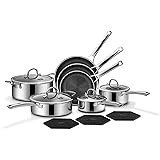
SNOWCLAD Pots and Pans Set Non Stick | Stainless Steel Kitchen Cookware | 14 Pcs | PFOA Free | Hybrid | Induction Compatible | Frying Skillet, Saucepans, Saute Pan & Stock Pot
$209.99 (as of October 5, 2026 19:04 GMT +00:00 - More infoProduct prices and availability are accurate as of the date/time indicated and are subject to change. Any price and availability information displayed on [relevant Amazon Site(s), as applicable] at the time of purchase will apply to the purchase of this product.)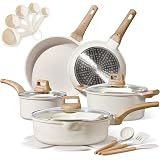
Now retrieving an image set.
CAROTE 20pcs Pots and Pans Set, Nonstick Cookware Sets | Induction Cooking, Ultra Durable, Easy to Clean, Even Heating, All-Stovetop Compatible, PFOA-Free Kitchen Set
$69.99 (as of October 5, 2026 19:04 GMT +00:00 - More infoProduct prices and availability are accurate as of the date/time indicated and are subject to change. Any price and availability information displayed on [relevant Amazon Site(s), as applicable] at the time of purchase will apply to the purchase of this product.)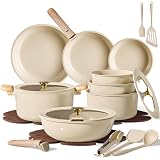
Now retrieving an image set.
CAROTE 25pcs Ceramic Cookware Set, Pots and Pans Set with Detachable Handle | Non-Stick, Non-Toxic, PFAS & PFOA Free, Induction Compatible, Dishwasher & Oven Safe, Space Saving, Camping Cooking, Oatmeal
$119.99 (as of October 5, 2026 19:04 GMT +00:00 - More infoProduct prices and availability are accurate as of the date/time indicated and are subject to change. Any price and availability information displayed on [relevant Amazon Site(s), as applicable] at the time of purchase will apply to the purchase of this product.)Rotation is a particularly relevant risk because cookware rarely moves in a perfectly level line. Cooks tip a sauté pan to spoon hot fat, angle a saucepan to drain liquid, and lift a skillet over a plate. During those movements, the load pulls away from the hand. A non-slip surface increases friction at the contact points, allowing the fingers and palm to oppose that turning force with less squeezing. It does not make careless handling safe, but it can provide a more stable connection during ordinary movements.
Consider a stainless-steel sauté pan containing browned vegetables and cooking oil. Its long handle may feel manageable while the empty pan sits in a store display. Once loaded, however, the pan becomes front-heavy. If the handle is narrow, polished, or rounded, it may twist in a damp hand as the cook carries it from the stove. A textured handle with a shape that resists rotation gives the hand more purchase, while a helper handle lets the cook share the load between both arms.
Grip also affects precision. A stable handle makes it easier to keep a crepe pan level, toss food without overcorrecting, or pour sauce in a controlled stream. Excessive squeezing is not a reliable substitute. It can tire the hand and still fail to stop a smooth cylindrical handle from turning. People with smaller hands, reduced grip strength, joint discomfort, or limited wrist mobility may notice these design differences sooner, although no handle can compensate for a vessel that is too heavy for the user.
The common mistake is treating “non-slip” as a guarantee. Grip performance changes with cooking oil, condensation, oven mitts, hand size, pan weight, and handle temperature. The practical priority is controlled handling: keep the gripping area clean and dry, use two hands for large or loaded vessels, and avoid moving a pan if its weight or balance already feels uncertain.
What Makes a Cookware Handle Truly Non-Slip?
Reliable traction comes from the interaction of surface, shape, hand fit, stiffness, and attachment—not from texture alone. Fine ridges, matte finishes, silicone sleeves, and rubberized inserts can increase friction, but their value falls if the handle is too wide to wrap securely or too narrow to distribute pressure. A good handle allows the fingers to close naturally while its underside gives them a defined place to resist forward and sideways movement.
Shape determines whether a pan can rotate within the hand. A perfectly round handle may permit twisting even when its surface feels tacky. Flattened tops, oval profiles, shallow contours, and subtle underside stops can improve directional awareness and rotational control. Deep finger grooves are less universally useful because their spacing may fit one hand and create pressure points for another. A lightly contoured profile usually accommodates more hand sizes than a highly sculpted one.
Material creates tradeoffs. Silicone and similar soft-touch sections often provide useful traction with bare hands, but they may collect grease around seams or degrade if exposed to heat beyond the maker’s stated limits. Textured metal can tolerate demanding use and cleaning, yet its traction may be modest when wet and the handle may become hot depending on construction and cooking method. Removable sleeves add grip to some metal handles, although they can shift if poorly fitted and must be removed when their temperature limitations require it.
Handle attachment and pan balance deserve equal attention. A grippy covering cannot correct loose rivets, a flexing joint, or a handle that places too much load at the wrist. Long handles create leverage; short handles bring the hand closer to the vessel. On stockpots, two side handles often provide better control because the weight is divided. On a large sauté pan, a helper handle can matter more than adding extra texture to the main grip.
A weak buying assumption is that softer always means safer. Very soft material may compress, feel unstable under a heavy load, or become slick when coated with grease. Judge the whole assembly instead. The surface should provide traction without sharp edges, the profile should resist twisting, the connection should feel rigid, and the length should give adequate clearance from the hot pan. Confirm oven and stovetop limitations in the manufacturer’s instructions rather than inferring heat resistance from appearance.
When Do Non-Slip Handles Matter Most?
Non-slip performance matters most when moisture, grease, weight, or an awkward movement reduces the margin for error. Frying and sautéing can leave an oily film on fingers or handles. Boiling creates steam and condensation. Washing nearby utensils may leave hands damp just before a saucepan needs attention. These ordinary kitchen conditions explain why a handle that feels secure when clean and dry may behave differently during a meal.
High-sided vessels create a specific challenge because their contents can shift. A pot of pasta water may surge toward one side when lifted, changing the force at each handle. Side grips should allow all fingers to fit without touching the pot wall, and the cook should have a clear route to the sink before lifting. A dry towel or suitable mitt may be needed for heat, but thick hand protection can reduce tactile feedback. A handle with distinct contours is easier to orient when the gripping surface is covered.
Long frying-pan handles face a different set of forces. Stirring usually places little demand on the grip, while tossing food or pouring oil places a sudden rotational load on it. If the pan is heavy, use the helper grip rather than relying on wrist strength. For oven-to-stovetop cookware, remember that a handle designed to stay relatively cool on a burner can become hot in an oven. Slip resistance does not indicate temperature, so a dry oven mitt remains necessary when directed by the cookware instructions.
Several situations deserve added caution:
- Wet or greasy preparation: pause to wash and dry both hands and the handle before lifting.
- Heavy contents: divide the load, use a helper handle, or transfer food in smaller portions.
- Draining liquids: use a fitted lid, insert, or colander rather than depending on grip strength alone.
- Reduced hand strength: favor lighter cookware, broad load-bearing surfaces, and two-handed designs.
The failure mode is asking grip texture to solve a weight or technique problem. No coating makes an overfilled stockpot easy to carry, and a secure handle does not protect against steam escaping near the fingers. Before moving hot cookware, assess the load, clear the path, choose appropriate hand protection, and decide whether a second hand or another person is needed. Traction is valuable because it adds control, not because it removes those constraints.
How to Evaluate and Maintain Handle Grip
A useful handle evaluation reproduces the movements made during cooking without exposing anyone to heat. With an empty, cool pan, grasp the handle as you normally would and gently simulate lifting, tilting, and pouring. Notice whether the handle rotates before the pan follows, whether its edges press into the palm, and whether the thumb has a stable resting area. If possible, add a safe amount of cold water to test the effect of realistic weight.
Check fit with the hand protection you actually use. A handle that feels excellent with bare hands may become hard to control through a thick mitt. Confirm that fingers can close around it without pressing against the vessel and that the mitt does not slide on a glossy section. On two-handled pots, test both grips together; limited clearance may force the wrists into an awkward angle once the vessel is loaded.
Use this compact inspection order when comparing or checking cookware:
- Traction: look for a clean, intact surface that does not slide easily in the hand.
- Shape: test resistance to twisting, not merely softness.
- Fit: check comfort with bare hands and intended heat protection.
- Attachment: inspect rivets, welds, screws, and joints for movement or gaps.
- Balance: assess the pan empty and with a safe cold load.
- Heat limits: verify the maker’s care, oven-use, and temperature directions.
Maintenance preserves grip performance. Oil can fill shallow texture and turn a normally secure surface slick. Clean the handle according to its care instructions, paying attention to seams around silicone inserts and removable sleeves. Rinse away detergent residue and dry the gripping area before use. Avoid abrasive tools or aggressive cleaners unless the manufacturer permits them, because they may damage soft-touch finishes or create rough, difficult-to-clean edges.
Inspect the handle periodically while the cookware is cool. Movement at the base, cracked material, a swollen insert, exposed metal, persistent tackiness, or a sleeve that creeps during lifting indicates declining performance. A screw should be tightened only if the manufacturer identifies it as user-serviceable and provides a suitable method. Riveted, welded, molded, or damaged assemblies may require manufacturer guidance or replacement rather than an improvised repair.
The sign of a successful choice is predictable control under realistic weight: the pan follows the hand without delayed twisting, concentrated pain, or excessive squeezing. Repeated repositioning, wrist strain, sliding through a mitt, or growing looseness signals a poor fit or developing defect. Stop using a compromised handle for hot, loaded cookware until its condition can be resolved safely.
Frequently Asked Questions
Are silicone cookware handles always non-slip?
No. Silicone often adds traction, but grease, wear, poor fit, and an overly round handle can still allow sliding or rotation. Its heat and care limits also vary by product.
Can a non-slip handle still become hot?
Yes. Grip and heat resistance are separate properties. Oven use, burner size, handle construction, and cooking time can all affect temperature, so follow the maker’s handling instructions.
What handle shape offers the best control?
An oval or lightly contoured handle often resists twisting better than a round one, but hand size and cookware weight affect fit. Test lifting and pouring motions before deciding.
Do textured handles replace oven mitts?
No. Texture can improve traction but does not provide reliable heat protection. Use the hand protection specified for the cookware and confirm that it maintains a secure grip.
When should cookware with a damaged handle be replaced?
Stop using it for hot, loaded food if the handle is loose, cracked, rotating, separating, or persistently slippery. Seek manufacturer guidance on approved repair or replacement options.
Conclusion
Handle texture deserves attention, but dependable control comes from the entire design. Prioritize a profile that resists rotation, fits the user’s hand, remains rigid at its attachment, and suits the weight of the vessel. Helper grips and two-handle layouts are often more useful than extra surface texture when cookware is large or heavily loaded.
Before buying, simulate lifting, tilting, and pouring with a cool pan and, where practical, a safe cold load. During use, keep gripping surfaces free of water and grease, respect stated heat limits, and use suitable hand protection. Inspect seams, coatings, sleeves, and attachment points as the cookware ages. If a handle begins shifting or requires excessive squeezing, treat that change as a functional problem rather than a minor cosmetic flaw.