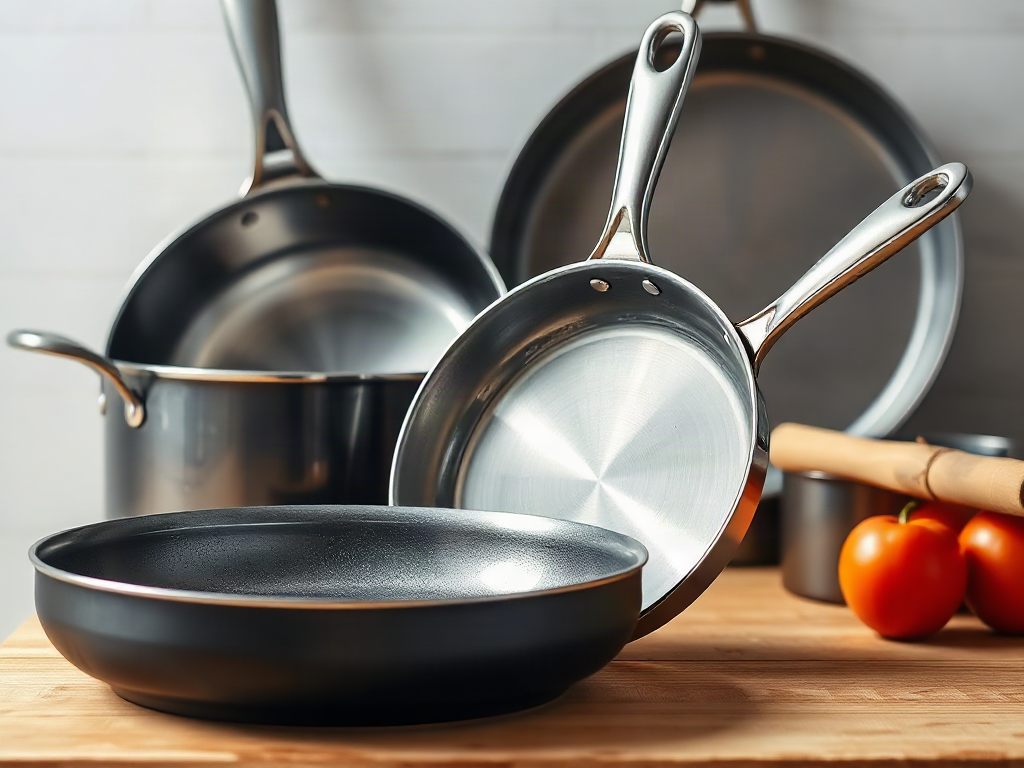
Recognize quality craftsmanship in cookware by inspecting the pan’s construction, surface finish, handle attachment, balance, and fit before judging its appearance or brand. Look for a level base, even wall thickness, clean seams, secure handles, smooth rims, and a coating without bubbles or exposed edges. A well-made pan should sit flat, feel stable when lifted, and match its material to the cooking task. Check the manufacturer’s care and heating instructions because excellent construction cannot compensate for misuse. Be cautious of decorative polish, excessive weight, or vague material claims; each may create an impression of quality without proving durability or dependable cooking performance.
Construction Details That Reveal Quality
Quality craftsmanship begins with how a pan is formed, joined, and finished rather than with its shine or packaging. Hold the piece at eye level and check whether the base is flat, the sides rise evenly, and the rim follows a consistent curve. A pan that rocks on a level surface may distribute heat unevenly and can become more troublesome on a glass cooktop. Slight variation in handmade items is not automatically a defect, but instability, distortion, or visibly uneven walls deserves caution.
Inspect the cooking surface and exterior for clean transitions. On stainless steel, look for an even polish or brushed pattern without deep gouges, sharp burrs, or discolored welds. On enameled cast iron, the coating should cover the interior and exterior consistently, with no chips around the rim. On nonstick cookware, the coating should appear continuous and firmly bonded; bubbles, pinholes, peeling edges, or exposed metal are poor signs. These details matter because a smooth, continuous surface is easier to clean and less vulnerable to local damage.
Some suggestions to consider!


SENSARTE Nonstick Ceramic Cookware Set, 13-pcs Non-toxic Pots and Pans Set | Healthy Kitchen Cooking Set with Stay-Cool Handles, Silicone Tools and Pot Protectors, PFAS Free
$65.94 (as of October 14, 2026 19:08 GMT +00:00 - More infoProduct prices and availability are accurate as of the date/time indicated and are subject to change. Any price and availability information displayed on [relevant Amazon Site(s), as applicable] at the time of purchase will apply to the purchase of this product.)
Now retrieving an image set.
CAROTE 21pcs Pots and Pans Set, Nonstick Cookware Sets | Titanium Reinforced Coating, Scratch-Resistant, Easy to Clean, Even Heating, Induction Compatible, with Frying Pans Set
$89.99 (as of October 14, 2026 19:08 GMT +00:00 - More infoProduct prices and availability are accurate as of the date/time indicated and are subject to change. Any price and availability information displayed on [relevant Amazon Site(s), as applicable] at the time of purchase will apply to the purchase of this product.)
Now retrieving an image set.
Caraway 12-Piece Non-Stick Ceramic Cookware Set | Pots, Pans, Lids and Kitchen Storage, PFAS and PFOA Free, Oven Safe Pan Set and Compatible with All Stovetops, Cream
$445.00 (as of October 14, 2026 19:08 GMT +00:00 - More infoProduct prices and availability are accurate as of the date/time indicated and are subject to change. Any price and availability information displayed on [relevant Amazon Site(s), as applicable] at the time of purchase will apply to the purchase of this product.)Weight can provide a clue, but it is not a quality test by itself. A thick pan may retain heat well, while an overly heavy design can be awkward to lift when full. Compare two similarly sized pieces by setting each down, lifting it with one hand, and checking whether the weight is centered. A well-balanced skillet usually feels controlled rather than merely dense. A common mistake is assuming that the heaviest option must be the best; excessive mass can reduce responsiveness and make everyday use less practical.
Use the broader how to recognize quality craftsmanship in cookware checklist when comparing products, but give construction defects priority over cosmetic preferences. A modest-looking pan with accurate geometry and clean joints is generally a stronger candidate than a highly polished pan with a warped base.
Materials, Bases, and Cooking Performance
Craftsmanship is closely tied to whether the construction suits the material. Stainless steel is durable and visually revealing: poor forming may show as a warped base, uneven thickness, or rough interior finishing. Aluminum commonly offers quick heat response, but a thin body may develop hot spots or deform more easily. Cast iron should have a stable base and a usable cooking surface; a rough texture is not necessarily faulty, but sharp casting ridges or an unstable foot are concerns. Nonstick cookware requires special attention to the bond between the coating and its underlying body.
Look for clear information about the body, cooking surface, base, and compatible stovetops. A multilayer pan may combine a responsive core with a more durable cooking surface, but the number of layers does not prove quality. What matters is whether the layers are joined evenly and whether the base remains flat after normal heating. A bonded disk on the underside can improve contact with an electric or induction burner, while a fully clad body may provide more consistent heat up the sides. Neither construction is automatically better for every task.
Consider a practical comparison. Someone who sears meat may value a stable, heat-retaining skillet, while someone making delicate sauces may prefer a more responsive pan that changes temperature quickly. A thick saucepan can be useful for reducing liquid, but its slow response may frustrate a cook who frequently moves between high and low heat. Quality means the pan performs predictably for its intended use, not that it has the most elaborate specification sheet.
Do not confuse a material label with proof of workmanship. Terms such as “premium,” “professional,” or “heavy duty” are less useful than measurable details about thickness, construction, coating limits, oven compatibility, and care. Manufacturer instructions also reveal whether the design has realistic constraints. Using how to recognize quality craftsmanship in cookware as a product-comparison lens means asking what the pan can do consistently, where it is vulnerable, and whether those limits fit your kitchen.
Handles, Rims, Lids, and Fit
Small components often expose workmanship faster than a broad cooking surface. A handle should attach securely, align with the pan, and remain comfortable when the vessel is tilted. Check rivets for firm seating and smooth edges, and inspect welded connections for clean, continuous work rather than rough blobs or visible gaps. If the handle is hollow, shake the pan gently; rattling suggests a loose component. A helper handle should sit where it can be grasped safely without forcing the wrist into an awkward angle.
Balance matters most when the pan contains food. Lift it as you would when draining pasta or turning vegetables, and notice whether the handle pulls the cooking surface sharply downward. A slightly angled handle can improve control, but poor balance increases spill risk. The handle’s material and attachment method also affect care. Metal handles may tolerate oven use better than heat-sensitive grips, yet they can become hot on the stovetop. Follow the stated limits rather than assuming that a metal component makes the entire pan oven-safe.
Rims and lids deserve the same scrutiny. A rolled rim should be smooth and free of sharp points, while a pouring edge should guide liquid without dripping excessively down the side. Place the lid on the pan and rotate it gently. It should seat evenly without excessive wobble, although a vent or intentionally loose fit may be part of the design. Glass lids should be checked for chips around the edge, and metal lids should not have rough seams that can scratch the vessel.
A common misconception is that a tight lid always signals superior quality. Fit must match the pan’s purpose: a close seal may help retain moisture, whereas controlled venting may be useful for simmering. Inspect the pieces together, not separately, because a well-made pan paired with a poorly aligned lid is still an inconvenient set. The related how to recognize quality craftsmanship in cookware approach should include the full user experience, from lifting and pouring to cleaning around attachments.
A Practical Inspection Checklist
A short inspection is more reliable than relying on brand reputation, attractive photography, or a single material claim. If shopping in person, examine the pan before purchase. If shopping online, use detailed product images, specifications, warranty terms, and return conditions to identify what cannot be verified remotely. Quality retailers should make the construction and care requirements understandable rather than hiding them behind vague adjectives.
Work through the following sequence:
- Check stability: place the pan on a flat surface and look for rocking, gaps, or a visibly distorted base.
- Inspect surfaces: search for scratches, pits, bubbles, coating gaps, chips, and sharp edges.
- Test balance: lift the empty pan by its primary handle and, if present, its helper handle.
- Examine attachments: check rivets, welds, screws, and handle joints for movement or rough finishing.
- Test the lid and rim: confirm that the lid seats sensibly and the rim is smooth and even.
- Match the construction to use: compare the pan’s responsiveness, weight, capacity, and stovetop compatibility with your actual cooking.
Prioritize defects that affect safety, stability, or function. A faint cosmetic mark may be acceptable if it does not compromise the cooking surface, while a loose handle or rocking base should not be rationalized as character. Online reviews can add useful context about recurring problems, but isolated complaints need to be separated from consistent reports of warping, coating failure, or inaccurate dimensions. Product photographs also have limits: studio lighting can conceal surface flaws, and a listed diameter may refer to the rim rather than the usable base.
When two pans appear similar, choose the one with clearer specifications and more transparent care instructions rather than automatically choosing the more expensive model. Price may reflect thicker materials, labor-intensive finishing, or a longer warranty, but it can also reflect branding. A disciplined inspection turns craftsmanship into observable evidence.
Durability, Care, and Honest Value
Good workmanship improves a pan’s prospects, but durability depends on use as well as construction. Rapid temperature changes can stress some materials, metal utensils can damage certain coatings, and abrasive cleaning can dull finishes or remove seasoning. Read the care instructions before buying because a pan that demands maintenance you will not provide is a poor practical match, even if its construction is excellent.
Think in terms of failure points. A nonstick pan may lose its usefulness when its coating is damaged, so a smooth initial finish and realistic heat guidance matter more than decorative extras. Cast iron can remain serviceable for a long time but requires attention to drying and seasoning. Stainless steel usually tolerates more aggressive use, yet discoloration or stuck food may require different cooking technique rather than indicating a defect. A lid knob, rivet, or exterior coating may fail before the main body, making replacement support and warranty language worth checking.
For example, a frequent stir-fry cook may value a stable base and robust handle more than a mirror finish. Someone who cooks small portions may prefer a lighter pan that heats quickly and is easy to wash. A household using induction should verify that the base is compatible and sufficiently flat; a beautifully finished vessel that does not couple reliably with the burner is not a good purchase for that kitchen.
Quality value comes from dependable performance over the period you realistically expect to use the pan. Avoid paying extra for features that conflict with your habits, but do not ignore construction details that are difficult or impossible to repair. The best final check is simple: identify the pan’s likely weak point, learn how to protect it, and decide whether the maintenance and limitations fit your cooking routine.
For additional product-specific information, consult the manufacturer’s official care and warranty documentation, then compare those instructions with recognized consumer-safety guidance and the requirements of your stovetop. These sources are more useful than marketing copy when evaluating heat limits, cleaning methods, coating care, and compatible surfaces.
Frequently Asked Questions
Does heavier cookware always indicate better craftsmanship?
No. Weight can reflect useful thickness, but it may also reduce maneuverability. Flatness, balance, secure attachments, and appropriate heat behavior are stronger indicators than mass alone.
How can I check cookware quality when shopping online?
Look for detailed construction specifications, close-up photographs, care instructions, warranty terms, and a clear return policy. Be cautious when material, thickness, or coating information is vague.
What surface defects should make me reject a pan?
Reject pieces with a rocking base, loose handle, sharp rim, peeling or bubbled coating, deep gouges, exposed metal where a coating should be, or chips that compromise an enamel surface.
Are riveted handles better than welded handles?
Neither method is automatically superior. Well-set rivets can be strong and serviceable, while a clean weld can be smooth and easy to clean. Judge the attachment by alignment, firmness, finish, and the manufacturer’s warranty.
What should I prioritize when my budget is limited?
Prioritize a flat base, sound handle attachment, suitable size, compatible stovetop construction, and an intact cooking surface. Decorative finishes and extra accessories can take lower priority.
Conclusion
Recognizing craftsmanship in cookware means examining evidence rather than guessing from price, weight, or appearance. Start with stability and surface condition, then inspect balance, handles, rims, lids, and the relationship between the material and your cooking method. A pan should feel controlled, sit flat, and have construction details that support its stated use. Treat vague specifications and cosmetic polish as incomplete information, not proof of quality. Before buying, identify the likely failure point, read the care instructions, and confirm compatibility with your stovetop and cleaning habits. Those checks will not predict every future problem, but they can separate a thoughtfully made pan from one that merely looks impressive on the shelf.