Construction Details That Reveal Real Quality
Quality craftsmanship begins with how a pan is formed, joined, and finished rather than with its appearance on a product page. A well-made piece usually feels structurally coherent: the walls are consistent, the base sits flat, and attached parts look integrated instead of added as an afterthought. Weight alone is not proof of quality, because a poorly balanced heavy pan can be less useful than a lighter vessel with sound construction.
Examine the body for even thickness and a clean transition from the base to the sidewalls. In layered stainless steel, the bonded layers should extend through the cooking area and, depending on the design, up the sides. A disc attached only beneath the pan may still work well for certain tasks, but it transfers heat differently from fully clad construction. Neither design is automatically superior: a thick-bottomed saucepan can be practical for simmering, while a fully clad sauté pan may offer more uniform sidewall heating.
Manufacturing clues appear at the edges. A rolled rim should be smooth and continuous, without sharp points, gaps, or visible distortion. Welded handles should show a neat, consistent joint; riveted handles should use solid-looking rivets that do not shift when the handle is gently tested. Small cosmetic marks may not affect function, but a crooked handle, uneven seam, or visibly warped body can signal a more meaningful quality-control problem.
Compare a pan that feels balanced in the hand with one that is merely dense. If the handle forces the cooking surface downward or the empty pan rocks when placed on a level counter, the design may become irritating or unsafe in daily use. A useful inspection also includes the manufacturer’s specifications: stated materials, layer arrangement, oven limits, and cleaning guidance should agree with the physical construction. Vague claims such as “professional quality” are weaker evidence than specific, verifiable details. For broader buying context, compare these observations with how to recognize quality craftsmanship in cookware before treating price or branding as a shortcut.
Some suggestions to consider!
Now retrieving an image set.
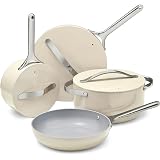
Caraway 12-Piece Non-Stick Ceramic Cookware Set | Pots, Pans, Lids and Kitchen Storage, PFAS and PFOA Free, Oven Safe Pan Set and Compatible with All Stovetops, Cream
$445.00 (as of October 14, 2026 19:08 GMT +00:00 - More infoProduct prices and availability are accurate as of the date/time indicated and are subject to change. Any price and availability information displayed on [relevant Amazon Site(s), as applicable] at the time of purchase will apply to the purchase of this product.)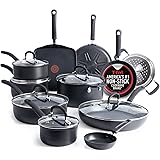
Now retrieving an image set.
T-Fal Ultimate Hard Anodized Nonstick Pots and Pans Set 17 Piece, Nonstick Cookware Set with Fry Pan, Saucepans, Saute-Pan, Griddle, Dishwasher Safe, Onyx
$229.95 (as of October 14, 2026 19:08 GMT +00:00 - More infoProduct prices and availability are accurate as of the date/time indicated and are subject to change. Any price and availability information displayed on [relevant Amazon Site(s), as applicable] at the time of purchase will apply to the purchase of this product.)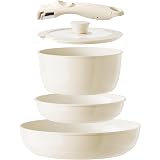
Now retrieving an image set.
Redchef Ceramic Pots and Pans Set Non Stick, Detachable Cookware Set 5 Pcs | Non Toxic Induction Compatible, Dishwasher & Oven Safe, Space Saving, PTFE Free, Camping/RV/Traveling, Reliable Gift
$39.99 (as of October 14, 2026 19:08 GMT +00:00 - More infoProduct prices and availability are accurate as of the date/time indicated and are subject to change. Any price and availability information displayed on [relevant Amazon Site(s), as applicable] at the time of purchase will apply to the purchase of this product.)Inspecting the Cooking Surface, Rim, and Base
The cooking surface deserves close attention because defects there affect both performance and maintenance. Run your eyes across the interior under good light. Stainless steel should appear evenly finished, with no deep scratches, pits, buckles, or abrupt polishing marks. A coated surface should be continuous and free from bubbles, exposed metal, flaking, or thin-looking patches around the rim. A glossy finish is not automatically better than a matte one; consistency and suitability for the pan’s intended use matter more.
Flatness is especially important for skillets, griddles, and induction-compatible vessels. Place the pan on a level surface and check for rocking. A very slight design-related curve may occur in some pans, but pronounced wobbling can cause uneven contact with a cooktop and may worsen as the vessel is repeatedly heated and cooled. On a glass or induction surface, an uneven base can also make movement more noticeable and reduce predictable contact.
The rim should be smooth enough to pour without a sharp burr and shaped so liquid does not run unpredictably down the exterior. Pouring tomato sauce from a saucepan is a simple test: a controlled stream suggests a useful lip, while dribbling along the side points to a design limitation. Pouring performance is not the only criterion, though. A wide rim may improve access for a spatula but can increase exposed surface area and evaporation during long simmering.
Look at the underside as well. A base should be level, securely bonded, and free from lifting edges. A pan with a copper or aluminum core may distribute heat effectively, but the construction still needs to tolerate ordinary expansion and contraction. Avoid assuming that thicker always means better; excessive mass can slow temperature changes and make a pan difficult to lift. The practical test is whether the base matches the burner size, the food being prepared, and the user’s ability to handle it. Signs of failure include persistent rocking, a base that spins on a flat surface, or a coating that is already damaged at the edge.
Handles, Lids, and Everyday Fit
Handles and lids reveal craftsmanship because they must remain useful while the vessel expands, heats, cools, and is moved repeatedly. A handle should feel secure without sharp transitions, excessive flex, or an awkward angle. Hold the pan as you would when tipping food into a bowl. If the wrist bends sharply or the grip feels front-heavy, the design may be uncomfortable even when the handle attachment is strong.
Riveted handles are common and can provide a durable mechanical connection, but the interior rivets create raised spots that may collect food and complicate scraping. Welded handles offer a smoother cooking surface and easier cleaning, although the quality of the weld and the surrounding material still matter. A long handle paired with a helper handle is often useful on a large Dutch oven or sauté pan because it improves control when the vessel is full. On a compact skillet, extra hardware may add bulk without solving a real problem.
A lid should sit evenly, match the rim, and provide a stable grip. Hold it in place and gently move it side to side; some ventilation movement is normal, but excessive wobble can allow steam to escape unpredictably. A glass lid is convenient for monitoring food, while a metal lid may be more resistant to breakage and can have a simpler, more durable construction. Neither choice guarantees superior workmanship. Inspect the knob, screw, and underside of the lid for looseness or rough finishing.
Consider storage and cleaning before buying. A handle that looks elegant but prevents the pan from fitting in the oven or cabinet is a practical failure. Silicone, wood, and phenolic components may improve grip but can impose temperature or dishwasher limits. A common mistake is judging a handle only while the pan is empty. Test the balance with one hand, imagine lifting it from a low oven, and check whether the lid can be handled with an oven mitt. The best construction is the one that remains controllable under the actual load and conditions you expect.
Matching Craftsmanship to Use and Care
Craftsmanship should be judged against the job the cookware must perform. A finely finished stainless-steel saucepan may be a durable choice for reductions, acidic sauces, and deglazing, but it demands attention to temperature and technique because food can adhere more readily than it would on a coated surface. A nonstick skillet may be expertly made yet still require gentler utensils and temperatures than an uncoated pan. Cast iron can have excellent machining and seasoning potential while remaining heavy and slower to respond to burner changes.
Material choice changes what “quality” looks like. For stainless steel, inspect flatness, bonding, rim work, and handle security. For enameled cast iron, check the enamel for pinholes, chips, rough patches, and consistent coverage around the rim. For nonstick cookware, look for an even coating and clear care instructions rather than assuming a premium price makes it indestructible. Aluminum cookware should be assessed for distortion and the quality of any coating or hard-anodized finish. A pan can be well crafted and still be the wrong tool for a particular cooking routine.
Care instructions are evidence of design honesty. Specific limits for utensils, oven use, dishwasher cleaning, and heat exposure help the buyer understand the intended service conditions. Instructions that conflict with the construction deserve caution. For instance, a handle containing heat-sensitive material may restrict oven use even if the pan body can tolerate high temperatures. Ignoring those limits can create damage that looks like poor workmanship but actually reflects misuse.
Prioritize the features that affect your regular meals. Someone who cooks eggs several times a week may value an intact, uniform coating and a stable low-to-medium heat response. Someone who sears steaks and finishes sauces may prioritize a thick, even base, secure oven-safe handles, and a surface that tolerates deglazing. Use the care guidance alongside material and construction checks rather than treating any single feature as a guarantee of longevity.
A Practical Store and Online Buying Checklist
A short inspection sequence can separate meaningful craftsmanship from attractive marketing. In a store, begin with the base and rim, then test balance and attachments. Online, use the same sequence through detailed product photographs, specifications, warranty language, and independent reviews that mention long-term fit, warping, coating wear, or loose hardware. A product description that lists only capacity and color leaves important questions unanswered.
- Check the body: Look for even walls, a level base, and no visible warping or dents.
- Inspect joins: Examine rivets, welds, screws, and the handle-to-body connection for movement or rough edges.
- Study the surface: Confirm that the interior finish is uniform and appropriate for the intended food and utensils.
- Test fit: Make sure lids sit properly, handles feel balanced, and the pan suits your cooktop, oven, storage space, and sink.
- Read limitations: Check temperature, cleaning, utensil, and warranty details before relying on a premium claim.
Price should enter the decision after these checks, not replace them. A moderately priced pan with honest specifications and sound construction may outperform an expensive piece with awkward balance or fragile fittings. Reviews are most useful when they describe repeated use rather than first impressions: reports of a lid loosening, a base changing shape, or a coating wearing near the rim are more informative than comments about attractive packaging.
Use return policies strategically when buying online. Inspect the pan immediately, before removing labels or using it, and compare the delivered item with the listed specifications. Return it if the base rocks, the handle shifts, the rim is sharp, or the finish has an unexplained defect. That simple step prevents a small manufacturing problem from becoming a long-term cooking inconvenience. A final reference to quality cookware evaluation can help organize the observations without reducing the decision to a single score.
For additional context, consult manufacturer care documentation, cookware construction specifications, and consumer-safety guidance from recognized organizations. These sources are most useful when they explain temperature limits, surface care, material compatibility, and warranty conditions for the specific product rather than making broad quality claims.
Frequently Asked Questions
Does heavier cookware always indicate better craftsmanship?
No. Weight can reflect useful material thickness, but balance, flatness, heat-distribution design, and secure attachments matter more than mass alone.
What should I inspect first when buying a pan?
Check whether the base sits flat, then inspect the rim, interior surface, handle connection, and any visible seams or rivets.
Are riveted or welded handles better?
Neither is automatically better. Rivets can provide a strong mechanical connection, while welds create a smoother interior; workmanship and intended use determine the better fit.
How can I assess cookware quality online?
Look for detailed construction specifications, close-up images, care limits, warranty terms, and long-term reviews that mention warping, coating wear, or loose hardware.
What is a warning sign of poor manufacturing?
A rocking base, sharp rim, shifting handle, uneven coating, rough weld, or lid that sits badly should be treated as a reason to inspect or return the item.
Conclusion
Recognizing craftsmanship in cookware means examining how the piece is built, not simply judging its shine, brand, or weight. Prioritize a flat base, consistent walls, clean rims, secure handles, properly fitted lids, and a surface suited to the foods and temperatures you use most. Then compare those features with care limits, storage needs, and the practical load of a full pan. A beautifully finished vessel with poor balance is not a strong purchase, and a modest-looking pan with honest construction may serve better for years. Inspect store purchases before use, study detailed specifications online, and return anything with structural movement or unexplained defects. That method turns a vague quality claim into a concrete decision based on fit, function, and expected care.