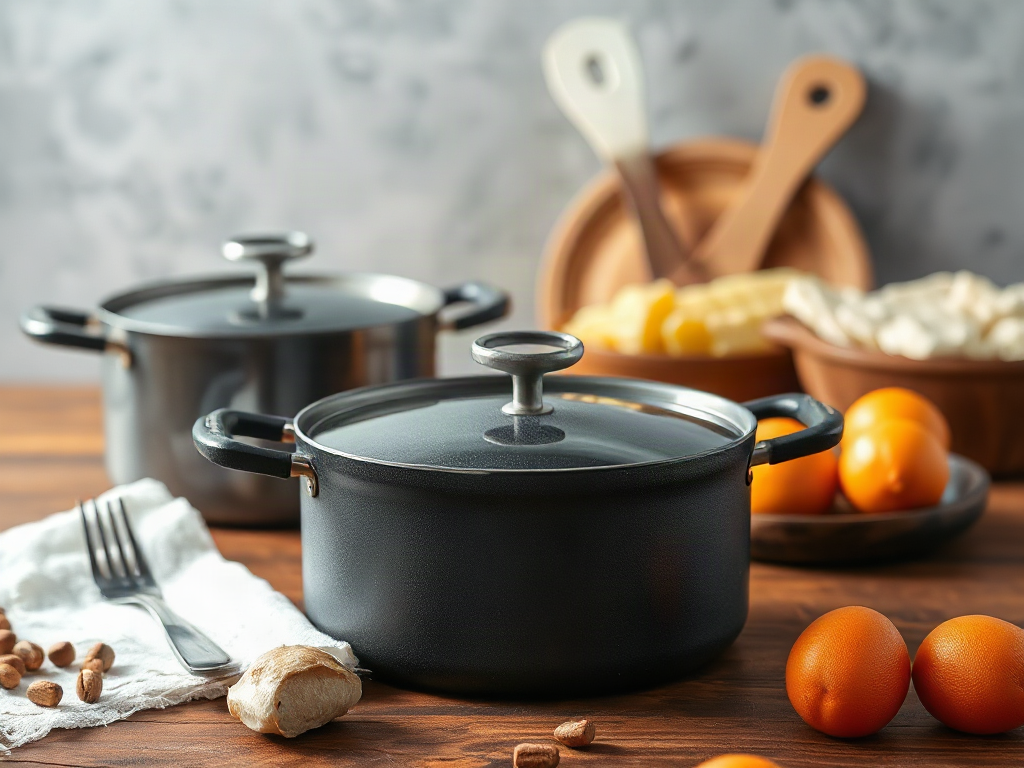
Choose cookware for batch cooking by matching usable capacity, cooking surface, material, and shape to the foods you prepare most often. Favor a wide, heavy-bottomed pot for soups and sauces, a broad skillet or sauté pan for browning, and oven-safe vessels when a batch moves between stovetop and oven. Leave enough headroom for stirring and simmering, but avoid oversized pans that your burner cannot heat evenly. Comfortable handles, tight-fitting lids, manageable filled weight, and easy cleanup matter as much as advertised volume because they determine whether the cookware remains practical through repeated cooking, portioning, and washing.
How Much Capacity Does a Batch Actually Need?
Advertised volume is only a starting point because a vessel filled to its rim is not usable for most batch recipes. Soups, beans, pasta sauce, and braises need open space for stirring, bubbling, and adding ingredients without spilling. A sensible working level is below the rim, with more headroom required for foaming foods such as beans, grains, and pasta. Instead of estimating from household size alone, check the finished yield of recipes you already cook and note how much room they occupy in your current cookware.
Some suggestions to consider!
Now retrieving an image set.
Astercook 21 Pcs Pots and Pans Set Non Stick, Ceramic Cookware Set Detachable Handle, RV Kitchen Cooking Set Removable Handles, Oven Safe, Induction Ready, Stackable, Black, Fathers Day Gift for Men
$59.99 (as of October 17, 2026 19:13 GMT +00:00 - More infoProduct prices and availability are accurate as of the date/time indicated and are subject to change. Any price and availability information displayed on [relevant Amazon Site(s), as applicable] at the time of purchase will apply to the purchase of this product.)
Now retrieving an image set.
HexClad 6pc Hybrid Nonstick Frying Pans Set with Lids, 8, 10 & 12" Pans | Stay-Cool Handles, Dishwasher and Oven Safe up to 900°F, Compatible with All Cooktops
$373.00 (as of October 17, 2026 19:13 GMT +00:00 - More infoProduct prices and availability are accurate as of the date/time indicated and are subject to change. Any price and availability information displayed on [relevant Amazon Site(s), as applicable] at the time of purchase will apply to the purchase of this product.)
Now retrieving an image set.
Cuisinart MultiClad Pro 12-Piece Stainless Steel Cookware Set, MCPS-12N | Tri-ply clad construction with heat surround technology, brushed stainless steel, 12-piece set
$267.51 (as of October 17, 2026 19:13 GMT +00:00 - More infoProduct prices and availability are accurate as of the date/time indicated and are subject to change. Any price and availability information displayed on [relevant Amazon Site(s), as applicable] at the time of purchase will apply to the purchase of this product.)Capacity should be considered together with base width. A tall, narrow stockpot may hold a large quantity, yet its small base limits evaporation and concentrates the burner’s heat in a relatively small area. That shape suits stock, broth, blanching, and boiling. A wide Dutch oven or rondeau-style pot exposes more food to the hot base and releases moisture faster, making it more effective for browning meat, reducing tomato sauce, or thickening chili.
For example, doubling a stew recipe in a deep stockpot may technically fit, but meat crowded into the narrow bottom releases moisture and steams rather than browns. Browning in several rounds solves that problem, although it adds time. A wider vessel may complete the same initial step faster, provided its base does not extend far beyond the burner. The useful question is therefore not simply “How many quarts does it hold?” but “How much food can I cook effectively at each stage?”
Oversizing creates its own difficulties. A very large pot can be awkward to lift when filled, slow to heat on a modest burner, and cumbersome in a standard sink. It may also leave shallow recipes spread too thinly, increasing the chance of scorching during reduction. If weekly cooking involves several different dishes rather than one enormous recipe, two medium vessels can be more flexible than one oversized pot. They permit parallel cooking, divide heavy loads, and fit ordinary storage spaces more easily.
Before buying, fill a comparable container with the amount of water represented by the recipe’s finished yield. Observe its weight and volume, then allow room for raw ingredients and stirring. This simple check exposes whether the planned capacity is realistically manageable rather than merely impressive on a product label.
Which Pan Shape Fits the Cooking Method?
Pan geometry controls surface contact, evaporation, stirring access, and the ease of transferring food into storage containers. Batch cooking is more efficient when the vessel supports the recipe’s dominant technique instead of forcing one general-purpose pot to handle every task. A broad cooking surface matters for searing and sautéing, while depth matters when liquids simmer for long periods.
A straight-sided sauté pan provides more usable floor area than a similarly measured skillet with sloped sides. It is well suited to large quantities of onions, ground meat, curry, or one-pan meals because food can be spread across the base and the sides contain sauce. A skillet remains useful when frequent tossing and utensil access matter, but its sloped walls reduce capacity. For meal-prep dishes that begin with browning and finish with liquid, a lidded sauté pan often provides the better compromise.
Deep pots serve a different role. A stockpot minimizes the exposed liquid surface relative to its capacity, which can slow evaporation during stock making or boiling. A Dutch oven has thicker construction and a wider base, making it more adaptable to braising, oven cooking, and slow reductions. Neither shape is universally better. Someone preparing broth and pasta every week may value a lighter stockpot, while someone making chili, pulled meat, and baked casseroles may use an oven-safe Dutch oven more often.
Lids also affect the cooking method. A well-fitting lid limits evaporation and helps maintain a gentle simmer, while a loose lid releases more steam. Glass offers visibility but adds weight and can be harder to handle when wet. Metal is usually lighter and less vulnerable to impact, though food must be uncovered for inspection. A vented lid can be convenient, but it is not ideal when retaining moisture is the goal.
Look at pouring and portioning as part of the shape decision. Tall walls can make it difficult to spoon thick food into containers without dripping down the exterior. Two short helper handles conserve storage space and support balanced lifting, while one long handle gives leverage but may make a large, heavy pan harder to fit in an oven or cabinet. The common mistake is choosing by diameter alone. Compare the interior floor, wall height, lid, and handle layout because those features determine how the pan behaves during an actual batch.
Which Cookware Materials Handle Repeated Batches Well?
Material determines how quickly cookware responds to burner changes, how evenly it distributes heat, what maintenance it needs, and how forgiving it is during long cooking sessions. Batch recipes often magnify hot spots because a heavy load takes longer to heat and may remain on the stove for hours. Thick, well-constructed bases are generally more useful than material labels considered in isolation.
Clad stainless steel is a versatile choice for sauces, soups, braises, and browning. Its nonreactive cooking surface handles acidic ingredients such as tomatoes and wine, while an aluminum core can spread heat across the base and sides. Food can stick during searing if the pan or oil is poorly heated, but that same surface develops browned residue that can be dissolved into a sauce. Stainless steel is a practical default for cooks who want one vessel to move among varied recipes without seasoning maintenance.
Enameled cast iron retains heat well and can move from stovetop to oven, making it useful for braises and steady simmering. Its mass stabilizes temperature after cold ingredients are added, but it also responds slowly when the burner is adjusted. A large enameled pot becomes very heavy when full, and the enamel can chip if struck. Bare cast iron offers strong heat retention and excellent browning, yet acidic batches may affect seasoning or pick up metallic flavors if left in the pan for extended periods. It also requires drying and occasional seasoning care.
Nonstick cookware makes eggs, delicate foods, and cleanup easier, but it is a weaker all-purpose investment for high-volume searing or long-term heavy use. High heat and metal utensils can shorten the useful life of the coating. A large nonstick sauté pan may still be worthwhile for grain dishes or foods prone to sticking, provided it is used within the manufacturer’s temperature and utensil guidance. It should not be assumed to replace a durable stockpot or braising vessel.
Aluminum heats quickly and keeps large pots relatively light. Uncoated aluminum can react with acidic or alkaline foods, so anodized aluminum, a stainless-lined design, or another nonreactive interior is more adaptable. Disc-bottom stainless pots can be economical for liquid-heavy cooking, although an exposed transition at the base may heat less evenly than fully clad construction when thick food reaches the sidewalls.
Judge performance by the entire build: base thickness, wall construction, handle attachment, lid fit, and maximum oven temperature. A material that looks ideal on paper may be inconvenient if the finished vessel is too heavy to drain or its handles become uncomfortable under load.
Will the Cookware Fit Your Stove, Oven, Sink, and Hands?
Large cookware must match the kitchen around it. A base that substantially exceeds the heating element may warm slowly at the edges, creating uneven browning and requiring frequent stirring. On a gas stove, flames should remain under the base rather than climbing the sides toward handles. Induction users must confirm magnetic compatibility and should compare the flat base diameter with the active cooking zone, not rely only on the pan’s rim measurement.
Oven clearance matters when cookware has tall lids, knobs, or long handles. Measure the usable rack width and height, including the space needed to lift the covered vessel in and out safely. Check the oven limits for the body, handles, lid, and knob separately because the least heat-tolerant component controls how the assembled pot can be used. A pan advertised as oven-safe may have a lower permitted temperature when its lid is attached.
Filled weight is an operational constraint rather than a minor comfort issue. Water alone is heavy, and dense foods add further load. Test the lifting motion you expect to use: moving the pot to the sink, tilting it to pour, or carrying it to a cooling area. Wide helper handles provide a stable two-handed grip, but small loops may become difficult to grasp with oven mitts. Riveted handles are common and durable, although food can collect around interior rivet heads. Welded interiors are smoother to clean, but construction quality still matters.
Cleanup can determine whether a vessel is used weekly or left in a cabinet. Confirm that the pan fits flat in the sink, can be rotated under the faucet, and leaves room for scrubbing. Dishwasher compatibility is useful only when the item actually fits the racks and the manufacturer permits repeated machine washing. Rolled rims, tight corners, exposed base seams, and lid channels deserve inspection because cooked starch and sauce can lodge there.
Storage should be checked with the lid included. Measure cabinet depth and shelf height, then account for protruding handles. Stacking saves room but can scratch coated or enameled surfaces unless protectors are used. A common purchasing failure is evaluating an empty pot in a spacious store aisle. Re-create the full workflow at home with measurements: burner, oven, sink, drying area, cabinet, and the route used to carry a hot batch.
A Practical Batch-Cookware Buying Checklist
A useful batch-cooking setup is usually built around recurring recipes, not a matching boxed set. Start by listing three to five meals made most often and identify their main operations: boiling, browning, reducing, braising, baking, or reheating. Any vessel that covers several frequent operations deserves priority over a specialized piece used occasionally.
Use the following checks while comparing candidates:
- Confirm usable volume: Allow space above the food for stirring, expansion, and simmering rather than treating rim capacity as working capacity.
- Measure the flat base: Match it to the stove’s effective heating area and verify induction compatibility when required.
- Choose for the dominant technique: Favor width for browning and reduction, or depth for liquid-heavy cooking and boiling.
- Test handling: Consider the vessel’s empty weight, expected filled weight, grip clearance, and ability to pour or drain safely.
- Verify the full temperature limit: Check the body, handle, lid, and knob rather than assuming every component shares one oven rating.
- Plan cleanup and storage: Measure the sink, dishwasher, oven, and cabinet before purchase.
A practical starter combination for varied weekly preparation might include a broad stainless sauté pan with a lid, a medium or large heavy-bottomed pot, and a smaller saucepan for grains, sauces, or reheating. That combination separates browning from liquid cooking and allows two components to run at once. Cooks who rely heavily on oven braises may substitute an enameled Dutch oven for the large pot; those who mainly prepare broth or boil pasta may prefer a lighter stockpot.
Avoid paying for capacity or features that do not serve the menu. Measurement marks are useful for liquids but less relevant to thick stews. A straining lid may simplify pasta preparation, yet the pot can become dangerous to tip when heavily loaded. Removable handles save space but introduce connection points that require careful inspection and use. Premium construction may be worthwhile for frequently used browning pans, while a simpler pot can perform adequately for water-based boiling.
Signs of a good match appear during use: the base heats across most of its surface, ingredients can be stirred without spilling, the vessel remains controllable when full, and cleanup fits the available time and space. Persistent scorching in one zone, repeated boilovers, weak browning, awkward lifting, or a pot that cannot fit the sink indicate a mismatch. Those observations are more informative than brand prestige and should guide the next purchase.
Frequently Asked Questions
Is a stockpot or Dutch oven better for batch cooking?
A stockpot is lighter and better suited to broth, boiling, and liquid-heavy recipes. A Dutch oven is better for browning, braising, reduction, and oven use, but it is considerably heavier when filled.
Should batch cookware be nonstick?
Nonstick is useful for delicate or starch-heavy foods and quick cleanup, but it is not necessary for every batch. Stainless steel or enameled cookware is usually more versatile for searing, acidic sauces, and prolonged cooking.
How much empty space should a batch pot have?
Leave enough room to stir without pushing food over the rim and additional headroom for foods that foam or expand. The required space varies by recipe, so judge working capacity rather than the vessel’s brim-full rating.
Is fully clad cookware necessary for large batches?
Not always. Fully clad construction is valuable for browning and thick mixtures that contact the sidewalls, while a well-made disc-bottom pot can work well for stock, boiling, and other liquid-centered tasks.
What cookware should a beginner buy first for meal prep?
Begin with a lidded, heavy-bottomed pot and a broad sauté pan sized to the stove. Add specialized pieces only after recurring recipes reveal a clear need for more capacity or a different shape.
Conclusion
Successful batch cookware fits both the recipe and the kitchen workflow. Prioritize usable volume over rim capacity, choose a broad base when browning or reducing matters, and reserve tall pots for liquid-focused work. Material should suit the food and maintenance you accept: stainless steel offers broad compatibility, enameled cast iron provides steady heat with extra weight, and nonstick serves narrower low-stick tasks.
Before purchasing, measure the burner, oven, sink, and storage area, then consider whether the filled vessel can be lifted and cleaned comfortably. Build around the dishes prepared repeatedly rather than buying a large matching set. If current cookware scorches, crowds food, spills during stirring, or becomes unmanageable when full, identify that exact failure and select the next piece to correct it.