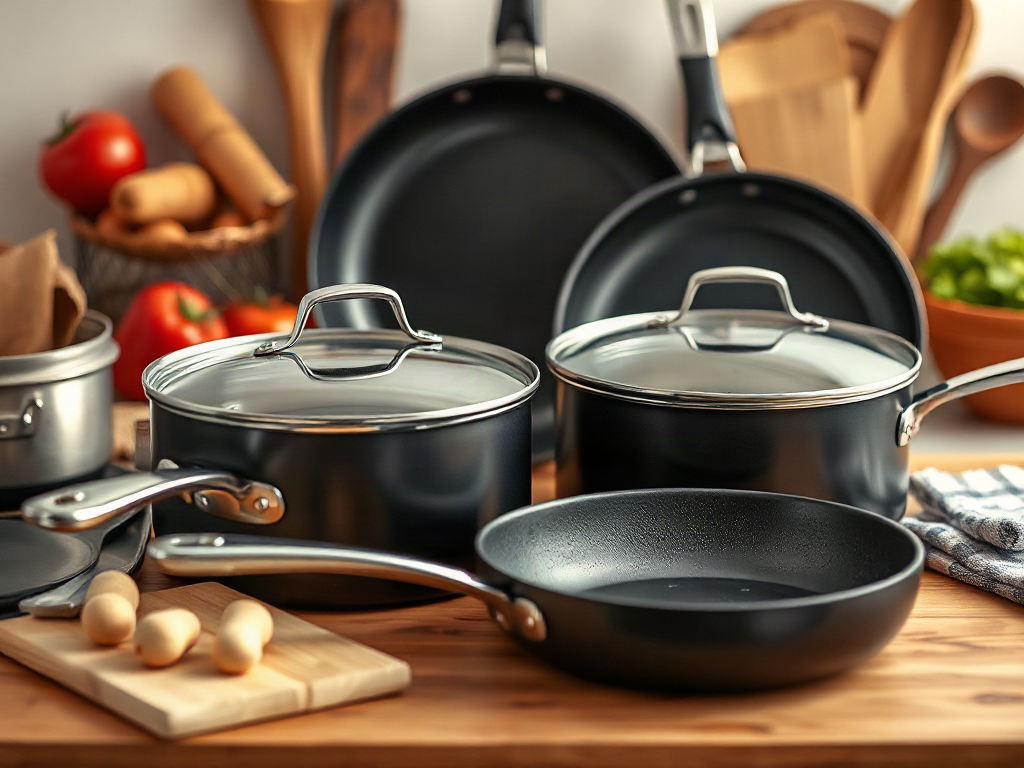
Choose cookware based on how often you cook, how hard you use each piece, and how much maintenance you will accept: occasional cooks can prioritize versatile, affordable pans, while frequent cooks should favor durable construction, comfortable handling, dependable heat control, and replaceable or repairable components. A daily home cook may get more value from stainless steel or well-made clad cookware for browning, sauces, and repeated washing, while a cook who mainly prepares eggs or delicate fish may add a nonstick skillet rather than buy a complete coated set. Match pan size to normal portions, check storage and cleaning limits, and avoid paying for specialized pieces that will sit unused. Frequency matters because repeated heating, washing, stacking, and handling expose weak coatings, loose handles, and poor balance quickly.
Match Cookware Investment to Your Cooking Routine
Cooking frequency should determine how much durability, versatility, and maintenance you purchase. Someone who cooks once or twice a week may need only a reliable skillet, saucepan, and larger pot, whereas a person preparing meals most days will repeatedly expose cookware to high heat, dishwashing, storage friction, and changing recipes. The difference is not simply how much money to spend. It is whether the pan’s construction and care requirements fit the number of times you will use it.
Begin by recording what you actually cook during a normal week. A frequent cook who sautés vegetables, sears meat, simmers sauces, and prepares grains needs pieces with different strengths. A lighter routine built around pasta, reheated food, and occasional pancakes may be served by fewer multipurpose pans. The useful question is not whether a set contains twelve pieces; it is whether the pieces cover your recurring tasks without creating storage and cleaning work.
Some suggestions to consider!
Now retrieving an image set.
CAROTE 21pcs Pots and Pans Set Non Stick, Detachable Handle Cookware Sets | Ultra Nonstick, Space Saving, Dishwasher & Oven Safe, Non-Toxic Kitchen/Apartment/Camping/RV/ Traveling, Purple
$99.96 (as of October 14, 2026 19:08 GMT +00:00 - More infoProduct prices and availability are accurate as of the date/time indicated and are subject to change. Any price and availability information displayed on [relevant Amazon Site(s), as applicable] at the time of purchase will apply to the purchase of this product.)


CAROTE 19pcs Pots and Pans Set Non Stick, Detachable Handle Cookware | Kitchen Cooking Sets, Space Saving, Dishwasher & Oven Safe, Non-Toxic, for Camping/RV/Traveling, Cream White
$54.99 (as of October 14, 2026 19:08 GMT +00:00 - More infoProduct prices and availability are accurate as of the date/time indicated and are subject to change. Any price and availability information displayed on [relevant Amazon Site(s), as applicable] at the time of purchase will apply to the purchase of this product.)
Now retrieving an image set.
Pots and Pans Set Non Stick, 31 Piece Kitchen Induction Cookware & Bakeware Set, Nonstick Kitchen Cooking Pans Set with Frying Pans Set Grill Pan Saucepan Baking Sheet & Utensils, PFOA Free
$113.99 (as of October 14, 2026 19:08 GMT +00:00 - More infoProduct prices and availability are accurate as of the date/time indicated and are subject to change. Any price and availability information displayed on [relevant Amazon Site(s), as applicable] at the time of purchase will apply to the purchase of this product.)For occasional cooking, moderate-priced cookware can be sensible because the purchase is exposed to fewer heating and washing cycles. Choose pieces with sturdy handles, flat bases, and clear care instructions rather than chasing professional-level construction. A three-quart saucepan and a 10-inch skillet may cover more meals than a large boxed set.
Frequent cooking changes the calculation. A pan that feels acceptable during one weekly use may become frustrating when it is lifted several times a day. Weight, balance, handle temperature, lid fit, and cleanup become repeated costs. A daily cook may reasonably pay more for a well-constructed skillet or saucepan, but should still avoid specialized pieces that duplicate an existing function.
A common mistake is treating cooking frequency as the only variable. Heavy weekend cooking can be harder on cookware than brief weekday meals, and a person who cooks rarely may still need a particular pan for high-temperature searing. Use frequency as the starting point, then adjust for heat intensity, food type, and cleaning habits.
Choose Materials for Repeated Use and Maintenance
Material selection matters because different cookware surfaces respond differently to heat, abrasion, acidic foods, and cleaning. Frequent use magnifies those differences. Stainless steel generally tolerates regular cooking and utensil contact well, making it useful for browning, pan sauces, vegetables, and simmered foods. Its learning curve is real: food can stick when the pan is poorly preheated or insufficiently oiled, but technique often matters more than replacing the pan.
Clad stainless steel, which combines layers of metals, is often attractive to regular cooks because it can provide more responsive and even heating than a thin single-layer pan. The exact performance varies by construction, so do not assume every product described as layered behaves identically. A heavier base, secure handle, and stable cooking surface deserve as much attention as the label.
Nonstick cookware is useful when low-stick release and quick cleanup are priorities. It can suit eggs, crepes, delicate fish, and low- to medium-heat cooking. Frequent cooks should treat a coated skillet as a working tool with a finite service life rather than as the only pan in the kitchen. Metal utensils, abrasive cleaners, overheating, and empty preheating can shorten the useful life of many coatings. A stainless skillet can handle tasks that would unnecessarily wear a nonstick surface.
Cast iron and carbon steel may reward cooks who sear often and do not mind seasoning and drying routines. Their heat retention can be useful for browning, but their weight may make repeated handling tiring, especially when a pan is full. They are less convenient for someone who wants rapid temperature changes or quick cleanup after every meal. Enameled cast iron reduces some seasoning work but remains heavy and may cost more.
The weak assumption to avoid is that one material is universally best. A daily cook may be better served by a small combination: stainless steel for high-heat and acidic cooking, nonstick for delicate foods, and a heavier pan only if its weight and care fit the routine. Read the manufacturer’s instructions for oven use, cleaning, and utensils instead of relying on broad material stereotypes.
Build a Practical Set for Your Actual Meals
The most efficient cookware collection is organized around repeated meals, not the number of pieces in a package. List your five or six most common cooking jobs, then assign one pan to each job. A household that frequently makes oatmeal, pasta, stir-fried vegetables, roasted chicken, and pan-seared fish may need a saucepan, stockpot or Dutch oven, skillet, and oven-capable roasting vessel. A person who mainly cooks single portions may need smaller diameters and fewer lids.
Pan size affects both results and convenience. An overcrowded skillet traps steam and makes browning difficult, while an oversized pan can leave a small portion spread too thinly across the heated surface. For regular family meals, a larger skillet may reduce batch cooking; for one or two servings, a smaller pan can heat faster and be easier to wash. Match capacity to normal portions rather than occasional holiday cooking unless those larger meals are genuinely part of the routine.
Think in terms of overlap. A sauté pan, frying pan, and shallow braiser may perform similar tasks, while a saucepan and stockpot serve different volume ranges. Buying a set can reduce cost per piece, but unused pans consume cabinet space and may include sizes that do not suit your stovetop. Open-stock purchasing lets you replace or add the exact piece that proves useful.
Use this compact decision sequence:
- Count uses: identify how many times each cooking task occurs in a typical week.
- Rank stress: note high heat, acidic ingredients, heavy loads, repeated washing, and stacking.
- Choose the workhorse: spend the largest share on the pan that handles the most demanding recurring job.
- Add a specialist: buy nonstick, cast iron, or another specialty piece only when a repeated task justifies it.
- Test storage: confirm that lids, handles, and pan diameters fit your cabinets and burners.
A common failure is buying for an imagined cooking identity. A large set may look economical, yet a daily cook can still end up reaching for the same two pans. The better signal is whether a piece earns regular use without awkward cleaning, unstable handling, or excessive storage.
Check Durability, Handling, and Replacement Costs
Durability is more than resistance to visible damage. Frequent cooks should inspect how the pan feels when empty and when loaded. A handle that is comfortable at first may become tiring when carrying soup or transferring food. A lid should seat securely, and the base should remain stable on the intended burner. Balance matters because poor weight distribution increases the chance of spills and makes repeated lifting unpleasant.
Look closely at construction before focusing on appearance. Riveted handles can be sturdy but may create areas that require extra scrubbing. Welded handles can be easier to clean, though the overall attachment still needs to feel secure. A warped base, loose handle, chipped enamel, or damaged coating is a practical warning sign regardless of how attractive the exterior remains.
Cleaning compatibility should be evaluated against your real behavior. If you hand-wash after every meal, a finish that releases food easily may save time. If cookware will enter a dishwasher, verify the manufacturer’s instructions and expect repeated cycles to affect some finishes and handles. Stacking also matters: rough surfaces can rub against one another, and coated pans may need protective separators.
Replacement cost changes the value equation. A less expensive skillet may be reasonable for occasional pancakes, while a frequently used pan with a replaceable lid or dependable warranty may be more economical over its working life. Avoid assuming that a long warranty guarantees carefree ownership; read exclusions concerning misuse, scratches, overheating, and normal surface wear.
Compare alternatives honestly. A complete set may offer a lower initial price per piece, but individual open-stock pans provide better control over sizes and replacements. A heavy pan may hold heat well but be inconvenient for a cook with limited storage or lifting comfort. The best choice is the one that continues to perform under your routine without making cooking or cleanup so difficult that you stop using it.
For product-specific limits, consult the manufacturer’s care and use instructions before selecting cookware for frequent use. Those documents are the most reliable source for temperature limits, utensil guidance, dishwasher compatibility, and handling requirements because these details vary by construction and finish.
Frequently Asked Questions
How often should I replace cookware?
Replace a piece when its base is unstable, handle is loose, coating is damaged, or its condition affects safe and predictable cooking. Frequency alone does not set a fixed replacement date.
Is expensive cookware worthwhile for occasional cooks?
Not automatically. Occasional cooks usually gain more from sound construction, useful sizes, and easy care than from premium features they will rarely use.
What cookware is most useful for daily cooking?
A durable skillet, medium saucepan, and larger pot cover many daily tasks. Add a nonstick skillet or heavier pan only when your recurring meals require it.
Should frequent cooks buy a complete cookware set?
A set works when its sizes match your meals and storage. Open-stock purchases are often better when you already own serviceable pieces or need only one high-use replacement.
Does heavier cookware always last longer?
No. Weight may reflect heat retention or thicker construction, but poor handles, unstable bases, and difficult care can make heavy cookware a poor practical choice.
Conclusion
Choose cookware around the work your kitchen actually performs. Occasional cooks can keep the collection compact and focus on dependable basics, while frequent cooks should give greater weight to construction, balance, cleaning compatibility, and the cost of repeated replacement. Match each material to its job instead of expecting one surface to handle delicate foods, high-heat browning, acidic sauces, and every cleaning method equally well. Before buying, list recurring meals, identify the pan that receives the most stress, and check whether its size fits your portions, burner, cabinet, and lifting comfort. A smaller collection of well-matched pieces will usually serve better than a large set filled with rarely used cookware.