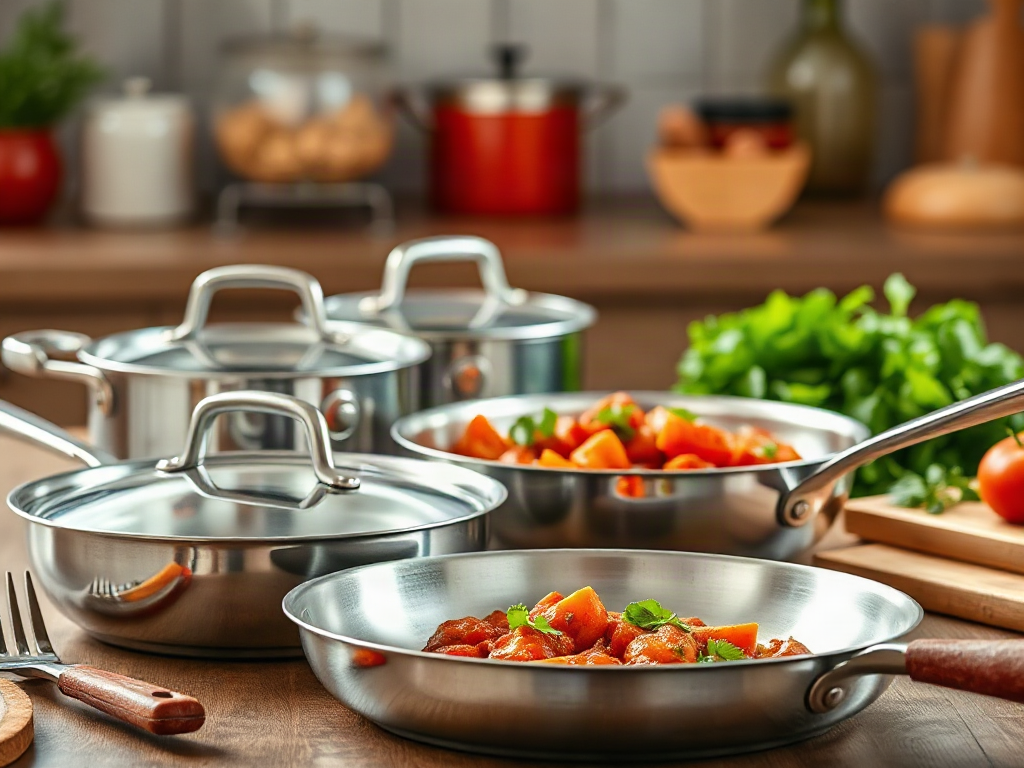
Choose cookware for gourmet cooking by matching each pan’s material, shape, heat response, and maintenance demands to the dishes you actually prepare. Use stainless steel for searing and pan sauces, enameled cast iron for steady braises, copper or responsive aluminum for precise temperature changes, and a coated skillet for delicate foods such as eggs or fish. Check that the base sits flat, the handle remains comfortable when full, and the pan suits your cooktop and oven. Avoid buying a large set based only on appearance; a smaller collection of well-matched pieces usually offers better control and fewer unused pans.
Match Cookware to Gourmet Techniques
Gourmet cooking places different demands on a pan than routine boiling or reheating. Searing a steak, reducing a wine sauce, tempering chocolate, and braising short ribs each require a different balance of heat retention, responsiveness, surface area, and moisture control. The most useful first step is to list the techniques you use most often rather than beginning with a brand name or matching set.
A sauté pan with a broad base and straight sides suits reductions, risotto, shallow braises, and dishes that need frequent stirring. A skillet with gently sloped sides makes it easier to turn food and evaporate moisture quickly. A heavy Dutch oven holds heat when cold meat or stock is added, which is helpful for braises, but its weight makes it less convenient for tossing vegetables. Those differences affect results more directly than a polished finish or an impressive piece count.
Some suggestions to consider!
Now retrieving an image set.
All-Clad HA1® Nonstick 5-Piece Pots & Pans Set, Induction Ready | Complete nonstick cookware set, Long-lasting non-stick, Scratch-Resistant Exterior, Dishwasher safe, Oven Safe up to 500°F
$159.99 (as of October 7, 2026 19:05 GMT +00:00 - More infoProduct prices and availability are accurate as of the date/time indicated and are subject to change. Any price and availability information displayed on [relevant Amazon Site(s), as applicable] at the time of purchase will apply to the purchase of this product.)
Now retrieving an image set.
CAROTE 21pcs Ceramic Cookware Sets, Pots and Pans Set | Healthy Cooking Set, Non-Toxic Induction, Ultra Durable, Easy Clean, Induction Compatible, PFAS FREE
$129.99 (as of October 7, 2026 19:05 GMT +00:00 - More infoProduct prices and availability are accurate as of the date/time indicated and are subject to change. Any price and availability information displayed on [relevant Amazon Site(s), as applicable] at the time of purchase will apply to the purchase of this product.)
Now retrieving an image set.
Cuisinart Stainless Steel Pots and Pans Set, Induction Compatible, 12 pc | 12-pc Cuisinart stainless steel cookware set with saucepans, sauté pan, stockpot, & skillets, oven safe to 500°F, MCPS-12N
$191.36 (as of October 7, 2026 19:05 GMT +00:00 - More infoProduct prices and availability are accurate as of the date/time indicated and are subject to change. Any price and availability information displayed on [relevant Amazon Site(s), as applicable] at the time of purchase will apply to the purchase of this product.)Consider what happens during the cooking process. Browning depends on maintaining contact with a hot surface while moisture escapes. A thin pan may cool sharply when several pieces of meat are added, encouraging steaming instead of crust formation. A very thick pan recovers more slowly when the burner is lowered, which can be inconvenient for delicate sauces. Neither design is universally superior; the right choice depends on whether stability or rapid adjustment matters more.
A practical test is to describe three meals you want to cook well. For example, a menu of scallops, a pan sauce, and a vegetable risotto points toward a responsive skillet, a stainless sauté pan, and a medium saucepan. Buying a ten-piece set before making that comparison often leaves you with duplicate small pots and no broad pan for reduction work. Readers comparing options can also use how to choose cookware for gourmet cooking as a checklist against their actual recipes.
Compare Materials by Heat Behavior
Cookware material determines how quickly a pan changes temperature, how evenly it spreads heat, and how much attention it needs. Stainless steel is durable and well suited to browning, deglazing, and pan sauces, but food can stick when the surface is too cool or when protein is moved before it has formed a crust. Preheating the pan, adding an appropriate amount of fat, and waiting for natural release matter more than treating stainless steel as inherently nonstick.
Cast iron and enameled cast iron retain heat exceptionally well. That steadiness helps with searing, frying, and long braises, especially when ingredients are added in batches. The tradeoff is slower response: a cast-iron pan does not cool immediately when a sauce begins to reduce too aggressively. Bare cast iron also demands seasoning and careful drying, while enamel avoids seasoning but can be damaged by harsh handling or abrupt thermal changes.
Copper and aluminum respond faster than cast iron, although construction varies widely. A responsive pan is useful for custards, caramel, fish, and sauces where a few seconds of excess heat can change texture. Copper commonly requires a lined cooking surface and more careful cleaning, while aluminum may be protected by stainless steel or a coating. A bonded multi-layer pan can combine responsiveness with durability, but the label alone does not reveal how evenly a particular piece performs.
Coated cookware has a distinct role rather than being a replacement for every other material. A quality coating is convenient for eggs, crepes, and fragile fillets, but high heat, metal utensils, and abrasive cleaning can shorten its useful life. A common mistake is choosing nonstick for searing because release is easy; high-temperature browning and coating longevity may be better served by stainless steel or cast iron. Build a collection around the cooking reactions you need, then assign coated cookware to delicate foods.
Choose Shapes and Sizes for Specific Dishes
Pan geometry controls evaporation, crowding, stirring, and the distance food sits from the heat source. A wide skillet exposes more liquid to air, so vegetables brown more readily and a sauce reduces faster. A tall saucepan limits surface evaporation and is better for grains, custards, and liquids that may bubble upward. Choosing by diameter alone misses the effect of wall height and usable interior space.
Size should follow batch volume and burner dimensions. A small skillet filled with several chicken thighs traps steam and prevents contact browning. An oversized pan on a small burner may develop a hot center and cooler edges, creating uneven cooking. For a household that regularly cooks for several people, a broad sauté pan can be more useful than a second small frying pan because it accommodates a single layer while still holding sauce or stock.
Shape also affects technique. Sloped sides help with tossing mushrooms or flipping an omelet, while straight sides provide extra capacity for a reduction or shallow braise. A rondeau-style pan can bridge those uses, but its width may be awkward on a narrow cooktop. A saucepan with a rounded interior corner is convenient for whisking pastry cream because a spatula can reach the edge; a narrow, deep pot is less convenient when scraping fond or stirring a thick mixture.
Before buying, measure the cooking zone, storage space, and sink clearance. Check whether a full pan can be lifted safely and whether its lid remains stable when steam builds. The weak assumption that bigger always means more versatile leads to heavy, awkward cookware that is rarely used. Choose the smallest vessel that allows ingredients to spread without crowding, then reserve larger pieces for stocks, family-size braises, or entertaining.
Check Construction, Compatibility, and Maintenance
Construction quality shows up in details that are easy to overlook in product photographs. A flat base supports stable contact with the burner, while a warped base can create hot spots and wobble. Riveted handles are generally secure, but rivets inside the cooking surface can collect residue and complicate scraping. Welded handles offer a smoother interior, though the overall attachment and balance still deserve inspection.
Cooktop compatibility narrows the choice. Induction requires a magnetic base, and not every stainless-steel pan qualifies. Glass and ceramic surfaces reward flat bottoms and careful lifting rather than dragging. Oven use depends on the entire piece, including the handle, lid knob, and any coating; a pan marketed as oven-friendly may still have a temperature limit that should be checked in the manufacturer’s instructions. Dishwasher guidance also varies, especially for seasoned cast iron, polished finishes, and nonstick interiors.
Maintenance changes the real value of cookware. Stainless steel tolerates vigorous use but may show discoloration. Bare cast iron needs drying and a light protective coating after washing. Enameled surfaces are easier to maintain but can chip if struck against a sink or another pan. Coated surfaces require gentler utensils and should not be treated as permanent. A pan that cooks beautifully but is too demanding for the household’s routine may spend more time stored than used.
Inspect the balance by holding the empty pan as though it were full. A long handle can keep hands away from heat but may make storage difficult. Helper handles improve control on large vessels. Look for a lid that fits without excessive rattling and a rim that pours cleanly. These checks prevent a common failure mode: selecting cookware by material reputation while ignoring handling, cleaning, and the physical limits of the kitchen.
Build a Practical Gourmet Cookware Collection
A focused collection usually begins with pieces that cover distinct techniques rather than every available size. A versatile starting group might include a medium stainless saucepan, a broad stainless or clad skillet, a heavy braising vessel, and a small coated pan for delicate foods. Add a stockpot only if you regularly make large quantities of soup, pasta, or stock. This approach reduces overlap and leaves room for specialized pieces that match your cooking style.
Prioritize the pan that solves your most frequent problem. If sauces scorch while meat browns well, a responsive saucepan or heavier-bottomed vessel may matter more than another skillet. If vegetables steam because the pan is crowded, increase surface area before upgrading to a more exotic material. If you cook mostly acidic tomato dishes, an enamel-lined or stainless option may be simpler to maintain than bare cast iron.
- First: match the vessel to your most common technique and batch size.
- Next: confirm cooktop, oven, storage, and cleaning compatibility.
- Then: compare weight, balance, lid fit, handle design, and warranty terms.
- Ultimately: buy specialized cookware only when a recurring dish exposes a clear limitation.
Test one piece through several meals before expanding. Notice whether food browns evenly, whether the handle stays manageable, whether the lid traps the amount of moisture you expect, and whether cleaning fits your routine. A premium pan cannot compensate for overcrowding, poor preheating, or an incorrect burner size. Conversely, a modest but well-matched pan can produce excellent results when its heat behavior and geometry suit the recipe.
Use how to choose cookware for gourmet cooking again when your menu changes, because a collection built around quick sautés may not suit bread baking or long braises. The goal is not to own every material. It is to create a dependable set in which each piece has a clear job, tolerates the way you cook, and gives you enough control to adjust timing and temperature.
For material-specific care, oven limits, induction compatibility, and cleaning instructions, consult the cookware manufacturer’s official documentation before using a new piece. Recipe technique references from established culinary schools and professional cooking organizations can also clarify why pan shape, preheating, and batch size affect browning and sauce reduction.
Frequently Asked Questions
What is the most versatile cookware material for gourmet cooking?
Clad stainless steel is a strong all-purpose choice because it supports browning, deglazing, sauces, and many stovetop methods. It is not the easiest surface for delicate foods, so a small coated pan can complement it.
Is cast iron better than stainless steel?
Neither is universally better. Cast iron holds heat for searing and braising, while stainless steel responds more readily and is usually simpler for pan sauces and acidic ingredients.
How many cookware pieces does a gourmet kitchen need?
A compact collection can cover most cooking with a saucepan, skillet, broad sauté pan, heavy braising vessel, and optional coated pan. Add pieces according to recurring recipes rather than set size.
What pan is best for making sauces?
A stainless saucepan or sauté pan with a light-colored interior makes it easier to monitor browning, fond, and reduction. Straight sides provide useful capacity, while a broad base speeds evaporation.
Should cookware be chosen for the stove or the recipes first?
Consider both, but identify recipes and techniques first, then confirm that the chosen pan works on your cooktop and in your oven. A perfect recipe match is impractical if the base is incompatible or the pan cannot be safely handled.
Conclusion
Choosing cookware for gourmet cooking becomes clearer when each piece is judged by the work it must perform. Match heat retention and responsiveness to the technique, select shape and capacity for the batch, and verify cooktop, oven, handling, and cleaning requirements before buying. Stainless steel, cast iron, responsive multi-layer construction, and coated surfaces each have useful roles, but none should be expected to do everything. Begin with the dishes you cook repeatedly, identify the point where your current pan fails, and replace that limitation with a purpose-built piece. A smaller collection with distinct functions will usually provide better control than a crowded set of overlapping vessels.