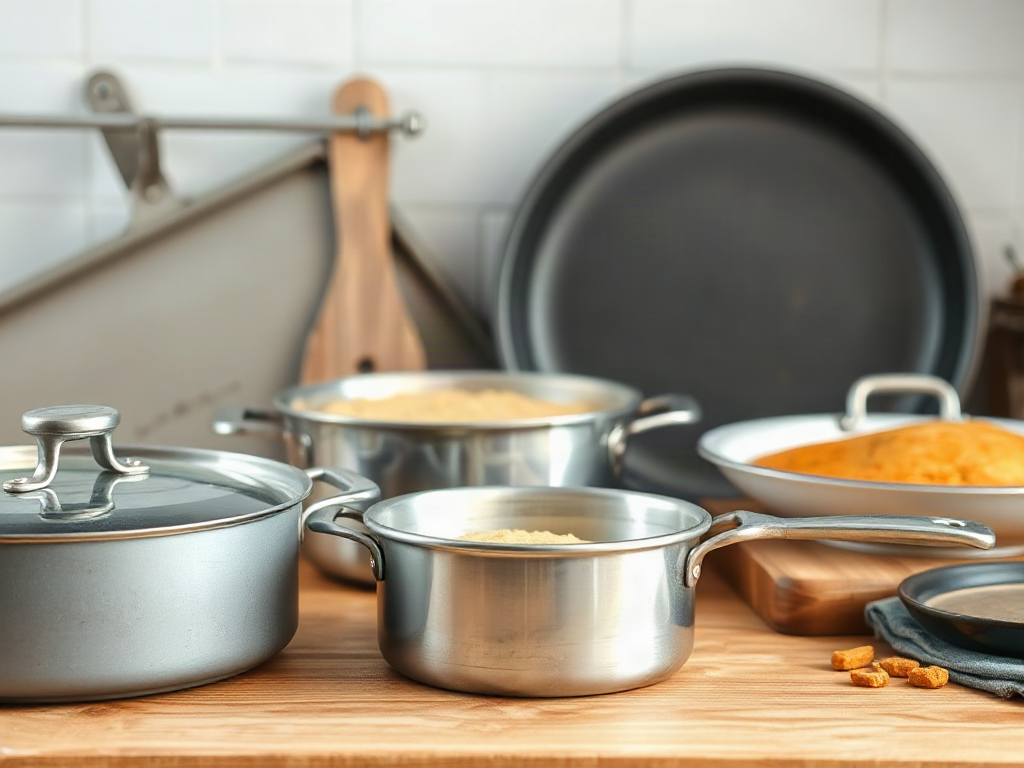
Determine the best cookware for baking by matching the pan’s material, color, shape, and heat tolerance to the food you make most often. Light-colored aluminum usually promotes even browning for cakes and cookies, while dark metal browns edges faster; glass and ceramic retain heat but may require temperature or timing adjustments. Check that the dimensions match the recipe, the base sits flat, and the manufacturer permits the intended oven temperature. Avoid judging a pan by weight alone: thick construction can reduce hot spots, but a poorly sized or dark pan may still overbake edges. Test unfamiliar cookware with a reliable recipe before relying on it for delicate cakes or custards.
Match the Pan to the Food and Recipe
The best baking cookware is determined by the type of food, the recipe’s specified pan, and the texture you want at the edges and center. A shallow metal sheet is suited to cookies and roasted vegetables, whereas a deep cake pan supports a thicker batter that needs time to set through the middle. Treating every oven-safe vessel as interchangeable is a common cause of uneven browning, collapsed centers, and incorrect baking times.
Begin by identifying how the recipe depends on the pan. Cakes often need straight sides and enough depth for rising. Brownies may benefit from a square metal pan that conducts heat efficiently, while cheesecakes and custards need gentle, predictable heating. Bread dough behaves differently again: a loaf pan guides vertical expansion, while a baking stone or steel transfers heat to the base and can produce a firmer crust.
Some suggestions to consider!
Now retrieving an image set.
Cuisinart Chef's Classic Stainless Steel Pots and Pans Set, 11 pc, 77-11G | Induction cookware compatible with all stovetops, tri-ply base, cool-grip handles, nontoxic cookware set, oven safe 550°F
$170.00 (as of October 14, 2026 19:08 GMT +00:00 - More infoProduct prices and availability are accurate as of the date/time indicated and are subject to change. Any price and availability information displayed on [relevant Amazon Site(s), as applicable] at the time of purchase will apply to the purchase of this product.)
Now retrieving an image set.
SODAY Pots and Pans Set Non Stick, 12Pcs Black Granite Induction Cookware | PFAS/PFOA/PFOS Free, Healthy Nonstick Kitchen Cookware Sets, Includes Fry Pans & Saucepans.
$59.99 (as of October 14, 2026 19:08 GMT +00:00 - More infoProduct prices and availability are accurate as of the date/time indicated and are subject to change. Any price and availability information displayed on [relevant Amazon Site(s), as applicable] at the time of purchase will apply to the purchase of this product.)
Now retrieving an image set.
HexClad 6pc Hybrid Nonstick Frying Pans Set with Lids, 8, 10 & 12" Pans | Stay-Cool Handles, Dishwasher and Oven Safe up to 900°F, Compatible with All Cooktops
$389.00 (as of October 14, 2026 19:08 GMT +00:00 - More infoProduct prices and availability are accurate as of the date/time indicated and are subject to change. Any price and availability information displayed on [relevant Amazon Site(s), as applicable] at the time of purchase will apply to the purchase of this product.)Pan dimensions matter as much as material. Changing from a 9-inch round pan to a larger pan spreads the batter into a thinner layer, so the center may finish sooner. Using a smaller vessel creates a deeper layer that can leave the middle underdone while the edges become firm. If a recipe gives a pan size, copy that dimension as closely as possible before adjusting temperature or timing.
Use how to determine the best cookware for baking as a task-based decision rather than a search for one universally superior material. A frequent mistake is buying a large assorted set when the actual need is two dependable cake pans and a rimmed sheet. The right choice is the pan that produces a predictable result for your regular recipes, fits your oven, and can be handled safely when full.
Compare Materials, Color, and Heat Behavior
Pan material controls how quickly heat reaches the batter and how long the cookware stays hot. Aluminum is a popular choice for cakes, cookies, and pastries because it conducts heat readily. A light or medium finish generally gives a more moderate surface temperature than a very dark finish, which can encourage faster browning at the sides and bottom.
Dark nonstick metal is convenient for release and cleanup, but it can produce darker crusts before the center is fully baked. That does not make it unsuitable; it means the recipe’s stated temperature may have been developed for a different finish. Watch the first batch closely and consider the recipe maker’s instructions rather than making an automatic temperature reduction. A shiny metal pan may brown more slowly, which can be useful for pale cakes but frustrating when a crisp base is the goal.
Glass and ceramic cookware usually heat more gradually and retain heat after removal from the oven. That retained heat can continue setting a casserole or custard, but it may also keep the edges cooking while the dish cools. These materials are useful when presentation, thermal retention, or gentle cooking matters more than rapid browning. They are less convenient when a recipe depends on quick heat transfer and a crisp pastry base.
Insulated pans reduce the rate at which heat reaches the food, which may protect delicate cookies from a dark underside but can leave some baked goods pale or soft. Stainless steel is durable and easy to maintain, yet it is generally less conductive than aluminum unless it has a layered construction. A coating improves release, not necessarily heat distribution. Inspect the base and sidewall construction instead of assuming that a nonstick label describes the whole performance.
For most households, a light-colored, reasonably thick aluminum pan is a flexible starting point. Choose glass, ceramic, dark metal, or insulated designs when a specific recipe or serving style justifies the tradeoff. If you are comparing options, how to determine the best cookware for baking comes down to matching heat response to the food, not ranking materials in isolation.
Check Shape, Size, and Construction
Shape determines how batter spreads, how heat reaches the edges, and how easily the finished food can be removed. Straight-sided pans support even layers and clean cake surfaces. Fluted or decorative pans create more exposed edges, so their detailed areas may brown or stick sooner if greasing is incomplete. A loose-bottom or springform design can simplify removal, but it may leak thin batters unless the recipe and pan are compatible.
Look for a flat base, firm corners, and sides that do not flex when lifted. A thin pan can warp in high heat, leaving part of the food closer to the oven’s hot air or rack. A very heavy pan may resist sudden temperature changes but can be awkward to move safely when filled. Weight is useful evidence of construction, not proof of quality.
Measure the interior rather than relying only on a product’s name. Nominal dimensions may refer to the outside rim, while the usable cavity is smaller. Check whether the pan fits with space around it for air circulation and whether its height clears the oven rack above. Crowding several pans together can alter browning even when each vessel is technically oven-safe.
Handles and rims deserve practical attention. Wide rims make a pan easier to grip with oven mitts, but they can occupy extra rack space. A rimless sheet may slide easily from a rack but offers little protection against spills. For cookies, a shallow rimmed sheet is often a safer all-purpose choice than a completely flat tray because it contains parchment and small amounts of grease.
Read the manufacturer’s temperature, broiler, dishwasher, and utensil guidance before purchase. Oven-safe does not mean suitable for direct flame, a broiler, abrupt temperature changes, or every style of cleaning. The common failure is choosing a pan for its appearance and discovering that its coating, seal, or handles cannot tolerate the intended routine. Construction should be judged against your actual oven, storage space, and handling habits.
Test Bakeware Before Trusting It
A controlled test reveals more than a label. Use a familiar recipe with a known result, such as a batch of cookies or a simple butter cake, and change only the pan. Record the rack position, oven setting, bake time, and visible results. Compare edge color, center texture, release, and whether the base is evenly browned.
Cookies are particularly useful for detecting hot spots. If one side darkens first, rotate the pan only when the recipe permits and inspect whether the oven or cookware is responsible. A cake that rises evenly but has a hard, dark perimeter suggests stronger edge heating or an unsuitable finish. A pale base with a dry top may indicate slow bottom transfer, an overly insulated pan, or an incorrect rack position.
Do not compensate too quickly. Moving a pan to a different rack, lowering the temperature, and shortening the bake time all at once makes the cause difficult to identify. Adjust one variable on the next attempt. An inexpensive oven thermometer can help distinguish cookware behavior from an oven that runs above or below its displayed setting, but it does not replace checking the pan’s dimensions and finish.
Release testing also matters. Grease, parchment, flour, and cooling time interact with the surface. Nonstick cookware may release delicate cakes easily when the coating is intact, but scratched surfaces can lose that advantage. Uncoated metal may need a deliberate lining method, while silicone can release cleanly yet provide less browning and may require a firm sheet underneath for support.
Signs of a good match include even color, a set center, predictable timing, and clean release without excessive grease. Signs of a poor match include burned corners, repeated sticking despite correct preparation, warping, or a large gap between the recipe’s timing and the food’s doneness. Keep notes on the pans that work. That record is more useful than relying on broad claims that one material is always best.
Build a Practical Baking Collection
A small, complementary collection usually outperforms a crowded set of duplicate pans. Prioritize cookware according to the foods you bake and the space available in your oven. Someone who makes cookies weekly needs dependable rimmed sheets, while a cake baker may gain more from matching round pans and a square pan for bars. A person who mainly prepares casseroles may prefer a durable glass or ceramic dish with secure handles.
A sensible starting collection can include a light-colored rimmed sheet, a square or rectangular metal pan, two matching round cake pans, and one deeper dish for pies or casseroles. Add specialty shapes only after a recurring recipe proves the need. Matching pairs are valuable for layered cakes because they reduce differences in depth and baking rate.
Budget decisions should focus on repeat performance and replacement risk. A low-cost pan that warps, rusts, or loses its coating may cost more in failed batches than a moderately priced pan that stays flat. That does not mean premium cookware is automatically better. Compare the warranty, care requirements, thickness, usable dimensions, and whether replacement pieces are available.
Storage affects condition. Nesting coated pans without protection can scratch the surface, while stacking heavy dishes can damage rims. Dry uncoated metal thoroughly, avoid storing damp parchment inside a pan, and follow care instructions for finishes. Clean residue that darkens the base because accumulated grease can change browning from one batch to the next.
When your needs change, reassess the collection rather than forcing one vessel to do every job. A baker making more sourdough may need a covered, high-temperature vessel; a cookie baker may benefit from lighter sheets instead. The most useful method for determining the best cookware for baking is to rank frequent recipes, oven limitations, heat behavior, maintenance, and replacement cost in that order.
Frequently Asked Questions
Is aluminum the best material for baking?
Light-colored aluminum is a versatile choice because it transfers heat readily and often produces balanced browning. It is not ideal for every task; glass, ceramic, dark metal, or insulated pans may suit recipes needing different heat retention or surface color.
Are dark baking pans harder to use?
Dark pans can brown edges and bottoms faster. They can work well when monitored closely, but recipes developed for lighter pans may need careful timing adjustments rather than automatic temperature changes.
Does a heavier pan bake better?
Thickness can reduce warping and help distribute heat, but weight alone does not determine results. A heavy pan with the wrong size, dark finish, or poor fit may still produce uneven baking.
Can glass replace a metal cake pan?
Glass can be used for some recipes, but it heats and retains heat differently from metal. Check the recipe guidance, allow for possible timing changes, and avoid sudden temperature changes unless the cookware instructions permit them.
What should I test when buying new bakeware?
Confirm interior dimensions, flatness, oven-temperature limits, rack fit, surface condition, cleaning requirements, and handling safety. Then test the pan with a familiar recipe and compare browning, doneness, and release.
Conclusion
Choose baking cookware by starting with the foods you make most often, then match pan dimensions, material, finish, and construction to those recipes. A light-colored aluminum pan is a flexible baseline, but glass, ceramic, dark metal, insulated designs, and specialty shapes each have legitimate uses when their heat behavior fits the task. Confirm the usable interior size, oven limits, rack clearance, and care requirements before buying. Test unfamiliar cookware with a dependable recipe and change one variable at a time when results differ. Prioritizing repeatability over appearance or sheer weight will leave you with fewer pans, more consistent browning, and a clearer sense of which additions genuinely improve your baking routine.