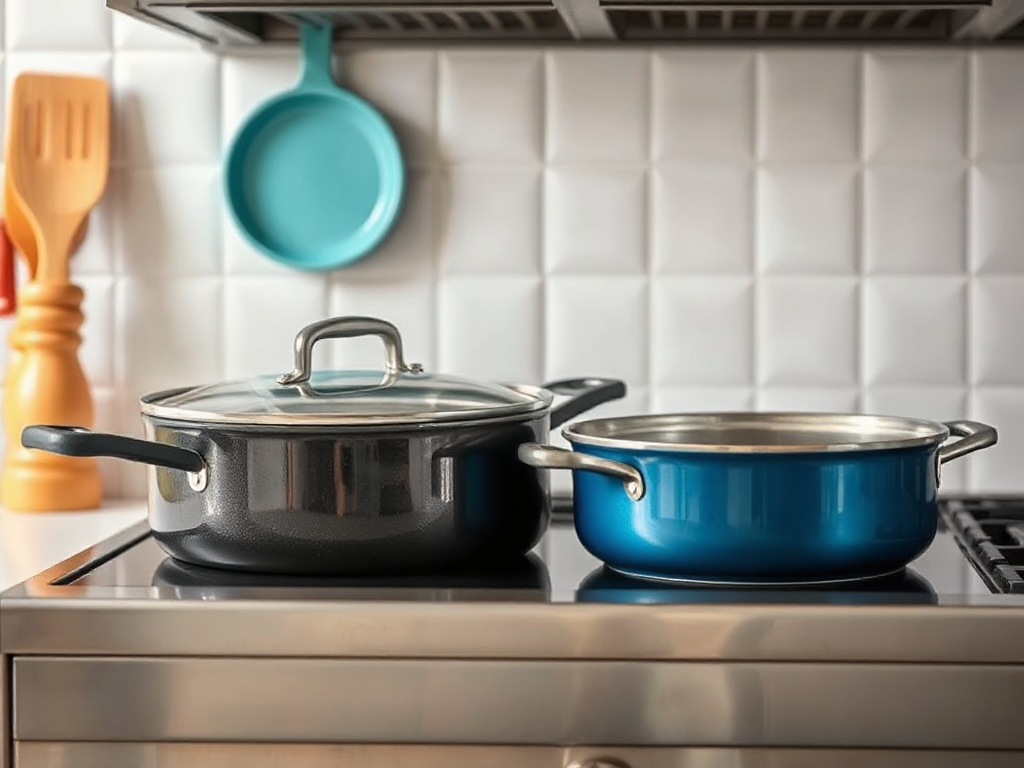
To tell if cookware is oven-safe, check the manufacturer’s temperature rating, inspect the pan and handle materials, and confirm that every attached part—including lids, knobs, and silicone grips—can tolerate oven heat. A stamped oven symbol or product manual is more reliable than appearance alone, because stainless steel, cast iron, and bare aluminum often behave differently from nonstick coatings, glass, or pans with plastic components. Do not assume a stovetop pan is suitable for baking, and never rely on a vague “heat-resistant” claim without a maximum temperature. When documentation is missing, treat the cookware as unsafe for oven use, especially under a broiler or during rapid temperature changes.
Read the Oven-Safe Markings and Manufacturer Instructions
The most dependable way to assess a pan is to find its oven-use symbol, maximum temperature, and care instructions from the manufacturer. Look on the underside, packaging, handle, lid, or product page for wording such as “oven-safe to 400°F” or “not for use under the broiler.” A symbol alone may confirm oven use, but the temperature limit determines whether the pan is suitable for a low casserole, a high-temperature roast, or direct broiling.
Use the exact product information whenever possible. Two pans with nearly identical stainless-steel bodies may have different ratings because one has a bonded handle, a nonstick interior, or a lid made from another material. Search the brand’s model name or item number rather than relying on a general statement about the product line. If the manual says the pan is oven-safe only without a temperature, contact the manufacturer before using it at high heat.
Some suggestions to consider!
Now retrieving an image set.
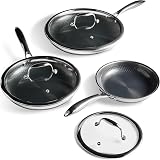
HexClad 6pc Hybrid Nonstick Frying Pans Set with Lids, 8, 10 & 12" Pans | Stay-Cool Handles, Dishwasher and Oven Safe up to 900°F, Compatible with All Cooktops
$389.00 (as of October 14, 2026 19:08 GMT +00:00 - More infoProduct prices and availability are accurate as of the date/time indicated and are subject to change. Any price and availability information displayed on [relevant Amazon Site(s), as applicable] at the time of purchase will apply to the purchase of this product.)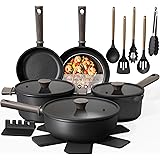
Now retrieving an image set.
Astercook 19 Pcs Pots and Pans Set Non Stick, Black Titanium Induction Kitchen Cookware Sets, Non toxic Healthy Kitchen Cooking Set with Frying Pans Set, PTFE PFOA PFOS Free, Fathers Day Gift for Men
$79.99 (as of October 14, 2026 19:08 GMT +00:00 - More infoProduct prices and availability are accurate as of the date/time indicated and are subject to change. Any price and availability information displayed on [relevant Amazon Site(s), as applicable] at the time of purchase will apply to the purchase of this product.)
Now retrieving an image set.
Calphalon Classic Stainless Steel Cookware Set, 10-Piece, Impact-Bonded Aluminum Base, Stay-Cool Handles, Oven Safe 450F, Silver
$132.99 (as of October 14, 2026 19:08 GMT +00:00 - More infoProduct prices and availability are accurate as of the date/time indicated and are subject to change. Any price and availability information displayed on [relevant Amazon Site(s), as applicable] at the time of purchase will apply to the purchase of this product.)Do not treat “stovetop-safe” and “oven-safe” as interchangeable terms. A skillet may handle a burner flame while its handle softens or discolors in an oven. Likewise, a lid may be safe at a moderate baking temperature but unsuitable under a broiler. Missing documentation is a practical warning, not an invitation to test the pan at maximum heat. For an older or unmarked item, the safest decision is to use it only in the ways clearly supported by available instructions.
Match the Materials and Temperature Limits
Material gives useful clues, but it does not prove oven compatibility. Bare cast iron and many fully metal stainless-steel pans are commonly designed for oven use because their primary components tolerate high temperatures. Aluminum may also be oven-capable, although coatings, riveted handles, and attached parts can lower the stated limit. The rating belongs to the complete piece, not just the metal cooking surface.
Nonstick cookware requires closer attention. Its coating may have a lower maximum temperature than the metal beneath it, and overheating can damage release performance or create smoke and unpleasant odors. Follow the manufacturer’s limit rather than assuming that a short exposure is harmless. A pan rated for moderate baking may not be appropriate for a pizza-style high-heat recipe or broiler finishing.
Glass and ceramic pieces introduce a different concern: thermal shock. A dish may be labeled oven-safe yet still crack if moved directly from a refrigerator into a hot oven, placed on a cold wet surface, or exposed to a sudden temperature change. Oven-safe cookware is not necessarily flame-safe, broiler-safe, freezer-to-oven-safe, or suitable for preheating while empty. Those uses require separate instructions.
Consider the recipe as well as the material. A covered braise at 325°F places different demands on cookware than a dry roasting step at 475°F. A cast-iron Dutch oven may suit the first scenario, while a coated skillet with a soft-touch grip may not suit the second. If the recipe calls for broiling, verify broiler approval specifically; the broiler’s direct radiant heat can be more demanding than the oven’s ordinary baking setting.
Inspect Handles, Lids, Coatings, and Attachments
Small components are often the limiting factor in oven safety. A metal pan body can tolerate oven heat while a plastic handle, wood grip, silicone sleeve, or decorative insert cannot. Examine the entire item before use, including rivets, helper handles, detachable grips, lid knobs, and sealing parts. The weakest heat-sensitive component usually determines how the cookware should be used.
Removable handles deserve special attention. Some are designed to come off before the pan enters the oven; others lock in place and carry their own temperature rating. Removing a handle does not automatically make the pan safe if its locking mechanism, exposed plastic, or coating has a separate restriction. Follow the product instructions for attachment and removal, and keep the handle away from heat sources if the instructions require it.
Lids can have a different rating from the base. Tempered glass may be approved for baking but not for broiling, while a metal lid may tolerate higher heat but include a knob made from heat-sensitive resin. Steam vents and silicone gaskets can also affect the permitted temperature. If a recipe needs a covered transfer from stovetop to oven, verify the lid and vessel as a pair rather than checking only the pot.
Visible damage changes the decision. Cracked glass, chipped ceramic, loose knobs, melted plastic, peeling coating, or a warped base are reasons to stop using the item in the oven even if it was originally rated for that purpose. A coating that is merely stained is not automatically proof of danger, but bubbling, flaking, or exposed substrate indicates deterioration and should not be ignored. The common mistake is judging readiness by the pan’s main material while overlooking the part closest to the oven’s heat.
Use a Practical Safety Check Before Baking
A short pre-use check can prevent the most avoidable mistakes. First, identify the exact pan and locate its temperature rating. Next, list every component that will enter the oven: base, lid, handle, grip, rack, and any insert. Compare the lowest component rating with the recipe temperature, allowing for the fact that broiling and self-cleaning cycles are not ordinary baking conditions.
- Confirm the source: use the manual, manufacturer page, or a clear marking instead of a guess based on appearance.
- Check the full assembly: include lids, knobs, detachable handles, silicone parts, and decorative materials.
- Inspect condition: reject cookware with cracks, loose attachments, severe warping, or damaged coatings.
- Control temperature changes: protect glass and ceramic from abrupt transfers between cold and hot environments.
- Plan removal: use dry oven mitts and remember that handles remain hot long after the dish leaves the oven.
Suppose a recipe begins by browning onions on the stovetop and then moves the skillet into a 375°F oven. A fully metal skillet with a documented rating above that temperature is a straightforward choice. A similar-looking nonstick skillet with a 350°F limit is not; transferring it anyway risks coating damage and falls outside the stated use. If the handle is wrapped in silicone, check whether that specific handle is included in the rating.
Temperature ratings also have boundaries. “Oven-safe to 400°F” does not mean the cookware can be used safely at 450°F for a few minutes, and it does not authorize a broiler. Empty preheating can create a hotter surface than a pan filled with food, particularly with thin metal or coated cookware. Avoid experimental testing because failure may involve cracking, smoke, a detached handle, or burns rather than a harmless visual change.
For more detailed cookware decisions, compare these checks with the advice in how to tell if cookware is oven-safe before selecting a pan for a new recipe. The same inspection also helps when deciding whether a piece belongs in storage, needs a replacement lid, or should remain limited to stovetop use.
Common Assumptions That Lead to Unsafe Oven Use
Several convenient assumptions regularly produce the wrong answer. “It is metal” ignores coatings and handles. “It came with a recipe for braising” does not establish a rating for every oven temperature. “The lid survived last time” is not a substitute for documented limits, particularly if the knob or seal has changed. Even a pan that performed well at 325°F may be unsuitable for a hotter setting or direct broiler exposure.
Another mistake is confusing heat resistance with thermal-shock resistance. A ceramic dish can tolerate a hot oven but still break when placed on a cold stone counter. A glass lid can be oven-rated yet vulnerable to a sharp temperature shift or impact from a utensil. Set hot cookware on a dry, heat-safe surface and allow it to cool according to the manufacturer’s directions.
Cleaning and age matter too. Repeated high-heat cycles can discolor metal, weaken attachments, and reduce the life of some coatings. Abrasive cleaning may remove markings that would otherwise identify the product. Keep manuals or record the model number when buying cookware so the rating remains available after packaging is discarded.
When information conflicts, use the more restrictive instruction. A recipe’s temperature, a retailer’s generic description, and a manufacturer’s care sheet are not equally authoritative. The product-specific documentation should control, and uncertainty should lead to a lower-risk alternative such as a confirmed ovenproof baking dish. Readers comparing pans can use how to tell if cookware is oven-safe as a final checklist, but no checklist overrides a warning printed by the maker.
For a specific pan, the manufacturer’s care manual and product page are the most useful sources because they identify the complete assembly, temperature ceiling, broiler restrictions, and thermal-shock warnings. If those instructions are unavailable, contact the manufacturer with the model number rather than relying on an unverified online claim.
Frequently Asked Questions
Can stainless-steel cookware go in the oven?
Often, but not automatically. Check the pan’s rating and inspect handles, coatings, lids, and attached parts before use.
Is a nonstick pan oven-safe?
Some are, within a stated temperature limit. The coating and handle may restrict use, and broiling is often a separate question.
Can I put a glass lid in the oven?
Only if its instructions approve oven use at the intended temperature. Avoid sudden temperature changes, impacts, and direct broiler heat unless specifically permitted.
Does an oven-safe pan work under the broiler?
Not necessarily. Broiling exposes cookware to intense direct radiant heat, so confirm broiler approval separately.
What should I do if cookware has no label?
Find the model instructions or ask the manufacturer. Until the rating is confirmed, avoid putting the item in the oven.
Conclusion
Reliable oven-safety decisions come from verifying the complete cookware assembly, not guessing from a metal body or a familiar brand. Check the product-specific temperature rating, distinguish baking from broiling, and inspect handles, lids, knobs, coatings, and seals for both material limits and damage. Glass and ceramic pieces also need protection from abrupt temperature changes, even when their labels approve oven use. Match the lowest-rated component to the recipe and choose a different vessel whenever documentation is missing or contradictory. Before the next stovetop-to-oven meal, identify the model, confirm the temperature, examine every part entering the oven, and plan for hot handles after removal. That process takes less time than dealing with a cracked dish, damaged coating, or preventable burn.