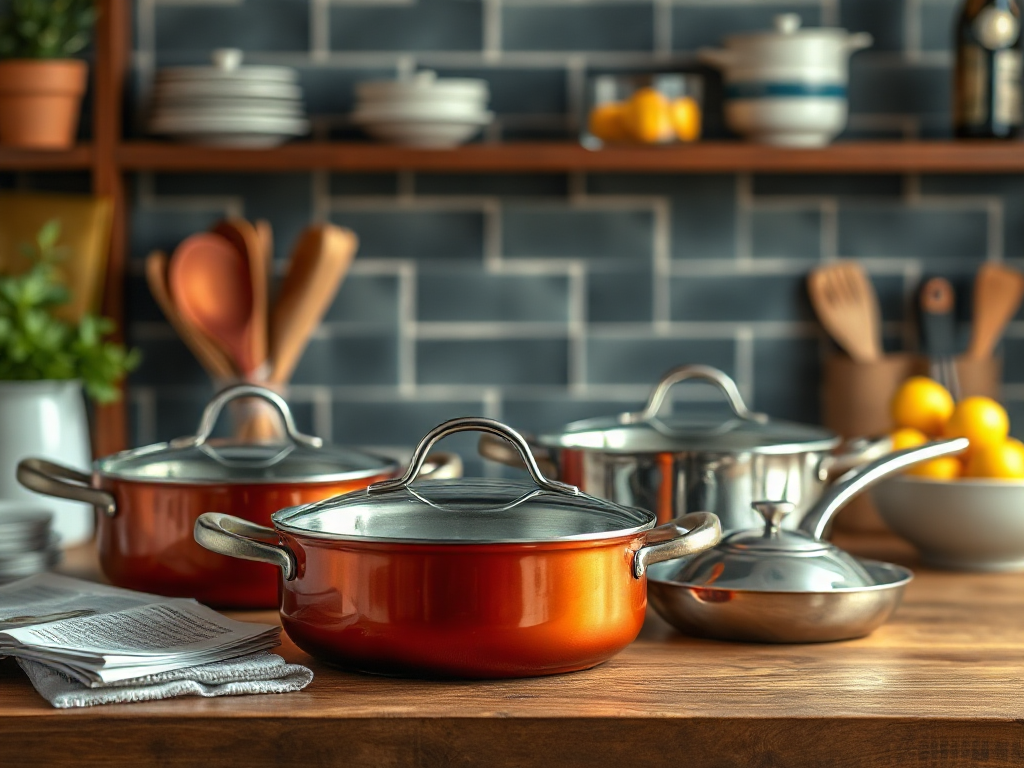
The importance of buying cookware from reputable brands lies in getting clearer material information, more dependable construction, stronger safety documentation, and support when a product fails. Established manufacturers are more likely to identify the cooking surface, disclose care limits, test handles and lids, and provide warranty terms that can be checked before purchase. That does not mean every expensive pan is better, or that an unfamiliar maker is automatically unsafe; specifications and seller credibility still matter. Compare the exact material, oven and stovetop limits, coating guidance, replacement policy, and return terms rather than relying on branding alone. A reputable source reduces uncertainty and may lower the long-term cost of replacing warped, damaged, or poorly supported cookware.
What Reputable Cookware Brands Actually Provide
A reputable cookware brand provides more than a recognizable logo. It gives shoppers access to identifiable product specifications, consistent manufacturing information, usable care instructions, and a business that can be contacted after the sale. Those details matter because a pan or pot is exposed to high temperatures, repeated washing, metal utensils, sudden temperature changes, and sometimes heavy food loads. A product description that merely says “premium quality” does not tell you how the cooking surface is made, whether the handle is attached securely, or which appliances are compatible.
Traceability is one of the clearest differences between an established manufacturer and an anonymous listing. A reliable product page should identify the item’s construction, dimensions, capacity, included lid, compatible cooktops, oven limit, and cleaning restrictions. These facts let a buyer compare a stainless-steel skillet with a coated aluminum pan on useful terms. They also make it easier to spot contradictions, such as a listing that claims both dishwasher safety and hand-wash-only care without explaining the difference.
Some suggestions to consider!
Now retrieving an image set.
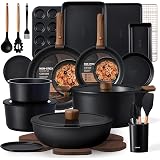
CAROTE 31pcs Pots and Pans Set Non Stick, Detachable Handle Cookware Set | Bakeware Set, Induction Compatible, Dishwasher & Oven Safe, Kitchen Organization, Cooking Set for Camping/RV/Traveling/Gifts
$139.99 (as of October 24, 2026 19:20 GMT +00:00 - More infoProduct prices and availability are accurate as of the date/time indicated and are subject to change. Any price and availability information displayed on [relevant Amazon Site(s), as applicable] at the time of purchase will apply to the purchase of this product.)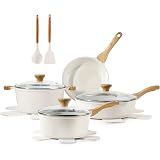


SENSARTE Nonstick Ceramic Cookware Set, 13-pcs Non-toxic Pots and Pans Set | Healthy Kitchen Cooking Set with Stay-Cool Handles, Silicone Tools and Pot Protectors, PFAS Free
$65.94 (as of October 24, 2026 19:20 GMT +00:00 - More infoProduct prices and availability are accurate as of the date/time indicated and are subject to change. Any price and availability information displayed on [relevant Amazon Site(s), as applicable] at the time of purchase will apply to the purchase of this product.)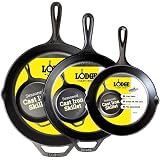
Now retrieving an image set.
Lodge Pre-Seasoned Cast Iron Skillet 3-Piece Set: 8, 10.25 & 12 inch | Non-Toxic & Naturally Non-Stick Cast Iron Pan, Compatible with Oven, Stove, Grill & Campfire, Made in USA
$64.90 (as of October 24, 2026 19:20 GMT +00:00 - More infoProduct prices and availability are accurate as of the date/time indicated and are subject to change. Any price and availability information displayed on [relevant Amazon Site(s), as applicable] at the time of purchase will apply to the purchase of this product.)Brand reputation is not a substitute for inspection. A famous company can still sell a product that is poorly suited to your kitchen, while a smaller maker may publish excellent specifications and offer responsive support. The stronger signal is the quality of the information surrounding the exact model. Look for a manufacturer website, a stable warranty page, clear ownership or importer details, and instructions that explain limitations rather than hiding them.
For shoppers comparing options, the importance of buying cookware from reputable brands becomes most apparent when two products have similar photographs but very different documentation. Choose the item whose claims can be verified, not simply the one with the largest review count or the most dramatic marketing language.
Safety Information, Construction, And Everyday Reliability
Reputable manufacturers are generally better positioned to communicate how cookware should be used safely. That includes temperature limits, appropriate burners, lid handling, utensil guidance, and cleaning methods. Clear instructions do not make a product risk-free, but they reduce guesswork. A coated skillet, for instance, may require different heat and utensil practices from an uncoated stainless-steel pan. Ignoring those distinctions can shorten the useful life of the surface or create avoidable damage.
Construction affects both safety and cooking control. A securely fixed handle should remain stable during ordinary use, while a well-fitted lid should sit predictably and have a handle that can be grasped without contacting hot metal. A flat base is especially relevant on smooth electric and induction cooktops, where poor contact can cause uneven heating or movement. Rivets, welds, seams, and the transition between the body and handle deserve attention because these are common points of wear.
Consider a household that frequently prepares tomato sauce in a saucepan, sears food in a skillet, and transfers dishes to the oven. The best purchase is not necessarily a matching set. It may be a stainless-steel saucepan with a clearly stated oven limit and a separate coated skillet chosen for delicate foods. A reputable seller should make those distinctions visible. An unverified listing may use the same stock image for several sizes while leaving the actual materials and temperature limits unclear.
Consumers should also avoid assuming that “nonstick,” “ceramic,” “stainless,” or “stone” describes a complete safety profile. Those labels can refer to different constructions and do not explain every layer, treatment, or care requirement. Read the full specification and follow the supplied instructions. If a seller will not identify the cooking surface or answer a basic compatibility question, that uncertainty is a practical reason to keep looking.
Why Price And Brand Reputation Need Context
A reputable brand can reduce uncertainty, but a higher price does not automatically prove better value. You are paying for a combination of construction, quality control, design, distribution, customer service, and sometimes warranty coverage. The useful question is whether those elements match the way you cook. A heavy pan may hold heat steadily for browning but feel cumbersome for someone with limited lifting strength. A lightweight pan may heat quickly but require closer attention to avoid hot spots.
Long-term value also depends on selecting the right material for the job. A durable stainless-steel skillet may tolerate high-heat searing and vigorous deglazing, yet food can stick if temperature and fat are poorly managed. A coated pan may release eggs more easily with less oil, but its surface can be damaged by overheating, abrasive cleaning, or unsuitable utensils. Cast iron can offer a long service life when maintained properly, while its weight and reactivity with some acidic foods may make it less convenient for certain recipes.
The common mistake is comparing only the purchase price. A bargain pan that warps, loses its coating, or has no meaningful return path may cost more after replacement. The opposite mistake is paying for features you will not use, such as a very high oven rating or an elaborate set of duplicate sizes. A practical comparison should include the price of the exact piece, expected care, replacement availability, shipping, return conditions, and whether the pan’s capacity suits your household.
Use reputable brands as a filter for credible information, not as permission to stop researching. Check independent customer feedback for recurring reports of loose handles, uneven bases, or coating failure, but interpret reviews carefully. A single complaint may reflect misuse; a repeated pattern across sizes and dates deserves attention. Pair reputation with model-specific evidence, because brand history does not guarantee identical performance across every product line.
A Practical Checklist Before You Buy
A short review process can expose most avoidable purchasing problems before money changes hands. Start with your cooking surface and recipes, then verify the product against those needs. Induction users need explicit compatibility rather than a general claim that a pan is “stovetop ready.” Oven users should check the limit for the complete item, including the lid and handle, because components may have different restrictions.
Use this compact checklist when comparing a reputable manufacturer with an unfamiliar alternative:
- Construction: Confirm the body material, number of layers when relevant, base design, handle attachment, and included components.
- Use limits: Check induction compatibility, oven temperature, broiler guidance, preheating instructions, and utensil restrictions.
- Care: Read whether hand washing, seasoning, nonabrasive tools, or gradual cooling is required.
- Seller credibility: Verify that the seller is authorized or clearly identified and that the product is not missing model information.
- Support: Locate the warranty, return window, replacement parts, and contact method before ordering.
Apply the checklist to a real scenario. If you need one skillet for induction cooking, oven finishing, and frequent family meals, a stable base, usable capacity, secure handle, and published oven limit should rank above a decorative finish. If you mainly cook pancakes and eggs, release performance and careful surface maintenance may matter more than maximum searing temperature. The right choice changes with the task.
Weak assumptions often appear in set purchases. A ten-piece bundle may count lids and duplicate sizes in its total, leaving you without the one large sauté pan you actually need. A low price may also reflect thinner construction rather than a temporary discount. Before buying a set, list the pieces you use each week and price comparable individual items. That approach can reveal whether the package offers useful coverage or merely a larger headline number.
For more focused comparisons, use the importance of buying cookware from reputable brands as a decision criterion alongside material, size, and maintenance. Reputation should strengthen your evidence, not replace it.
Warranty Support And Long-Term Ownership
After-sale support is a major reason to buy from an accountable brand. Cookware can develop problems that are difficult to judge from photographs: a lid may stop fitting correctly, a handle may loosen, or a base may become unstable. A clear warranty tells you what the manufacturer considers a defect, how long coverage lasts, and what documentation may be required. It also gives you a realistic route to resolution when the issue is not caused by ordinary wear or misuse.
Warranty language deserves careful reading. Many policies exclude damage from overheating, abrasive cleaners, commercial use, normal surface wear, or alterations. Those exclusions may be reasonable, but they should be visible before purchase. A reputable company should explain whether it repairs, replaces, refunds, or evaluates a claim. Keep the receipt, model number, and care instructions, since those details may be needed if you contact support.
Replacement parts can matter as much as warranty coverage. A removable handle, tempered-glass lid, or silicone component may eventually need replacement even when the vessel remains usable. A brand with a durable product line and accessible parts can prevent the unnecessary disposal of an otherwise sound pan. By contrast, an anonymous product may become impractical after one small component fails.
Maintenance still determines much of the ownership experience. Follow the supplied heat and cleaning guidance, avoid sudden cooling of very hot cookware unless the instructions allow it, and inspect handles and bases periodically. Signs that a product is failing include a rocking base, a loose attachment, cracking or peeling surface material, or a lid that no longer seats securely. Stop using damaged cookware when continued use could create a burn, cut, or food-contact concern, and consult the manufacturer about the appropriate next step.
Frequently Asked Questions
Does a reputable brand guarantee that cookware is safe?
No brand eliminates every risk. A credible manufacturer is more likely to provide identifiable materials, use instructions, temperature limits, and customer support, but safe use still depends on following those limits and inspecting the item.
Is expensive cookware always better?
No. Price should be weighed against construction, intended use, care requirements, warranty terms, and replacement availability. A moderately priced pan that fits your cooking routine may offer better value than an expensive item with unused features.
What should I verify before buying a cookware set?
Check each piece’s material, capacity, cooktop compatibility, oven limit, cleaning instructions, handle design, warranty, and return terms. Confirm that the sizes match recipes you actually prepare.
Why do warranty terms matter for cookware?
They clarify how a manufacturer handles defects such as a warped base or failed handle attachment. Read exclusions carefully because normal wear, overheating, and improper care may not qualify for coverage.
Can I trust cookware from a small or unfamiliar company?
Possibly, if the company identifies the product clearly, publishes complete specifications and care guidance, offers a reachable support channel, and provides reasonable return and warranty terms. Lack of verifiable information is the stronger warning sign.
Conclusion
Buying from a reputable cookware brand is valuable because it makes the product easier to evaluate, use, maintain, and replace when something goes wrong. Prioritize verifiable construction details, compatible appliances, realistic temperature limits, care instructions, and a warranty you can understand. Treat price and brand recognition as supporting evidence, not proof that a particular pan suits your kitchen. Before ordering, compare the exact model with the recipes, burner, oven use, cleaning routine, and storage space you have. A carefully selected skillet or saucepan is often a better investment than a large set chosen for its piece count. Clear information and accountable support cannot remove every tradeoff, but they substantially reduce the uncertainty that makes cookware purchases costly and frustrating.