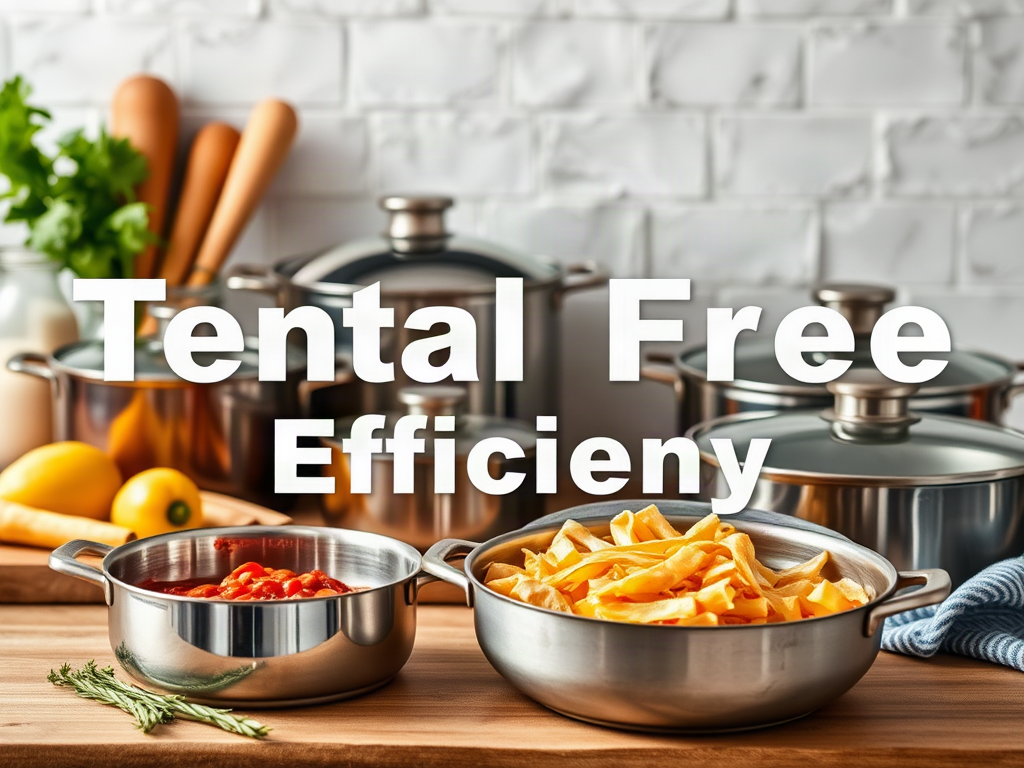
Select cookware for meal prep efficiency by matching vessel capacity, cooking surface, heat response, and cleanup demands to the meals you prepare most often. Prioritize a wide sauté pan for browning and one-pan dishes, a lidded stockpot for grains or batch recipes, and a sheet pan for hands-off roasting. Choose pieces that fit your burners, refrigerator portions, and sink rather than buying an oversized set. Compatible lids, oven-safe handles, and stackable shapes can reduce transfers and storage friction.
Map Cookware to Your Meal-Prep Workflow
Efficient cookware follows the sequence of your actual prep session: sear or sauté, simmer, roast, cool, portion, and clean. A piece earns its space when it removes a transfer, accommodates a normal batch, or runs alongside another task without creating a bottleneck. Begin by reviewing three or four meals you make repeatedly and note the cooking methods, ingredient volumes, and number of burners each one requires.
Some suggestions to consider!
Now retrieving an image set.
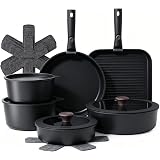
SENSARTE 17 Piece Nonstick Detachable Handle Pots and Pans Set Black | Removable Handle Cookware Set, Induction Cookware Set with Removable Handle, Healthy Non Stick for RV, Dishwasher & Oven Safe
$79.99 (as of October 23, 2026 19:19 GMT +00:00 - More infoProduct prices and availability are accurate as of the date/time indicated and are subject to change. Any price and availability information displayed on [relevant Amazon Site(s), as applicable] at the time of purchase will apply to the purchase of this product.)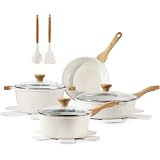


SENSARTE Nonstick Ceramic Cookware Set, 13-pcs Non-toxic Pots and Pans Set | Healthy Kitchen Cooking Set with Stay-Cool Handles, Silicone Tools and Pot Protectors, PFAS Free
$65.94 (as of October 23, 2026 19:19 GMT +00:00 - More infoProduct prices and availability are accurate as of the date/time indicated and are subject to change. Any price and availability information displayed on [relevant Amazon Site(s), as applicable] at the time of purchase will apply to the purchase of this product.)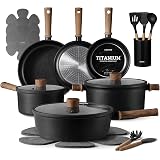
Now retrieving an image set.
CAROTE Pots and Pans Set Nonstick Cookware Sets 21 Pieces Black | Titanium Reinforced Coating, Scratch-Resistant, Easy to Clean, Even Heating, Induction Compatible, with Frying Pans Set
$89.99 (as of October 23, 2026 19:19 GMT +00:00 - More infoProduct prices and availability are accurate as of the date/time indicated and are subject to change. Any price and availability information displayed on [relevant Amazon Site(s), as applicable] at the time of purchase will apply to the purchase of this product.)Suppose a weekly session includes roasted vegetables, a pot of rice, and chicken cooked in a pan. The useful combination is not necessarily a large boxed set. A rimmed sheet pan handles the vegetables while a saucepan cooks the rice and a wide skillet or sauté pan browns the chicken. These pieces can operate simultaneously and do not compete for the same burner. By contrast, three similar saucepans add nominal piece count without expanding what the kitchen can accomplish at once.
Capacity should reflect the cooked volume rather than the number of servings printed in a recipe. Grains expand, soups need headroom for stirring, and crowded vegetables steam instead of browning. A vessel filled close to its rim is harder to stir and more likely to boil over. Yet excessively large cookware has costs: it heats more slowly, may extend beyond the burner, occupies more dishwasher or sink space, and can be awkward to lift when full.
Track the point where your current process slows down. If ingredients brown in several rounds, usable cooking surface is probably the constraint. If a stockpot blocks the sink during cleanup, size and handling may matter more than raw capacity. If two recipes need the same pan in succession, a complementary vessel may be more useful than a premium replacement. A practical audit should cover:
- Batch volume: the largest routine quantity, with room to stir or toss.
- Parallel tasks: the pieces that must fit on the stovetop or in the oven together.
- Transfer points: steps caused by a pan being too small, too shallow, or not oven-safe.
- Cooling and washing: where hot, bulky cookware will sit after cooking.
A common mistake is planning around an occasional holiday-scale meal. Select for the weekly workload first, then borrow, improvise, or add a specialized piece for rare events. Signs of a good match include fewer cooking rounds, enough room to stir safely, and no idle recipe waiting for a vessel to become available.
Which Cookware Sizes and Shapes Save the Most Time?
Shape determines usable capacity more accurately than a diameter or quart label alone. Wide cooking surfaces accelerate evaporation and expose more food to direct heat, while tall, narrow vessels conserve stovetop area and reduce splashing. Meal prep usually benefits from a deliberate mix of those geometries rather than several pieces with nearly identical proportions.
A straight-sided sauté pan is particularly versatile when meals move from browning to simmering. Its broad base can sear portions of meat or spread chopped vegetables into a relatively even layer, while its sides contain sauce and make stirring less risky. A sloped skillet is easier for turning food and sliding out eggs, pancakes, or sautéed vegetables, but its usable flat area is smaller than its rim measurement suggests. Choose between them according to whether contained volume or easy utensil access matters more.
For grains, beans, sauces, and smaller batches of soup, a lidded saucepan or medium pot is often easier to manage than a large stockpot. A stockpot becomes worthwhile when the routine genuinely includes substantial quantities of broth, chili, pasta, or blanching water. Check the interior dimensions and imagine the finished batch inside; advertised capacity includes space that should remain empty during active cooking.
| Cookware shape | Efficient meal-prep use | Constraint to check |
|---|---|---|
| Wide sauté pan | Browning followed by a sauce or covered simmer | May occupy two small-burner zones |
| Sloped skillet | Fast sautéing, turning, and portion-by-portion cooking | Less flat surface than the rim suggests |
| Medium lidded pot | Grains, legumes, sauces, and moderate soup batches | Needs headroom for expansion and stirring |
| Rimmed sheet pan | Roasting vegetables or proteins with little supervision | Must fit the oven rack and storage area |
| Large stockpot | High-volume soups, pasta, broth, or blanching | Heavy when full and cumbersome to wash |
Measure before buying. Compare the base diameter with the heating element, not merely the pan’s upper rim. Confirm that a sheet pan clears the oven walls and that its handles or rolled edges do not prevent the door from closing. On a compact stove, two moderately sized vessels may provide more useful throughput than one oversized pan that blocks adjacent burners.
The usual failure is equating maximum size with maximum efficiency. An oversized vessel is productive only when its surface and volume are routinely used. Select the smallest size that holds a normal batch without crowding, overflowing, or forcing constant attention.
How Do Materials Affect Batch-Cooking Speed and Control?
Cookware material changes how quickly a pan responds to burner adjustments, how evenly it distributes heat, and how much effort cleaning requires. No single construction is ideal for every meal-prep task. The useful question is whether the material’s behavior matches the food and the amount of supervision available during a multi-recipe session.
Clad stainless steel is a strong general-purpose choice for sauté pans and saucepans because it tolerates browning, acidic ingredients, deglazing, and changes between stovetop and oven when the manufacturer permits. Its metal layers are intended to spread heat more evenly than thin, single-layer steel. Food can stick if the pan, oil, and ingredient timing are poorly managed, so stainless steel rewards basic heat control rather than offering effortless release.
Cast iron retains heat well once hot. That stability helps when searing multiple portions or maintaining a steady cooking temperature, but preheating takes time and the pan remains hot after cooking. Weight becomes a practical constraint when a large skillet contains several servings. Enameled cast iron adds a nonreactive cooking surface and suits braises or stews, though it is still heavy and can be slower to maneuver through washing and cooling.
Nonstick cookware can shorten cleanup for eggs, delicate foods, and low-fat reheating. It is less compelling as the sole meal-prep workhorse because high-heat browning and metal utensils may not suit the coating. Follow the manufacturer’s temperature, utensil, oven, and care limits; replace a piece if its coating is materially damaged rather than treating it as permanent cookware.
Aluminum conducts heat readily and keeps weight manageable, but construction matters. Bare aluminum may react with some acidic foods, while anodized or coated forms behave differently. Carbon steel offers a responsive, relatively light surface for high-heat cooking after seasoning, yet it requires drying and maintenance and may not be convenient for long acidic simmers.
A mixed lineup usually outperforms a same-material set. Stainless steel can cover sauces and browning, a nonstick skillet can handle delicate breakfast portions, and a heavy pot can manage long-cooked recipes. The common mistake is buying by material reputation without checking thickness, balance, handle design, induction compatibility, or care instructions. Good performance is visible when heat remains controllable across a batch and cleanup does not discourage use; repeated scorching, warping, or burdensome maintenance indicates a mismatch.
Evaluate Lids, Handles, Cleanup, and Storage
Small construction details often determine whether cookware remains efficient after the burner is switched off. Secure handles, properly fitting lids, manageable weight, and accessible corners reduce the physical friction of draining, transferring, washing, and storing large batches. Evaluate these details with the pan loaded in mind, not while it is empty on a showroom shelf.
A long handle should provide stable leverage without colliding with neighboring pots. Large sauté pans and stockpots benefit from a helper handle because cooked food and liquid can make one-handed lifting unsafe or impractical. Check how the handle attaches and whether the attachment area creates an interior cleaning trap. If oven use is part of the workflow, verify the entire assembly’s stated temperature limit, including grips, knobs, coatings, and lids.
Lids improve efficiency when they are interchangeable across several pieces or when they seal well enough for grains and covered simmering. Glass lids allow visual checks but add weight and may have lower oven limits than a metal lid. Metal lids are durable and often easier to store, though food cannot be monitored without releasing heat and steam. A vented lid may limit rattling but is not automatically preferable for recipes that depend on controlled moisture retention.
Cleanup claims deserve a realistic test against your habits. Dishwasher-safe labeling is useful only if the piece fits the machine and the manufacturer’s care instructions align with repeated dishwasher use. Hand-washed cookware should fit flat or at a workable angle in the sink. Rounded interior corners are easier to reach than tight seams, while exposed rivets may collect residue. Dark interiors can also make browning cues harder to judge than a light stainless surface.
Storage is part of cooking speed because retrieving one pan should not require unloading a cabinet. Stackable shapes conserve room, but direct contact may mark coatings; use protectors if recommended. Hanging works only when the support and cookware design are appropriate. Before buying, record the usable cabinet width, depth, and height, including clearance around hinges and shelves.
The weak assumption is that more features create more convenience. Removable grips, strainer lids, and nested sets can be useful, but each mechanism or specialized shape should solve a recurring problem. Favor sturdy, easy-to-clean parts over accessories that complicate assembly or occupy the same storage space as another pan.
Build an Efficient Cookware Lineup
A focused lineup should cover distinct cooking jobs while leaving room for future additions based on observed bottlenecks. Buy individual pieces when possible rather than accepting set components that duplicate capacity. Start with the vessel that resolves the most frequent delay, then confirm its value through several prep cycles before adding another.
For a household preparing mixed meals, a practical foundation may include a medium lidded pot, a broad skillet or sauté pan, and one or two rimmed sheet pans. A larger pot becomes the next addition if soups, pasta, or batch-cooked legumes regularly exceed the medium vessel. A small nonstick skillet may be justified for eggs or delicate portions, while a Dutch oven makes more sense for oven braises and long simmers. The sequence should follow menu frequency, not a universal checklist.
Compatibility must be verified at the product level. Induction cooking requires a suitable magnetic base, while glass or ceramic cooking surfaces reward flat, stable bottoms. Gas flames should remain under the base rather than climbing the sides. Confirm oven limits from the maker’s documentation and consider the lowest-rated component; a heat-sensitive lid knob can limit a pot that is otherwise oven-capable.
Use this purchase order to keep the decision tied to workflow:
- List the three meals that consume the most active preparation time.
- Identify whether capacity, cooking surface, burner access, transfers, or cleanup causes the delay.
- Choose a shape that removes that specific constraint.
- Verify base dimensions, full-pan weight, handle clearance, oven limits, and storage fit.
- Review the care requirements and decide whether they match your routine.
Price should be weighed against frequency and construction rather than set size. Spend more where warping resistance, balanced handling, or reliable heat distribution affects a piece used every week. Save on specialized items used rarely, provided they remain safe and functional for their intended task. A pan is not efficient merely because it is durable; it must also be comfortable enough to reach for, wash, and store.
After several sessions, look for measurable operational signs: fewer batches, less waiting between recipes, no blocked burners, and manageable washing. If a new piece remains unused, duplicates another vessel, or makes lifting and storage harder, the selection solved the wrong problem. Adjust the lineup from observed use rather than continuing to add pieces.
Frequently Asked Questions
Is a cookware set efficient for meal prep?
A set is efficient only when most pieces serve different, recurring tasks. Individual purchases are often better when a set includes duplicate saucepan sizes or vessels that do not fit your stove and storage.
What pan is most versatile for weekly meal prep?
A wide, lidded sauté pan is highly versatile for browning, shallow frying, simmering, and one-pan meals. A skillet may be better if easy turning and utensil access matter more than contained volume.
Should meal-prep cookware be dishwasher-safe?
Dishwasher compatibility can reduce labor, but only if the cookware fits the machine and repeated dishwasher use follows the maker’s instructions. Easy hand-washing may be more useful in a small kitchen.
Is stainless steel or nonstick better for batch cooking?
Stainless steel suits browning, sauces, and varied heat, while nonstick simplifies delicate foods and cleanup. Many cooks gain more flexibility from one of each than from choosing a single material exclusively.
How can I tell whether a pan is too large for my burner?
Compare the flat base with the heating zone. A base extending far beyond that zone may heat unevenly and can obstruct adjacent burners; follow the stove and cookware manufacturers’ compatibility guidance.
Conclusion
Meal-prep efficiency comes from removing specific workflow constraints, not accumulating the largest set. Review the foods you make repeatedly, note where batches crowd a surface or compete for a burner, and choose a vessel whose shape and usable capacity address that problem. Confirm stovetop compatibility, oven limits, loaded weight, lid fit, cleaning effort, and cabinet clearance before purchasing.
A broad sauté pan, a manageable lidded pot, and properly sized sheet pans cover many weekly routines, but the final combination should reflect your menu and kitchen. Add specialized pieces only after actual use reveals a gap. The next practical step is to record one complete prep session, identify its slowest stage, and measure the available burner, oven, sink, and storage space before comparing products.