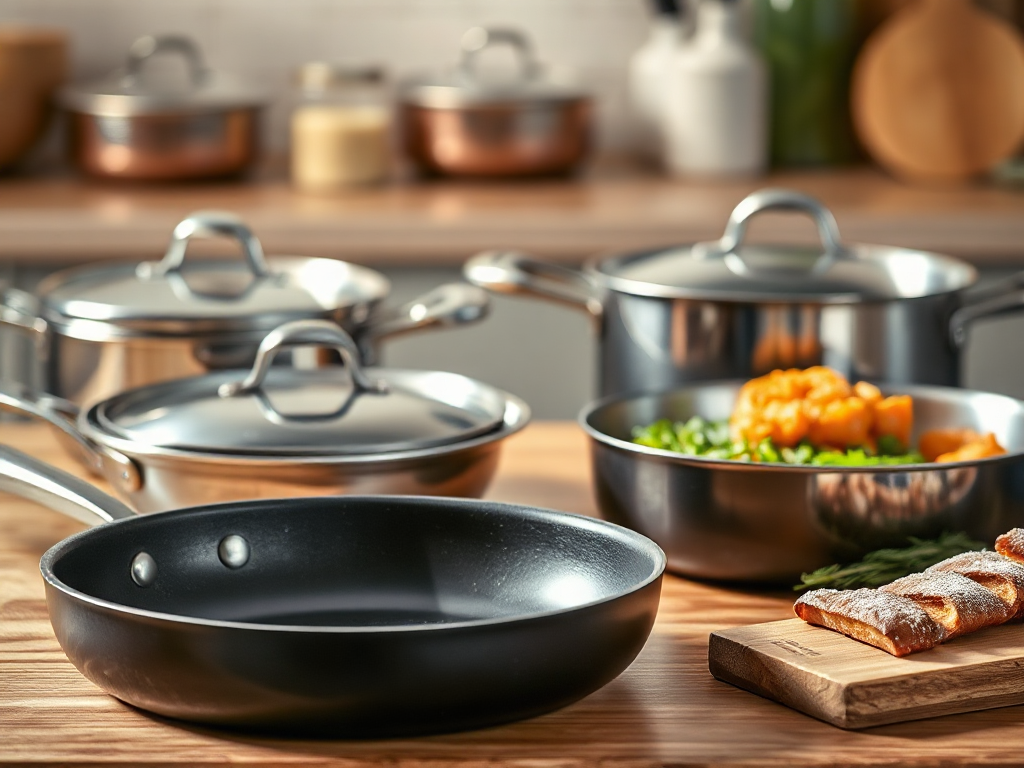
How to choose cookware for specific cooking techniques depends on matching the pan’s shape, material, and heat response to the food and method: use a wide skillet for searing, a heavy pot for braising, a small saucepan for sauces, and a responsive pan for delicate foods. Thick, heat-retentive construction suits browning and slow cooking, while lighter materials make temperature changes easier during sautéing or simmering. Consider the cooking surface, capacity, lid, handle, cooktop compatibility, and oven rating before buying. A common mistake is choosing a large cookware set without checking whether its individual pieces support the techniques you use most.
Match Pan Geometry to the Cooking Method
Pan shape determines how ingredients contact the cooking surface, how quickly moisture escapes, and how easily you can stir, turn, or reduce food. A wide base with low sides exposes more food to direct heat, making it useful for searing steaks, sautéing vegetables, frying eggs, and reducing a sauce. Taller vessels hold liquid and limit evaporation, which suits pasta, soup, stock, and braised dishes.
A skillet is the practical choice when food needs a broad cooking area and frequent access. Its sloped sides make tossing and turning easier, but they provide less capacity for liquid. A sauté pan has straighter sides and generally holds more sauce without taking up as much stovetop space. For a chicken-and-tomato braise, the sauté pan may be more useful than a shallow skillet because it accommodates liquid while still offering enough surface area to brown the chicken first.
Some suggestions to consider!
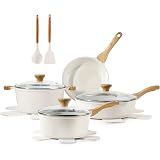


SENSARTE Nonstick Ceramic Cookware Set, 13-pcs Non-toxic Pots and Pans Set | Healthy Kitchen Cooking Set with Stay-Cool Handles, Silicone Tools and Pot Protectors, PFAS Free
$65.94 (as of October 14, 2026 19:08 GMT +00:00 - More infoProduct prices and availability are accurate as of the date/time indicated and are subject to change. Any price and availability information displayed on [relevant Amazon Site(s), as applicable] at the time of purchase will apply to the purchase of this product.)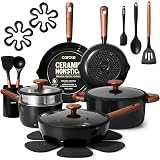
Now retrieving an image set.
CAROTE 21pcs Ceramic Cookware Set, Pots and Pans Set | Non-Toxic Healthy Cooking Set with Silicone Lids, Dishwasher Safe, Even Heating, with Steamer & Silicone Trivet, PFAS FREE
$79.97 (as of October 14, 2026 19:08 GMT +00:00 - More infoProduct prices and availability are accurate as of the date/time indicated and are subject to change. Any price and availability information displayed on [relevant Amazon Site(s), as applicable] at the time of purchase will apply to the purchase of this product.)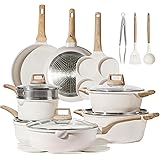
Now retrieving an image set.
CAROTE 21pcs Pots and Pans Set, Nonstick Cookware Sets, with Egg Pan | Induction Kitchen Cooking Set, Durable, Easy Food Release, Fast & Even Heating, with Frying Pan
$129.98 (as of October 14, 2026 19:08 GMT +00:00 - More infoProduct prices and availability are accurate as of the date/time indicated and are subject to change. Any price and availability information displayed on [relevant Amazon Site(s), as applicable] at the time of purchase will apply to the purchase of this product.)Choose a stockpot when volume matters rather than rapid evaporation. Its height reduces splashing and gives ingredients room to move in water, but the narrow base may be inefficient for browning aromatics. A Dutch oven bridges those roles with a broad base, high sides, and substantial walls. It works well for searing, braising, baking, and slow simmering, although its weight makes quick temperature adjustments less convenient.
Shape should also reflect utensil access. A narrow saucepan is efficient for heating a small amount of milk or making a glaze, while a wider saucepan is easier for whisking custard or reducing a larger quantity. Avoid assuming that more capacity is always better: an oversized pan can leave a thin layer of food that dries quickly, while an overcrowded small pan traps steam and weakens browning. The best match is the vessel that gives the food enough room for the method without creating unnecessary empty space.
Readers comparing how to choose cookware for specific cooking techniques should identify the movement and moisture pattern first: open and dry for searing, contained and liquid-rich for braising, or shallow and accessible for sautéing.
Choose Heat Response for Browning, Simmering, and Delicate Foods
Heat response describes how quickly cookware heats, how evenly it spreads energy, and how long it remains hot after the burner is lowered. Those traits affect control more than a simple “high heat” label. Searing benefits from a pan that stores enough heat to recover when cold meat touches it. A delicate cream sauce benefits from cookware that responds promptly when the heat needs to be reduced.
Heavy cast iron and thick-clad construction retain heat effectively. That stability can produce deep browning on mushrooms, burgers, or pork chops, especially when the pan is preheated and not crowded. The tradeoff is delayed adjustment: lowering the burner does not immediately cool the cooking surface. A cook who adds butter to an overheated heavy pan may brown or burn it before the temperature falls.
Aluminum-based pans generally respond more quickly and distribute heat efficiently, making them convenient for sautéing, pancakes, and foods that move between medium and low heat. Bare aluminum is not suitable for every acidic preparation, and many products use a coating or bonded stainless layer to change the surface characteristics. Stainless steel can brown food well but rewards proper preheating, adequate fat, and patience; forcing a stuck piece loose too early can tear the crust.
For simmering, evenness matters more than maximum heat retention. A pan with a thin base may create a hot ring over the burner, causing milk, sugar, or a thick stew to scorch before the rest is ready. A heavier base reduces that problem, but no vessel replaces occasional stirring or appropriate burner control. For fragile foods such as fish, omelets, or crepes, a responsive nonstick surface may reduce sticking, while a seasoned iron surface can work when preheated and maintained carefully.
A useful test is to observe the food rather than trust the dial. Searing is working when the ingredient makes strong contact without releasing excessive liquid; simmering is working when small, steady bubbles appear rather than violent boiling; delicate cooking is failing when edges darken while the center remains underdone. Those signs tell you whether the pan’s heat behavior fits the technique.
Select Surfaces and Construction for Specific Foods
The cooking surface should be chosen around the food’s tendency to stick, react with metal, or require browning. A smooth nonstick surface is convenient for eggs, crepes, and low-fat cooking because food releases with relatively little scraping. It is less appropriate for developing a hard seared crust or using metal utensils unless the manufacturer permits them. High heat, abrasive cleaning, and overheating an empty coated pan can shorten its useful life.
Stainless steel is versatile for fond-building, pan sauces, vegetables, and proteins that benefit from browned residue. The surface is not naturally nonstick, so technique matters: dry the ingredient, preheat the pan, add suitable fat, and allow a crust to form before turning. The browned bits left behind can be loosened with stock, wine, or water to make a sauce. The common mistake is treating sticking as proof that the pan is unsuitable when the actual problem is excess surface moisture or premature movement.
Cast iron and enameled cast iron are strong candidates for high-heat searing and long braises. Bare cast iron needs drying and appropriate seasoning after washing, and its weight can be inconvenient for tossing food. Enameled interiors simplify acidic cooking and cleanup, but chipped enamel or manufacturer-specific heat limits should be taken seriously. Neither type is automatically ideal for every task: a heavy braiser is cumbersome for a quick omelet, and a small nonstick skillet is poorly suited to a large batch of steak.
Copper and highly conductive multi-layer pans offer precise changes in temperature, which can help with sugar work, reductions, and sauces. They are often more expensive and may require a compatible lining or particular care. Ceramic-coated products can offer easy release, but performance varies with use and cleaning habits. Read the care instructions rather than assuming that every “ceramic” surface tolerates the same heat, utensils, or dishwasher cycle.
Food acidity and cooking time also influence the choice. Tomatoes, wine, citrus, and vinegar spend more time in contact with the surface during sauces and braises, so a lining or enamel may be preferable to an unlined reactive metal vessel. For specific cooking techniques, surface convenience should not outweigh the method’s demands: choose release for fragile foods, durability for rough stirring, and a stable interior for long acidic cooking.
Use a Practical Cookware Selection Checklist
Build a cookware collection around repeated techniques rather than buying every shape in a matching set. A home cook who sears meat, cooks grains, and makes sauces may need a skillet, a lidded saucepan, and a medium pot more than three different frying pans. Someone who bakes bread and braises regularly may place greater value on a covered Dutch oven and a durable sheet pan.
Before purchasing, check the complete operating context. Induction cooktops require a magnetic base, while a gas burner can concentrate heat around the edges of a pan. Oven use depends on the entire piece, including handles, lids, knobs, and surface coating. Dishwasher compatibility may simplify cleanup but does not guarantee that repeated cycles will preserve a finish. Storage space also matters: a heavy vessel that is difficult to lift or nest may be used less often than a slightly smaller alternative.
- Technique: Decide whether the main task is searing, sautéing, simmering, braising, frying, steaming, or baking.
- Food volume: Leave room for ingredients to contact the surface instead of piling into a wet layer.
- Heat behavior: Favor retention for browning and stability, or responsiveness for sauces and delicate foods.
- Surface: Match release, browning ability, acidity tolerance, and utensil needs to the recipes.
- Practical fit: Confirm cooktop, oven, lid, handle, cleaning, weight, and storage requirements.
Prioritize the feature that directly controls the failure you experience. If vegetables steam instead of brown, more cooking oil may not solve an overcrowded pan; a wider base may. If sauces scorch, a heavier base and lower heat may help more than a larger capacity. If eggs tear, a suitable release surface and moderate temperature may matter more than premium metal construction.
Do not judge a pan by material alone. A poorly shaped, thinly built stainless pan may perform worse for a particular task than a well-made aluminum or coated alternative. Conversely, an easy-release pan may be the wrong purchase if you regularly deglaze browned residue. Compare the piece against your actual recipes, handling ability, and maintenance habits, then buy the smallest set that covers those demands reliably.
For additional cookware guidance, consult manufacturer care instructions for temperature and utensil limits, and compare recommendations from established culinary education organizations or consumer safety publications. Those sources are more useful than relying on material labels alone because they address the complete pan construction and intended use.
Frequently Asked Questions
What pan is best for searing meat?
A broad, heavy skillet or sauté pan works well because it retains heat when meat is added and gives the surface room to brown without crowding.
Is nonstick cookware suitable for high-heat cooking?
Nonstick pans are usually better for moderate-temperature foods such as eggs and fish. Follow the product’s stated limits and choose stainless steel or cast iron when intense searing is the priority.
Why does food stick to stainless steel?
Excess moisture, insufficient preheating, too little fat, or turning food before a crust forms can cause sticking. Dry ingredients and let them release naturally before scraping.
Do I need different cookware for induction?
Yes. Induction requires cookware with a magnetic base, so test the underside with a magnet or check the manufacturer’s compatibility statement before buying.
Should cookware size match the amount of food?
Yes. A pan should provide enough room for ingredients to spread in a single workable layer while avoiding excessive empty surface that can dry or burn small portions.
Conclusion
Choose cookware by starting with the technique you perform most often, then match pan geometry, heat response, surface, and capacity to that method. A wide skillet favors browning and sautéing, a heavy covered pot supports braising and steady simmering, and a responsive or nonstick pan can make delicate foods easier to control. Check the less glamorous details before buying: induction compatibility, oven limits, lid fit, handle temperature, cleaning requirements, and weight. A versatile collection does not need to be large; it needs to cover your recipes without forcing one pan to perform every job. Test your choice against actual cooking signals—browning, bubbling, sticking, and scorching—and adjust size or heat behavior when results consistently miss the mark.