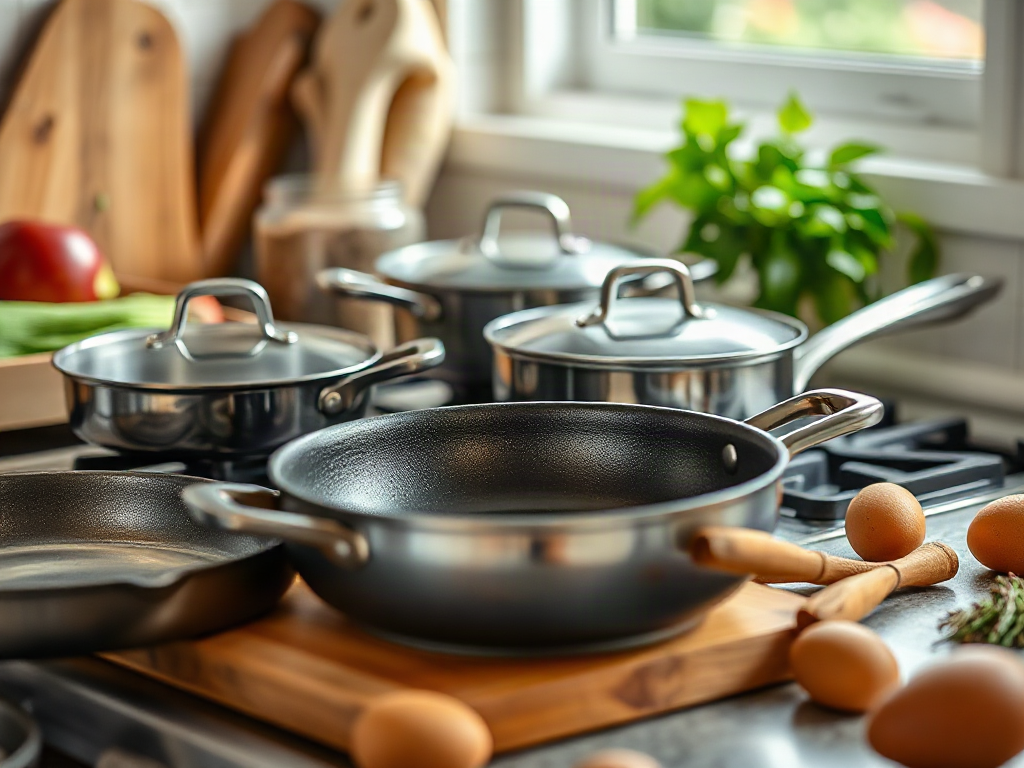
How to choose cookware for larger families starts with matching pan capacity to the meals you actually prepare, then checking stovetop fit, weight, construction, handles, and storage. A wide skillet is useful for browning several portions without crowding, while a deep sauté pan or stockpot handles sauces, pasta, soup, and batch cooking with less spillover. Heavy construction can distribute heat more evenly, but an oversized or very heavy pan may be difficult to lift when full. Prioritize the largest burner that suits the pan, oven and dishwasher compatibility, secure handles, and enough room to stir safely rather than buying the biggest set available.
Match Pan Capacity to Family Meals
The most useful cookware size depends on the portions, recipes, and cooking methods that appear on your table—not simply on the number of people in the household. A family that regularly makes pasta, chili, casseroles, and stir-fries needs different pieces from one that cooks separate proteins and vegetables in small batches. Before shopping, write down three or four meals you prepare repeatedly and identify where your current pans cause crowding, overflow, or extra batches.
Capacity affects cooking quality as well as convenience. Food packed tightly into a skillet releases moisture faster than it can evaporate, so meat may steam instead of brown and vegetables may soften unevenly. A pan that is too shallow can spill when you stir a thick sauce or fold in cooked pasta. On the other hand, an enormous vessel placed on a small burner may heat slowly at the edges and encourage uneven results.
Some suggestions to consider!
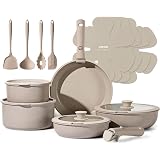


CAROTE 19pcs Pots and Pans Set Non Stick, Detachable Handle Cookware Sets | Ultra Nonstick, Space Saving, Dishwasher & Oven Safe, Non-Toxic Kitchen/Apartment/Camping/RV/ Traveling, Taupe
$59.99 (as of September 16, 2026 08:01 GMT +00:00 - More infoProduct prices and availability are accurate as of the date/time indicated and are subject to change. Any price and availability information displayed on [relevant Amazon Site(s), as applicable] at the time of purchase will apply to the purchase of this product.)
Now retrieving an image set.
SENSARTE Ceramic Cookware Sets, Pots and Pans Set Non stick, 14 Piece Induction Cookware, Non toxic Healthy Non Stick Kitchen Cooking Set, with Frying Pans Set, PFAS PTFE PFOA PFOS Free
$109.99 (as of September 15, 2026 18:46 GMT +00:00 - More infoProduct prices and availability are accurate as of the date/time indicated and are subject to change. Any price and availability information displayed on [relevant Amazon Site(s), as applicable] at the time of purchase will apply to the purchase of this product.)
Now retrieving an image set.
Kikcoin 31 Piece Pots and Pans Set Non Stick Kitchen Cookware Sets | Nonstick Cooking Set with Grill Pan Saucepan Baking Sheet Utensil, Black
$152.99 (as of September 15, 2026 18:46 GMT +00:00 - More infoProduct prices and availability are accurate as of the date/time indicated and are subject to change. Any price and availability information displayed on [relevant Amazon Site(s), as applicable] at the time of purchase will apply to the purchase of this product.)For many larger households, a useful core includes a wide skillet for browning, a deep sauté pan for one-pan meals, and a substantial pot for soups, grains, or pasta. A 12-inch skillet often offers more working surface than a narrow high-sided pan, while a deep vessel is better when the recipe contains liquid or needs frequent stirring. Capacity markings are helpful, but usable cooking area and headroom matter more than the advertised volume.
Test a prospective pan against your actual routine. If you cook two pounds of ground meat, several chicken breasts, or a large vegetable mixture, imagine whether the ingredients can sit in a mostly single layer. For soup and stew, leave room for bubbling and ladle movement. The common mistake is choosing the biggest piece available and discovering that it is hard to store, awkward to lift, or poorly matched to the burner. A slightly smaller pan used efficiently can outperform a huge one that heats unevenly.
Choose Shapes and Materials for Batch Cooking
Pan shape determines how efficiently a larger meal cooks. A broad base exposes more ingredients to the heated surface, which is valuable for searing, reducing sauces, and sautéing vegetables. Tall sides conserve space and reduce splashes, making them useful for braises, curries, and simmered dishes. Straight sides provide more volume, while sloped sides make tossing and turning food easier.
Construction changes how a pan responds when a large quantity of cool food is added. A substantial metal base generally retains heat better than a very thin one, so the cooking surface is less likely to lose temperature abruptly during batch cooking. That benefit comes with extra weight and slower response when you turn the burner down. Aluminum often heats quickly, stainless steel can offer durable cooking surfaces, and enameled or bare cast iron retains heat well but may be demanding to lift when full. No material is ideal for every family or recipe.
Surface choice should follow the tasks you perform most. A nonstick skillet can simplify eggs, pancakes, and delicate foods, but its coating requires appropriate utensils and care. Stainless steel is versatile for browning and pan sauces, although food can stick when the surface is cold or the pan is overloaded. Cast iron can be useful for high-heat searing and oven dishes, yet its weight and maintenance may make it unsuitable for a cook who frequently moves full pans.
Consider two contrasting scenarios. A household that cooks stir-fries needs a wide, responsive vessel and may value quick temperature changes. A household that makes large batches of beans or stew may prefer a heavier pot with secure handles and steady heat retention. The weak assumption is that one premium material solves every problem. A mixed collection can be more practical: use a coated skillet for delicate foods, a stainless or clad pan for browning, and a deep pot for liquid-heavy meals. Readers comparing options can also use how to choose cookware for larger families as a checklist against their weekly menu.
Check Stovetop Fit, Handling, and Storage
Large cookware must fit the kitchen as carefully as it fits the recipe. Measure the cooking zones, cabinet openings, sink, oven, and dishwasher before buying. A pan that extends far beyond a burner may develop uneven temperature zones, while a large pot can block neighboring controls or prevent other burners from being used comfortably. On induction, confirm that the base is compatible and large enough for the cooking zone; on any cooktop, a flat, stable bottom is preferable.
Weight becomes a safety and usability issue once a pan contains water, oil, or food. Lift an empty piece with one hand and check whether the main handle stays balanced. A helper handle is valuable on a large skillet or Dutch oven because it spreads the load between both hands. Handles should remain clear of adjacent burners and provide enough room for an oven mitt. Glass lids should have a secure grip and enough venting or fit tolerance to prevent messy boilovers; they also add weight when moved.
Storage often exposes a purchase mistake after the first week. Nested sets save cabinet space, but stacking can scratch surfaces and make the frequently used pan hard to reach. Long handles may prevent a pot from fitting in a drawer, and large lids can consume more room than expected. Measure the actual storage location, then decide whether a few individual pieces are better than a complete set.
A practical check is to fill a candidate pot with water to a realistic level and imagine draining it. If the weight feels unsafe or the handles force your wrists into an awkward position, choose a smaller vessel or divide the batch. Do not assume that a family-size pan must be moved while full. Cooking in two manageable batches can be safer and may produce better browning than forcing a single overloaded pan.
Build a Practical Cookware Collection
A larger household usually benefits from a coordinated collection rather than many similar pieces. Begin with the vessel that solves the most frequent failure: a skillet that crowds dinner, a pot that boils over, or a shallow pan that cannot contain a one-pot meal. This approach controls cost and avoids filling cabinets with duplicate sizes.
A sensible priority list might include a wide skillet, a deep sauté pan or braiser, a medium saucepan, and a large stockpot. Add a second skillet if cooking several components at once regularly saves time. Choose a roasting pan or oven-safe casserole when sheet-pan meals, baked pasta, or large roasts are common. A cookware set can be economical, but compare the included sizes and shapes with your menu; sets often contain several small saucepans while omitting the broad pan a larger family actually needs.
Match each purchase to a specific job. The wide skillet should have enough flat area for browning without severe crowding. The deep pan should have generous headroom and a lid that seals reasonably well. The stockpot should be large enough for the intended batch while remaining liftable when partly filled. If the family cooks on weeknights, easy cleaning and dishwasher instructions may matter more than specialized heat performance. If weekend batch cooking dominates, durability, storage, and heat retention may deserve more weight.
Watch for failure signs after purchase: food browns only in the center, the handle becomes uncomfortable, the lid rattles during a simmer, or the pan cannot be washed without rearranging the entire sink. Those clues indicate a mismatch rather than a need for more heat. Reassess the size, burner placement, and loading pattern before replacing the cookware. For related planning, how to choose cookware for larger families should remain tied to real meal quantities, while how to choose cookware for larger families can help organize a phased buying list.
For additional practical checks, consult the care and compatibility instructions supplied by the cookware manufacturer, especially for oven limits, induction use, coating care, and dishwasher cleaning. Product manuals are more reliable than assumptions based on appearance or general material labels.
Frequently Asked Questions
What size skillet works well for a larger family?
A wide 12-inch skillet is a useful starting point for many households, but the best choice depends on burner size, storage, and whether the pan can be lifted safely when full.
Is a cookware set better than buying individual pieces?
Individual pieces are often better when your cooking needs unusual proportions, such as one large skillet and one deep pot. A set makes sense only when its included sizes match your regular meals.
Which pan shape is best for batch cooking?
A broad, flat base is useful for browning and sautéing, while taller straight-sided cookware is better for soups, sauces, braises, and foods that need extra headroom.
Does heavier cookware always cook better?
Heavier construction may retain heat more steadily, but it can respond slowly and become difficult to move. Choose the weight you can handle confidently after the pan is filled.
How can I avoid overcrowding a family-size pan?
Use a wider cooking surface, leave space between ingredients, and cook in batches when necessary. Overloading traps moisture and can reduce browning even when the pan is technically large enough.
Conclusion
Choosing cookware for a larger family is mainly an exercise in matching capacity to real meals while preserving control, comfort, and safe handling. Prioritize the pan that currently causes the most trouble, then check its working surface, depth, burner compatibility, weight, handles, lid, and storage footprint. A wide skillet, deep sauté vessel, and appropriately sized pot often provide more value than a large set filled with redundant pieces. Materials should follow cooking habits rather than marketing claims: responsive cookware suits quick sautéing, while heavier vessels may suit simmered batch meals. Buy in stages, test each piece against your normal portions, and treat crowding, awkward lifting, and uneven browning as signs to change the method or size.