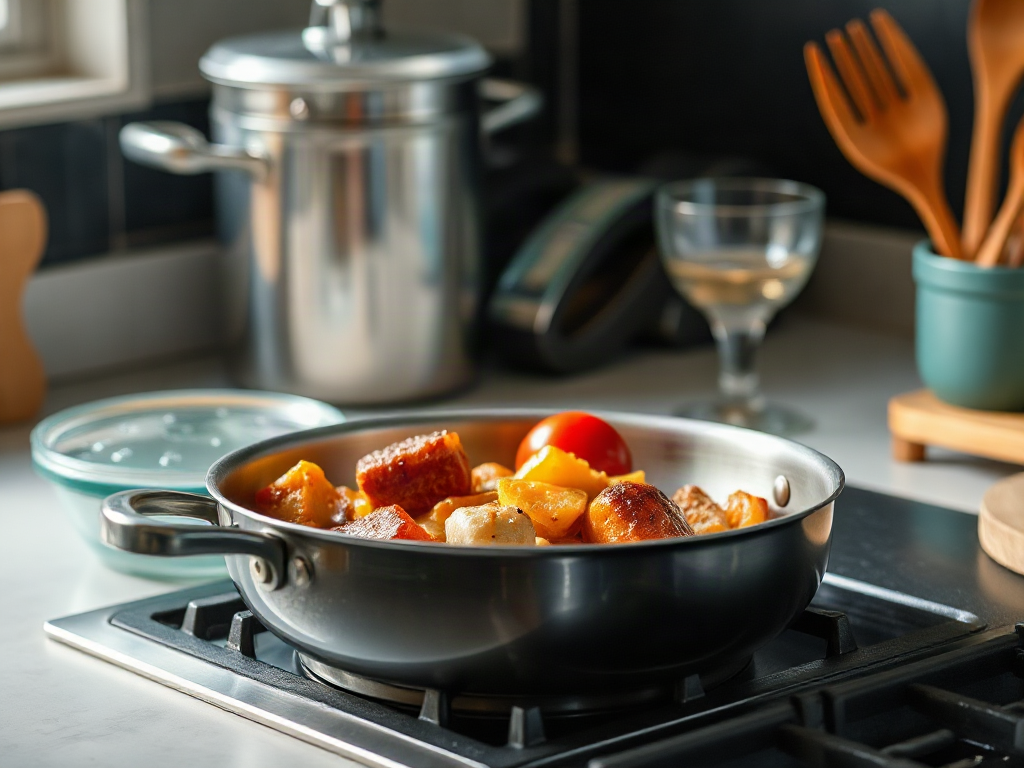
The importance of heat conductivity in cookware lies in how quickly and evenly a pan transfers burner energy to food, affecting temperature control, browning, simmering, and the risk of scorching. Highly conductive metals such as copper and aluminum respond rapidly, while stainless steel is less conductive but durable and often paired with an aluminum or copper core. Cast iron heats more slowly, yet its mass stores heat well and can provide steady searing once preheated. The best choice depends on the task: responsive cookware suits sauces and delicate foods, while heat-retaining cookware suits searing and baking. Thickness, construction, burner compatibility, and cooking technique matter as much as the material label.
How Heat Conductivity Changes Cooking Results
Heat conductivity describes how readily a material moves thermal energy through itself. In a pan, that movement determines how quickly the cooking surface responds when a burner is turned up, lowered, or switched off. A highly conductive base can distribute heat across a broad area, while a poorly conductive or very thin base may leave hot spots directly over the burner and cooler areas near the rim.
That difference becomes visible during ordinary cooking. A sauté pan with uneven heat may brown onions in the center while leaving the outer pieces pale. A saucepan with a responsive base can reduce a cream sauce more predictably because the cook can lower the heat before the bottom overheats. With a conductive material, the pan surface is more likely to follow the setting selected on the stove instead of continuing to build heat in isolated areas.
Some suggestions to consider!
Now retrieving an image set.
Umite Chef 21Pcs Pots and Pans Set Non Stick, Nonstick Ceramic Cookware Sets Detachable Handle, Non Toxic Healthy Induction Cookware, Kitchen Cooking Set, with Frying Pans Set, Dishwasher/Oven Safe
$57.99 (as of October 7, 2026 19:05 GMT +00:00 - More infoProduct prices and availability are accurate as of the date/time indicated and are subject to change. Any price and availability information displayed on [relevant Amazon Site(s), as applicable] at the time of purchase will apply to the purchase of this product.)
Now retrieving an image set.
SENSARTE Ceramic Cookware Sets, Pots and Pans Set Non stick, 14 Piece Induction Cookware, Non toxic Healthy Non Stick Kitchen Cooking Set, with Frying Pans Set, PFAS PTFE PFOA PFOS Free
$72.19 (as of October 7, 2026 19:05 GMT +00:00 - More infoProduct prices and availability are accurate as of the date/time indicated and are subject to change. Any price and availability information displayed on [relevant Amazon Site(s), as applicable] at the time of purchase will apply to the purchase of this product.)
Now retrieving an image set.
HexClad 6pc Hybrid Nonstick Frying Pans Set with Lids, 8, 10 & 12" Pans | Stay-Cool Handles, Dishwasher and Oven Safe up to 900°F, Compatible with All Cooktops
$287.99 (as of October 7, 2026 19:05 GMT +00:00 - More infoProduct prices and availability are accurate as of the date/time indicated and are subject to change. Any price and availability information displayed on [relevant Amazon Site(s), as applicable] at the time of purchase will apply to the purchase of this product.)Conductivity does not mean that a pan should heat as fast as possible. Fast response is useful for delicate tasks, but excessive responsiveness can punish an inattentive cook. A thin aluminum pan may become hot almost immediately and lose temperature quickly when cold food is added. A thicker pan may react more slowly but provide a steadier surface. The practical question is whether the cookware matches the timing and temperature demands of the food.
Weak assumptions often cause disappointment. A pan labeled with a conductive metal is not automatically even-heating if the base is thin, warped, or poorly bonded. Burner size matters too: a large pan on a small burner may have a hot center regardless of its material. Readers comparing options should inspect the base thickness, construction, flatness, and stated cooktop compatibility alongside the metal itself. Those details explain more than a simple material name.
Comparing Common Cookware Materials
Aluminum is widely valued for strong conductivity, moderate weight, and quick response. It can work well for sautéing, sheet pans, and saucepans because heat travels through the base efficiently. Its limitations include easier denting and, in some untreated forms, reactivity with strongly acidic foods. An anodized finish or a separate cooking surface may address some concerns, but the exact construction still matters.
Copper transfers heat exceptionally well and changes temperature quickly. That responsiveness is useful for custards, caramel, and reductions where a small burner adjustment can affect the result. Copper cookware is often lined with stainless steel because the lining provides a practical food-contact surface. The tradeoff is cost, maintenance, and the need to follow the maker’s care instructions. Copper is not automatically the best everyday choice if the user values low maintenance over rapid control.
Stainless steel by itself is less conductive than aluminum or copper, which can produce uneven heating in a thin pan. Its strengths are durability, stain resistance, and a cooking surface that tolerates many ingredients. Many higher-performing stainless pieces use a layered design with an aluminum or copper core. That combination explains why two pans that both say “stainless steel” can behave very differently.
Cast iron is another useful contrast. It does not spread heat as quickly as copper or aluminum, but its substantial mass stores heat and resists cooling when a steak or several chilled vegetables enter the pan. Preheating is therefore more important. A cast-iron skillet may be less convenient for a quick temperature change, yet excellent for searing or oven cooking once the surface is hot. This is why conductivity and heat retention should be considered together rather than treated as competing labels.
For a practical comparison, choose a responsive aluminum or copper-lined pan for a sauce that must be stopped quickly, layered stainless for general-purpose durability, and cast iron when stored heat matters more than instant adjustment. The internal link the importance of heat conductivity in cookware is especially relevant when comparing these tradeoffs instead of ranking materials in isolation.
Conductivity, Heat Retention, and Pan Construction
Heat conductivity controls how energy moves through a pan, while heat retention describes how much energy the pan holds after it becomes hot. A thin copper or aluminum pan may respond rapidly but cool noticeably when food is added. A thick cast-iron or multilayer pan may take longer to preheat and then remain stable through a demanding cooking step. Both behaviors can be useful; neither is universally superior.
Construction determines whether a material’s theoretical performance reaches the food. A clad pan bonds multiple metals across the base and sometimes the sidewalls, allowing a conductive core to spread heat beneath a durable stainless surface. A disk-bottom pan concentrates its layered base beneath the cooking area, which can perform well but may leave the sidewalls less responsive. A thin pan with a nominally conductive metal may still create hot spots because there is not enough material to distribute energy.
Thickness introduces another tradeoff. More metal often improves stability and reduces abrupt temperature swings, but it adds weight and slows response. That extra weight may be welcome on a range when the pan stays planted, yet inconvenient for tossing vegetables or lifting a full pot. Handles, balance, and the cooktop’s power should be evaluated with the base rather than separately.
Induction adds a further constraint: conductivity alone does not determine compatibility. The cookware must contain a magnetic layer suitable for the induction field, and the base must make reliable contact with the cooking surface. A copper pan may be thermally excellent but unusable on an induction hob unless it has an appropriate magnetic layer. Conversely, an induction-ready pan can heat efficiently while still needing a conductive interior layer for even distribution.
Before buying, use a compact priority check:
- Confirm the cooktop compatibility and base flatness.
- Look for layered or reinforced construction rather than relying on a single metal label.
- Match responsiveness to the food: delicate sauces favor control, while searing favors stability.
- Consider filled weight, handle strength, and whether the pan will move between burner and oven.
A pan that meets these conditions will usually be more useful than one selected solely for the highest advertised conductivity.
Choosing Conductivity for Specific Cooking Tasks
Delicate foods benefit from a cooking surface that responds predictably to adjustments. Custard, melted chocolate, milk-based sauces, and sugar work can suffer when the pan bottom stays excessively hot after the burner is reduced. A conductive, well-distributed base gives the cook a better chance to lower the temperature before proteins seize or sugars darken. Even then, stirring and removing the pan from the burner may be necessary because cookware cannot replace attention.
Sautéing and stir-frying place different demands on a pan. The surface needs to recover after cool ingredients arrive, but it also needs enough distribution to prevent the center from scorching. A broad aluminum or clad pan can offer a useful balance. Overcrowding remains a common failure: too much food releases moisture, lowers the surface temperature, and creates steaming even in highly conductive cookware. Conductivity improves transfer; it does not overcome poor spacing.
Searing favors heat retention as much as rapid conduction. A heavy skillet can maintain contact temperature when a cold steak enters, supporting browning across the surface. A very thin pan may heat quickly but lose energy so rapidly that the food releases liquid and steams. Cast iron and thick multilayer stainless are often practical choices here, provided they are preheated gradually and handled according to the manufacturer’s guidance.
Baking and roasting introduce another concern: stable, predictable heat across the entire vessel. A dark, thin pan may absorb and transfer heat quickly, while a heavy metal pan may take longer to come up to temperature. The correct choice depends on the recipe, oven temperature, vessel size, and whether the food needs crisp edges or gentle, even cooking. A reader comparing pans should prioritize the result they want rather than treating speed as the only measure of performance.
Use the specific task as the deciding filter. Choose fast response when timing a temperature change is central, stored heat when recovery after adding food matters, and balanced layered construction for one pan expected to handle both. The related reference the importance of heat conductivity in cookware can help organize that decision around actual cooking situations rather than marketing claims.
Testing and Using Cookware More Effectively
Simple kitchen observations can reveal whether a pan’s heat distribution suits its job. Preheat it gradually over the intended burner, add a small amount of oil, and watch whether the oil thins evenly or pulls sharply toward one hot area. A few pieces of bread or similarly sized food can provide a rough browning comparison, although this is not a laboratory measurement. The useful signal is consistency across the cooking surface, not a dramatic demonstration.
During normal use, note how quickly the pan responds when the heat is reduced and how well it recovers after chilled ingredients are added. If the center repeatedly burns while the edges remain undercooked, check burner-to-pan size, ingredient spacing, and the pan’s flatness before blaming the metal alone. A warped base can create poor contact on a glass cooktop, while a small burner can leave a large pan underheated at the perimeter.
Good technique also protects the advantages of conductive cookware. Preheat according to the material and recipe, avoid maximum heat when medium heat is sufficient, and allow space between ingredients. Reduce heat earlier in a highly responsive pan; lower the burner and move a heat-retaining pan away from the source when the food has reached the desired stage. Sudden thermal changes can also stress some cookware, so follow the care guidance supplied with the piece.
Common mistakes include judging quality by weight alone, assuming a premium metal guarantees even cooking, and choosing a pan for one spectacular use while ignoring daily handling. Heavy cookware can be stable but cumbersome. A very responsive pan can be precise but unforgiving. The best sign is repeatable control: food browns where expected, sauces stop thickening when heat is reduced, and the pan behaves consistently on the cooktop used most often.
For shoppers, compare construction diagrams, base coverage, oven and induction limits, warranty terms, and maintenance requirements. For current owners, test the pan with the foods you actually prepare. This practical approach connects material properties with real performance more reliably than a conductivity ranking alone. It also supports a more useful understanding of the importance of heat conductivity in cookware.
For additional technical context, consult cookware manufacturer documentation for construction details and cooktop compatibility, along with university materials-science or culinary education resources that explain thermal transfer. These sources are most useful when they identify the tested construction, thickness, and application rather than making broad claims about a material in isolation.
Frequently Asked Questions
Why does heat conductivity matter in a frying pan?
It affects how evenly the surface heats and how quickly the pan responds to burner changes, which influences browning, sticking, and scorching.
Is copper always better than stainless steel?
No. Copper responds faster, while stainless steel offers durability and easier maintenance. Layered stainless with a conductive core may provide a practical balance.
Does high conductivity prevent hot spots?
Not by itself. Base thickness, layered construction, burner size, pan flatness, and sidewall design also determine heat distribution.
Which cookware is best for searing?
A thick, heat-retaining pan such as cast iron or substantial multilayer stainless often suits searing because it loses less heat when cold food is added.
How can I assess a pan before buying it?
Check its base construction, cooktop compatibility, flatness, weight, balance, handle, care requirements, and whether those traits match the foods you cook most often.
Conclusion
Heat conductivity is useful because it connects cookware design with the control a cook experiences at the stove. Fast-conducting metals can respond quickly and spread energy effectively, but thickness and construction determine whether that advantage reaches the food evenly. Heat retention matters just as much for searing, roasting, and cooking large amounts at once. Prioritize the actual task, then compare the pan’s layered structure, base coverage, cooktop compatibility, weight, and maintenance demands. A responsive saucepan may be ideal for delicate sauces, while a heavier skillet may perform better when steady heat is needed. Test the cookware with familiar foods, watch for uneven browning or delayed response, and adjust burner size and ingredient spacing before judging the material alone.