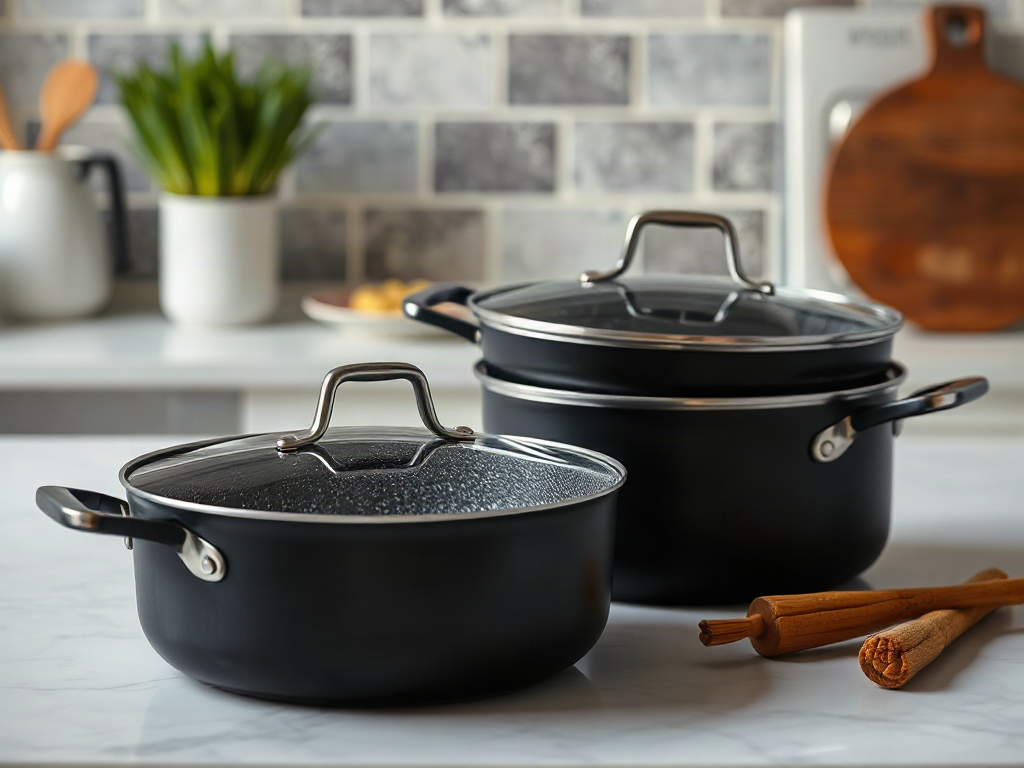
The impact of cookware color on heat absorption is real but usually smaller than the effects of material, thickness, finish, and burner contact: dark exterior surfaces absorb more radiant energy, while light or reflective surfaces absorb less. The difference is most noticeable with sunlight, broiler exposure, grills, and other radiant heat sources, not during ordinary stovetop cooking where the burner heats the base directly. Dark finishes may become hotter faster under radiant exposure, but they can also make surface-temperature changes harder to judge visually. For dependable results, prioritize the pan’s construction and flat base, then treat color as a secondary factor for outdoor, glass-top, or high-radiant-heat use.
Where Color Changes Heat Absorption
Cookware color affects the amount of radiant energy a surface absorbs, but its practical influence depends heavily on how the pan is being heated. Dark, matte finishes generally absorb more visible and infrared radiation than pale or shiny finishes. A reflective silver exterior sends more incoming radiation away, while a blackened or dark-coated surface converts more of that radiation into heat at the exposed surface.
That distinction matters most when energy arrives from the surroundings rather than through direct contact. A dark baking tray left in strong sunlight, for instance, can become noticeably hotter than a bright, reflective tray beside it. The same principle can appear under a broiler or near intense grill radiation, where exposed sidewalls and upper surfaces receive energy directly. The pan’s base may still be governed mainly by the heat source and its construction.
Some suggestions to consider!
Now retrieving an image set.
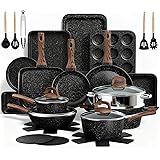
Pots and Pans Set Non Stick, 31 Piece Kitchen Induction Cookware & Bakeware Set, Nonstick Kitchen Cooking Pans Set with Frying Pans Set Grill Pan Saucepan Baking Sheet & Utensils, PFOA Free
$104.47 (as of October 7, 2026 19:05 GMT +00:00 - More infoProduct prices and availability are accurate as of the date/time indicated and are subject to change. Any price and availability information displayed on [relevant Amazon Site(s), as applicable] at the time of purchase will apply to the purchase of this product.)
Now retrieving an image set.
T-Fal Signature Nonstick Pots and Pans Set 12 Piece, Oven Broiler Safe 350F, Kitchen Cookware Set w/Fry Pans, Saucepans, Saute Pan, Dutch Oven, Griddle, Kitchen, Home, Dishwasher Safe, Black
$89.99 (as of October 7, 2026 19:05 GMT +00:00 - More infoProduct prices and availability are accurate as of the date/time indicated and are subject to change. Any price and availability information displayed on [relevant Amazon Site(s), as applicable] at the time of purchase will apply to the purchase of this product.)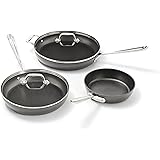
Now retrieving an image set.
All-Clad HA1® Nonstick 5-Piece Pots & Pans Set, Induction Ready | Complete nonstick cookware set, Long-lasting non-stick, Scratch-Resistant Exterior, Dishwasher safe, Oven Safe up to 500°F
$159.99 (as of October 7, 2026 19:05 GMT +00:00 - More infoProduct prices and availability are accurate as of the date/time indicated and are subject to change. Any price and availability information displayed on [relevant Amazon Site(s), as applicable] at the time of purchase will apply to the purchase of this product.)Color does not create heat by itself, and a dark pan is not automatically a faster or better cooking tool. The absorbed energy must travel through the coating, metal, or ceramic body before it reaches the food. A thick aluminum pan with a dark exterior may respond differently from a thin steel pan with the same color because thermal conductivity, mass, and contact area control how quickly heat spreads.
A useful way to think about the impact of cookware color on heat absorption is to separate radiant exposure from conduction. Color has greater leverage in the first situation. Direct burner contact, pan thickness, and the flatness of the cooking surface dominate the second. Assuming that a black pan will always heat faster is a common mistake because it ignores the path the energy takes.
Why Material and Finish Usually Matter More
Pan construction normally has a larger effect on cooking performance than exterior color. Aluminum transfers heat rapidly, stainless steel is less conductive on its own, cast iron stores substantial heat, and multilayer designs combine different metals to balance responsiveness with stability. Those differences remain significant even when two pans have identical black, white, or metallic finishes.
Thickness changes the result as well. A thin dark sheet may absorb radiant energy quickly but lose heat quickly when cool food is added. A heavier pan may take longer to warm yet maintain its temperature more effectively during searing or baking. The color describes the surface’s interaction with radiation; it does not reveal the pan’s thermal mass or its ability to distribute heat.
Finish can complicate color comparisons. A glossy dark coating may reflect more radiation than a rough, matte dark coating, while a polished metal surface can reflect a large portion of incoming radiant energy. Interior color may also affect what the cook sees rather than how the food heats. A light interior makes browning, fond, and sauce reduction easier to monitor; a dark interior can make early browning harder to distinguish.
Consider two roasting pans: one has a dark nonstick coating over aluminum, and the other is bright stainless steel with a heavier body. Under normal oven conditions, the dark pan may absorb more radiation at its exposed surfaces, but the stainless pan could distribute and retain heat differently because of its mass and construction. Choosing solely by color may therefore produce the wrong result. Compare the base, wall thickness, coating, handle design, and intended temperature range first.
The practical priority is straightforward:
- For even heating: inspect construction, thickness, and base contact.
- For radiant exposure: consider color and reflectivity of exposed surfaces.
- For visual control: choose an interior shade that makes browning and residue easy to see.
Color is a useful secondary clue, not a substitute for thermal design. Readers comparing options through the impact of cookware color on heat absorption should avoid treating finish color as a performance rating.
Stovetop, Oven, Grill, and Sunlight Comparisons
The heating environment determines whether cookware color produces a noticeable difference. On a conventional stovetop, the burner transfers energy into the pan primarily through direct contact with the base. A black exterior may absorb some heat from surrounding radiation, but burner size, base flatness, metal conductivity, and the flame or electric element’s contact pattern generally matter more.
Ovens create a mixed environment. Hot air warms the pan through convection, oven walls and heating elements provide radiation, and the rack supports the pan through contact. A dark baking sheet can often promote stronger surface heating than a bright sheet, especially when it is exposed to intense radiant energy. That does not mean every recipe needs a color adjustment. Food thickness, pan gauge, rack position, and whether the pan is covered usually have greater practical effects.
Grills and broilers make surface color more relevant because radiant energy is concentrated from above. A dark sidewall or tray may absorb more energy than a shiny one, raising the temperature of exposed areas. Food placed near those areas may brown sooner, while a reflective surface may delay that response. Watch the food rather than relying on color alone, particularly when using a new pan or changing rack height.
Sunlight is the clearest everyday demonstration. A dark pan left outdoors can become very hot even when the surrounding air feels moderate, whereas a reflective pan may remain cooler at the surface. The difference is useful for understanding radiation, but outdoor exposure is not a controlled cooking method: wind, angle, clouds, surface texture, and the pan’s thickness all change the result.
Several weak assumptions cause confusion:
- A dark pan does not guarantee faster cooking on every heat source.
- A light pan does not prevent browning if the oven and food surface reach the right temperature.
- Color cannot compensate for poor burner alignment, a warped base, or uneven construction.
When changing from a light sheet to a dark sheet for baking, monitor the first batch closely and adjust rack position or timing only when the food shows a consistent difference. Do not make a large temperature change based solely on the pan’s appearance.
Choosing and Testing Cookware by Use Case
The best color choice depends on where the pan receives heat and what the cook needs to observe. For everyday stovetop sautéing, construction and base compatibility should lead the decision. A stable, flat pan with appropriate conductivity is generally more useful than selecting a particular exterior shade. Color may still matter for appearance, cleaning visibility, or matching a cooking setup, but those are separate considerations from heat transfer.
For baking and roasting, a dark finish can be useful when stronger surface browning is desired, while a lighter or reflective surface may be preferable when a recipe is sensitive to rapid edge browning. The result is not determined by color alone. A thin dark sheet may brown cookies more aggressively than a heavy light sheet, but the comparison reflects both finish and gauge. Recipe temperature, parchment, rack position, and dough composition also affect the edges.
For outdoor cooking or strong radiant sources, color deserves more attention. Dark surfaces may absorb more energy and become hotter in exposed areas, so use heat-resistant handling, avoid touching the pan based on visual appearance, and allow time for cooling. Reflective surfaces can reduce radiant absorption but may still become extremely hot through direct contact or trapped heat.
A simple comparison test can reveal whether color matters in your setup:
- Use similar-sized pans with comparable thickness and construction.
- Preheat them in the same position and under the same setting.
- Cook identical portions, keeping food temperature and starting time consistent.
- Compare browning at the center and edges rather than judging only cooking time.
- Repeat the test before changing the recipe temperature.
Infrared thermometer readings can help identify surface differences, but readings depend on emissivity and may be less reliable across glossy, coated, and polished surfaces. Treat the numbers as comparative evidence rather than an absolute verdict. Food appearance, base contact, and repeatable results remain valuable checks.
For most buyers, the decision order should be material and construction first, heat-source compatibility second, interior visibility third, and exterior color fourth. That order changes when the pan will sit in direct sunlight, beneath a broiler, or close to a powerful grill element. In those cases, color and finish become practical variables rather than decorative details. A focused look at the impact of cookware color on heat absorption is most useful when it is tied to that specific heating environment.
Frequently Asked Questions
Do black pans always absorb more heat?
Black, matte surfaces generally absorb more radiant energy than light or reflective surfaces, but the result depends on finish, material, thickness, and the heating environment.
Does cookware color matter on a stovetop?
Usually less than it does under direct sunlight, a broiler, or a grill. Burner contact, base design, and metal conductivity typically dominate stovetop heating.
Are dark baking sheets better for browning?
They may encourage stronger browning at exposed surfaces, but sheet thickness, material, rack position, parchment, and recipe temperature also influence the outcome.
Does a shiny pan stay cooler?
A shiny surface may reflect more radiant energy, but direct contact with a burner or hot rack can still make the pan very hot.
What should matter more than cookware color?
Prioritize the pan’s material, thickness, flat base, heat-source compatibility, coating condition, and interior visibility before choosing an exterior color.
Conclusion
Cookware color changes radiant heat absorption, but its importance depends on the way the pan is heated. Dark, matte surfaces can respond more strongly to sunlight, broilers, and grill radiation, while stovetop results are usually governed by the base, metal, thickness, and burner contact. Treat color as a situational performance factor rather than a universal shortcut for choosing a pan. If browning differs after switching finishes, compare similar pans, repeat the test, and inspect rack position and construction before changing recipe settings. For an everyday purchase, select thermal design and heat-source compatibility first, then use color to fine-tune radiant exposure, visual monitoring, and practical handling.