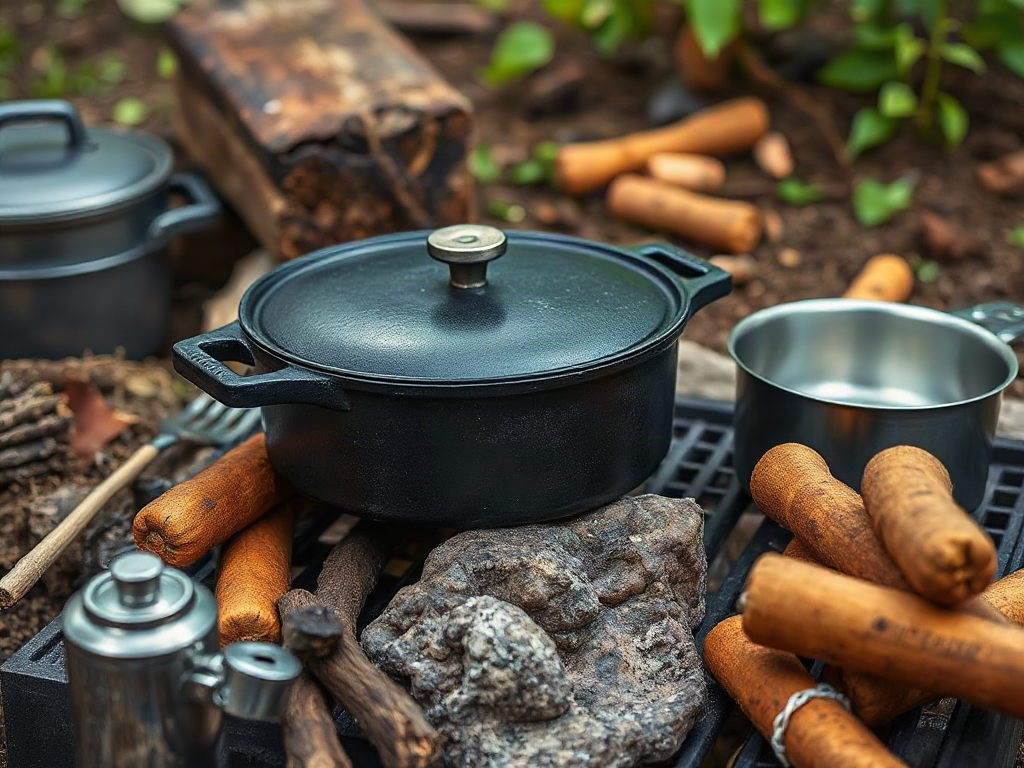
Choose cookware for outdoor cooking by matching the vessel to the heat source, meal size, portability needs, and cleanup conditions. Cast iron suits steady campfire cooking because its mass holds heat, while stainless steel is lighter and easier to maintain for stoves and short trips. Check that the pan fits your burner or grate, has a secure heat-resistant handle, and offers enough capacity without adding unnecessary weight. Avoid relying on indoor nonstick pans, which may be damaged by intense direct heat, metal utensils, or rough transport. A practical setup usually includes one lidded pot, one skillet, and tools sized for the number of people and meals planned.
Match the Vessel to the Outdoor Heat Source
The cooking surface should determine the cookware before appearance or brand does. A campfire produces uneven zones, shifting flames, and intense radiant heat, while a portable gas stove usually delivers a smaller, more predictable burner. A grate may support a broad Dutch oven, but a compact backpacking stove can become unstable under a wide skillet or tall pot.
For open-fire meals, thick cast iron or purpose-made steel cookware is usually more forgiving than thin indoor pans. Cast iron spreads heat slowly and retains it when flames fluctuate, which makes it useful for beans, stews, cornbread, and skillet meals. Its drawback is weight: carrying a large Dutch oven several miles is a very different proposition from moving it from a vehicle to a picnic table.
Some suggestions to consider!
Now retrieving an image set.
Umite Chef 21Pcs Pots and Pans Set Non Stick, Nonstick Ceramic Cookware Sets Detachable Handle, Non Toxic Healthy Induction Cookware, Kitchen Cooking Set, with Frying Pans Set, Dishwasher/Oven Safe
$57.99 (as of October 7, 2026 19:05 GMT +00:00 - More infoProduct prices and availability are accurate as of the date/time indicated and are subject to change. Any price and availability information displayed on [relevant Amazon Site(s), as applicable] at the time of purchase will apply to the purchase of this product.)
Now retrieving an image set.
T-Fal Ultimate Hard Anodized Nonstick Pots and Pans Set 17 Piece, Nonstick Cookware Set with Fry Pan, Saucepans, Saute-Pan, Griddle, Dishwasher Safe, Onyx
$179.99 (as of October 7, 2026 19:05 GMT +00:00 - More infoProduct prices and availability are accurate as of the date/time indicated and are subject to change. Any price and availability information displayed on [relevant Amazon Site(s), as applicable] at the time of purchase will apply to the purchase of this product.)
Now retrieving an image set.
SENSARTE Ceramic Cookware Sets, Pots and Pans Set Non stick, 14 Piece Induction Cookware, Non toxic Healthy Non Stick Kitchen Cooking Set, with Frying Pans Set, PFAS PTFE PFOA PFOS Free
$72.19 (as of October 7, 2026 19:05 GMT +00:00 - More infoProduct prices and availability are accurate as of the date/time indicated and are subject to change. Any price and availability information displayed on [relevant Amazon Site(s), as applicable] at the time of purchase will apply to the purchase of this product.)Portable stoves favor cookware with a stable base that sits fully over the burner. A narrow pot may heat efficiently, whereas an oversized pan can extend beyond the flame and waste fuel. Check the stove manufacturer’s support limits rather than assuming a pan is safe because it fits visually. Wind can also push flames sideways, so a vessel that performs well indoors may heat unevenly outside.
A common mistake is choosing cookware only by its maximum temperature claim. Outdoor performance also depends on contact with the grate, flame direction, lid fit, and whether the handle can be kept away from hot metal. Before buying, identify the actual heat source, the cooking position, and whether the vessel will be lifted over coals repeatedly. Those details narrow the field more effectively than a general label such as camp cookware.
Compare Materials, Weight, and Durability
Material affects heat response, carrying burden, maintenance, and the type of food that cooks comfortably outside. Cast iron offers excellent heat retention and tolerates direct-fire use, but it is heavy and can rust if stored damp. Stainless steel is lighter in many designs, resists corrosion, and handles rough transport well, although thin stainless pans can develop hot spots over a small flame.
Aluminum is popular for backpacking because it reduces pack weight and heats quickly. That speed can be useful for boiling water or preparing a quick meal, but it also means food may scorch when the flame is too high. An anodized aluminum pot may offer a harder surface than basic aluminum, yet its exact care instructions still matter. Titanium is exceptionally light and useful for boiling, but its low mass makes it less comfortable for browning or simmering foods that need steady heat.
Nonstick coatings can simplify cleanup, especially for eggs or delicate foods, but outdoor use exposes them to risks that are less common in a home kitchen. Abrasive cleaning, stacking without protection, overheating an empty pan, and contact with metal tools can shorten coating life. If a coated piece is selected, use the manufacturer’s heat and utensil guidance and transport it so the cooking surface cannot rub against fuel canisters or cookware edges.
Consider the meal rather than treating one material as universally best. A vehicle-based group camp may justify a heavy cast-iron skillet for searing vegetables and cooking breakfast. A hiker boiling dehydrated meals needs a very different priority: low weight, nesting, and fuel efficiency. The wrong assumption is that heavier always means higher quality. Weight is valuable when it improves stability or heat retention, but it becomes a liability when it discourages carrying the pan or complicates safe handling.
Choose Sizes for Meals, Storage, and Transport
Capacity should reflect both the number of diners and the food’s expansion during cooking. A pot that barely holds dry pasta, rice, or beans leaves little room for stirring and increases the chance of spills. On the other hand, carrying a family-size vessel for one person wastes pack space and can make a small stove unstable.
For solo or two-person trips, a compact pot with enough room for boiling and stirring often does more work than a collection of specialized pieces. A group cooking chili, soup, or pasta may benefit from a deeper lidded pot, while a skillet is more useful for tortillas, pancakes, fish, or vegetables that need a broad surface. The best combination depends on the menu, not on a matching set.
Measure the packed dimensions as carefully as the open dimensions. Cookware that nests around a fuel canister, cup, or compact stove can save considerable space, but nesting only works if handles, lids, and fragile coatings do not interfere. Check whether the lid doubles as a pan or plate, but do not assume that a lightweight lid is suitable for direct cooking unless the maker specifies it.
A useful pre-purchase test is to write down every planned meal and mark whether it requires boiling, simmering, browning, baking, or draining. If most meals are one-pot preparations, prioritize a lidded pot. If breakfast includes eggs and vegetables, add a skillet or choose a pot with a broad base. A frequent failure mode is buying a large multipiece set because it appears versatile, then carrying pieces that never leave the storage bin.
Check Handles, Lids, and Cleanup Requirements
Outdoor cookware needs controls that remain usable around heat, gloves, wind, and uneven ground. A folding handle saves space but should lock firmly and stay cool enough for the intended cooking method. Removable pot grips can be convenient, yet they are easy to misplace when a hot vessel needs to be moved quickly. For campfire cooking, a bail handle or a purpose-designed lifting tool may be more practical than a long side handle.
Lids improve fuel efficiency and help food cook evenly, but a loose lid can let steam escape and allow ash or debris to enter. Look for a lid that can be lifted without placing fingers near hot metal. Small vents may reduce rattling and pressure buildup, while a secure knob makes simmering safer. These details matter more during a windy dinner than they do during a calm backyard test.
Cleanup conditions should shape the interior and form. Smooth stainless steel is durable but may require soaking or careful deglazing after food browns. Seasoned cast iron can release food well when maintained, though soap, moisture, and storage habits must be handled according to the manufacturer’s care instructions. A pot with rounded interior corners is easier to scrape clean than one with tight angles where grease and sauce collect.
Plan for water limitations. At a remote site, a pot that can be wiped clean after a one-pot meal may be more practical than a pan that demands several rinses. Pack a scraper, a small sponge, and a dry cloth, and let cookware cool before cleaning. Never pour greasy residue onto the ground or into a natural water source. The practical mistake is judging cleanup only by the first meal; a pan that is easy after eggs may be frustrating after sticky rice or caramelized sauce.
Build a Practical Outdoor Cookware Kit
A useful kit begins with the cooking tasks that cannot be replaced by another vessel. For many campers, that means a lidded pot for boiling and simmering, a skillet for surface cooking, and a heat-safe tool for stirring or lifting. A lid that fits well can reduce fuel use and protect food, while a stable base prevents spills when the ground or grate is imperfect.
Use this priority order before adding extras:
- Compatibility: confirm the cookware works with the stove, grate, or fire arrangement.
- Capacity: allow room for stirring and food expansion without carrying excess volume.
- Handling: inspect grips, locks, bail handles, lid knobs, and glove clearance.
- Care: choose a finish that matches available water, cleaning tools, and storage conditions.
- Packability: verify nesting, packed dimensions, and total carried weight.
Test the kit at home before taking it on a trip. Put the pot on the actual stove, fill it with the amount of water or food you expect to cook, and check whether the handle blocks access to the fuel control. Practice lifting it with the gloves you will use outdoors. If a skillet slides when lightly nudged, it may be unsafe on the intended grate even if its cooking surface is excellent.
Budget should follow use frequency and replacement difficulty. A durable skillet may justify a higher initial cost for frequent vehicle camping, while a casual picnic may need only a modest pot and pan. Do not pay for nesting features that do not fit your stove or menu. For more cookware decision support, compare the criteria in how to choose cookware for outdoor cooking with your specific trip conditions, then review how to choose cookware for outdoor cooking before purchasing.
The strongest sign that a setup is working is uneventful control: the pan stays stable, food cooks without constant flame adjustment, handles remain manageable, and cleanup fits the site’s limits. If food burns in the center, the vessel rocks, or the lid cannot be handled safely, change the cookware or heat arrangement rather than compensating with increasingly complex techniques.
Frequently Asked Questions
Is cast iron good for outdoor cooking?
Yes, especially for campfires, Dutch ovens, and foods needing steady heat. Its main disadvantages are weight, slow heating, and the need to keep it dry.
Can regular kitchen cookware be used outside?
Some stainless steel or heavy-duty pans may work, but check heat limits, handles, coatings, and stability. Indoor nonstick cookware is often a poor choice for direct flames or rough transport.
What cookware is best for a portable camping stove?
Choose a lightweight pot or pan with a flat, stable base that matches the stove’s support arms and burner diameter. A fitted lid improves boiling and simmering efficiency.
How many pieces of cookware do I need for camping?
Many trips can be covered by one lidded pot and one skillet, provided their capacities suit the group and menu. Add specialized pieces only when a planned meal genuinely requires them.
How should outdoor cookware be cleaned?
Let it cool, scrape food residue, wash with an appropriate small amount of water, and dry it completely. Keep grease and wash water away from natural waterways and follow any material-specific care instructions.
Conclusion
Choose outdoor cookware by starting with the heat source and planned meals, then balance material, capacity, handling, cleanup, and packed weight. Cast iron is a strong vehicle-camping option when heat retention matters, while aluminum, titanium, or stainless steel may make more sense when carrying distance and quick heating matter more. A well-fitting lid, stable base, secure handle, and manageable cleaning routine often matter more than an impressive piece count. Test the complete setup before leaving home, including its fit on the stove, lifting points, nesting arrangement, and likely meal portions. The best kit is not the heaviest or most elaborate one; it is the smallest setup that cooks the intended food safely and remains practical from the first boil through final cleanup.