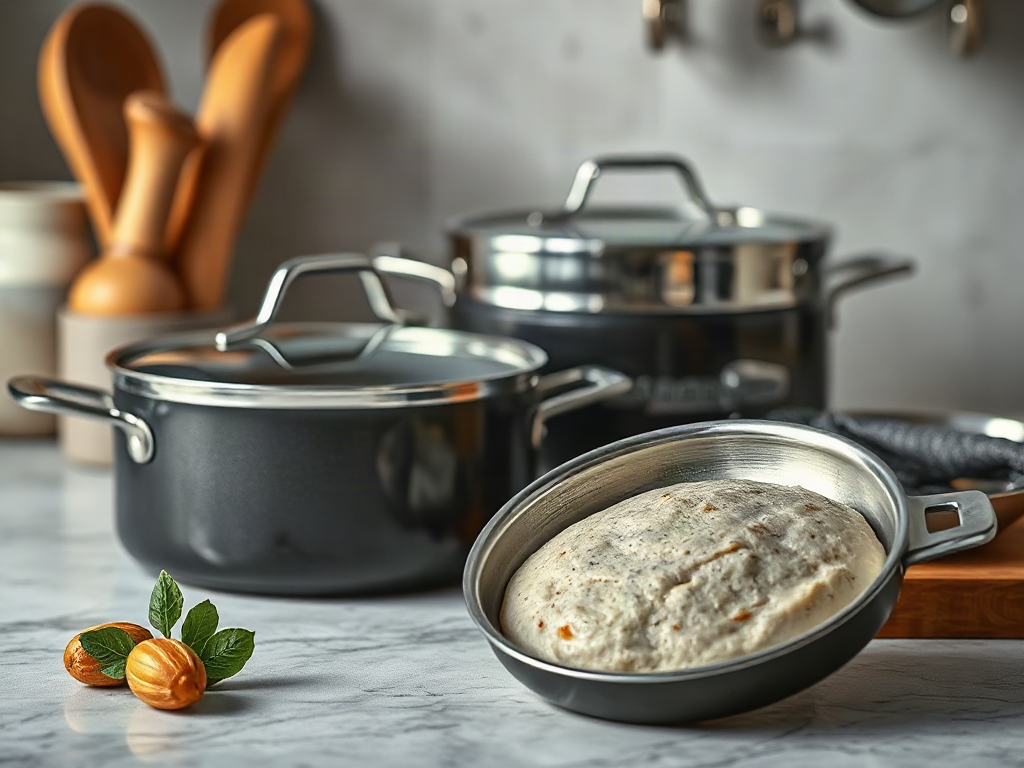
Assess nonstick quality by inspecting the cookware under bright light, checking that its base heats evenly, and cooking a plain egg or thin crepe with minimal oil at moderate heat. A sound surface releases food without force and shows no bubbling, peeling, deep scratches, rough patches, or exposed substrate. Test results only count when the pan is clean and properly preheated; excess oil, cooking spray residue, and excessive heat can conceal or create sticking. Judge durability separately by reviewing the coating type, warranty, care instructions, and construction, because an impressive first release does not show how well the surface will withstand repeated use.
What Does Good Nonstick Performance Look Like?
Good nonstick performance means delicate food separates from the cooking surface with little resistance under suitable cooking conditions. Release should be reasonably consistent across the usable area, not excellent in the center but stubborn near one edge. An egg should slide or lift cleanly after its underside has set, while a thin pancake or crepe should turn without leaving a bonded film behind.
Some suggestions to consider!
Now retrieving an image set.
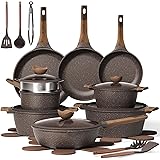
CAROTE 26pcs Pots and Pans Set Non Stick Cookware Sets | Induction Kitchen Cooking Set, Special Texture Design, Ultra Durable, Easy Food Release, Even Heating, with Frying Pans Set
$219.99 (as of October 6, 2026 19:04 GMT +00:00 - More infoProduct prices and availability are accurate as of the date/time indicated and are subject to change. Any price and availability information displayed on [relevant Amazon Site(s), as applicable] at the time of purchase will apply to the purchase of this product.)
Now retrieving an image set.
Amazon Basics Non-Stick Kitchen Cookware 8-Piece Set, Non-Induction, Includes Pots and Pans, Black
$65.15 (as of October 6, 2026 19:04 GMT +00:00 - More infoProduct prices and availability are accurate as of the date/time indicated and are subject to change. Any price and availability information displayed on [relevant Amazon Site(s), as applicable] at the time of purchase will apply to the purchase of this product.)
Now retrieving an image set.
CAROTE 21pcs Pots and Pans Set, Nonstick Cookware Sets, with Egg Pan | Induction Kitchen Cooking Set, Durable, Easy Food Release, Fast & Even Heating, with Frying Pan
$189.99 (as of October 6, 2026 19:04 GMT +00:00 - More infoProduct prices and availability are accurate as of the date/time indicated and are subject to change. Any price and availability information displayed on [relevant Amazon Site(s), as applicable] at the time of purchase will apply to the purchase of this product.)Release is only one part of the assessment. A useful pan must also distribute heat predictably. A slick coating over a thin, distorted base may perform well in a brief demonstration yet produce a hot center that burns food before the outer portion sets. Scorched proteins and sugars adhere more readily, so uneven heating can resemble coating failure. Examine release, heat distribution, surface condition, and physical stability together rather than treating slipperiness as the only measure of quality.
The amount of fat required provides another practical signal, although “nonstick” does not necessarily mean every food should be cooked completely dry. A small amount of butter or oil can improve browning, flavor, and heat transfer. The meaningful question is whether the pan needs a growing layer of fat to release the same food under the same conditions. If eggs once lifted with a light wipe of oil but now require a visible pool, performance has probably declined.
Expectations should match the food. Eggs, crepes, fish fillets, and cheese expose release problems quickly because they are delicate or rich in adhesive proteins. Sautéed vegetables are a weaker test: their moisture and cooking oil may hide an uneven surface. A steak is also unsuitable for judging pure release because deliberate browning involves contact and crust formation.
Do not mistake appearance alone for performance. Some coatings are matte, textured, or reinforced and may not feel glass-smooth to a fingertip. Conversely, a glossy pan can still have poor heat control or residue that becomes sticky when warmed. The most credible judgment combines a close inspection with a controlled cooking test.
Inspect the Surface and Pan Construction
Surface inspection can reveal defects that no food test should be used to excuse. Hold the clean, dry pan under strong light and view it from several angles. Look for peeling edges, blisters, chips, deep scratches, discolored hot spots, exposed metal, or areas that differ sharply in texture. A few superficial utensil marks may affect appearance more than function, but flaking, bubbling, and visible substrate indicate physical coating failure.
Run a clean fingertip gently over a cool surface only when the manufacturer’s care guidance permits normal hand washing. The finish should feel consistent for that particular coating. A distinct ridge around a scratch, a raised bubble, or a rough patch where food repeatedly catches deserves more attention than uniform factory texture. Do not scrape a questionable spot to see whether it lifts; that can enlarge damage and makes the pan unsuitable for a fair assessment.
Inspect the rim and sidewalls as well as the central cooking area. Damage often begins where utensils strike the wall or where pans rub together during storage. Darkened residue around rivets can also create localized sticking even when the coating remains intact. Residue usually feels tacky or uneven and may respond to manufacturer-approved cleaning, whereas missing coating cannot be cleaned back into place.
The body of the pan affects how the coating performs. Place it on a flat counter and press gently around the rim. A pan that rocks may have a warped base and unstable burner contact. On an electric or induction surface, poor contact can produce irregular heating; on gas, a distorted pan may still heat unevenly because the metal thickness and flame exposure vary. A substantial, flat base is generally more useful than weight alone. Heavy cookware can still be poorly balanced, while lighter cookware may perform evenly if its conductive layer is well designed.
For new cookware, examine the product documentation rather than relying on labels such as “stone,” “granite,” “diamond,” or “ceramic look.” Those marketing terms do not by themselves disclose the coating chemistry, layer design, allowable utensils, maximum recommended temperature, or dishwasher guidance. Prioritize a clearly identified cooking surface, specific care instructions, a stable base, and warranty language that explains what coating defects are covered.
How Should You Test a Nonstick Pan?
A controlled test uses a clean pan, moderate heat, minimal fat, and a food that makes release easy to observe. Before testing, wash away storage dust or old oil according to the maker’s directions and dry the pan fully. Avoid aerosol cooking spray unless the manufacturer explicitly allows it; some sprays can leave a persistent film that becomes gummy and confuses the result.
Begin with a plain egg because its proteins expose sticking without requiring an aggressive cooking temperature. Warm the pan gradually at low to medium heat. Add a light wipe of oil or a small amount of butter, followed by the egg. Let the white set before trying to move it. Prematurely pushing raw egg around tests timing more than the coating. Once set, slide a compatible spatula underneath and note whether the egg lifts intact, tears at isolated spots, or remains bonded across a broad area.
A thin pancake or crepe is a useful second test because it covers more of the cooking surface. It can reveal an overheated center, a cool perimeter, or a damaged patch missed by the egg. Use the same batter amount and burner setting when comparing two pans. Differences in recipe, moisture, sugar, and pan temperature make casual side-by-side impressions unreliable.
| Observation | Likely Meaning | Next Check |
|---|---|---|
| Food releases evenly | Surface and heat control are functioning well | Repeat after normal use to judge durability |
| Food sticks only in the center | Possible hot spot or residue | Lower the heat and inspect the center when cool |
| Food catches at one scratch | Localized surface damage | Check for a ridge, chip, or exposed base material |
| Food sticks everywhere | Wrong temperature, residue, or broad wear | Clean correctly and repeat once under controlled conditions |
One trial should not decide the verdict. Repeat the test after the pan has cooled, been washed, and been dried. A repeatable result is more informative than one unusually good or bad cook. Never use an empty-pan high-heat test, deliberately burn food, or scrape the surface with metal to prove durability. Those methods can damage the coating and do not represent normal use.
Is Sticking Caused by the Coating or Cooking Method?
Sticking does not automatically mean the coating has failed. Excessive burner heat, baked-on oil, overcrowding, cold food, and moving proteins too early can all produce poor release. Before replacing a pan, change one variable at a time and repeat a simple test. This separates a damaged surface from a correctable cooking or cleaning problem.
Temperature is the first variable to examine. Nonstick cookware is generally intended for controlled rather than extreme heat, subject to the manufacturer’s directions. A burner setting marked “medium” is not a standardized temperature: a powerful burner can overheat an empty pan quickly. If butter darkens immediately or the first part of an egg hardens before the rest begins setting, the pan may be too hot. Reduce the setting and allow the pan to cool before trying again.
Residue can make a sound coating feel sticky. Thin layers of polymerized oil may look like amber or brown staining, particularly near the center or around rivets. Aggressive scouring is a poor first response because it can trade removable residue for permanent scratches. Use the cleaning method specified by the manufacturer, with a soft sponge and compatible detergent, then reassess. If the tackiness remains after proper cleaning, the surface may be worn or the residue may be too established for safe removal under the approved care instructions.
Technique matters most with proteins. A fish fillet placed wet into a barely warm pan can grip the surface, while the same fillet, patted dry and left undisturbed until its exterior firms, may release cleanly. That improvement does not prove the coating is new; it shows that moisture and timing influenced the original result. In contrast, food repeatedly catching at the same blister or exposed patch points toward physical damage.
Use a short diagnostic sequence: clean the pan correctly, inspect it when dry, repeat an egg test at lower heat, and compare where sticking occurs. Improving after cleaning or temperature adjustment suggests a use-related issue. Persistent, localized failure aligned with visible damage suggests retirement. Broad deterioration despite correct preparation suggests the release layer has reached the end of its useful service life.
Judge Durability Before and After Purchase
Durability cannot be proven by a showroom touch test or a single fried egg. It must be inferred from construction, care limits, documentation, and performance over repeated cooking cycles. A newly applied coating can feel exceptionally slick even when the underlying pan is thin or the finish requires careful handling. Treat initial release as a baseline rather than a lifetime prediction.
Before purchase, compare specific operating constraints. Check which utensils are permitted, whether hand washing is recommended, how pans should be stacked, which cooktops are compatible, and whether the maker states a temperature limit. A pan that requires soft utensils and hand washing may deliver excellent release for a careful household but be a poor match for a shared kitchen where metal tools and dishwashers are routine. Suitability is part of quality: a delicate surface that conflicts with actual habits is unlikely to retain its performance.
Warranty coverage can clarify what the company considers a defect, but it should be read closely. Normal wear, overheating, scratches, and misuse may be treated differently from peeling or blistering. A long headline warranty is less informative than clear terms, accessible care instructions, and an identifiable manufacturer. Keep the receipt and photograph the clean surface when new if coating coverage matters to the purchase decision.
After purchase, establish a simple baseline. Note how an egg releases, how evenly a pancake colors, and whether the pan sits flat. Recheck when performance changes rather than waiting until food is difficult to remove. The comparison is most useful when the food, burner, heat setting, and fat are similar. Gradual loss of slickness without visible peeling may be ordinary wear; sudden failure after severe overheating or abrasive cleaning has a more identifiable cause.
Storage and utensils strongly affect the useful life of the surface. Use tools approved for that pan and avoid nesting bare metal cookware directly against the coating. A soft pan protector can prevent rims and bases from grinding against it. Replace rather than continue testing cookware with substantial peeling, widespread blistering, sharp gouges, or exposed substrate. No release benefit compensates for a mechanically unstable cooking surface.
Frequently Asked Questions
Can I test a nonstick pan without oil?
You can if the manufacturer permits dry cooking, but a very light, measured film of oil gives a more realistic comparison and reduces recipe-related variation.
What food gives the clearest nonstick test?
A plain egg is the most convenient first test. A thin crepe or pancake adds coverage and can reveal uneven heating across the pan.
Does a scratched pan always need replacement?
Light cosmetic marks differ from peeling, deep gouges, raised edges, or exposed substrate. Follow the maker’s damage guidance and replace cookware with substantial coating failure.
Why has my pan become sticky even though it is not scratched?
Baked-on oil, cooking spray residue, excessive heat, or broad coating wear can create tackiness. Clean it by the approved method and repeat a moderate-heat test.
Can price determine nonstick quality?
No. Price alone does not establish release or durability. Compare surface condition, base stability, coating disclosure, care limits, warranty terms, and controlled cooking performance.
Conclusion
A dependable assessment combines observation with repeatable cooking conditions. First reject obvious defects such as peeling, blisters, deep gouges, exposed metal, or a warped base. Then test a clean pan at moderate heat with a plain egg and, if needed, a crepe or pancake that covers a wider area. Record whether food releases evenly and whether browning reveals hot spots.
If performance is weak, correct residue, temperature, timing, and excess cooking spray before blaming the coating. Persistent failure in the same damaged location is more persuasive than one poor cooking result. For a new purchase, weigh construction, usage limits, warranty clarity, and compatibility with household habits alongside initial slickness. For cookware already in service, compare current behavior with its original baseline and retire surfaces showing substantial mechanical deterioration.
Additional Resources
Authoritative Sources
- Homemaker's Column: Cookware Safety - Clemson Blogs
blogs.clemson.eduMay 16, 2022 — Nonstick coatings will wear away with rugged use, and particles may chip off, so following manufacturers' instructions for use and care is ... Read more