How Cookware Color Changes Heat Absorption
Cookware color affects how a surface interacts with radiant energy, especially when the pan is exposed to an oven’s heating elements, a broiler, or direct sunlight. Dark, matte finishes generally absorb more incoming radiation than pale or reflective finishes, while shiny surfaces tend to reflect more of it. That difference can influence surface temperature, but it does not operate independently from the pan’s material, thickness, coating, and contact with the heat source.
The distinction matters because kitchen heat arrives in several ways. A stovetop transfers much of its energy through direct contact between the burner and the pan base. An oven surrounds the cookware with hot air while also exposing it to radiation from heating elements and oven walls. A broiler relies heavily on radiant energy from above. Color has more opportunity to matter as radiant exposure increases.
For example, two similarly constructed baking sheets with dark and pale finishes may not behave identically under a broiler or in a hot oven. The darker sheet may absorb radiant energy more readily, potentially increasing surface temperature and browning food sooner. That does not mean every dark pan automatically cooks faster. A heavy, light-colored pan can retain and distribute heat more effectively than a thin, dark one.
The practical takeaway is to treat color as a secondary heat variable. If a recipe repeatedly produces over-browned cookie bottoms, pan color deserves attention, particularly when switching from a light aluminum sheet to a dark coated sheet. Lowering the oven temperature slightly, shortening the baking time, or using parchment may be more useful than replacing the entire pan without checking its construction.
Some suggestions to consider!
Now retrieving an image set.
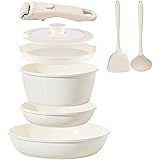
Ceramic Cookware Set Non Stick 8Pcs Pots and Pans Set Detachable Handle Induction Kitchen Cooking Set with Frying Pans Oven Dishwasher Safe, PFAS/PFOA Free, Cream White
$39.98 (as of October 22, 2026 19:19 GMT +00:00 - More infoProduct prices and availability are accurate as of the date/time indicated and are subject to change. Any price and availability information displayed on [relevant Amazon Site(s), as applicable] at the time of purchase will apply to the purchase of this product.)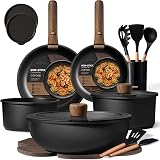


CAROTE 21pcs Pots and Pans Set Non Stick, Detachable Handle Cookware, Black | Induction Compatible, Dishwasher & Oven Safe, Kitchen Organization, Cooking Set for Camping/RV/Traveling, House Warming Gift
$99.99 (as of October 22, 2026 19:19 GMT +00:00 - More infoProduct prices and availability are accurate as of the date/time indicated and are subject to change. Any price and availability information displayed on [relevant Amazon Site(s), as applicable] at the time of purchase will apply to the purchase of this product.)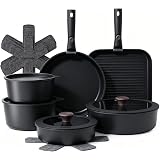
Now retrieving an image set.
SENSARTE 17 Piece Nonstick Detachable Handle Pots and Pans Set Black | Removable Handle Cookware Set, Induction Cookware Set with Removable Handle, Healthy Non Stick for RV, Dishwasher & Oven Safe
$79.99 (as of October 22, 2026 19:19 GMT +00:00 - More infoProduct prices and availability are accurate as of the date/time indicated and are subject to change. Any price and availability information displayed on [relevant Amazon Site(s), as applicable] at the time of purchase will apply to the purchase of this product.)Why Material and Heat Source Usually Matter More
Pan material and geometry usually exert a stronger influence on cooking performance than visible color. Aluminum transfers heat quickly, cast iron stores substantial heat, stainless steel depends heavily on its layered construction, and ceramic or glass cookware responds more slowly to temperature changes. A colored coating may alter surface absorption, but the underlying body determines how heat travels through the pan and reaches the food.
Heat source changes the ranking of those factors. On an electric or induction cooktop, the base must couple efficiently with the burner or magnetic field. A dark exterior cannot compensate for an unsuitable induction base, a warped bottom, or poor contact with the cooking surface. On gas, flame contact and pan placement often create larger temperature differences than the shade of the sidewalls.
In an oven, the pan’s thickness and thermal mass affect how quickly it responds and how steadily it holds temperature. A thin, dark baking tray may heat rapidly and encourage fast browning, while a thick, pale tray may warm more gradually but provide a steadier buffer against sudden temperature changes. Neither is universally better. Thin dark metal can suit foods where rapid browning is desirable; delicate cookies may be easier to manage on a lighter sheet.
A common mistake is comparing only color while ignoring finish. A glossy black surface and a textured black surface may interact with radiant energy differently, and a coated pan may have an insulating layer between the food and the metal. When evaluating the impact of cookware color on heat absorption, check the base material, wall thickness, interior coating, and intended heat source before drawing conclusions from appearance alone.
Dark and Light Interiors in Everyday Cooking
Interior color changes more than heat behavior; it changes what the cook can see. A light interior makes pale sauces, caramelization, and fond easier to monitor. A dark interior can make early browning less obvious, although it may visually emphasize contrast in foods with light surfaces. These observation differences affect timing because cooks often adjust heat based on appearance rather than a thermometer.
Consider a stainless steel sauté pan with a bright interior beside a dark enamel-coated pan. The stainless surface makes browned bits easy to identify as they develop, which helps when deglazing onions or building a pan sauce. The dark pan may produce a visually less obvious color change, so the cook may need to rely more on texture, aroma, sizzling behavior, and a timer. The pan’s thermal response still depends mainly on its construction, not just the interior shade.
Light interiors can be particularly useful for custards, reductions, roux, and other preparations where a small color change signals a narrow cooking window. Dark interiors may be comfortable for roasting or baking, where the food’s surface is the primary visual reference. Enamel, ceramic, and nonstick coatings also introduce durability and care considerations: discoloration, scratches, and staining can make any color harder to interpret over time.
Do not assume a dark interior guarantees better browning. Browning depends on food moisture, surface contact, temperature, fat, crowding, and time. A pale pan with strong heat transfer may brown more effectively than a dark pan used with wet or overcrowded ingredients. A useful approach is to choose a visible interior for precision sauces and reductions, then judge a baking pan by its thickness, finish, and recipe compatibility. Color should support observation, not replace control.
Choosing a Pan Color for the Cooking Environment
The best color choice depends on where and how the cookware will be used. For oven baking, a lighter, reflective sheet may provide more forgiving browning for cookies and thin pastries, while a darker sheet may suit roasted vegetables or foods where deeper surface color is welcome. Recipe instructions that specify a light or dark pan are usually addressing the combined effect of surface absorption, pan thickness, and contact with the food.
For broiling, color may have a clearer effect because radiant energy from above reaches exposed surfaces directly. Still, distance from the element, rack position, food moisture, and pan material can overwhelm the color difference. Broiling should be monitored closely regardless of finish because small changes in position can produce large changes in surface browning.
On the stovetop, prioritize a flat base, suitable material, and even construction. A black exterior may look heat-absorbing, but the burner is primarily heating the underside through contact. For induction, verify compatibility and pay attention to the magnetic base rather than relying on the pan’s visible color. For cast iron or thick steel, thermal mass often matters more than finish once the pan is hot.
A practical selection order is:
- Match the base to the heat source: confirm induction compatibility and suitable oven limits.
- Choose construction for the food: favor responsive metal for quick adjustments and heavier cookware for steady searing or roasting.
- Use color as a tuning factor: select lighter finishes for delicate baking visibility and darker finishes when faster surface browning is useful.
- Account for care: a finish that shows stains, scratches, or discoloration may become harder to read over time.
These priorities prevent a common purchasing error: selecting a pan because its color suggests strong heating while overlooking a thin base, uneven construction, or a coating unsuitable for the intended temperature.
Common Misconceptions and Practical Testing
The most misleading assumption is that cookware color alone determines how hot a pan becomes. Color influences radiant absorption, but the result at the food depends on energy transfer through the entire pan. A black pan on a low burner may remain cooler than a silver pan on a high burner, and a heavy light-colored pan may hold heat longer after the burner is reduced.
Another mistake is transferring outdoor or solar-heating observations directly to indoor cooking. A dark object can heat strongly in sunlight because radiation is the primary energy source. On a stovetop, direct contact and conduction dominate. In an oven, convection and radiation work together. The same color can therefore produce different practical results in different settings.
Home cooks can compare pans without pretending to conduct a laboratory experiment. Use the same recipe, ingredient mass, rack position, preheating time, and oven setting. Record the pan color, material, thickness, baking time, underside browning, and carryover cooking. Repeat the comparison if the difference seems small. A single batch can be distorted by dough temperature, oven hot spots, or unequal spacing.
Signs that color may be influencing the result include consistently darker bottoms after changing from a light to a dark sheet while all other variables remain stable. Signs that another factor is responsible include uneven browning within the same pan, dramatic differences between oven racks, or inconsistent results caused by crowding. For deeper context, readers comparing the impact of cookware color on heat absorption should separate radiant exposure from conduction, then test one variable at a time.
Frequently Asked Questions
Do black pans always absorb more heat?
Black, matte surfaces generally absorb more radiant energy than light or reflective surfaces, but material, thickness, finish, and heat source can have a larger practical effect.
Does cookware color matter on a stovetop?
Usually less than it does in radiant heating. Burner contact, base construction, material, and heat setting typically dominate stovetop performance.
Are dark baking pans better for browning?
They may encourage faster browning in some oven situations, but food moisture, pan thickness, oven calibration, and spacing also strongly affect the result.
Why do recipes specify light-colored baking sheets?
Light sheets can provide more forgiving browning for cookies and delicate pastries. Dark sheets may brown bottoms sooner, so timing or temperature adjustments may be needed.
Should cookware color determine a purchase?
Use color as a secondary preference. Prioritize heat-source compatibility, material, thickness, flatness, coating quality, and the foods you prepare most often.
Further Reading
Authoritative Sources
- Cooking and Energy Efficiency
energy.govProvides practical context on how household cooking appliances transfer and use heat
- National Institute of Standards and Technology
nist.govOffers background on measurement concepts useful when comparing temperature and heat behavior
Conclusion
Cookware color matters most when radiant energy plays a substantial role, such as baking, broiling, or exposure to strong sunlight. Dark, matte finishes may absorb radiation more readily, while light or reflective surfaces can offer slower visual browning and clearer interior contrast. The effect is real, but it should not outrank pan material, base design, thickness, finish, or heat-source compatibility.
For a practical decision, match the pan to the task: consider lighter baking surfaces for delicate pastries, darker finishes for recipes that benefit from stronger surface browning, and visible interiors for sauces or reductions that require close color monitoring. If results change after switching pans, test color alongside thickness and material rather than blaming shade alone. That approach produces more reliable cooking decisions and more realistic expectations.