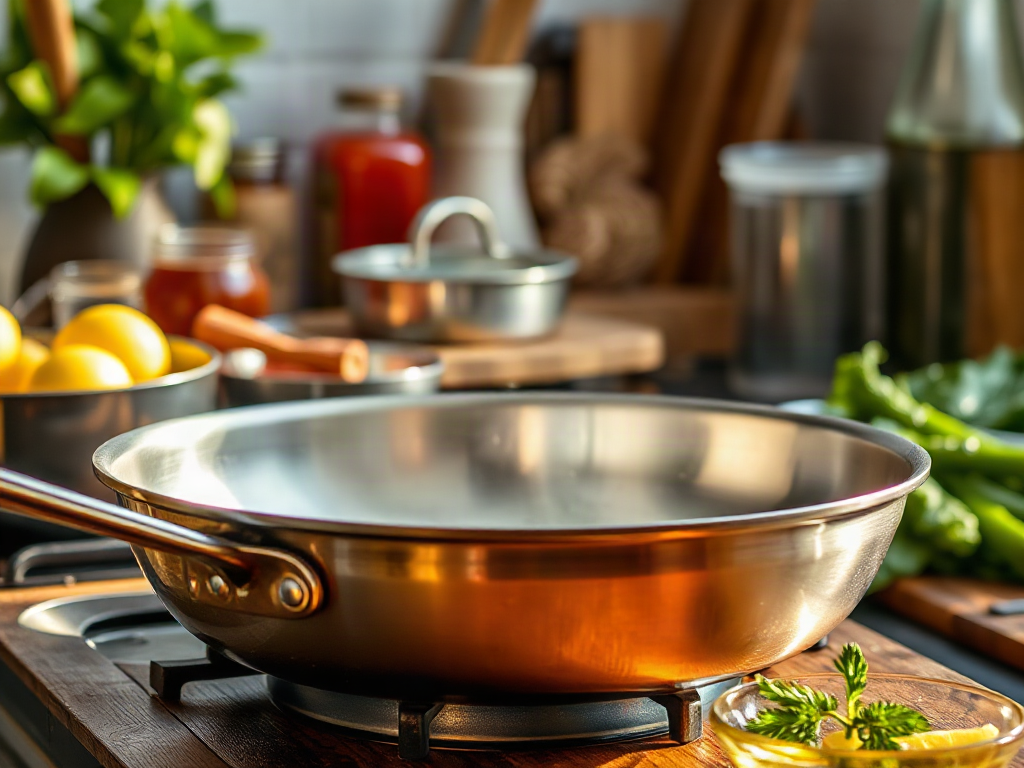
The importance of cookware weight for stability comes from how a pan’s mass resists sliding, tipping, and sudden movement during stirring, pouring, and lifting. A heavier base can keep a skillet steady on a burner, while balanced weight between the vessel and handle reduces torque at the stovetop. Weight also affects heat retention, but added mass is not automatically safer or better if it makes lifting, draining, or cleaning difficult. Compare the pan’s empty weight, handle design, base contact, and your typical cooking tasks rather than choosing the heaviest option. A stable pan should stay planted without demanding awkward grip strength or unsafe two-handed handling.
How Weight Keeps Cookware Stable
Cookware stability depends on the vessel’s resistance to movement when force is applied. A pan with more mass generally requires more force to slide across a smooth cooktop, shift when a spoon scrapes the bottom, or rotate as food is tossed. Its weight works with the flatness of the base and the grip of the cooking surface, giving the pan a steadier platform during ordinary tasks.
The effect is easiest to notice while stirring thick food. A light saucepan may travel across the burner as a wooden spoon pushes through oatmeal, risotto, or a dense sauce. A heavier saucepan tends to remain in place because the downward force increases contact between the base and the cooktop. Stability does not mean immobility under every condition: grease, moisture, a warped base, or an uneven grate can still make any vessel slide.
Some suggestions to consider!
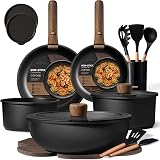


CAROTE 21pcs Pots and Pans Set Non Stick, Detachable Handle Cookware, Black | Induction Compatible, Dishwasher & Oven Safe, Kitchen Organization, Cooking Set for Camping/RV/Traveling, House Warming Gift
$99.99 (as of October 23, 2026 19:19 GMT +00:00 - More infoProduct prices and availability are accurate as of the date/time indicated and are subject to change. Any price and availability information displayed on [relevant Amazon Site(s), as applicable] at the time of purchase will apply to the purchase of this product.)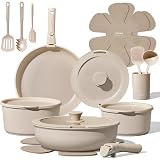


CAROTE 21pcs Pots and Pans Set Non Stick, Detachable Handle Cookware Sets | Stackable Cooking Set, Dishwasher & Oven Safe, Induction Ready, for Kitchen/Apartment/Camping/RV, House Warming Gift
$59.98 (as of October 24, 2026 11:50 GMT +00:00 - More infoProduct prices and availability are accurate as of the date/time indicated and are subject to change. Any price and availability information displayed on [relevant Amazon Site(s), as applicable] at the time of purchase will apply to the purchase of this product.)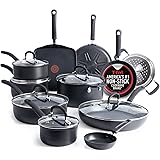
Now retrieving an image set.
T-Fal Ultimate Hard Anodized Nonstick Pots and Pans Set 17 Piece, Nonstick Cookware Set with Fry Pan, Saucepans, Saute-Pan, Griddle, Dishwasher Safe, Onyx
$229.95 (as of October 23, 2026 19:19 GMT +00:00 - More infoProduct prices and availability are accurate as of the date/time indicated and are subject to change. Any price and availability information displayed on [relevant Amazon Site(s), as applicable] at the time of purchase will apply to the purchase of this product.)Weight also helps resist tipping. A tall pot filled with water has a high center of gravity, so a small sideways force at the handle can create a tipping moment. A substantial base can counter some of that movement, particularly when the pot is sitting on a properly sized burner grate. The result is not a guarantee against spills, but it gives the cook more control when adding ingredients or stirring.
A useful comparison is a thin, lightweight frying pan versus a heavier skillet. The lighter pan may respond quickly to lifting and repositioning, but it can move when a spatula presses against food. The heavier skillet is usually more planted, yet its mass makes it harder to maneuver over a sink or transfer from stovetop to oven. The better choice depends on which movement presents the greater risk in your kitchen.
Readers assessing the importance of cookware weight for stability should test movement rather than relying on a product label. Place the empty pan on the intended burner, hold the handle as you would while cooking, and apply gentle stirring pressure with the other hand. Excessive sliding, handle lift, or rocking indicates that shape and base design may be undermining the benefit of the pan’s weight.
Weight Distribution Matters More Than Bulk
Evenly distributed mass is usually more useful than maximum mass. A pan can feel heavy yet remain awkward if most of its weight sits in a long handle, a tall wall, or one thick section of the base. Stability improves when the center of mass stays close to the cooking surface and the handle does not create excessive leverage.
Handle torque explains why some cookware tips or rotates despite having a substantial body. A long handle acts like a lever. When it is pulled, bumped, or loaded with a towel, the force is transferred to the rim and can lift the opposite side of the pan. A compact handle with a secure attachment may create less leverage, while a helper handle can make a wide, heavy pan easier to control with two hands.
Base geometry matters as well. A broad, flat base usually gives a vessel more contact with a smooth cooking surface than a narrow or rounded base. On a gas range, the base must sit securely on the grate; a pan that rests on only a few points may wobble even when it is heavy. On induction or glass, a flat underside is particularly important because a warped base can rock and may not transfer heat evenly.
Consider a large sauté pan filled with vegetables. If its body is broad and its main mass sits low, stirring is less likely to make it rotate. If the same pan has a narrow base and an oversized handle, the cook may need to brace it constantly. The second design is not necessarily defective, but its usable stability is lower than its scale might suggest.
Weight distribution also affects lifting. A vessel that feels balanced when empty can become handle-heavy when filled, especially if the contents are liquid. Check whether the primary handle remains comfortable when the pan is loaded with a realistic amount of food. A stable design should support controlled lifting without forcing the wrist into an extreme angle or requiring the cook to reach over a hot surface.
For more context, the importance of cookware weight for stability is best evaluated alongside base width, handle position, wall height, and the way the pan will be filled. Comparing only listed weight can hide the design features that determine whether that weight actually works for you.
Choosing Weight for Different Cooking Tasks
The right cookware weight changes with the task. A stable Dutch oven or stockpot may benefit from considerable mass because it holds liquid, sits on one burner for a long period, and is often stirred in place. A small saucepan used for melting butter may not need the same heft, particularly if frequent pouring is part of the routine.
For frying and searing, a heavier skillet can feel controlled when food is turned with a spatula or when a roast is moved against the pan surface. Its mass may also reduce the immediate temperature drop that follows the addition of cold ingredients, although thickness, material, burner output, and food quantity all contribute. Heavy construction does not excuse overcrowding or poor heat control.
For sautéing vegetables, weight should be balanced against the need to shake or lift the pan. A cook who frequently performs a quick wrist toss may prefer a moderate-weight skillet with a comfortable handle. Someone who stirs with a utensil and keeps the pan on the burner may value a heavier base. A pan that is theoretically stable but too difficult to lift can become less safe during transfers.
Liquid-heavy tasks require special attention. A pot that is easy to handle empty may become substantially more demanding when filled with soup, pasta water, or braising liquid. Look for side handles that permit a secure two-handed grip, and leave enough room to move the vessel without passing it over another burner. The practical weight is the combined weight of the cookware and its contents, not the number printed on the packaging.
Baking and oven use introduce another constraint: racks, mitts, and narrow clearances make awkward cookware harder to control. A heavy roasting pan may stay planted while a turkey or dense roast is moved, but its handles must remain accessible with protective mitts. A very lightweight baking vessel may be easier to remove yet more prone to flexing or shifting when a rack is pulled.
A compact decision check can help:
- Choose more mass when stirring force, burner stability, or heat retention is a frequent concern.
- Choose moderate mass when the pan must be lifted, shaken, poured, or moved often.
- Prioritize balance when the vessel will be filled with liquid or handled with two hands.
- Reject awkward weight if the grip, wrist angle, or storage method makes routine use difficult.
That approach keeps the purchase tied to real cooking behavior rather than the assumption that heavier always means better. A useful the importance of cookware weight for stability assessment asks what forces the pan will face and how you will respond to them.
Tradeoffs, Safety Checks, and Buying Priorities
Extra weight can improve control, but it also increases strain during lifting, washing, draining, and storage. A heavy cast-iron skillet may stay firmly positioned while frying, yet it can be difficult to move safely with one hand. A thick stainless-steel pot may feel reassuring on a burner, but its loaded weight may exceed what a user can comfortably carry to the sink.
Do not treat weight as a substitute for a sound base. A heavy pan with a convex underside, damaged cooking surface, loose handle, or unstable grate can still shift. Inspect the base for flat contact, place it on the intended cooking surface, and check whether it rocks. Examine handle attachments and confirm that the handle does not dip toward the burner or force your hand close to heat.
Stability can also change over time. Repeated overheating, rough handling, and thermal shock may contribute to warping in some cookware. Sudden cooling of a hot vessel can also stress certain materials. Follow the manufacturer’s care instructions, avoid sliding cookware across delicate surfaces, and use an appropriately sized burner. These habits protect the base that the cookware’s stability depends on.
A common mistake is buying the heaviest available option without considering storage. If a pan is difficult to retrieve from a high shelf, it may be dropped or handled with poor posture. Another mistake is judging stability while the pan is empty. Test the grip and balance with a modest load of water, staying within a safe handling range, to understand how the center of mass changes.
Prioritize features in this order: a flat and appropriately sized base, secure and well-positioned handles, a center of mass close to the cooking surface, enough weight for the intended stirring or heating task, and manageable loaded weight. That sequence prevents a heavy but poorly designed pan from outranking a lighter, better-balanced one.
People with limited hand strength, wrist discomfort, or restricted reach should treat manageable weight as a safety requirement rather than a convenience. A helper handle, smaller diameter, or two medium pans may be more practical than one oversized vessel. Stability only helps when the user can control the cookware throughout cooking and cleanup.
For product-specific limits, oven ratings, care instructions, and handle guidance, consult the manufacturer’s documentation for the exact cookware model. Consumer safety organizations and university food science or extension programs may also provide general advice on safe handling, burner fit, and preventing spills without endorsing a particular weight or material.
Frequently Asked Questions
Does heavier cookware always provide better stability?
No. Weight helps resist movement, but a flat base, balanced handle, and suitable burner fit matter just as much. A heavy pan can still rock or tip if its design is poorly balanced.
Why does a cookware handle affect stability?
A long or handle-heavy design creates leverage that can rotate or lift the vessel when pulled. A shorter grip or helper handle may distribute force more effectively, especially on wide pans.
Is lightweight cookware safer for people with limited strength?
Often, manageable weight is safer because it reduces strain during lifting and washing. Choose a lighter pan only if its base and handle still provide adequate control during stirring.
Should a saucepan be heavy if it holds liquids?
A stable base is useful, but the loaded weight matters more than the empty weight. Side handles and a comfortable two-handed grip may be more valuable than maximum mass.
How can I test cookware stability before buying?
Set the vessel on the intended cooktop or grate, check for rocking, hold the handle, and apply gentle stirring pressure. If possible, test balance with a modest amount of water rather than judging the empty pan alone.
Conclusion
Cookware weight supports stability by helping a pan resist sliding, rotation, and tipping, but useful stability comes from the whole design. Base flatness, contact area, handle leverage, wall height, and loaded balance determine whether extra mass improves control or simply makes the vessel harder to move. Match the weight to the task: substantial construction can suit steady frying, simmering, or braising, while moderate weight may be better for frequent lifting, shaking, and pouring. Before buying, test the pan on the relevant cooking surface, inspect its balance, and imagine handling it full of food. The best choice is not the heaviest cookware; it is the cookware that stays planted during use and remains comfortable to control through transfer, cleaning, and storage.