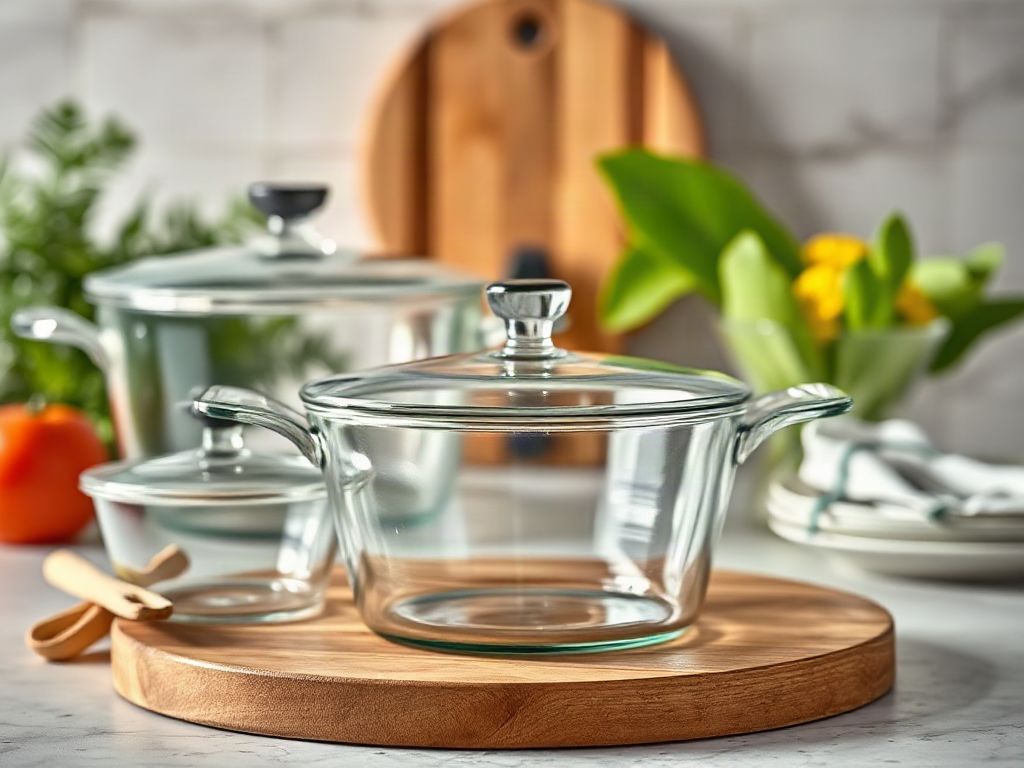
The benefits of using glass cookware include clear visibility, nonreactive cooking surfaces, straightforward cleanup, and convenient oven-to-table serving, while its main limitation is sensitivity to sudden temperature changes. Glass does not readily interact with acidic foods such as tomatoes, citrus, or vinegar, so flavors and colors are less likely to be affected during baking or roasting. Its transparency also makes browning, bubbling, and liquid levels easy to monitor without lifting a lid. Choose oven-safe pieces marked for cooking, avoid thermal shock, and inspect for chips or cracks before each use.
Why Glass Cookware Performs Differently
Glass cookware is useful because its cooking surface is generally nonreactive, transparent, and easy to inspect. Those characteristics make it especially practical for casseroles, baked pasta, roasted vegetables, fruit crisps, and foods with acidic sauces. Unlike some bare metals, glass does not readily contribute a metallic taste or react with ingredients such as tomato, lemon, wine, or vinegar. That does not make every glass item suitable for every appliance, but it gives the material a predictable role in many home kitchens.
Transparency changes how cooking decisions are made. A clear baking dish lets you see whether a sauce is bubbling around the edges, whether a crust is browning, or whether liquid has evaporated too far. A covered glass container can move from oven or refrigerator to the table when its manufacturer permits that use, reducing the number of dishes needed for serving. The practical benefit is not merely appearance: visibility can help prevent overbaking, scorching at the edges, or adding liquid when the dish is already adequately moist.
Some suggestions to consider!
Now retrieving an image set.
CAROTE 21pcs Pots and Pans Set Non Stick, Detachable Handle Cookware Sets | Ultra Nonstick, Space Saving, Dishwasher & Oven Safe, Non-Toxic Kitchen/Apartment/Camping/RV/ Traveling, Purple
$99.99 (as of October 23, 2026 19:19 GMT +00:00 - More infoProduct prices and availability are accurate as of the date/time indicated and are subject to change. Any price and availability information displayed on [relevant Amazon Site(s), as applicable] at the time of purchase will apply to the purchase of this product.)
Now retrieving an image set.
Anymark 16PCS Pots and Pans Set Non Stick Cookware (white, 16pieces) | Beautiful Great Value Food Cooks Evenly Cleans Easily With Frying Pan
$59.98 (as of October 23, 2026 19:19 GMT +00:00 - More infoProduct prices and availability are accurate as of the date/time indicated and are subject to change. Any price and availability information displayed on [relevant Amazon Site(s), as applicable] at the time of purchase will apply to the purchase of this product.)
Now retrieving an image set.
Astercook 21 Pcs Pots and Pans Set Non Stick, Ceramic Cookware Set Detachable Handle, RV Kitchen Cooking Set Removable Handles, Oven Safe, Induction Ready, Stackable, Black, Fathers Day Gift for Men
$99.98 (as of October 23, 2026 19:19 GMT +00:00 - More infoProduct prices and availability are accurate as of the date/time indicated and are subject to change. Any price and availability information displayed on [relevant Amazon Site(s), as applicable] at the time of purchase will apply to the purchase of this product.)Glass also retains heat after removal from the oven, which can keep a casserole warm while it rests. That same property can work against delicate foods if the dish remains hot for too long. A lasagna may continue setting in a warm glass pan, whereas vegetables intended to stay crisp may soften. Compared with thin metal, glass often gives a slower, steadier feel during baking, but recipes developed for one material may not produce identical results in another.
A common mistake is treating all glass as interchangeable. Tempered ovenware, borosilicate glass, decorative serving glass, drinking glasses, and ordinary storage containers may have different temperature limits. Look for the maker’s instructions rather than assuming that a glass bowl or dish is oven-safe. Readers comparing materials can use the benefits of using glass cookware as a starting point, then match the specific item to the appliance and recipe.
Food Visibility, Flavor, and Cleanup
Clear walls provide a direct advantage when a recipe depends on visual cues. Baked custards, layered enchiladas, gratins, and cobblers often change appearance before their internal texture can be judged. Seeing the bottom and sides helps reveal whether liquid is still pooling, whether a cheese layer is browning too quickly, or whether a fruit filling has begun to thicken. This is particularly helpful for cooks adjusting an unfamiliar oven or working with a recipe whose pan size differs from the original.
The neutral surface is another reason glass suits acidic and strongly colored foods. Tomato sauce, berry juices, and turmeric-rich mixtures may stain some plastics or leave odors in porous surfaces. Glass is not immune to residue, but its smooth surface generally releases food more readily when cleaned promptly. Soaking a cooled dish in warm water with dish soap is often enough for ordinary residue; a nonabrasive sponge is preferable to aggressive scraping that could damage the finish or create scratches.
Cleanup depends on the shape as much as the material. A deep dish with sharp corners may hold baked-on sauce, while a shallow rounded vessel may rinse quickly. Greasing or lining a pan can reduce sticking, but excessive oil does not compensate for an unsuitable temperature or an overfilled dish. For storage, glass containers resist retaining smells better than many lightweight plastics, making them convenient for garlic-heavy sauces, curries, and leftovers that will be reheated later.
Glass is not automatically the easiest option in every situation. It can be heavier than metal or plastic, and baked-on sugar may require patience. A practical approach is to choose it when visibility, neutral flavor, or odor resistance matters most, rather than replacing every pan. A metal sheet pan may be more convenient for fast, high-heat roasting, while a glass casserole may be better for a saucy dish that needs to be monitored and served from the same vessel.
Heat Management and Thermal Shock
The main limitation of glass cookware is its vulnerability to sudden temperature changes. Glass expands and contracts when heated or cooled. If different areas change temperature at sharply different rates, internal stress can develop and the piece may crack or shatter. Thermal shock can occur when a cold dish enters a hot oven, when a hot dish is placed on a wet or cold surface, or when cold liquid is poured into recently heated glass.
Safe handling starts before cooking. Do not move a refrigerated glass casserole directly into a fully heated oven unless the manufacturer specifically permits that transition. Let the dish warm as directed, place it on a dry heat-resistant surface after cooking, and avoid using a damaged piece. A hot glass lid should not be set on a cold countertop or rinsed immediately under cold water. These steps protect the dish and also reduce the risk of burns from sudden breakage.
Recipe conversion requires judgment. Glass may hold heat longer than a thin metal pan, so the edges of a baked item can continue cooking after the oven is turned off. When adapting a metal-pan recipe, monitor the food’s color, bubbling, and set rather than relying on time alone. A cake may need a different baking time depending on pan depth, material, and oven behavior; there is no universal adjustment that works for every formula.
Overfilling creates a separate problem. A casserole filled to the rim can bubble over, soil the oven, and make the hot dish harder to move safely. Leave room for expansion and use a sturdy rack positioned according to the recipe. The failure mode to avoid is assuming that oven-safe means resistant to every temperature transition. Oven-safe labeling usually describes a defined use, not unlimited movement between freezer, stovetop, broiler, oven, and sink.
Choosing and Maintaining the Right Pieces
The best glass cookware purchase depends on the cooking task. A shallow rectangular baking dish suits roasted vegetables, brownies, and layered pasta; a deeper vessel accommodates casseroles with substantial filling; and a lidded storage dish is valuable when leftovers need to be covered after cooling. Check the base, handles, lid, and instructions for explicit appliance compatibility. A glass dish intended for the oven should not automatically be placed on a burner, under a broiler, or in a microwave without confirmation.
Inspect construction before buying or using a piece. Look for an even rim, stable handles, and a surface free from chips, hairline cracks, or deep scratches. Damage around the rim deserves special attention because it can weaken the item during heating or handling. If a dish has suffered a hard impact, replacing it may be more sensible than waiting for visible failure. A decorative glass serving platter should remain a serving platter unless its labeling says otherwise.
A useful decision checklist is short:
- Match the task: choose glass for baking, roasting with moisture, storage, or table service when its visibility and neutral surface offer a real advantage.
- Check temperature instructions: confirm whether the item can move between refrigerator, oven, microwave, or freezer.
- Allow thermal transitions: avoid abrupt changes and use dry, heat-resistant supports.
- Inspect condition: retire pieces with chips, cracks, or questionable damage.
- Account for weight: use two hands for large hot dishes and leave clear space on the counter.
Maintenance is simple but not careless. Let cookware cool according to its instructions, remove residue with soaking rather than metal tools, and store pieces so they do not knock against one another. If a lid uses plastic or silicone, follow separate care instructions for that component. Glass can last a long time when treated consistently, but durability depends on design, manufacturing, and handling rather than the word “glass” alone.
For cooks deciding between glass and metal, the priority is control. Select glass when a nonreactive surface, visible cooking progress, and oven-to-table convenience solve a recurring problem. Select metal when rapid heat response, low weight, or direct stovetop use matters more. That comparison gives the material a realistic place in a cookware collection instead of promising that one option is ideal for every recipe.
Frequently Asked Questions
Is glass cookware safe for acidic foods?
Glass is generally a nonreactive choice for acidic ingredients such as tomatoes, citrus, vinegar, and wine. Confirm that the particular piece is designed for cooking rather than serving only.
Can glass cookware go from the refrigerator to the oven?
Only when the manufacturer expressly allows that temperature transition. Otherwise, the sudden change can create thermal shock and cause cracking or breakage.
Does food cook faster in glass or metal cookware?
Results vary with the recipe, pan thickness, and oven. Glass retains heat well, while thin metal often responds more quickly, so rely on visual and doneness cues rather than a universal time change.
Can glass baking dishes be used on a stovetop?
Do not use an oven glass dish on a stovetop unless its instructions specifically identify it as stovetop-safe. Most baking dishes are not designed for concentrated burner heat.
How should damaged glass cookware be handled?
Retire pieces with chips, cracks, or serious impact damage. Washing and heating can place additional stress on weakened glass, making continued use an unnecessary risk.
Conclusion
Glass cookware earns its place through a useful combination of transparency, a generally neutral cooking surface, easy odor control, and convenient serving. Its strongest applications are baked and saucy foods where seeing the cooking process or preserving the dish from oven to table adds practical value. The tradeoff is weight and sensitivity to abrupt temperature changes, not poor everyday performance. Choose pieces labeled for the appliance you intend to use, leave room for bubbling, handle hot dishes with dry protection, and let temperature changes happen gradually. A small, well-chosen collection can cover casseroles, desserts, roasted dishes, and leftovers without forcing glass to perform tasks better suited to metal or stovetop-specific cookware.