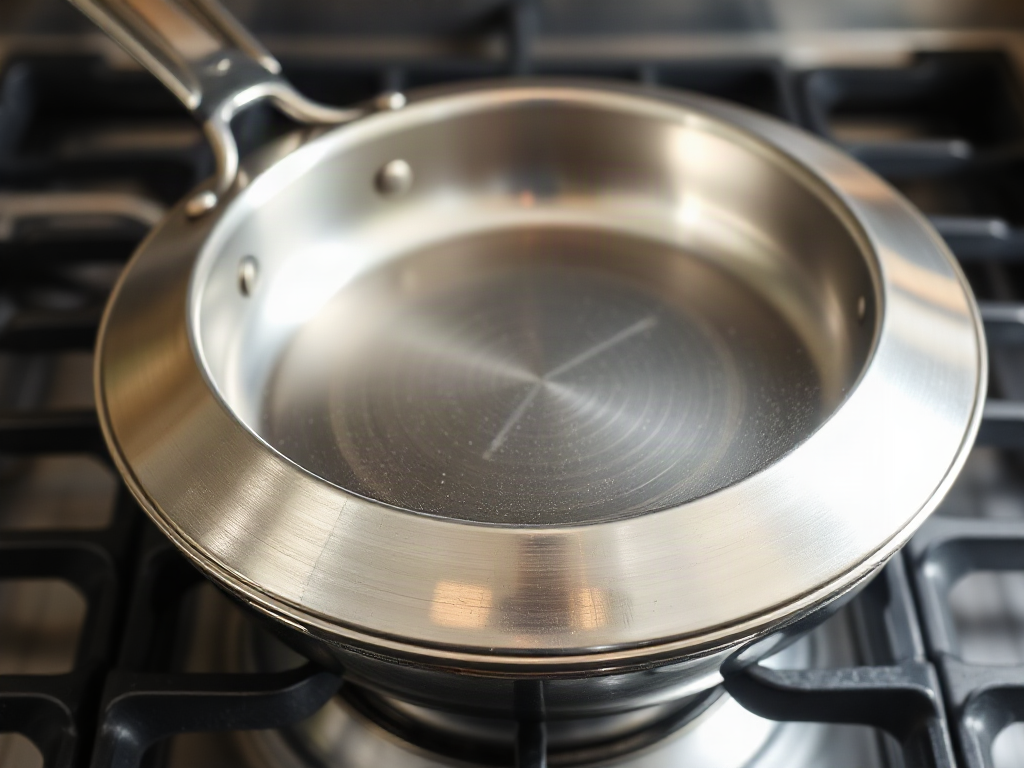
Read cookware care labels by separating three decisions: where the pan may be used, how it should be cleaned, and which handling limits protect its surface or construction. Match stovetop, oven, broiler, induction, and dishwasher symbols to your actual appliance, then check any temperature limit before heating. Treat warnings about preheating, thermal shock, metal utensils, abrasive cleaners, and removable handles as use conditions rather than decoration. If a symbol is unclear or missing, use the manufacturer’s model-specific instructions instead of assuming that a similar-looking pan has the same rating. The label can prevent warped bases, damaged coatings, loose handles, discoloration, and avoidable warranty problems.
Separate the Label Into Use, Heat, and Cleaning Rules
Cookware care labels are easiest to interpret when each symbol is assigned to a specific decision: the cooking surface, the maximum heat exposure, or the cleaning method. A small icon on a box or handle may look self-explanatory, but a pan can be suitable for one stage of cooking and unsuitable for another. For example, an oven-safe skillet may still have a handle, lid, or nonstick coating with a lower temperature limit than the metal body.
Read the label before removing packaging, because the instructions may distinguish between the vessel and its accessories. A stainless-steel pan with a metal handle may tolerate oven use, while the same pan with a silicone grip could require the grip to be removed. A glass lid may have a separate temperature restriction. The practical question is not simply “Can this pan go in the oven?” but “Which complete configuration can go in the oven, at what temperature, and for how long?”
Some suggestions to consider!
Now retrieving an image set.
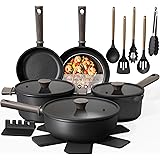
Astercook 19 Pcs Pots and Pans Set Non Stick, Black Titanium Induction Kitchen Cookware Sets, Non toxic Healthy Kitchen Cooking Set with Frying Pans Set, PTFE PFOA PFOS Free, Fathers Day Gift for Men
$79.99 (as of August 23, 2026 18:26 GMT +00:00 - More infoProduct prices and availability are accurate as of the date/time indicated and are subject to change. Any price and availability information displayed on [relevant Amazon Site(s), as applicable] at the time of purchase will apply to the purchase of this product.)
Now retrieving an image set.
HexClad 6pc Hybrid Nonstick Frying Pans Set with Lids, 8, 10 & 12" Pans | Stay-Cool Handles, Dishwasher and Oven Safe up to 900°F, Compatible with All Cooktops
$319.00 (as of August 23, 2026 18:26 GMT +00:00 - More infoProduct prices and availability are accurate as of the date/time indicated and are subject to change. Any price and availability information displayed on [relevant Amazon Site(s), as applicable] at the time of purchase will apply to the purchase of this product.)
Now retrieving an image set.
CAROTE 16pcs Pots and Pans Set, Nonstick Cookware Sets | Titanium Reinforced Coating, Scratch-Resistant, Easy to Clean, Even Heating, Induction Compatible, with Frying Pans Set
$149.99 (as of August 23, 2026 18:26 GMT +00:00 - More infoProduct prices and availability are accurate as of the date/time indicated and are subject to change. Any price and availability information displayed on [relevant Amazon Site(s), as applicable] at the time of purchase will apply to the purchase of this product.)Write down the information in three short lines if the label is crowded:
- Use: compatible stovetops, oven or broiler permission, and removable parts.
- Heat: stated maximum temperature and any preheating or thermal-shock warning.
- Care: dishwasher status, hand-washing instructions, detergents, utensils, and storage cautions.
This separation prevents a common mistake: treating one approval as universal permission. “Dishwasher safe” does not establish oven safety, and “oven safe” does not mean broiler safe. A label that permits metal utensils may apply to uncoated stainless steel but not to a coated interior or a separate lid. For additional context on product-specific instructions, see how to read cookware care labels effectively alongside the manufacturer’s manual.
Decode Stovetop, Oven, Broiler, and Induction Symbols
Stovetop symbols identify the heat source the base is designed to contact. A coil or ring commonly represents an electric burner, a flame indicates gas, and a distinctive electromagnetic coil symbol indicates induction compatibility. A pan marked for induction generally needs a magnetic base or magnetic construction; a symbol showing a burner does not automatically mean the pan will work on induction.
Check the actual appliance rather than relying on the label’s broad wording. A gas-compatible pan can be used over a flame, but flames extending up the side may discolor exterior finishes or heat a handle. On a glass or ceramic cooktop, dragging a heavy pan can scratch the surface even when the pan itself is approved. Induction use can produce rapid heating, so a label warning against high heat or empty preheating deserves particular attention. The pan may be compatible with the cooktop while still requiring moderate power.
Oven and broiler markings need closer reading. An oven symbol usually concerns enclosed, indirect heat; a broiler exposes the cookware to intense radiant heat from above. Those conditions are not interchangeable. A coated sauté pan may be oven-safe below a stated limit but unsuitable for broiling. Lids, knobs, gaskets, and helper handles can have different limits from the main body, so inspect every component that will remain attached.
Use this sequence before moving a pan from the stovetop into an oven:
- Confirm that the body is approved for the destination appliance.
- Find the lowest temperature limit among the pan, lid, handle, knob, and grip.
- Remove any part that the instructions identify as non-oven-safe.
- Use dry, heat-rated protection when removing the pan, since an oven-safe handle may still be extremely hot.
A frequent misconception is that thick metal automatically makes cookware safe for every heat source. Construction affects durability and heat distribution, but it does not override a coating, bonded handle, seal, or glass component. When the label and a general material assumption disagree, follow the specific component restriction.
Read Cleaning and Utensil Instructions as Material Clues
Cleaning symbols reveal how the cooking surface is expected to respond to water, detergent, friction, and temperature changes. A dishwasher icon may indicate that the item can tolerate a dishwasher cycle, but repeated cycles can still affect appearance, exposed aluminum, uncoated finishes, or attached hardware. “Hand wash” is not merely a preference; it often signals that the finish or construction benefits from gentler chemistry and less prolonged heat.
Look for distinctions between the interior surface and the exterior. A stainless-steel body may handle a non-scratch pad, while a coated interior should be cleaned with a soft sponge and mild dish soap. Enameled surfaces can resist staining yet chip if struck against a sink or another pan. Cast iron may require drying and a thin protective oil layer, whereas a fully enameled piece follows a different routine. The material name alone is not enough because coatings and bonded components change the care requirement.
Utensil instructions work the same way. A label allowing metal tools may still advise against sharp-edged scraping or forceful contact. If the label says to use wood, silicone, or nylon utensils, the concern is usually surface damage rather than food safety in the abstract. A deep scratch can create a rough area that is harder to clean and may accelerate coating wear. Switching to a soft-edged utensil is a small tradeoff that can preserve the intended cooking surface.
Dishwasher permission should be treated as a convenience choice, not a durability guarantee. Hand washing usually takes less time than repairing a damaged finish, but dishwasher use may be reasonable for robust, uncoated stainless steel when the manufacturer explicitly allows it. Dry the item promptly if the care instructions warn against prolonged moisture, and avoid stacking pieces when the label recommends protective separators. The useful internal reference is how to read cookware care labels effectively, especially when a set contains several materials with different cleaning rules.
Resolve Ambiguous Labels Before the First Use
An unclear care label should be treated as incomplete information, not as permission to use the most convenient setting. Symbols can be abbreviated, printed on a removable sticker, or separated between the carton and the product. Photograph the label and retain the packaging until the model number, temperature limit, and component instructions have been recorded.
Search the manufacturer’s official product page or instruction manual using the exact model name or number. A brand may sell visually similar pans with different coatings, handle materials, or bases, so a generic search for the product family can lead to the wrong limit. If the manual lists a lower rating for the lid or handle, apply that lower rating to the assembled cookware. When no reliable instruction is available, avoid the uncertain use—particularly broiling, high-temperature empty heating, or a sudden transfer from a refrigerator or cold sink to a hot burner.
Conflicting information deserves a conservative interpretation. Suppose the package says dishwasher safe but the care sheet says hand wash for best results. The first statement describes permitted use; the second describes the lower-wear option. If one source says oven-safe and another gives no temperature, do not infer an unlimited rating. Look for the exact maximum or contact the manufacturer.
Labels also have limits. They may not explain burner size, preheating speed, thermal shock, storage, or what to do after a spill burns onto the surface. A label is a boundary, not a complete cooking technique. For example, an approved pan can still warp when heated empty on a very high burner, and an approved glass lid can still crack after a sharp temperature change. Stop using cookware if a handle becomes loose, a coating is lifting, or a base no longer sits flat; care instructions cannot restore damaged construction.
Turn the Label Into a Practical Care Routine
Effective label reading ends with a routine that fits the way the cookware is actually used. Before the first meal, identify the heat source, inspect every removable component, and choose the cleaning method that matches the most delicate surface. Before each unusual use—such as oven finishing, induction cooking, broiling, or dishwasher cleaning—check the relevant symbol rather than relying on memory.
A simple priority order reduces mistakes:
- Honor the strictest temperature limit among all attached parts.
- Prevent thermal shock by avoiding abrupt transfers between extreme temperatures unless the manufacturer permits them.
- Match utensils and scrubbers to the most vulnerable interior surface.
- Keep approved cookware dry and separated in storage when the instructions call for it.
- Recheck the manual after replacing a lid, handle, gasket, or removable grip.
Consider a weeknight example. A cook sears vegetables in a coated pan, moves it to a moderate oven, and cleans it after dinner. The label should first confirm the oven limit for the pan and handle, then indicate whether the pan may go into the dishwasher. If hand washing is required, soaking briefly with warm water may be preferable to scraping hardened residue. A stainless-steel alternative may offer easier cleanup, but it may need more attention to preheating and food release. The better choice depends on whether surface preservation or cleanup speed is the priority.
Signs that the routine is working include a flat base, intact coating, secure hardware, and a surface that cleans without aggressive abrasion. Warning signs include discoloration after every use, recurring burnt residue from excessive heat, a lid that no longer fits, or a handle that loosens. Those symptoms call for reviewing the specific instructions and changing use—not simply adding stronger detergent or higher heat. The most useful habit is to save the manual with other appliance documents and use the exact model information whenever a symbol is uncertain.
Frequently Asked Questions
Does oven-safe mean broiler-safe?
No. Broiling uses intense radiant heat, so use the broiler only when the label or manual specifically permits it.
Can dishwasher-safe cookware still be hand washed?
Yes. Hand washing is usually the gentler option, especially for coated, decorated, or mixed-material cookware.
How do I read a cookware temperature limit?
Apply the lowest stated limit among the pan, lid, knob, handle, grip, and any other part that remains attached during heating.
Does a burner symbol confirm induction compatibility?
No. Look for the induction symbol or a manufacturer statement confirming a magnetic base and induction use.
What should I do if the care label is missing?
Find the exact model manual from the manufacturer. Until then, avoid uncertain high-heat, broiler, dishwasher, and thermal-shock uses.
Further Reading
Authoritative Sources
- U.S. Consumer Product Safety Commission
cpsc.govUseful for checking consumer product safety notices and recalls that may affect cookware handles, coatings, or related components
- Health Canada Home Safety
canada.caProvides general household product safety information that supports cautious use when manufacturer instructions are incomplete
Conclusion
Care labels become useful when they are converted into specific operating limits. Check the cooking surface, temperature rating, and cleaning instructions separately, then apply the strictest restriction among the pan and its attached parts. Do not equate oven approval with broiler approval, dishwasher permission with unlimited durability, or material type with universal compatibility. When symbols conflict or the model is unclear, preserve the packaging, locate the exact manufacturer manual, and postpone the uncertain use. A short review before induction cooking, oven finishing, or dishwasher cleaning can prevent warped bases, damaged coatings, cracked lids, and loose hardware. Revisit the instructions whenever a component is replaced, and stop using cookware that shows structural damage rather than trying to compensate with a different cleaning method.