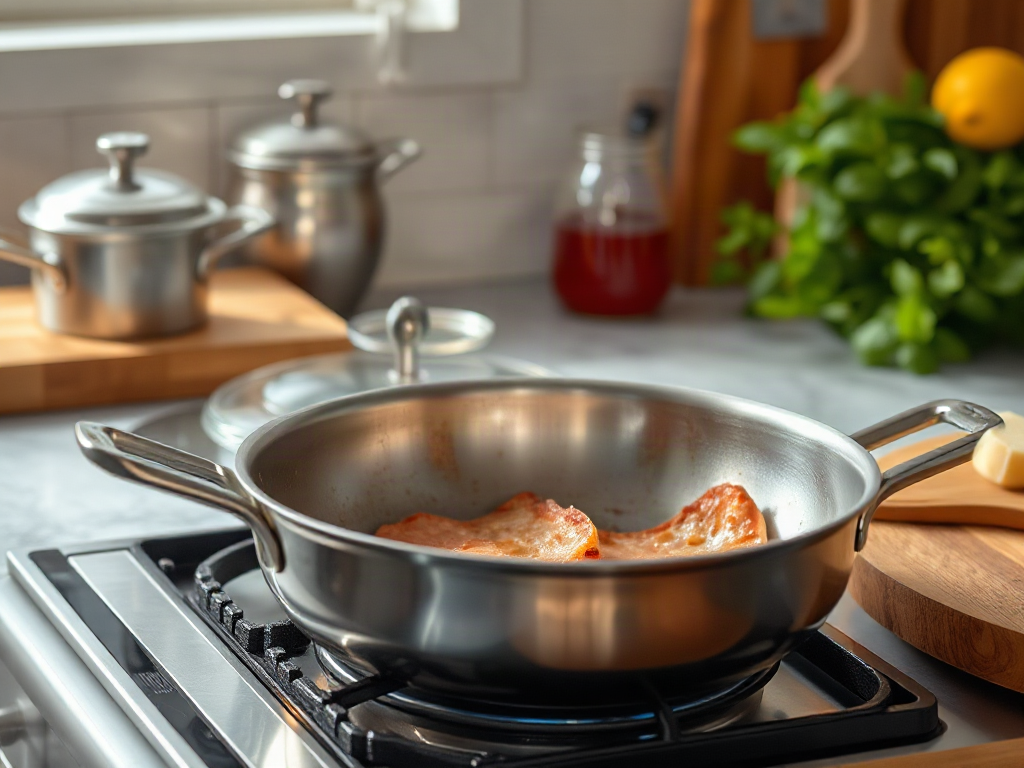
Material thickness impacts cooking results by changing how quickly cookware responds to heat, how evenly it distributes that heat, and how well it holds temperature after food is added. Thick bases usually reduce hot spots and recover faster when cold ingredients enter, which suits searing, sauces, and steady simmering, while thinner construction heats and cools quickly for responsive temperature changes. Thickness cannot be judged alone: aluminum, stainless steel, cast iron, and ceramic materials transfer and retain heat differently. Choose thickness according to the task, use moderate preheating, and watch for scorching, slow response, or uneven browning rather than assuming the heaviest piece is always best.
What Thickness Changes in the Kitchen
Material thickness affects cooking mainly through thermal response. A thicker layer generally contains more material to warm, so it takes longer to reach temperature, but it also stores more energy and is less easily cooled by a steak, vegetables, or a splash of liquid. That steadier temperature can produce more consistent browning and fewer sharply overheated areas.
A thin sheet behaves differently. It responds rapidly when the burner setting changes, which can be useful for delicate tasks such as melting butter or reducing a small amount of sauce. The same responsiveness can become a weakness when the pan sits over a strong burner: the area directly above the flame may become much hotter than the surrounding surface. Food can then brown in patches, scorch at the center, or require constant movement.
Some suggestions to consider!

Now retrieving an image set.
Calphalon Classic Stainless Steel Cookware Set, 10-Piece, Impact-Bonded Aluminum Base, Stay-Cool Handles, Oven Safe 450F, Silver
$132.99 (as of October 22, 2026 19:19 GMT +00:00 - More infoProduct prices and availability are accurate as of the date/time indicated and are subject to change. Any price and availability information displayed on [relevant Amazon Site(s), as applicable] at the time of purchase will apply to the purchase of this product.)
Now retrieving an image set.
CAROTE 21pcs Pots and Pans Set, Nonstick Cookware Sets, with Egg Pan | Induction Kitchen Cooking Set, Durable, Easy Food Release, Fast & Even Heating, with Frying Pan
$129.98 (as of October 22, 2026 19:19 GMT +00:00 - More infoProduct prices and availability are accurate as of the date/time indicated and are subject to change. Any price and availability information displayed on [relevant Amazon Site(s), as applicable] at the time of purchase will apply to the purchase of this product.)


SENSARTE Nonstick Ceramic Cookware Set, 13-pcs Non-toxic Pots and Pans Set | Healthy Kitchen Cooking Set with Stay-Cool Handles, Silicone Tools and Pot Protectors, PFAS Free
$65.94 (as of October 22, 2026 19:19 GMT +00:00 - More infoProduct prices and availability are accurate as of the date/time indicated and are subject to change. Any price and availability information displayed on [relevant Amazon Site(s), as applicable] at the time of purchase will apply to the purchase of this product.)Thickness is not a promise of even heating by itself. A thick piece made from a poor conductor may retain heat without spreading it efficiently. A thinner aluminum layer can distribute heat more readily than a thicker stainless-steel layer. Shape, burner size, flatness, and whether the base is bonded or layered all influence the final result.
When assessing how material thickness impacts cooking results, separate three observations: how fast the surface heats, how evenly heat reaches the cooking area, and how quickly the surface cools after food is added. Those distinctions explain why a pan may preheat slowly yet still cook more evenly once it is ready.
Thin and Thick Construction Compared
Thin cookware offers speed and control, while thick cookware offers stability. A thin skillet may become ready within a short preheating period and will cool promptly when the heat is lowered. That makes it convenient for quick eggs, sautéed greens, or recipes where the cook must stop browning immediately. Its smaller thermal reserve, however, means a crowded pan can lose surface temperature quickly.
Thicker construction is more forgiving when ingredients are cold, wet, or added in batches. A heavy skillet often maintains more of its heat as meat enters, allowing the surface to keep browning instead of steaming the food. A thick saucepan base can also moderate temperature swings during a long simmer. The tradeoff is delayed adjustment: turning down the burner does not instantly remove stored heat, so a cream sauce or sugar syrup may continue cooking after the setting changes.
Consider two batches of diced chicken. In a lightweight pan, the first pieces may brown well while later additions release moisture and lower the temperature around them. In a heavier pan, recovery may be better, but preheating too aggressively can make the surface excessively hot before the chicken is added. Neither design eliminates technique; each changes the margin for error.
Common mistakes include treating weight as a direct measure of quality and using high heat to compensate for slow preheating. A thick pan should usually be warmed gradually enough for the base and sides to approach a useful cooking temperature together. A thin pan benefits from lower heat and less crowding. The sign of a suitable match is not merely rapid heating; it is predictable browning, controlled simmering, and a surface that responds at a manageable pace.
Matching Thickness to Cooking Methods
Searing generally benefits from a substantial, stable cooking surface because meat or vegetables can absorb heat quickly when they touch the pan. A heavier base helps limit the temperature drop that follows, especially when the food is chilled or the batch is large. The cook still needs a preheated surface and adequate spacing. Thickness cannot correct for wet ingredients or overcrowding.
Simmering calls for a different balance. A thick base can reduce localized scorching in oatmeal, custards, beans, and tomato sauces by spreading and buffering burner energy. It may also make a gentle simmer easier to maintain once the pan is hot. Yet stored heat can be troublesome for fragile mixtures. Moving the pot off the burner, stirring, or using a lower setting may be necessary because the base continues releasing energy.
Quick sautéing often favors thinner or moderately thick cookware. Foods such as sliced mushrooms, shrimp, and tender vegetables may need rapid changes in burner power so they do not overcook. A very heavy vessel can be less convenient when the recipe moves from browning to deglazing within seconds. For baking, thickness affects heat stability and the rate at which the vessel transfers energy to the batter. Dark, thin metal may brown edges quickly, while a heavier or lighter-colored vessel can produce a different balance between crust formation and interior cooking.
A practical priority list looks like this:
- Choose a stable, heat-retaining base for searing, roasting, and long reductions.
- Choose responsive construction for delicate foods and frequent temperature changes.
- Favor a thick, well-spread base for foods prone to scorching.
- Match the base diameter to the burner so thickness is not undermined by concentrated heat.
Recipes that require both searing and a long braise may justify a heavier vessel, while a cook focused on fast weeknight sautéing may value quicker response. The best choice follows the method used most often, not a general belief that more thickness always produces better food.
How Material and Construction Alter the Result
The effect of thickness depends strongly on the material carrying that thickness. Aluminum transfers heat efficiently and often responds relatively quickly, so a moderate thickness can provide useful distribution without becoming excessively sluggish. Stainless steel is durable and nonreactive but is not as conductive on its own; a thin stainless body may develop stronger hot spots than a clad design with an aluminum or copper core.
Cast iron typically has considerable thermal mass. It can deliver a steady sear after adequate preheating, but temperature changes are slow and the handle can remain hot. Enamel-coated cast iron retains the same general thermal behavior while adding a surface layer that should not be treated as indestructible. Ceramic and glass vessels may warm differently again, with slower transitions and sensitivity to abrupt temperature changes depending on the product.
Layered construction changes the meaning of a thickness specification. A pan may have a thin visible cooking surface but a thick encapsulated base that spreads energy beneath it. Conversely, a thick wall does not guarantee a thick, conductive base. Inspect the cooking area, not only the sidewall or overall weight. A flat base that stays in close contact with the burner is more useful than bulk concentrated in handles or decorative outer layers.
Weak assumptions cause avoidable problems. “Stainless steel is uneven” ignores clad construction; “cast iron never sticks” ignores preheating and surface preparation; “thick aluminum cannot scorch” overlooks an oversized burner. Use the material and thickness together, then account for the heat source. Induction, gas, electric coils, and oven heating can expose different weaknesses in the same vessel.
Choosing and Testing Cookware in Practice
Product descriptions rarely make thickness comparisons simple because brands may report gauge, base thickness, wall thickness, or total layered construction. Look for a clear explanation of where the material is concentrated and whether the base is bonded across the full cooking area. A pan that feels balanced, sits flat, and has a base proportionate to its diameter is often more informative than a headline weight claim.
At home, test behavior with ordinary cooking rather than an empty high-heat experiment. Warm the vessel on a moderate setting, add a small amount of oil, and observe whether it spreads and shimmers consistently across the surface. Sauté a modest batch of similarly sized vegetables. Even color change suggests useful distribution; a dark ring or isolated center suggests a mismatch among thickness, material, and burner size. For a saucepan, make a small batch of a thick sauce and note whether stirring prevents localized sticking.
Keep a simple decision framework in mind:
- Identify whether the recipe needs rapid response or temperature stability.
- Check the material’s conductivity and the base’s actual construction.
- Match the vessel diameter to the heat source.
- Adjust preheating and burner power before blaming the cookware.
- Judge results by browning, recovery, simmer control, and cleanup.
Signs the setup is working include even browning, a simmer that remains gentle after adjustment, and little need to chase hot spots with constant stirring. Failure signs include food burning in one location while remaining pale elsewhere, a pan that takes too long to react during delicate steps, or a base that warps and loses contact. These symptoms may point to technique, burner mismatch, or construction rather than thickness alone. More detail on how material thickness impacts cooking results can help when comparing replacement pieces.
Budget also matters. Spending on a thick base is most worthwhile for a frequently used skillet, sauté pan, or saucepan where temperature stability affects repeated meals. A rarely used specialty vessel may not justify maximum thermal mass. Prioritize the cooking tasks that produce the most disappointing results, then choose construction that addresses that specific weakness.
For additional technical context, consult manufacturer documentation for the vessel’s layered construction and care limits, along with university food-science or engineering resources that explain heat transfer and thermal mass. Those sources are more useful than relying on weight alone when comparing products.
Frequently Asked Questions
Does thicker cookware always cook better?
No. Thickness can improve stability and reduce hot spots, but a thinner conductive material may respond better for delicate cooking. The best choice depends on the recipe, material, burner, and desired control.
Why does a thick pan take longer to preheat?
More material must absorb energy before the cooking surface reaches temperature. That delay is exchanged for greater heat storage and less cooling when food is added.
Is a thick base more useful than thick walls?
Usually, the base has the greatest effect on burner-to-food heat transfer. Thick walls can add retention, but bulk outside the active cooking area may contribute less to even heating.
What thickness is best for searing?
A stable, heat-retaining base is generally helpful, especially for chilled or larger portions. Preheat moderately, dry the food, and avoid crowding so the pan can use that thermal reserve.
Can thin cookware be used successfully?
Yes. Use moderate heat, smaller batches, and closer attention to temperature changes. Thin cookware can be excellent when quick response matters more than prolonged heat retention.
Conclusion
Material thickness changes the pace and stability of cooking, but it works alongside conductivity, layered design, burner size, and technique. Thick bases are valuable when a recipe needs strong temperature recovery, even browning, or protection against localized scorching. Thinner construction can be the smarter option for fast adjustments and delicate foods. Before buying, identify the cooking problem you want to solve, inspect the base rather than judging overall weight, and match the diameter to the heat source. During use, look for consistent browning and controllable simmering; those signals matter more than a specification in isolation. A well-matched vessel will not replace good preheating or sensible batch sizes, but it can make those practices easier and the results more repeatable.