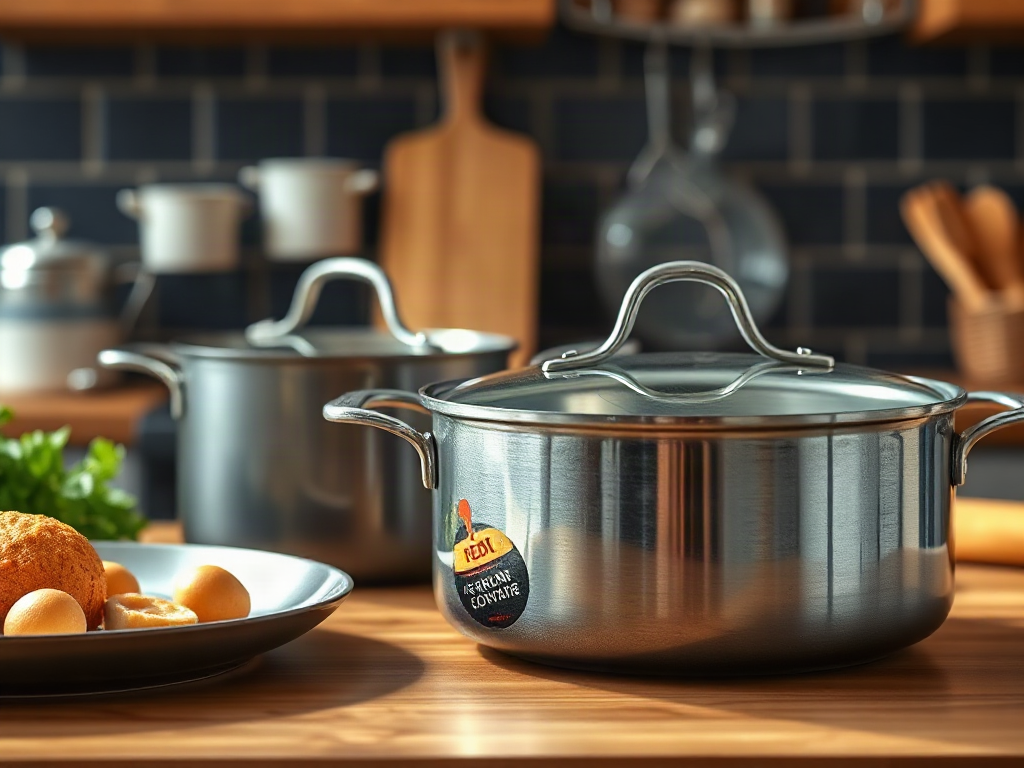
The importance of ergonomic design in cookware lies in reducing unnecessary wrist, hand, and shoulder strain while giving cooks steadier control over hot, heavy, or awkward vessels. Handle shape, grip texture, weight balance, lid clearance, helper handles, and heat resistance all affect whether a saucepan can be lifted safely or a skillet can be maneuvered without twisting the wrist. Good ergonomics may also reduce spills and fatigue during tasks such as draining pasta, stirring thick sauces, or transferring a full braise. A comfortable handle alone is not enough: the cookware must fit the user’s hand, cooking style, storage space, and strength, while remaining stable on the stovetop.
What Ergonomic Cookware Design Actually Changes
Ergonomic cookware is designed around the movements, reach, grip, and physical effort required to prepare food. Its value becomes clearest when a cook must hold a vessel for more than a few seconds, guide it with one hand, or control it near heat and liquid. A saucepan with a broad, heat-resistant handle distributes pressure across the palm; a Dutch oven with a sturdy helper handle gives the second hand a safer lifting position; a lid knob with adequate clearance allows removal without placing fingers over escaping steam.
These details affect control because the hand does not work in isolation. A long handle creates leverage, but excessive length can make a pan feel front-heavy and difficult to turn in a crowded kitchen. A thick handle may suit a large hand while forcing a smaller hand to squeeze harder. A polished metal grip may look refined yet become difficult to control when hands are damp. Ergonomic design therefore concerns the relationship between the vessel, the user, and the task rather than appearance alone.
Some suggestions to consider!
Now retrieving an image set.
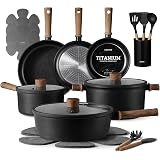
CAROTE Pots and Pans Set Nonstick Cookware Sets 21 Pieces Black | Titanium Reinforced Coating, Scratch-Resistant, Easy to Clean, Even Heating, Induction Compatible, with Frying Pans Set
$89.99 (as of October 22, 2026 19:19 GMT +00:00 - More infoProduct prices and availability are accurate as of the date/time indicated and are subject to change. Any price and availability information displayed on [relevant Amazon Site(s), as applicable] at the time of purchase will apply to the purchase of this product.)
Now retrieving an image set.
Amazon Basics Non-Stick Kitchen Cookware 8-Piece Set, Non-Induction, Includes Pots and Pans, Black
$63.99 (as of October 22, 2026 19:19 GMT +00:00 - More infoProduct prices and availability are accurate as of the date/time indicated and are subject to change. Any price and availability information displayed on [relevant Amazon Site(s), as applicable] at the time of purchase will apply to the purchase of this product.)
Now retrieving an image set.
CAROTE 25pcs Ceramic Cookware Set, Pots and Pans Set with Detachable Handle | Non-Stick, Non-Toxic, PFAS Free, Induction Compatible, Dishwasher & Oven Safe, Kitchen Organization, for Camping/RV/Gifts
$119.99 (as of October 22, 2026 19:19 GMT +00:00 - More infoProduct prices and availability are accurate as of the date/time indicated and are subject to change. Any price and availability information displayed on [relevant Amazon Site(s), as applicable] at the time of purchase will apply to the purchase of this product.)Consider a cook stirring a thick risotto in a three-quart saucepan. If the pan shifts whenever the spoon meets resistance, the cook may brace the wrist awkwardly or hold the handle with unnecessary force. A handle that aligns with the forearm and a stable base reduce that compensating movement. The improvement is not that the pan cooks differently; it is that the user can apply force more predictably.
Ergonomics also has a safety dimension, although it should not be treated as a guarantee against burns or spills. A secure grip may help a person keep a pan level while moving it, and a cool-touch handle may reduce the temptation to grab a hot surface with a towel. Users still need proper mitts, clear paths, and attention to manufacturer instructions. For broader buying guidance, the importance of ergonomic design in cookware is best judged alongside capacity, construction, and heat-source compatibility.
Handles, Balance, and Grip Control
Handle geometry is usually the first ergonomic feature shoppers notice, but balance determines whether that handle performs well. A useful handle should let the wrist remain close to a neutral position while the fingers maintain a firm but moderate grip. The attachment must also feel rigid: flex between the handle and the pan can make lifting a full vessel feel unpredictable, even when the grip itself is comfortable.
Balance can be tested without heating the cookware. Hold the empty pan by its primary handle, then add a realistic amount of water or dry beans and lift it only a few inches over a counter. Notice whether the front rim drops, whether the wrist bends sharply, and whether the other hand naturally reaches for a helper handle. This simple test is more informative than judging an empty skillet, because food and liquid change the center of mass.
Grip texture involves a real tradeoff. Silicone or textured materials may offer confidence during wet-hand tasks, but they can retain grease or have cleaning limitations depending on construction. Bare stainless steel is durable and easy to inspect, yet it may become hot and slippery without appropriate protection. Wood can feel warm and comfortable, though it may require more care and may not suit every dishwasher routine. No material is automatically ergonomic; the relevant question is whether it stays controllable throughout the intended task.
Handle clearance matters as well. A handle that sits too close to the rim can force fingers toward hot metal, while one that projects far beyond the counter can catch clothing or collide with neighboring cookware. Riveted attachments may provide visible durability, but interior rivets can interfere with scraping and cleaning. Welded handles create a smoother cooking surface, though construction quality still needs inspection. Choose the design that combines stable attachment, useful clearance, and a grip suited to your hand rather than selecting based on one feature.
Matching Design to Real Cooking Tasks
Different cooking tasks place different demands on the body, so one universally ergonomic pan does not exist. A shallow sauté pan is often easier to access with a spatula because its low sides reduce wrist extension. A stockpot needs vertical stability and dependable side handles because its contents are heavy even before the pot is full. A small saucepan may benefit from a long handle for distance from the burner, while a wide braiser may be easier to manage with two short side handles.
Pouring exposes design weaknesses quickly. A saucepan with a sharply shaped pouring rim can direct liquid without requiring the user to tilt the vessel as far. A lid that can be held securely while draining may reduce the need for a second tool, but the locking or resting feature must be intuitive and should not place fingers near steam. For pasta, soup, or gravy, compare the expected filled weight with the way you actually transfer food. If the vessel is routinely too heavy to pour comfortably, a smaller batch or a ladle may be a safer solution than relying on handle strength.
Stirring and scraping create another useful comparison. A rounded interior corner allows a spoon or spatula to reach the edges without repeated wrist rotation, which is valuable for sauces, custards, and reductions. A deep, narrow pot can protect against splashes but may require more shoulder movement when mixing. A wide pan offers access and evaporation but can be awkward on a small burner or in a compact sink. The better choice depends on whether access, capacity, splatter control, or storage dominates the task.
People with reduced grip strength, arthritis, limited reach, or a preference for one-handed cooking may need to prioritize weight and stability over maximum capacity. A two-handed transfer is not a design failure; it may be the appropriate operating method for a large cast-iron vessel. Conversely, choosing heavy cookware because it feels durable can create needless strain when the user mostly prepares quick meals. Ergonomic fit means selecting equipment that supports the cooking pattern you repeat, not the most demanding recipe you might make once.
A Practical Ergonomic Cookware Checklist
A short inspection can reveal more than a product description. Test cookware in the position and condition in which it will be used, and judge the complete movement from shelf to stovetop to sink. The following checks focus on control rather than cosmetic comfort.
- Grip: Can the hand close around the handle without a painful squeeze or excessive finger stretch?
- Wrist position: Does lifting keep the wrist reasonably straight, or does the handle force a sharp bend?
- Loaded balance: Does the vessel remain level with a realistic amount of water or food?
- Secondary support: Are helper handles large enough to use with a mitt, and are they positioned where the second hand can reach naturally?
- Clearance: Are fingers separated from the hot body, lid edge, and likely steam path?
- Movement: Can the cookware fit between burners, into the sink, and onto the storage shelf without awkward contact?
Prioritize the features linked to your most frequent strain point. Someone who makes soups may value balanced side handles and a manageable filled weight. Someone who sautés vegetables may care more about a responsive long handle, low sidewalls, and easy wrist rotation. A household sharing cookware should test the same item with each regular user, since a handle comfortable for one person may be too thick, short, or heavy for another.
Look for signs that the design is working after several uses: the pan stays stable while stirring, transfers feel deliberate rather than rushed, and the user does not need to reposition the hand repeatedly. Failure signs include numbness, hot fingers caused by poor clearance, a handle that twists under load, or a vessel that is routinely left half-full because it is difficult to move. Those observations are more valuable than a brief showroom grip test.
Ergonomic design should also fit cleaning and storage. A pan that is comfortable on the stove but too heavy to wash safely in a deep sink may not be a practical improvement. Likewise, a long handle that offers leverage can consume cabinet space or force stacking at an angle. Include these daily movements in the decision, just as you would compare cookware construction and cooking performance.
Common Mistakes and Sensible Tradeoffs
The most common mistake is treating softness as the same thing as ergonomic quality. A padded handle may feel pleasant when empty but provide poor leverage when the pan is loaded. A second mistake is ignoring heat behavior: a handle described as comfortable may still become hot on a particular stovetop, in an oven, or when positioned over a neighboring burner. Always check the manufacturer’s heat and oven-use instructions rather than assuming that a material’s appearance reveals its limit.
Another weak assumption is that heavier cookware is automatically more stable and therefore better. Weight can help a pan resist movement, but it also increases the force required to lift, rotate, wash, and store it. A lighter vessel with a broad base may provide adequate stability for everyday sautéing, while a heavier pot may be worthwhile for long braises if it can be moved with two hands. The correct tradeoff depends on the user’s strength, the filled weight, and the frequency of transfers.
Price can complicate the decision. More expensive cookware may offer refined handle attachment or better balance, but cost alone does not prove that a design suits your hand. Inspect dimensions, grip shape, lid handling, and cleaning requirements. If buying online, use the listed handle length, vessel weight, diameter, and capacity to anticipate movement; reviews are most useful when they describe a specific task rather than simply calling a pan comfortable.
A sensible process is to choose the dominant use first, test the loaded balance second, and consider storage and cleaning before finalizing. Do not sacrifice a secure grip for a fashionable finish, or a manageable weight for a capacity you rarely need. The most durable purchase is often the one that users can control confidently and will continue using correctly. That practical standard captures the importance of ergonomic design in cookware more accurately than a feature checklist detached from daily use.
For additional context, consult cookware manufacturers’ official care and heat-use instructions, university extension publications on kitchen safety, and consumer safety organizations that discuss burn prevention and safe handling. These sources can clarify operating limits, but they cannot replace testing whether a particular vessel fits your hand, kitchen layout, and regular cooking tasks.
Frequently Asked Questions
What makes cookware ergonomic?
Ergonomic cookware combines a manageable weight, stable balance, secure handle, useful finger clearance, and controls that suit the intended task. No single material or handle shape works equally well for every user.
Why does cookware balance matter?
Balance affects how much wrist and finger force is needed to lift, turn, or steady a vessel. A pan that tips forward when filled may be harder to control than one with a slightly heavier but better-positioned body.
Are long handles always more comfortable?
No. A long handle can provide leverage and distance from heat, but it may make a pan front-heavy or awkward in a crowded kitchen. Length should be judged with the pan’s diameter, weight, and normal contents.
How can I test cookware ergonomics before buying?
Check the grip with your usual hand, hold the vessel at a natural height, and assess it with a realistic amount of water or dry goods. Also consider whether it fits your sink, storage space, and stovetop.
What is the best ergonomic cookware for someone with weak grip strength?
Look for lighter vessels with secure, non-slippery handles, stable bases, and helper handles that support two-handed lifting. Smaller capacities may be more practical than a large pot that becomes difficult when full.
Conclusion
Good cookware should make common movements predictable: lifting, stirring, turning, pouring, draining, and washing. Start by identifying the task that causes the most effort, then compare loaded balance, handle geometry, heat clearance, and storage demands rather than judging an empty pan by its finish or softness. A large, heavy vessel may be appropriate for shared two-handed cooking, while a lighter pan with a well-positioned handle may better suit everyday meals. Test the complete path from cabinet to sink whenever possible, and treat hot-handle instructions as operating limits, not suggestions. The best ergonomic choice is the vessel that fits the user and the repeated task closely enough to support controlled movement without unnecessary strain.