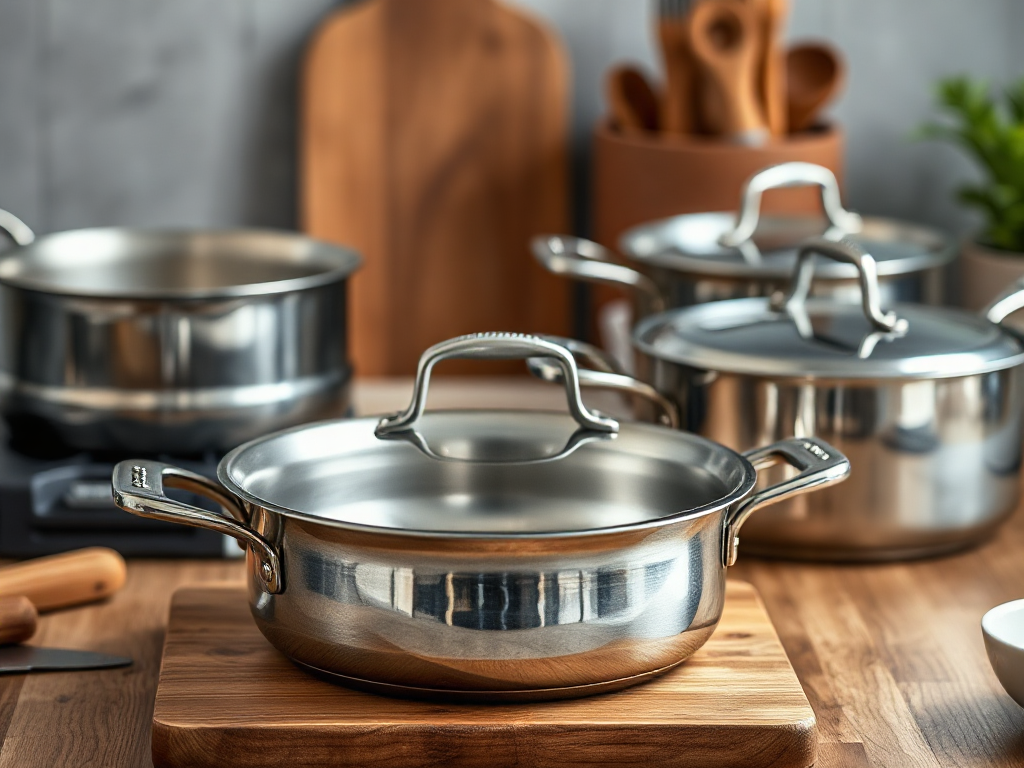
The differences between clad and non-clad cookware come from how metal layers are arranged: clad pans bond conductive aluminum between stainless-steel layers for faster, more even heating, while non-clad pans use one primary metal or a separate base. Clad construction usually offers better control for sauces, searing, and temperature-sensitive foods, but it costs more and can weigh more. Non-clad cookware may be preferable when you want strong heat retention, lightweight handling, low cost, or a specialized surface such as cast iron or copper. Compare the pan’s material, thickness, cooking surface, handle design, maintenance demands, and stovetop compatibility rather than treating “clad” as an automatic quality guarantee.
How Clad and Non-Clad Cookware Are Built
Clad cookware is made by bonding two or more metal layers together across the base and, in many designs, up the sidewalls. A common arrangement places an aluminum or copper core between stainless-steel layers. The outer stainless steel supplies a durable cooking surface and may provide induction compatibility, while the inner conductive metal spreads energy more efficiently than stainless steel alone.
Non-clad cookware is not necessarily inferior; it simply does not use that bonded, layered construction throughout the pan. A non-clad piece may be made from cast iron, carbon steel, copper, aluminum, ceramic-coated metal, or stainless steel with a separate encapsulated base. Each material behaves differently. A thick cast-iron skillet stores substantial energy but changes temperature slowly. A thin aluminum pan responds quickly but may develop hot spots. A copper pan conducts exceptionally well, although it may need a lining and careful maintenance.
Some suggestions to consider!
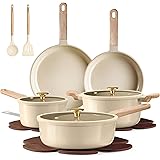




CAROTE Pots and Pans Set, Ceramic Cookware Set, 14pcs | Healthy Induction Kitchen Set, with Silicone Lids, Easy Clean, Even Heating, Space Saving, PFAS FREE
$69.99 (as of September 3, 2026 18:33 GMT +00:00 - More infoProduct prices and availability are accurate as of the date/time indicated and are subject to change. Any price and availability information displayed on [relevant Amazon Site(s), as applicable] at the time of purchase will apply to the purchase of this product.)
Now retrieving an image set.
Redchef Ceramic Pots and Pans Set Non Stick, Nonstick Kitchen Cookware Sets, Non Toxic Pots and Pans Set Non Stick, PFAS PFOA & PTFE Free, Detachable Handle Pots and Pans 5 Piece, RV Cookware
$39.99 (as of September 3, 2026 18:33 GMT +00:00 - More infoProduct prices and availability are accurate as of the date/time indicated and are subject to change. Any price and availability information displayed on [relevant Amazon Site(s), as applicable] at the time of purchase will apply to the purchase of this product.)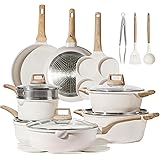
Now retrieving an image set.
CAROTE 21pcs Pots and Pans Set, Nonstick Cookware Sets, with Egg Pan | Induction Kitchen Cooking Set, Durable, Easy Food Release, Fast & Even Heating, with Frying Pan
$139.99 (as of September 3, 2026 18:33 GMT +00:00 - More infoProduct prices and availability are accurate as of the date/time indicated and are subject to change. Any price and availability information displayed on [relevant Amazon Site(s), as applicable] at the time of purchase will apply to the purchase of this product.)The word clad describes construction, not a complete quality rating. A poorly designed clad pan can have a thin core, a warped base, or uncomfortable handles. Likewise, a well-made non-clad pan can outperform it for a particular task. When comparing products, inspect whether the layers extend up the walls or only cover the bottom. A “tri-ply” label often refers to three bonded layers, but thickness, alloy, and manufacturing quality still determine how the pan behaves.
That distinction matters when reading specifications. A stainless-steel pan with an aluminum disk under the base can heat more evenly in the center than bare stainless steel, yet its sidewalls may remain less responsive. Full-clad construction distributes the conductive layer farther around the pan, which is useful for sautéing ingredients that reach the edges. Before choosing, connect the construction to your actual habits rather than assuming more layers automatically mean better results.
Heat Distribution, Responsiveness, and Cooking Results
Clad cookware generally balances heat distribution and responsiveness because its conductive core moves energy across the cooking surface while the steel layers moderate direct burner exposure. The result is often a wider usable heating zone and fewer abrupt temperature changes. When a cook lowers the burner beneath a clad sauté pan, the pan usually responds more quickly than thick cast iron, though it may not cool instantly.
Non-clad materials divide into very different performance groups. Cast iron and heavy carbon steel retain heat well, so they are useful for steaks, cornbread, and foods that benefit from a stable surface after cold ingredients are added. Their limitation is recovery time: adding refrigerated vegetables to a crowded skillet can reduce surface temperature, and the pan may need longer to regain it. Bare aluminum, by contrast, responds quickly but can concentrate heat beneath the burner if the gauge is thin.
Consider a tomato-based pan sauce. A clad stainless sauté pan can spread heat around the base and sides, allowing reduction with controlled adjustments. A thin non-clad stainless pan may scorch a small patch while the surrounding liquid remains less active. A heavy non-clad pan may avoid that sharp hot spot but take longer to react when the sauce reaches the desired thickness. Neither comparison makes one construction universally correct; it reveals a tradeoff between evenness, stored energy, and control.
Burner size and technique remain decisive. A large pan on a small burner can leave the edges cooler regardless of its construction. Preheating an empty pan too aggressively can cause sticking in stainless steel and may contribute to warping in some cookware. Use moderate heat, allow the surface to warm, and adjust after adding ingredients. If the center browns while edge ingredients lag, the issue may be burner-to-pan mismatch rather than the absence of cladding.
Choosing Between the Two for Everyday Foods
Clad cookware is often the more versatile choice for cooks who prepare varied meals in one pan. Its combination of stainless-steel durability and an aluminum or copper core suits sautéed vegetables, chicken cutlets, pan-seared fish, grains, and reductions. The uncoated surface also allows fond to form, which can be loosened with liquid for a sauce. Food release depends on preheating, oil, moisture, and timing; cladding does not make stainless steel nonstick.
Non-clad cookware is usually the better match when a particular material’s behavior matters more than broad versatility. A seasoned cast-iron skillet is valuable for high-heat browning and oven-to-table cooking. Carbon steel offers similar searing ability with less weight and a surface that can become increasingly slick through seasoning. Nonstick cookware, which is generally non-clad, is practical for eggs, delicate fish, and low-fat cooking, but its coating requires temperature and utensil discipline and may have a shorter service life than bare metal.
Use the cooking task as the deciding test:
- Choose clad stainless steel for sauces, sautéing, deglazing, and a single pan that handles many ingredients.
- Choose cast iron or carbon steel for strong searing, heat retention, and frequent stovetop-to-oven use.
- Choose non-clad aluminum or copper when rapid response is the priority and the surface or lining suits your maintenance routine.
- Choose coated cookware for fragile foods, while accepting that coating care matters more than layered construction.
A common mistake is buying an entire set based on one advertised feature. A home cook who mainly makes omelets may gain more from one quality nonstick skillet than from a large clad set. Someone who reduces sauces or cooks acidic foods may prefer lined stainless steel over an unlined reactive metal. A compact combination—such as a clad saucepan, a nonstick egg pan, and a seasoned skillet—can cover more tasks than several nearly identical pans.
Stovetop compatibility also changes the decision. Stainless-clad cookware may work on induction when its exterior includes a magnetic steel layer. Aluminum and copper alone generally do not activate induction unless the manufacturer adds a magnetic base. Always check the product’s specifications rather than relying on its appearance. Oven temperature limits, dishwasher guidance, and handle construction deserve equal attention because they affect whether the pan fits your routine.
Durability, Maintenance, and Buying Checks
Clad cookware can provide long service because stainless-steel cooking surfaces resist many forms of wear, and the bonded structure does not depend on a coating for food contact. It still needs sensible use. Rapidly cooling a very hot pan under cold water can stress the metal and contribute to distortion. Persistent discoloration is often cosmetic and can usually be addressed with an appropriate stainless-steel cleaner, while warped bases or separated layers are functional concerns.
Non-clad durability depends heavily on its material and finish. Cast iron can last for generations but requires drying and a maintained seasoning layer to limit rust. Carbon steel may discolor and change appearance as it seasons; that is not automatically a defect. Copper offers excellent control but may require polishing and attention to its lining. Nonstick surfaces demand softer utensils and lower or moderate heat; once the coating is deeply damaged or no longer performs as intended, replacement is more realistic than aggressive restoration.
Evaluate a prospective pan with a short checklist:
- Identify the cooking surface and the core or base material.
- Check whether cladding reaches the sidewalls or only the bottom.
- Compare pan thickness and weight with the foods you cook most often.
- Confirm induction, oven, dishwasher, and utensil restrictions.
- Inspect the handle attachment, balance, lid fit, and warranty terms.
Weight deserves a practical interpretation. Extra mass can reduce temperature swings, but a pan that is difficult to lift may encourage poor handling or discourage everyday use. A lighter pan can be more comfortable and still work well if its base is adequately designed. Price should be judged against the role: paying more for full-clad construction may make sense for a frequently used sauté pan, while a specialty cast-iron skillet may offer better value for high-heat searing.
Look for signs that a choice is working: browning spreads across the intended surface, burner adjustments produce predictable changes, and cleanup matches the manufacturer’s instructions. Signs of mismatch include repeated center scorching, a pan that never reaches useful heat on the available burner, sticking caused by unsuitable technique, or maintenance demands that are routinely ignored. The best comparison of the differences between clad and non-clad cookware is therefore practical: assess construction, then test whether it suits your stove, meals, storage, and willingness to maintain it.
A Practical Buying Decision for Your Kitchen
Start by identifying the two or three pans that would solve your most frequent cooking problems. If uneven sautéing and sauce control are recurring frustrations, full-clad stainless steel may address the cause more directly than simply buying a heavier pan. If the problem is weak searing after adding cold meat, a thick cast-iron or carbon-steel skillet may provide the heat reserve you need. If eggs are sticking, changing construction alone will not fix the issue; a suitable coated surface and controlled heat may be more appropriate.
Then compare the pan against your constraints. Induction users should verify the magnetic exterior. Small kitchens may benefit from one versatile clad skillet instead of a full set. Cooks who dislike scrubbing may reasonably prioritize a coated pan for selected foods, even if bare stainless steel offers greater longevity. Those who regularly cook acidic sauces should consider the lining and manufacturer’s care instructions before choosing unlined copper or reactive aluminum.
Do not confuse a polished exterior, a high layer count, or an impressive product name with useful performance. A well-balanced pan with a flat base and a suitable diameter can be more effective than a heavier model that overheats the center or is awkward to handle. For many kitchens, a mixed collection is the most rational solution: clad stainless for general-purpose cooking, a coated skillet for delicate foods, and cast iron or carbon steel when heat retention is the priority. That approach reflects the real differences between clad and non-clad cookware without forcing one construction to perform every job.
For product-specific limits, consult the manufacturer’s care and warranty documentation, especially for oven temperatures, induction compatibility, cleaning products, and coating restrictions. University extension publications and recognized cookware manufacturers can also provide useful material-care guidance; compare those instructions with the construction of the exact pan you own.
Frequently Asked Questions
Is clad cookware always better than non-clad cookware?
No. Clad construction is versatile and often distributes heat well, but cast iron may be better for heat retention, while nonstick is usually better for eggs and delicate foods.
What does fully clad mean?
Fully clad usually means the bonded layers extend across the base and up the sidewalls. A pan with an aluminum disk only under the base is not fully clad.
Does clad cookware work on induction?
It can, but only if the exterior includes a magnetic material. Check the manufacturer’s induction specification instead of assuming stainless steel will work.
Which construction is best for searing meat?
Clad stainless steel, cast iron, and carbon steel can all sear effectively. Cast iron retains more heat, while clad stainless generally offers quicker adjustments and easier deglazing.
Why does food stick to clad stainless steel?
Sticking commonly results from insufficient preheating, inadequate fat, wet food, or turning food too soon. Cladding improves heat behavior but does not create a nonstick surface.
Further Reading
Authoritative Sources
- Academy of Nutrition and Dietetics
eatright.orgProfessional nutrition guidance, healthy eating resources, and practical dietitian-reviewed advice.
- U.S. Department of Agriculture
usda.govOfficial food, nutrition, agriculture, and consumer guidance from the USDA.
- NIH Office of Dietary Supplements
ods.od.nih.govResearch-based fact sheets on nutrients, supplements, dietary intake, and safety considerations.
- International Society of Sports Nutrition
sportsnutritionsociety.orgEvidence-informed sports nutrition resources and position stands for active people and athletes.
Conclusion
Clad and non-clad cookware solve different kitchen problems. Clad pans are strong all-purpose tools when you want a durable stainless surface with more even heat and responsive burner control. Non-clad options remain valuable because cast iron stores heat, carbon steel develops a seasoned surface, copper reacts quickly, and coated pans simplify delicate cooking. Choose by matching construction to the food, stovetop, maintenance routine, and handling comfort you actually have. Check whether layers extend up the sides, verify induction and oven limits, and judge weight as a daily-use issue rather than a status symbol. A thoughtfully mixed collection will usually serve more effectively than a uniform set selected from labels alone.