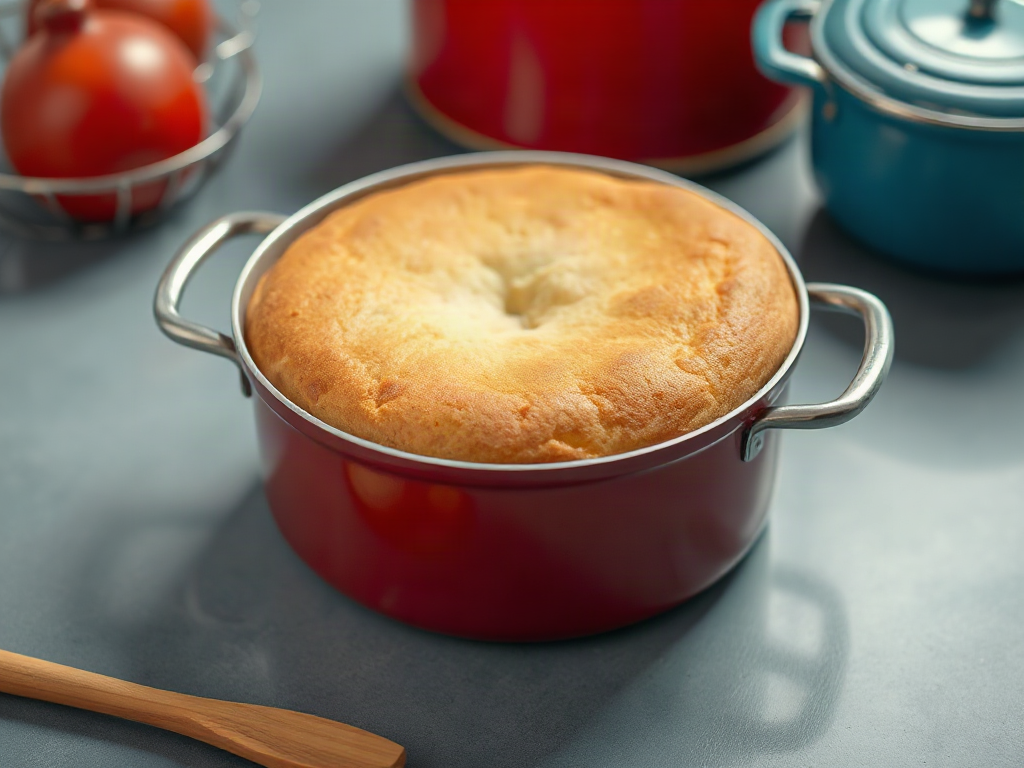
Evaluate cookware for baking performance by checking its material, wall thickness, color, shape, and ability to distribute oven heat without warping or creating scorched edges. Test each pan with a familiar recipe, keeping batter quantity, oven rack, temperature, and bake time consistent. Even browning, a level rise, clean release, and only a small timing adjustment indicate dependable performance. Dark metal usually browns faster than light aluminum, glass retains heat longer, and thin pans may develop hot spots.
Which Materials Produce Reliable Baking Results?
Material affects how quickly cookware absorbs heat, how evenly it spreads that heat, and how long it continues cooking food after leaving the oven. Those behaviors matter more than whether a pan feels heavy or looks professionally finished. A useful evaluation begins by identifying the base material rather than relying on a broad label such as nonstick, ceramic, or premium.
Some suggestions to consider!
Now retrieving an image set.
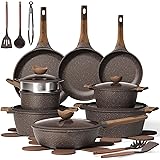
CAROTE 26pcs Pots and Pans Set Non Stick Cookware Sets | Induction Kitchen Cooking Set, Special Texture Design, Ultra Durable, Easy Food Release, Even Heating, with Frying Pans Set
$139.98 (as of October 21, 2026 19:18 GMT +00:00 - More infoProduct prices and availability are accurate as of the date/time indicated and are subject to change. Any price and availability information displayed on [relevant Amazon Site(s), as applicable] at the time of purchase will apply to the purchase of this product.)
Now retrieving an image set.
CAROTE 22pcs Ceramic Cookware Set, Pots and Pans Set | Non-Toxic Healthy Cooking Set with Glass Lids, Even Heating, with Steamer & Utensils Set & Sponge Eraser, PFAS FREE
$79.97 (as of October 21, 2026 19:18 GMT +00:00 - More infoProduct prices and availability are accurate as of the date/time indicated and are subject to change. Any price and availability information displayed on [relevant Amazon Site(s), as applicable] at the time of purchase will apply to the purchase of this product.)


CAROTE 21pcs Pots and Pans Set Non Stick, Detachable Handle Cookware, Black | Induction Compatible, Dishwasher & Oven Safe, Kitchen Organization, Cooking Set for Camping/RV/Traveling, House Warming Gift
$99.99 (as of October 21, 2026 19:18 GMT +00:00 - More infoProduct prices and availability are accurate as of the date/time indicated and are subject to change. Any price and availability information displayed on [relevant Amazon Site(s), as applicable] at the time of purchase will apply to the purchase of this product.)Uncoated aluminum is widely used for baking because it heats relatively quickly and tends to distribute heat well when the pan has adequate thickness. Light-colored aluminum is particularly useful for cakes, cookies, and breads that need gradual, controlled browning. Very thin aluminum, however, can flex, dent, and react rapidly to oven temperature swings. A substantial rolled rim and a base that resists twisting are better signs than weight alone.
Steel is stronger but generally transfers heat less evenly than aluminum. Many steel pans use a dark nonstick surface, which absorbs radiant heat readily and can produce deeply browned edges before a thick cake or loaf is finished at the center. That response may be desirable for crisp roasted potatoes or browned muffin sides, but it can be unforgiving with pale cookies. Coated steel should therefore be judged as a combination of its core, coating color, and thickness rather than by the word “steel” alone.
Glass heats more slowly than thin metal but holds heat after the oven door opens and after the dish is removed. It lets the baker inspect bottom and side browning, making it practical for pies, fruit crisps, and casseroles. Its retained heat can overcook edges if a recipe was developed for metal. Glass also requires careful handling: avoid abrupt temperature changes, follow the manufacturer’s oven limits, and do not use chipped or damaged pieces.
Cast iron has high thermal mass. Once hot, it maintains a strong cooking surface that favors cornbread, skillet cookies, cobblers, and breads needing a firm crust. It also takes longer to preheat and is a poor match for delicate items that need quick cooling. Enameled cast iron shares much of that heat retention but may have different temperature and broiler restrictions.
A practical material check should answer three questions: Does the pan respond at the pace the recipe needs? Does it spread heat before one area becomes too dark? Does retained heat help the crust or continue cooking it too aggressively? The common mistake is treating one material as universally superior. Match fast, moderate heating to delicate baking and reserve strong heat retention for recipes that benefit from a pronounced crust.
How Does Pan Design Change Browning and Rise?
Dimensions and geometry can alter a bake even when two pans are made from the same metal. Measure the inside length and width at the top, the depth, and the base where the food actually sits. Sloped walls make the usable bottom smaller than the advertised rim dimensions, while rounded corners change how batter collects and sets.
Volume is especially important for cakes, quick breads, and brownies. A shallow pan spreads batter into a thinner layer, increasing surface area and shortening the path heat must travel to the center. A deeper vessel does the opposite: the outside may set while the center remains fluid. Never judge capacity only from nominal labels such as “loaf pan,” because differently shaped pans carrying that label may produce noticeably different batter depths.
Side construction affects both structure and browning. Straight, square corners create defined brownie and bar edges but can hold thicker deposits of batter in the corners. Sloped sides promote easier release in some cake pans, although they change the finished profile. A pronounced rim stiffens a sheet pan and provides a safer grip, yet an oversized rim can reduce usable baking area. Handles need enough clearance for oven mitts without making the pan difficult to position on a crowded rack.
Surface color deserves a separate check. Dark finishes absorb radiant heat more readily than shiny, light surfaces and often create faster browning at the bottom and perimeter. A dark pan is not defective when cookies finish sooner; it is behaving differently. The problem appears when that browning is too rapid for the interior to finish. Silicone or very light decorative coatings may behave differently again, so color is a useful clue rather than a complete prediction.
Inspect the base on a flat counter before buying or testing. It should sit without rocking, and opposing corners should not lift when pressed. Rolled edges and reinforcement can limit distortion, although no construction makes a pan immune to misuse or severe thermal shock. For sheet pans, also look for enough vertical clearance to allow air to circulate around food rather than crowding ingredients against tall walls.
The weak assumption is that a heavier pan must bake more evenly. Added mass can stabilize temperature, but poor geometry, an excessively dark finish, or an uneven base can outweigh that advantage. Choose dimensions that reproduce the intended batter depth first, then compare thickness, color, and reinforcement among pans of the correct size.
Run a Controlled Home Baking Test
A controlled test separates pan performance from recipe and oven variation. Use a recipe you have baked successfully several times, and change only the pan. Keep the ingredient brands, mixing method, portion size, rack position, temperature, and starting conditions the same. An oven thermometer can help reveal whether the oven is operating far from its setting, but it cannot map every hot and cool area inside the cavity.
Cookies make an efficient first test for sheet pans because differences appear quickly across a wide surface. Portion dough consistently and arrange pieces in a symmetrical pattern. Record which cookies spread fastest, where bottoms become darkest, and whether the front or rear finishes first. If one corner repeatedly burns while the others remain pale, rotate the pan 180 degrees during a second batch. A pattern that turns with the pan points toward the pan; a pattern that stays in the same oven location suggests an oven hot spot.
For loaf, cake, or muffin pans, use the same batter depth in each comparison. Note the time when the edges become firm, when the center is done according to the recipe’s appropriate doneness cue, and how the crust looks after cooling. A tall crown with overdone edges may indicate that the pan is too small, too dark, or too conductive for the chosen conditions. A low, dense center may come from the recipe or mixing method, so repeat the test before blaming the vessel.
Use this compact checklist for each trial:
- Inspect: Confirm that the pan is flat, clean, undamaged, and appropriate for the stated oven temperature.
- Standardize: Match food quantity, spacing, rack position, and preheating.
- Observe: Check side, bottom, and center color rather than judging only the top.
- Record: Write down bake time, rotation, release behavior, and cooling changes.
- Repeat: Run another batch before deciding whether a pattern is dependable.
Release is part of performance, but it should be evaluated with the preparation the recipe calls for. A cake pan that releases cleanly only after greasing and lining is not necessarily inferior; many cakes are designed for that method. Conversely, effortless release does not compensate for an underdone center or scorched crust. Examine whether a nonstick finish releases consistently without requiring cutting tools that could damage it.
Signs of a successful test include similar color from edge to edge, predictable timing, a finished center before the perimeter dries out, and no permanent distortion after cooling. Failure signs include localized scorching that follows the pan, repeated rocking after heat cycles, coating bubbles, severe twisting, or results that require constant correction. Small timing changes are normal when switching materials. Large and inconsistent changes are more concerning than a stable adjustment of a few minutes.
What Do Common Performance Problems Reveal?
Uneven results should be traced to the pan, oven, recipe, or loading method before the cookware is replaced. The location and repeatability of the defect provide the strongest clues. A single bad bake proves little; a pattern repeated under controlled conditions is much more useful.
| Observed result | Likely cookware factor | What to check next |
|---|---|---|
| Dark edges with a pale center | Dark finish, excessive depth, or strong heat retention | Verify pan dimensions and compare with a lighter metal pan |
| One corner scorches repeatedly | Uneven base or local hot spot | Repeat after rotating the pan and changing rack orientation |
| Cookies brown underneath too soon | Dark or thin sheet surface | Shorten the first timing check or test a light, heavier sheet |
| Pan rocks after cooling | Heat distortion | Inspect the base and avoid abrupt temperature changes |
| Cake sticks in isolated patches | Damaged coating, residue, or uneven preparation | Clean gently, inspect the surface, and repeat the same lining method |
Warping deserves close attention because it changes contact, food distribution, and handling. Sheet pans can make audible movement as metal expands in the oven without suffering permanent damage. The meaningful test is whether the cooled pan returns to a stable shape. Persistent twisting, pooled oil on one side, or a rocking base indicates a functional problem. Sudden temperature changes, such as placing a very hot pan under cold water, can make distortion more likely and should be avoided.
Coating condition must be judged separately from browning quality. Scratches, peeling, blistering, or exposed substrate call for checking the manufacturer’s care and replacement guidance. Do not use metal utensils or abrasive cleaners on a finish that prohibits them. A stained surface is not automatically failed cookware, but roughness and loose material are different from cosmetic discoloration.
Capacity errors often masquerade as poor heat distribution. An overfilled loaf pan can produce a dark shell and wet middle because the batter layer is too deep, not because the metal is defective. Similarly, overcrowded roasted vegetables release moisture faster than it can escape, causing steaming rather than browning. Compare actual food depth and spacing before drawing a conclusion about conductivity.
Decide whether adaptation is reasonable. A dependable dark pan that needs an earlier doneness check may still be useful, especially for crisp edges. A vessel that repeatedly twists, scorches one fixed area, or damages delicate bakes despite controlled trials is a weaker candidate. Keep simple notes for the pans you retain—best recipes, usual rack, lining method, and timing difference—so their distinct heat behavior becomes predictable rather than inconvenient.
Frequently Asked Questions
Is heavier cookware always better for baking?
No. Added mass may moderate temperature changes, but suitable dimensions, even construction, surface color, and recipe compatibility matter more than weight by itself.
Why do dark baking pans cook food faster?
Dark surfaces generally absorb radiant oven heat more readily, so edges and bottoms may brown sooner than they would in a shiny, light-colored pan.
How can I separate a pan problem from an oven hot spot?
Repeat the same bake after rotating the pan. If the dark area moves with the pan, inspect the cookware; if it remains in the same oven location, investigate heat distribution in the oven.
Should glass and metal pans use identical baking times?
Not automatically. Glass heats and cools differently from metal, so begin checking doneness early and follow recipe or manufacturer directions written for that material.
When should a baking pan be replaced?
Consider replacement when it remains warped after cooling, rocks on a flat surface, has a peeling or blistered coating, or produces repeatable localized scorching under controlled tests.
Conclusion
Reliable baking cookware should make results predictable rather than demand constant rescue. Begin with the correct interior dimensions and capacity, then assess the material, thickness, surface color, wall shape, reinforcement, and condition. Test promising pans with a familiar recipe under controlled conditions, recording browning, rise, release, timing, and distortion after cooling.
Do not reject a pan merely because it behaves differently from another material. A stable timing adjustment or stronger crust can be useful when it suits the food. Give more weight to repeatable faults: scorching that follows the pan, a center that consistently lags behind overdone edges, permanent warping, or coating deterioration. The next practical step is to test one commonly used pan for two batches, document the pattern, and reserve it for recipes that match its heating behavior.
Additional Resources
Authoritative Sources
- Metric Kitchen: Cookware and Tools | NIST
nist.govMar 1, 2023 — Measuring ingredients my weight rather than volume is more precise and consistent, Using a metric kitchen scale helps achieve better baking ...