Where Cookware Saves Time in Meal Prep
Cookware affects meal prep efficiency through the number of actions required to cook, move, portion, and clean food. A vessel with the right surface area can brown a full quantity of vegetables in one pass, while a cramped pan forces multiple batches and creates extra heating, stirring, and washing. The same principle applies to a pot that is large enough for pasta or grains without boiling over, and to a roasting pan that leaves room for food to cook rather than steam.
The time savings are often indirect. A dependable sauté pan gives chopped onions, peppers, and proteins enough contact with the hot surface to cook at a predictable pace. A lidded saucepan can finish rice or lentils while another burner handles a main dish. An oven-safe braiser may sear ingredients and then hold the complete meal for a slower finish, reducing transfers between vessels. These small reductions in handling matter when several components are prepared in the same session.
Efficiency does not mean cooking everything in the biggest vessel available. An oversized pan may spread a small portion too thinly, causing sauces to reduce too quickly or delicate foods to dry out. A small saucepan used for a large batch may prolong cooking and make stirring awkward. The useful question is whether the vessel gives the food enough room for the intended cooking method without wasting heat or counter space.
Consider a Sunday meal-prep session involving roasted vegetables, chicken, and a grain. A shallow sheet pan handles vegetables efficiently because its broad surface promotes evaporation and browning. A saucepan with a tight lid manages the grain with minimal attention. A skillet sized for the chicken avoids crowding during searing. Trying to perform all three tasks in one deep pot may reduce dish count, but it usually sacrifices texture and creates a longer sequence of waiting and transferring.
Some suggestions to consider!
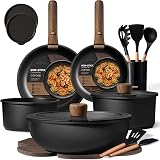


CAROTE 21pcs Pots and Pans Set Non Stick, Detachable Handle Cookware, Black | Induction Compatible, Dishwasher & Oven Safe, Kitchen Organization, for Camping/RV/Traveling, Cooking Set, House Warming Gift
$59.99 (as of October 14, 2026 19:08 GMT +00:00 - More infoProduct prices and availability are accurate as of the date/time indicated and are subject to change. Any price and availability information displayed on [relevant Amazon Site(s), as applicable] at the time of purchase will apply to the purchase of this product.)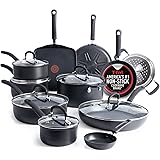
Now retrieving an image set.
T-Fal Ultimate Hard Anodized Nonstick Pots and Pans Set 17 Piece, Nonstick Cookware Set with Fry Pan, Saucepans, Saute-Pan, Griddle, Dishwasher Safe, Onyx
$229.95 (as of October 14, 2026 19:08 GMT +00:00 - More infoProduct prices and availability are accurate as of the date/time indicated and are subject to change. Any price and availability information displayed on [relevant Amazon Site(s), as applicable] at the time of purchase will apply to the purchase of this product.)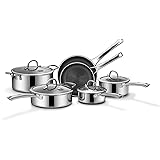
Now retrieving an image set.
SNOWCLAD Pots and Pans Set Non Stick | Stainless Steel Kitchen Cookware | 10 Pcs | PFOA Free | Hybrid | Induction Compatible | Frying Skillet, Saucepans, Saute Pan & Stock Pot
$169.99 (as of October 14, 2026 19:08 GMT +00:00 - More infoProduct prices and availability are accurate as of the date/time indicated and are subject to change. Any price and availability information displayed on [relevant Amazon Site(s), as applicable] at the time of purchase will apply to the purchase of this product.)Readers comparing cookware choices with the broader the role of cookware in meal prep efficiency should measure time in complete cycles: preheating, cooking, holding, portioning, and washing. A pan that finishes food quickly but takes special cleaning may not be the fastest choice for a large weekly routine.
Matching Pan Shape and Capacity to Batch Cooking
Pan geometry determines how food contacts heat, releases moisture, and fits into the cook’s workflow. Wide, relatively shallow skillets are useful for sautéing, browning ground meat, reducing sauces, and reheating prepared portions because ingredients can spread into a single layer. Deep pots are better suited to soups, beans, pasta, and foods that need liquid circulation. A sheet pan supports a different kind of efficiency: many small pieces can cook together while the cook prepares another component.
Capacity should be judged by the batch rather than the label on the package. A pan advertised as a certain size may lose usable capacity when food needs room to turn or when liquid must remain below the rim. Overcrowding a skillet traps steam between ingredients. Instead of browning mushrooms or chicken, the food releases moisture and simmers. The result may still be edible, but the cook spends more time waiting for liquid to evaporate and may need another batch to achieve the intended texture.
For weekly preparation, choose vessels around recurring quantities. A two-person household may need a medium skillet for vegetables and a smaller saucepan for sauces, while a larger household may gain more from a wide sauté pan or a second sheet pan than from several small frying pans. Two moderate pans can outperform one very large vessel when separate ingredients need different temperatures or when the stovetop has limited burner space.
Capacity checks that prevent bottlenecks
- Leave cooking space: ingredients should be spread enough to turn, stir, or brown without spilling.
- Check storage fit: a pan that cannot cool safely or stack conveniently may slow the portioning stage.
- Match depth to moisture: shallow surfaces favor reduction and browning, while deeper vessels contain liquids and larger volumes.
- Account for handles: long handles can block neighboring burners or make refrigerator storage impractical.
A common mistake is buying a matched set with several pieces that duplicate the same capacity while omitting a wide pan or oven-capable vessel. A smaller, deliberate collection often performs better: one broad skillet, one lidded pot, one saucepan, and one oven tray can cover many batch-cooking patterns. The best combination depends on recipe volume, burner layout, oven dimensions, and whether food is portioned immediately or stored in the cooking vessel.
Material, Heat Response, and Cooking Control
Cookware material influences how quickly a vessel heats, how steadily it holds temperature, and how forgiving it is when several ingredients are added at once. A thin pan may respond rapidly to burner changes but lose heat when cold food enters. A heavier pan generally takes longer to preheat but can maintain a steadier surface for searing or cooking a crowded batch. Neither behavior is automatically better; the useful choice depends on the task.
Stainless steel is versatile for browning, pan sauces, and high-temperature cooking, but it rewards preheating and adequate fat because delicate food may stick. Nonstick surfaces can simplify eggs, fish, and low-fat reheating, reducing scraping and washing, though they require attention to manufacturer temperature limits and utensil compatibility. Cast iron retains heat well for searing and roasting, but its weight and slower temperature changes may make rapid, multi-pan prep less convenient. Clad pans can offer a middle ground, combining a responsive cooking surface with more even heat distribution.
Heat response becomes especially relevant when meal prep involves sequential tasks. A pan that stays hot after vegetables are removed may be useful for browning the next ingredient, but it can scorch a quick sauce if the burner is not reduced. A highly responsive pan may prevent that problem, yet it may also require closer attention when cooking a large cold batch. Efficiency comes from predictable control, not from maximum heat retention or maximum speed alone.
Suppose a cook prepares chicken, then uses the browned bits for a sauce. Stainless steel may support that sequence because fond can develop and loosen with liquid. For a delicate reheating task the next day, a nonstick skillet may be more practical because food releases easily and cleanup is short. Treating one material as the universal answer creates avoidable compromises.
Use the vessel that fits both the food and the timing. Preheat heavier cookware while ingredients are being organized, reduce heat sooner than expected after adding food, and avoid judging readiness only by the burner setting. If the first batch browns unevenly, check pan crowding, burner alignment, and whether the pan was fully heated before replacing the cookware. The the role of cookware in meal prep efficiency is strongest when heat behavior is familiar enough to reduce corrections.
Designing a Cookware Setup for Fewer Delays
An efficient setup is organized around the order of operations rather than the number of pieces owned. Begin by listing the dishes that commonly appear in one preparation session and identify which tasks can overlap. A pot can cook grains while a skillet handles vegetables, and an oven tray can roast food while both burners remain available. This parallel approach reduces idle time, but only when each vessel is ready for the next step and does not block the workspace.
Use a simple priority sequence: assign the longest unattended task first, reserve the widest surface for food that needs browning, and keep the easiest-to-clean vessel available for the final quick task. For example, start a covered pot of beans or rice, load vegetables into the oven, then use a skillet for a protein or sauce. If a recipe requires the same pan for several components, cook the items in an order that preserves useful flavor and avoids washing between every stage.
Cookware compatibility also matters. Induction burners require compatible bases, while an oven-to-table plan requires handles and lids that tolerate the intended oven conditions according to the maker’s instructions. A vessel that fits the cooktop but not the oven may force a transfer into another dish. That extra transfer adds a utensil, a surface to clean, and a cooling delay. On the other hand, buying only oven-safe cookware may add weight and cost without helping someone who rarely uses the oven for batch cooking.
One practical failure mode is beginning with too many active pans. More vessels can create burner conflicts, crowded counters, and unclear timing. Three coordinated pieces may be easier to manage than five competing for attention. Signs that a setup is working include fewer pauses while food waits for an empty burner, less repeated transferring, consistent batch sizes, and a clear place for hot cookware to rest. Signs that it is failing include frequent burner rearrangement, food sitting in a hot pan after cooking, and cleanup beginning before the final batch is complete.
For readers refining the role of cookware in meal prep efficiency in their own kitchen, test the arrangement with one familiar meal before buying replacements. Record which vessel caused waiting, which surface was too small, and which piece created the most cleanup. That observation is more useful than selecting cookware solely from a general size chart.
Cleaning, Storage, and the Total Time Cost
Meal prep efficiency includes everything that happens after the burner is turned off. A pan that cooks well but requires prolonged soaking, careful scrubbing, or awkward storage can erase the time saved during cooking. Smooth interiors, accessible corners, removable parts, and dishwasher guidance all influence the final workload. Cleanup needs vary by material: cooked-on fond may be valuable for a sauce but may require prompt deglazing, while delicate nonstick surfaces call for gentler tools.
Design the session to reduce soil buildup. Cook foods that share a flavor profile in the same vessel when practical, deglaze browned residue while the pan is still warm, and avoid stacking hot cookware where moisture can remain trapped. If several dishes need the oven, line up cooking temperatures and pan availability before starting. Cooling food in a separate container may improve storage and safety practices, but it also adds dishes; make that transfer an intentional part of the plan rather than an afterthought.
Storage dimensions can be as important as cooking dimensions. A large pan with a permanently extended handle may consume more cabinet space than expected, and a lid without a storage location can become a daily obstacle. Nesting pieces reduce clutter, but frequent nesting can scratch surfaces if separators are not used. Heavy cookware may be durable and heat-stable, yet awkward lifting can make it less attractive for repeated meal preparation.
A useful purchase checklist is short:
- Does the vessel match the usual batch quantity?
- Can it perform the intended stovetop, oven, or reheating task?
- Will its heat response be predictable for the foods prepared most often?
- Can it be cleaned and stored without adding a recurring chore?
- Does it fill a genuine gap rather than duplicate an existing piece?
The common misconception is that efficiency comes from premium construction alone. Better materials may improve control or durability, but the wrong shape, capacity, or storage fit remains inconvenient. Prioritize the piece that removes a repeated bottleneck, then assess whether its maintenance demands suit the household’s schedule.
Frequently Asked Questions
Which cookware piece usually saves the most meal-prep time?
A wide skillet or sauté pan often removes the most common bottleneck because it supports larger batches of vegetables, proteins, and sauces without excessive crowding. The best choice still depends on your recipes and stovetop size.
Does heavier cookware make meal prep more efficient?
Heavier cookware may hold heat steadily for searing and large batches, but it takes longer to heat and may be harder to move or wash. Choose it when temperature stability matters more than rapid burner changes.
Why does overcrowding slow down batch cooking?
Overcrowding lowers the cooking surface temperature and traps moisture around the food. Ingredients then steam instead of browning, which can require extra cooking time or a second batch.
Is a complete cookware set necessary for efficient meal prep?
No. A focused collection matched to regular quantities is usually more practical than several duplicate pieces. A broad skillet, lidded pot, saucepan, and oven tray cover many routines.
How should cookware cleanup affect a buying decision?
Consider washing time, utensil compatibility, handle design, lid storage, and whether the piece can be cleaned with your normal routine. A difficult-to-maintain pan may reduce total efficiency even if it cooks well.
Further Reading
Authoritative Sources
- USDA Food Safety and Inspection Service: Safe Food Handling
fsis.usda.govUseful for aligning batch-cooking, cooling, storage, and reheating decisions with recognized food-safety guidance
- U.S. Department of Energy: Cooking
energy.govProvides practical information about cookware, cooking methods, and appliance use that can inform efficient kitchen routines
Conclusion
Efficient meal prep depends less on owning many vessels than on assigning each task to cookware with suitable surface area, depth, heat behavior, and cleanup demands. A wide pan can prevent repeated browning batches, a stable pot can handle unattended grains or soups, and oven-compatible pieces can remove unnecessary transfers. The practical next step is to observe one normal prep session: note where food waits, which pan feels crowded, and which item creates the longest cleanup. Replace or add cookware only when it addresses a repeated bottleneck. That approach keeps the collection manageable while improving the sequence from raw ingredients to cooled, portioned meals.