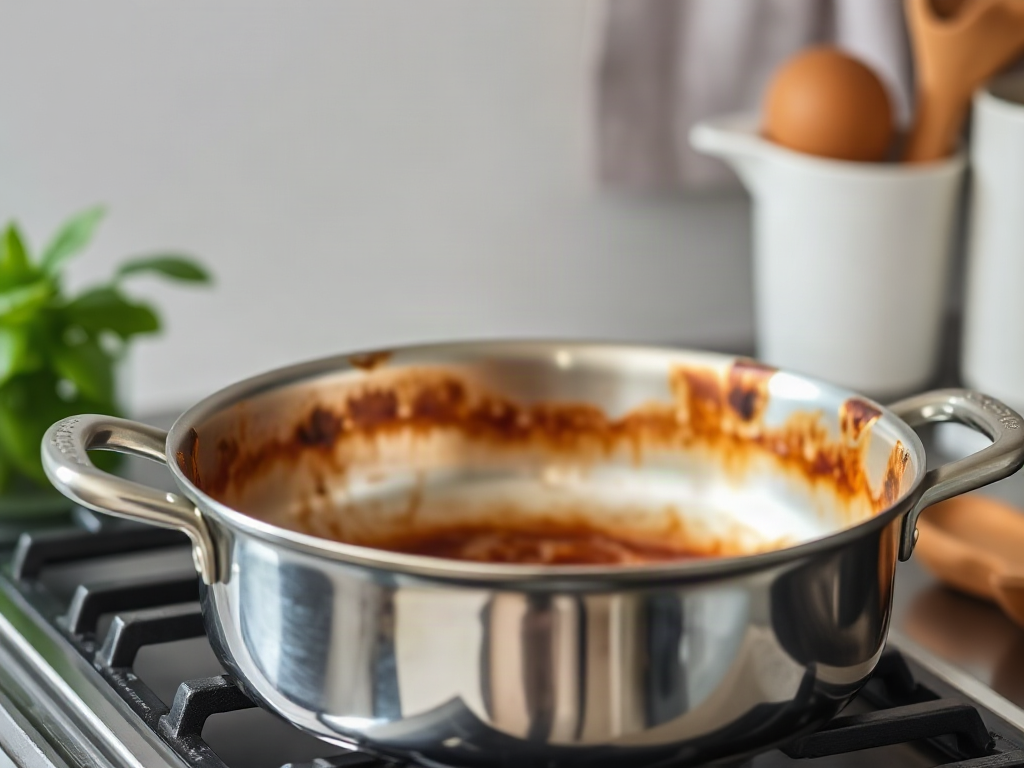
How to clean burnt-on food from cookware depends on the surface: soak stainless steel or enamel with hot water and dish soap, simmer a baking-soda solution for stubborn residue, and use gentler methods on nonstick coatings. Loosen the burned layer only after it has softened, then lift it with a nylon scraper or soft sponge rather than metal tools. Cast iron needs a brief scrub, thorough drying, and a light coat of oil instead of prolonged soaking. Avoid sudden temperature changes, abrasive powders on delicate finishes, and mixing cleaning chemicals. If the coating is blistered, peeling, or deeply scratched, cleaning may not restore safe, reliable use.
Identify the Surface Before Cleaning
The cookware material determines how much heat, soaking, friction, and chemical action the surface can tolerate. Burnt food is usually a mixture of dehydrated starches, proteins, sugars, and cooking fats that have bonded to the pan as moisture disappeared. A method that works on bare stainless steel can dull enamel, scratch a nonstick coating, or strip seasoning from cast iron.
Start by letting the pan cool naturally. Pouring cold water into a very hot pan can create thermal stress, particularly in glass, enamel, and some layered pans. Once it is safe to handle, remove loose crumbs with a wooden or silicone utensil. Do not begin with aggressive scraping; dry, forceful pressure can turn a removable deposit into a scratched cooking surface.
Some suggestions to consider!
Now retrieving an image set.
CAROTE 26pcs Pots and Pans Set, Nonstick Cookware Sets | Induction Kitchen Cooking Set, Special Texture Design, Ultra Durable, Easy Food Release, Even Heating, with Frying Pans Set
$139.99 (as of September 15, 2026 18:46 GMT +00:00 - More infoProduct prices and availability are accurate as of the date/time indicated and are subject to change. Any price and availability information displayed on [relevant Amazon Site(s), as applicable] at the time of purchase will apply to the purchase of this product.)
Now retrieving an image set.
CAROTE 21pcs Pots and Pans Set Non Stick, Detachable Handle Cookware Sets | Ultra Nonstick, Space Saving, Dishwasher & Oven Safe, Non-Toxic Kitchen/Apartment/Camping/RV/ Traveling, Purple
$99.99 (as of September 15, 2026 18:46 GMT +00:00 - More infoProduct prices and availability are accurate as of the date/time indicated and are subject to change. Any price and availability information displayed on [relevant Amazon Site(s), as applicable] at the time of purchase will apply to the purchase of this product.)
Now retrieving an image set.
Caraway 12-Piece Non-Stick Ceramic Cookware Set | Pots, Pans, Lids and Kitchen Storage, PFAS and PFOA Free, Oven Safe Pan Set and Compatible with All Stovetops, Cream
$445.00 (as of September 15, 2026 18:46 GMT +00:00 - More infoProduct prices and availability are accurate as of the date/time indicated and are subject to change. Any price and availability information displayed on [relevant Amazon Site(s), as applicable] at the time of purchase will apply to the purchase of this product.)Check the interior for its finish. Shiny silver metal is commonly stainless steel, while a dark, slightly textured surface may be seasoned cast iron. A smooth colored interior may be enamel, and a slick dark coating that should not be scraped is likely nonstick. If the manufacturer gives care instructions, they take priority over a general household remedy.
A useful distinction is between residue and surface damage. A brown or black layer that feels raised may respond to soaking and heat. A gray patch, peeling film, blister, or rough area that remains after washing may indicate damaged finish rather than food. Cleaning can remove residue, but it cannot rebuild a failed coating.
A Step-by-Step Method for Burnt Residue
The safest first method is controlled softening: cover the burned area with warm water, add a small amount of dish soap, and let the pan sit for 15 to 30 minutes. Water penetrates and swells many dried food deposits, while detergent helps separate grease from the surface. This approach is slower than abrasive scouring, but it preserves finishes and gives you a clear signal about how firmly the residue is attached.
After soaking, use a nylon scraper, wooden spatula, or soft dish brush. Work from the edge of the deposit toward the center so the tool lifts the film instead of dragging grit across clean metal. If flakes come away easily, rinse and repeat the soak. A pan that still has a hard, glassy layer needs more softening rather than greater force.
For stainless steel or enamel cookware that tolerates heat, add enough water to cover the residue and stir in one to two tablespoons of baking soda. Bring the liquid to a gentle simmer for several minutes, turn off the heat, and let the pan cool before scrubbing. The warm alkaline solution helps loosen cooked-on proteins and starches. Keep the simmer gentle; boiling an almost empty pan can create another burned ring.
Use this compact order of operations:
- Cool the pan and remove loose food.
- Soak with warm water and dish soap.
- Scrape with a nonmetal tool.
- For suitable surfaces, simmer water with baking soda.
- Wash, rinse, dry, and inspect before repeating.
Signs that the method is working include softened edges, cloudy water, and residue lifting in thin pieces. Signs that it is failing include a coating becoming dull, visible scratches, or no change after repeated gentle cycles. At that point, continuing to scrub usually adds damage without improving cleanliness. The how to clean burnt-on food from cookware process should be adjusted to the material, not intensified automatically.
Material-Specific Methods and Mistakes
Stainless steel
Stainless steel generally gives you the widest cleaning margin. A dish-soap soak followed by a nylon pad is suitable for ordinary scorching, while a baking-soda simmer can help with a dark layer on the base. For a stubborn spot, make a loose baking-soda paste, spread it over the cooled area, and leave it briefly before scrubbing with the grain or direction of the existing finish.
A common mistake is using steel wool immediately. It may remove food, but it can leave fine scratches that trap later residue and make the pan look permanently cloudy. Chlorine bleach and harsh oven cleaners are also poor default choices because they may discolor or attack metal surfaces. If rainbow discoloration remains after the food is gone, that is often heat tint rather than burnt food and needs a different, gentler treatment.
Nonstick cookware
Nonstick pans need the least abrasion. Use warm soapy water, a soft sponge, and a plastic or silicone utensil for softened fragments. Avoid metal scrapers, abrasive powders, scouring pads, and high-heat empty simmering. A nonstick coating is not meant to be polished back to its original appearance through force.
Suppose scrambled eggs have formed a black ring around a nonstick skillet. A prolonged warm soak may loosen the ring; a soft brush can then remove it without pressing hard. If the surface has bubbles, peeling, deep scratches, or exposed metal, replacement is more sensible than trying stronger chemicals. The cookware cleaning method should protect the coating even when that means accepting two gentle cycles instead of one aggressive session.
Cast iron
Cast iron should not be left submerged for long periods. Add a small amount of water, warm the pan briefly, and loosen the residue with a stiff nylon brush or scraper. Pour out the water, wash away remaining food, dry the pan completely over low heat, and apply a thin film of cooking oil while it is warm.
Soap is not automatically forbidden for modern seasoned cast iron, but extended soaking and harsh scouring can reduce the seasoning layer. A crust that comes off with a short scrub is a cleaning problem; flaking black material across a broad area may mean the seasoning needs rebuilding. Enamel-coated cast iron follows enamel care instead: avoid thermal shock and abrasive tools.
When Residue or Damage Requires a Different Approach
Not every dark mark should be treated as the same problem. Sugar-heavy foods can harden into a brittle, shiny layer, while milk, starch, and protein often create a stubborn matte film. Grease may soften with detergent but resist plain water. Identifying the likely food changes the first move: water and time help dehydrated food, detergent helps fat, and gentle heat can soften caramelized deposits on heat-tolerant surfaces.
Do not mix cleaning products. Combining bleach, ammonia-based products, acids, or commercial cleaners can create irritating or hazardous vapors. Baking soda and vinegar are also frequently used together without purpose: their reaction produces fizz, but once they neutralize each other, the mixture is not automatically stronger than either product used appropriately. Use one compatible method at a time and rinse the pan thoroughly.
Some situations call for stopping rather than escalating. A pan with a warped base may heat unevenly and create repeated scorching. A nonstick interior with peeling or exposed metal should not be rescued with abrasive cleaning. Enamel with chips on the cooking surface may continue to shed fragments and should be evaluated against the maker’s care guidance. Damage around rivets, handles, or seams can also trap moisture and food, making complete cleaning difficult.
For a pan that is sound but badly scorched, repeat the softening cycle after the first wash rather than attacking the remaining patch while dry. A short pause between cycles lets water reach small cracks in the residue. Once clean, dry the pan fully, especially around handles and rims, and adjust cooking habits: lower empty-pan heat, add liquids before a sauce reduces completely, and avoid leaving sugar-rich food unattended. Preventing another hardened layer is usually easier than removing one.
Readers comparing methods in how to clean burnt-on food from cookware should prioritize finish safety in this order: manufacturer instructions, gentle soaking, compatible low heat, nonmetal scraping, and only then a stronger material-approved cleaner. That sequence protects the pan while still giving stubborn residue a reasonable chance to release.
Frequently Asked Questions
Can I use baking soda on every type of cookware?
Baking soda is commonly suitable for stainless steel and some enamel surfaces, but it can be too abrasive for certain finishes. Use it cautiously on nonstick cookware and follow the manufacturer’s instructions.
Should I scrape burnt food while the pan is hot?
Use heat only to soften residue on a heat-tolerant pan. Let the cookware cool enough to handle, then use a wooden, silicone, or nylon tool; never risk burns or thermal shock.
How do I clean a burnt nonstick pan?
Soak it in warm soapy water, then use a soft sponge or plastic utensil. Do not use steel wool, metal scrapers, abrasive powders, or high heat to force the residue off.
Is vinegar good for burned cookware?
Vinegar may help with mineral deposits or some odors, but it is not a universal solution for carbonized food. Use it only when compatible with the cookware and never mix it with bleach.
When should I replace a burnt pan?
Consider replacement when a nonstick coating peels, blisters, or exposes the base, or when cookware is warped, cracked, or deeply chipped. Food residue alone does not necessarily mean the pan is ruined.
Conclusion
Burnt-on food is best handled by softening it before scraping, not by applying maximum force. Begin with a warm soapy soak, use a nonmetal tool, and reserve a baking-soda simmer for stainless steel or compatible enamel. Nonstick surfaces need the gentlest treatment, while cast iron needs brief cleaning followed by immediate drying and oiling. Watch for the difference between removable residue and damaged cookware: a raised crust may release, but peeling coatings, chips, and warping will not be repaired by another cleaner. Rinse thoroughly, avoid mixing chemicals, and change the cooking habit that caused the scorching when possible. A patient, material-specific method protects both the pan and the surface you cook on.