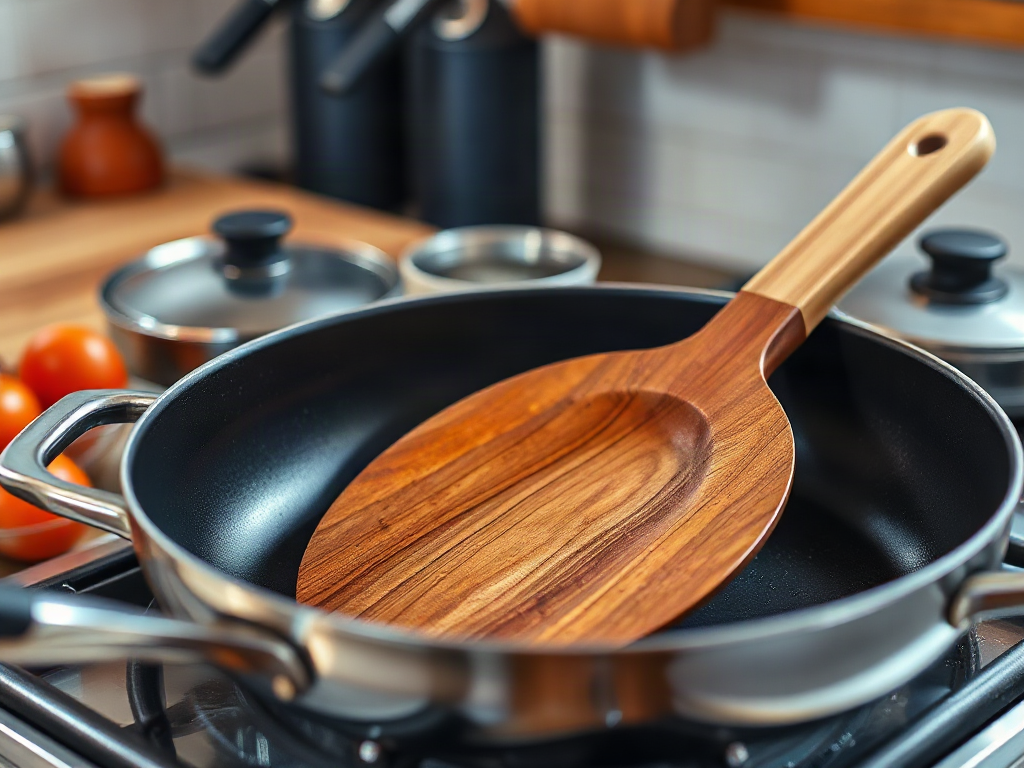
The environmental impact of cookware materials depends less on a single “greenest” metal than on manufacturing intensity, expected lifespan, energy use, maintenance, and whether the pan can be reused or recycled. Aluminum and stainless steel require substantial industrial energy, while cast iron is heavy to transport but can last for decades; coated cookware may use fewer raw materials yet become harder to recover when the surface fails. A practical choice is a durable pan suited to your cooking, maintained according to its instructions, and replaced only when performance or safety has genuinely declined. Reusing, repairing, donating, and checking local recycling rules usually matter more than chasing a material label alone.
Where Cookware’s Environmental Burden Comes From
Cookware affects the environment at several points: extracting minerals, refining and forming them, adding coatings or handles, transporting finished products, heating pans in the home, and managing them after disposal. The material named on the package is only one part of that chain. A lightweight aluminum skillet and a thick cast-iron pan have different manufacturing and transport demands, but the skillet may be discarded sooner if its surface warps or wears out.
Manufacturing often deserves the greatest attention because metal production can require high temperatures and significant electricity or fuel. Mining also changes land and water conditions, while refining creates industrial residues that must be managed. Stainless steel is an alloy rather than a single raw material, and its environmental profile reflects the production of iron, chromium, nickel, and any recycled content. Aluminum production is energy-intensive, although aluminum’s ability to be recycled can preserve value when collection and processing systems accept it.
Some suggestions to consider!
Now retrieving an image set.
CAROTE 20pcs Pots and Pans Set, Nonstick Cookware Sets | Induction Cooking, Ultra Durable, Easy to Clean, Even Heating, All-Stovetop Compatible, PFOA-Free Kitchen Set
$69.99 (as of October 14, 2026 19:08 GMT +00:00 - More infoProduct prices and availability are accurate as of the date/time indicated and are subject to change. Any price and availability information displayed on [relevant Amazon Site(s), as applicable] at the time of purchase will apply to the purchase of this product.)
Now retrieving an image set.
CAROTE 21pcs Ceramic Cookware Set, Pots and Pans Set | Non-Toxic Healthy Cooking Set with Silicone Lids, Dishwasher Safe, Even Heating, with Steamer & Silicone Trivet, PFAS FREE
$79.97 (as of October 14, 2026 19:08 GMT +00:00 - More infoProduct prices and availability are accurate as of the date/time indicated and are subject to change. Any price and availability information displayed on [relevant Amazon Site(s), as applicable] at the time of purchase will apply to the purchase of this product.)
Now retrieving an image set.
T-Fal Ultimate Hard Anodized Nonstick Pots and Pans Set 17 Piece, Nonstick Cookware Set with Fry Pan, Saucepans, Saute-Pan, Griddle, Dishwasher Safe, Onyx
$229.95 (as of October 14, 2026 19:08 GMT +00:00 - More infoProduct prices and availability are accurate as of the date/time indicated and are subject to change. Any price and availability information displayed on [relevant Amazon Site(s), as applicable] at the time of purchase will apply to the purchase of this product.)Use-phase impacts are usually tied to the stove, not merely the pan. A poorly matched pan can waste heat through a small burner, a warped base, or slow heating. Thick cookware may retain heat effectively, but its weight does not automatically make it efficient for every meal. Induction can transfer energy efficiently to compatible cookware, while gas cooking sends more heat around the vessel. The same pan may therefore have different operating impacts in different kitchens.
End-of-life handling creates another distinction between materials. Clean, uncoated metal is more straightforward for scrap recovery than a multi-material item with riveted parts, plastic components, and a bonded coating. A common mistake is treating a curbside recycling bin as a universal solution. Many household recycling programs do not accept cookware, so the useful next step is checking the local waste authority, scrap-metal facility, retailer take-back program, or municipal reuse option.
Readers researching the environmental impact of cookware materials should examine the whole product system rather than ranking materials from a single trait. Weight, durability, repairability, packaging, cooking compatibility, and realistic service life often change the comparison.
Comparing Common Cookware Materials
Stainless steel, aluminum, cast iron, carbon steel, copper, ceramic, glass, and coated cookware each present different environmental tradeoffs. No material wins every category. A sensible comparison asks whether the item can perform its intended task for a long time, whether it contains complex layers, and what will happen when it is no longer usable.
Metals: durability versus production intensity
Stainless steel is valued for corrosion resistance and a long service life. A well-made stainless pan can remain useful after years of high heat and repeated washing, which spreads its manufacturing burden over many meals. Its alloy composition and multi-layer construction can complicate recycling, particularly when an aluminum core is bonded to steel. Even so, a durable pan that stays in service is often more practical environmentally than a cheaper pan replaced repeatedly.
Aluminum is light and conducts heat readily, reducing the mass moved through the supply chain and often allowing quick response on the stove. Primary aluminum production, however, is resource- and energy-intensive. Recycled aluminum generally avoids some of the need for new ore extraction, but consumers cannot assume that every aluminum pan will enter a recycling stream. Handles, coatings, and food residue may require separation before a recycler will accept it.
Cast iron and carbon steel can last for generations when kept dry and seasoned appropriately. Their main disadvantages include substantial weight, which affects shipping, and the energy required to cast or form thick metal. Their durability becomes meaningful when the pan is actually retained and used. A heavy skillet left unused because it is difficult to lift or clean may not deliver the expected longevity advantage; a lighter pan that is used for years can be the better personal fit.
Coatings, ceramics, and glass
Nonstick coatings can make delicate foods easier to release and may reduce the need for cooking fat, but a damaged or degraded surface often shortens the product’s practical life. Coated pans are also more complex at disposal because the coating is attached to a metal body. “Ceramic” cookware may describe a true ceramic vessel or a ceramic-like coating on metal, so the environmental assessment depends on the actual construction.
Glass and ceramic baking dishes can be long-lived and chemically stable for their intended uses, yet they are brittle and relatively heavy. Breakage during shipping or household use changes the waste outcome. Copper offers excellent heat responsiveness but uses a material with high economic and resource value; its environmental case is strongest when its performance and longevity justify the product rather than when it is purchased for appearance alone.
A useful decision is not “Which material has no impact?” but “Which construction meets the job with the fewest likely replacements?” Consider the cooking task, burner type, storage, lifting needs, cleaning method, and whether the manufacturer provides care and end-of-life information.
Why Lifespan And Care Change The Result
Service life is one of the most powerful variables in a cookware comparison because manufacturing impacts are incurred again whenever a pan is replaced. A durable skillet used for fifteen years may compare favorably with several short-lived alternatives, even if its initial production required more material. That does not make every heavy or expensive pan automatically sustainable; unused capacity and premature replacement still carry costs.
Care determines whether a product reaches its potential lifespan. Stainless steel may tolerate vigorous use, but scorched residue can encourage abrasive cleaning that dulls the surface. Cast iron and carbon steel need drying and suitable seasoning to limit rust. Coated cookware generally benefits from moderate heat, nonmetal utensils, and cleaning methods that do not scratch the surface. Following the manufacturer’s instructions is more reliable than applying one rule to every material.
Consider a household that buys a coated skillet for eggs but uses it under a broiler, stacks it without protection, and replaces it after the surface becomes damaged. The same household might achieve a longer service life with a pan suited to moderate stovetop use, or by reserving the coating for delicate foods and using stainless steel for high-heat tasks. The lower-impact choice is shaped by behavior and task allocation, not just the coating category.
Signs that care is working include a stable base, intact handles, predictable heating, and a surface that remains appropriate for its intended use. Signs of failure include severe warping, loose hardware, deep corrosion, exposed or peeling coating, and damage that changes safe handling. Cosmetic discoloration alone is not the same as functional failure. Replacing a pan because it looks less polished can create more waste than accepting normal wear.
Repair and reuse deserve attention before disposal. A loose handle may be serviceable if the fastener or replacement part is available. A pan that no longer suits one cook may still work for another household, a community kitchen, or a reuse organization. Never donate cookware with a compromised cooking surface or unstable handle simply to avoid throwing it away. The environmental impact of cookware materials is reduced most credibly when usable products remain useful without creating a safety problem.
A Practical Lower-Impact Buying And Disposal Plan
The best purchasing decision begins with the meal patterns and equipment already present in the kitchen. Buying a full set can create duplicate sizes and unused pieces, while selecting one durable pan for a frequent task may avoid unnecessary material. Check whether the base is compatible with the stove, whether the oven temperature matches your recipes, and whether the construction feels robust at the handle, rim, and cooking surface.
Use this compact priority order when comparing options:
- Choose the right function: Match the pan to tasks such as searing, simmering, eggs, baking, or induction cooking.
- Estimate realistic lifespan: Favor construction and care requirements that fit your habits rather than an idealized routine.
- Limit unnecessary complexity: Fewer bonded layers, detachable parts, and mixed materials may simplify future handling.
- Buy only needed capacity: A single frequently used pan usually has a stronger case than redundant pieces.
- Plan the exit route: Identify reuse, repair, scrap-metal, or local waste options before purchase.
Marketing language can mislead when it highlights one attribute, such as recycled content, without explaining the product’s total composition or expected life. Recycled content is useful information, but it does not compensate for a pan that fails quickly. Likewise, “natural,” “stone,” or “eco” labels do not by themselves describe mining, manufacturing energy, coating chemistry, durability, or recyclability. Ask for material details and care limits when the product page is vague.
Disposal should follow the item’s condition. Pass along a sound pan through a local reuse channel, repair a safe mechanical fault where feasible, and separate components only when the receiving facility requests it. Do not place cookware in curbside recycling unless local instructions explicitly allow it. Scrap dealers may accept clean metal cookware, but acceptance varies by alloy, coating, and attached parts. A municipal waste directory is often more useful than a general recycling symbol.
Energy use also deserves a practical check. Use a burner that fits the base, keep lids on when appropriate, and avoid heating an empty coated pan for extended periods. These habits will not erase the impacts of extraction or manufacturing, but they can reduce wasted household energy while protecting the product from avoidable damage. For a deeper comparison of purchase decisions, see the environmental impact of cookware materials alongside the manufacturer’s specifications and local disposal guidance.
What To Prioritize When Tradeoffs Conflict
Tradeoffs become clearer when the decision is tied to a specific kitchen scenario. A renter with limited storage may sensibly choose one versatile, moderately weighted pan rather than several specialty pieces. A cook who uses induction needs a compatible base first; a theoretically recyclable pan that cannot heat properly on the available stove may lead to replacement. Someone with limited lifting ability may be better served by lighter cookware that can be handled safely and retained for years.
Budget changes the calculation but does not eliminate it. The least expensive item may have a short life, while the highest-priced option may include features that are unnecessary for ordinary meals. Look for solid construction, replaceable or securely attached handles, clear care instructions, and a suitable warranty without assuming that a warranty guarantees environmental performance. Reviews can reveal warping, coating wear, or handle problems, but they should be read as evidence of use patterns rather than proof of every product’s lifespan.
A common misconception is that one material can be declared universally sustainable. Environmental performance varies with recycled input, factory energy, shipping distance, product weight, use frequency, maintenance, and disposal infrastructure. The same stainless pan can be a strong long-term choice for one household and an oversized duplicate for another. The same cast-iron pan can last for decades in a careful kitchen but be abandoned if its weight and maintenance conflict with daily needs.
Prioritize retention over novelty. Replace cookware when it is unsafe, unusable, or poorly matched to the kitchen—not simply because a new finish or color appears. When replacement is necessary, choose a construction whose limitations you understand, then protect its service life through appropriate heat, utensils, cleaning, and storage. That approach addresses the largest controllable part of household cookware waste: repeated purchasing caused by preventable failure or poor fit.
For current material and disposal details, consult manufacturer specifications, your municipal waste authority, and established scrap-metal or reuse organizations. Local acceptance rules vary, so official local guidance should take precedence over general recycling advice.
Frequently Asked Questions
Which cookware material is most environmentally friendly?
No single material is best in every situation. A durable pan that suits your stove, cooking habits, and maintenance ability can have a lower overall burden than a supposedly greener product that needs frequent replacement.
Is stainless steel better for the environment than nonstick cookware?
Stainless steel may last longer and be simpler to recover as metal, but the comparison depends on construction and use. A carefully maintained nonstick pan used within its limits may also provide years of service.
Can old cookware go in household recycling?
Usually only if the local program specifically accepts it. Check municipal instructions or contact a scrap-metal facility, especially for coated pans, mixed materials, or pieces with attached plastic and wood.
Does heavier cookware always have a smaller environmental impact?
No. Heavier cookware may last a long time, but it requires more material and transport weight. Its advantage depends on whether it remains useful and is not replaced because it is difficult to handle.
How can I reduce the environmental impact of a cookware purchase?
Buy only the piece you need, select a durable construction compatible with your stove, follow care instructions, repair safe faults, and arrange reuse or proper local disposal before discarding it.
Conclusion
Cookware decisions become more environmentally sound when they account for the entire product life rather than a single material label. Manufacturing energy, mineral extraction, product weight, coatings, cooking efficiency, durability, maintenance, and disposal all influence the outcome. Start with the pan’s actual job and your ability to care for it, then choose a construction likely to stay useful for a long time. Avoid duplicate purchases, treat marketing claims as prompts for questions, and distinguish cosmetic wear from genuine failure. When a pan reaches the end of its safe service, try repair or reuse first and verify local recycling or scrap-metal instructions before disposal. A well-matched, well-maintained pan retained for years is often a more practical environmental choice than frequent replacement driven by trends or poor fit.