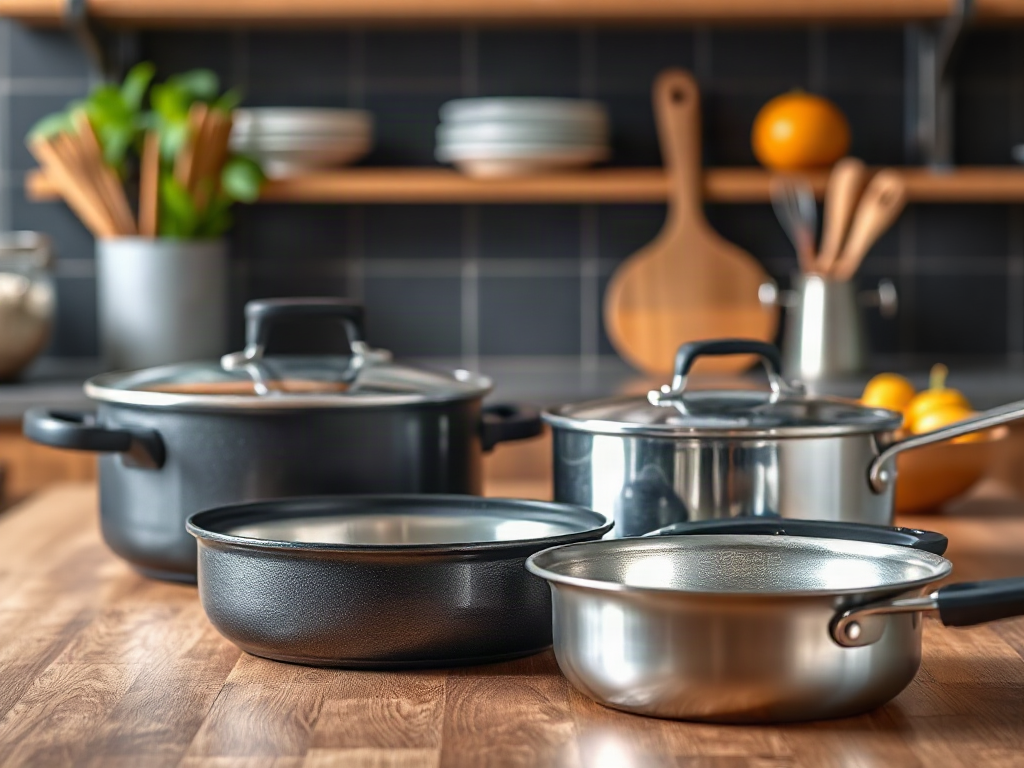
Choose child-safe cookware by checking the coating and base material, handle security, heat exposure, stability, and the care instructions before comparing price or appearance. Prefer pans with firmly attached, heat-resistant handles, a stable base, intact cooking surfaces, and clear manufacturer guidance for temperatures and utensils. Keep in mind that no cookware is child-safe when a pan is within reach of a hot burner, and lightweight pieces may tip more easily when pulled or bumped. Stainless steel, quality enameled cookware, and intact nonstick pans can each suit a family kitchen when their limitations are respected.
Define Child Safety Beyond the Cookware Material
Child-safe cookware is not a single material category. A well-made pan can still create a serious burn or spill hazard if its handle extends over the front edge, its base rocks on the stovetop, or an older child can reach it from a chair. Material selection matters, but physical design and kitchen placement usually determine whether a child can contact a hot surface or pull down a heavy vessel.
Begin by separating two questions: whether the cookware is suitable for food preparation and whether the cooking setup limits access to heat. Stainless steel, cast iron, enameled cookware, and nonstick pans may all be appropriate in different homes, yet none removes the need for supervision and burner control. A pan with a cool-touch handle may reduce contact with the handle, but the rim, lid, steam, and contents can remain hot.
Some suggestions to consider!
Now retrieving an image set.
Cuisinart MultiClad Pro 12-Piece Stainless Steel Cookware Set, MCPS-12N | Tri-ply clad construction with heat surround technology, brushed stainless steel, 12-piece set
$270.84 (as of October 14, 2026 19:08 GMT +00:00 - More infoProduct prices and availability are accurate as of the date/time indicated and are subject to change. Any price and availability information displayed on [relevant Amazon Site(s), as applicable] at the time of purchase will apply to the purchase of this product.)
Now retrieving an image set.
Astercook 21 Pcs Pots and Pans Set Non Stick, Ceramic Cookware Set Detachable Handle, RV Kitchen Cooking Set Removable Handles, Oven Safe, Induction Ready, Stackable, Black, Fathers Day Gift for Men
$59.99 (as of October 14, 2026 19:08 GMT +00:00 - More infoProduct prices and availability are accurate as of the date/time indicated and are subject to change. Any price and availability information displayed on [relevant Amazon Site(s), as applicable] at the time of purchase will apply to the purchase of this product.)
Now retrieving an image set.
Cuisinart Chef's Classic Stainless Steel Pots and Pans Set, 11 pc, 77-11G | Induction cookware compatible with all stovetops, tri-ply base, cool-grip handles, nontoxic cookware set, oven safe 550°F
$170.00 (as of October 14, 2026 19:08 GMT +00:00 - More infoProduct prices and availability are accurate as of the date/time indicated and are subject to change. Any price and availability information displayed on [relevant Amazon Site(s), as applicable] at the time of purchase will apply to the purchase of this product.)Consider the child’s age, height, mobility, and behavior. A toddler who reaches upward creates a different risk from a school-age child learning to stir oatmeal. For a low-range stove, front burners and long handles deserve especially careful attention. Turning handles inward and using rear burners can reduce accidental contact, but they do not make an unattended pan safe.
A common mistake is treating a safety label, a “family-friendly” description, or a nonstick coating as a complete safety assessment. Read the construction details and imagine the pan in use: where the handle points, how much force is needed to tip it, whether the lid can be lifted safely, and what happens if a child bumps the counter. The best choice is the one that fits the household’s actual supervision and storage habits.
For broader material context, compare these decisions with how to choose child-safe cookware options alongside your normal cooking needs. Safety should narrow the choices, not replace practical questions about cleaning, weight, and temperature control.
Compare Materials, Coatings, And Temperature Limits
Material affects heat retention, surface behavior, weight, and the care required to keep the pan in good condition. Stainless steel is durable and resistant to coating wear, but food can stick when the pan is overheated or insufficiently preheated. It may also be heavier than a thin aluminum pan. Enameled cookware offers a sealed cooking surface, while cast iron retains heat for a long time and can be difficult for a child to move safely.
Nonstick cookware is often convenient for eggs, pancakes, and soft foods because it needs less fat and releases food easily. Its safety depends heavily on the condition and temperature limits stated by the manufacturer. Avoid heating an empty nonstick pan for extended periods, follow the specified heat guidance, and use utensils that will not scratch the surface. A damaged or peeling coating is a replacement signal rather than a surface to keep using.
“PFOA-free” or similar marketing language does not answer every question about a pan. It may describe one chemical or manufacturing stage while leaving out maximum temperatures, coating construction, utensil restrictions, or the condition of the finished surface. Product instructions are more useful when they identify care requirements and limits clearly. If a listing does not explain the cooking surface or heat guidance, treat that lack of information as a reason to keep comparing.
Weight creates a real tradeoff. A heavy pan is less likely to slide during stirring, but a child or older adult may struggle to lift it, increasing the chance of dropping it. A lightweight pan is easier to handle but may move when a handle is pulled. For a family preparing food together, a moderately weighted pan with a broad, flat base may offer a better balance than either an extremely thin or very heavy alternative.
Check compatibility with the intended cooktop as well. A base that sits unevenly on an electric or induction surface can create movement and uneven heating. Use the manufacturer’s temperature and cleaning instructions, and do not assume that oven-safe automatically means safe for a child to handle after removal. Oven-safe cookware can remain dangerously hot long after cooking ends.
Inspect Handles, Lids, Bases, And Stability
Hardware deserves the same attention as the cooking surface. Handles should be firmly attached, comfortable to grip, and positioned so they do not project into a walking path or over the front of the stove. A helper handle can make a large pot easier for an adult to control, while a long handle may provide leverage for pulling a pan toward the edge. Neither feature is automatically safer; placement and supervision decide the outcome.
Examine the attachment points for looseness, gaps, exposed fasteners, or movement when the handle is gently tested. Heat resistance is useful, but “cool-touch” does not mean heatproof under every cooking condition. A handle can become hot when exposed to an adjacent burner, placed in an oven, or left near steam. Use a dry mitt or holder when the instructions require one, and keep children away from the assumption that a handle is always cool.
Lids introduce steam and pressure hazards. A lid with a secure, heat-resistant knob is easier for an adult to lift than one with a tiny metal grip, but lifting technique still matters: open it away from the face and hands, and expect hot vapor. Glass lids can make monitoring easier, yet a cracked lid should be removed from service because thermal changes can worsen existing damage. Avoid lids that slide easily when a pot is moved.
Stability comes from a flat base, suitable diameter, and sensible fill level. A tall, narrow pot may be stable when empty but top-heavy when filled with soup. A wide skillet may sit securely while still allowing hot food to spill if its contents are near the rim. Test an empty piece on the intended burner and look for rocking. A pan that wobbles before food is added is a poor candidate for routine family use.
The failure mode to avoid is judging safety from a product photograph. Photos rarely show how the handle aligns with a burner, whether the base warps under heat, or how awkward the pan becomes when full. Read care instructions, inspect the piece in person when possible, and choose storage that keeps handles and lids out of a child’s reach.
Build A Safer Buying And Use Checklist
A short inspection sequence keeps attractive design or low price from dominating the decision. Before buying, identify the meals the pan will prepare, the cooktop it will sit on, and who may handle it. A saucepan used for reheating soup has different demands from a large stockpot used on a front burner. The first should offer controlled pouring and a secure handle; the second needs a stable base and manageable weight when full.
Use this compact priority order:
- Surface condition and disclosure: Confirm the material, coating care, heat limits, and utensil guidance.
- Control points: Check the handle attachment, grip, lid knob, helper handle, and pouring edge.
- Stability: Look for a flat base, balanced weight, and a shape that does not become top-heavy when filled.
- Household fit: Confirm that the pan can be stored securely and used on a rear burner when appropriate.
- Maintenance: Make sure the adults using it will follow the cleaning and inspection instructions.
Then consider a realistic cooking scenario. If a teenager is preparing pasta under supervision, a smaller stainless steel pot may tolerate ordinary utensil use and provide a durable learning tool, but an adult should handle draining because the contents and steam remain hazardous. If a younger child is helping make pancakes, a cool, empty pan can be part of preparation, while the adult controls the heated pan and transfers the finished food.
Do not confuse participation with access. Child-safe kitchen practice may include measuring ingredients, mixing in a cool bowl, or placing prepared food on a plate without giving a child control of a hot burner. Cookware selection supports those boundaries; it cannot replace them. The most useful sign that a choice is working is predictable control: the pan stays where it is placed, the adult can lift it without strain, and the care instructions are easy to follow.
For a more complete household purchase comparison, keep a note of the factors in how to choose child-safe cookware options before shopping. A written checklist is particularly useful when buying a set, since one attractive piece may not share the same handle construction or coating as the others.
Recognize Damage And Replace At The Right Time
Regular inspection matters because a pan can become less controllable over time. Look for a loose handle, a detached rivet, a warped base, deep dents, chipped enamel, cracks in a lid, or a cooking surface that has degraded beyond the care instructions. These defects can change how heat spreads, make a pan rock, or allow food and moisture to collect in places that are difficult to clean.
Nonstick surfaces deserve careful attention. Minor cosmetic marks do not all mean the same thing, but deep scratches, flaking, bubbling, or exposed underlying material should prompt replacement or manufacturer-specific advice. Do not attempt to restore a damaged coating with improvised treatments. Abrasive cleaning can worsen surface damage, while high heat can accelerate deterioration.
Warping is a practical safety issue as well as a cooking-quality problem. A warped skillet may spin or slide on a smooth cooktop, especially when someone stirs from the side. A pot with a distorted base may heat unevenly and encourage the user to move it repeatedly while hot. Discard or replace any piece that no longer sits securely, even if the cooking surface looks acceptable.
A common misconception is that expensive cookware remains safe indefinitely. Price can reflect construction and durability, but handles, coatings, lids, and bases still experience wear. Keep damaged pieces away from children while deciding what to do, and do not pass questionable cookware to a child as a “starter” item. A smaller, intact pan is a better learning tool than a worn-out adult pan.
Store cookware so children cannot pull down stacked pieces or reach handles from a low drawer. Use a stable shelf, keep lids from sliding forward, and avoid placing heavy pans above shoulder height for the adults who use them. These simple storage choices often prevent the very pulling and dropping events that material comparisons cannot address.
Frequently Asked Questions
What cookware material is safest around children?
No material makes a hot pan safe to touch. Choose an intact surface with clear care guidance, a stable base, secure handles, and a design that fits your supervision and storage routine.
Is nonstick cookware suitable for a family kitchen?
It may be suitable when used within the manufacturer’s heat limits and kept free of peeling, bubbling, or deep scratches. Do not heat it empty for extended periods or use damaging utensils.
Are heavy pans safer than lightweight pans?
Heavy pans may resist sliding but can be difficult to lift when full. Select a balanced piece that the responsible adult can control without strain and that sits flat on the cooktop.
Should cookware handles point inward?
Turning handles inward can reduce accidental bumps and grabbing, especially on front burners, but it does not remove burn or spill risks. Use rear burners when practical and supervise hot cooking.
When should child-safe cookware be replaced?
Replace cookware with loose handles, severe warping, cracked lids, chipped enamel, or peeling or bubbling coatings. Follow the manufacturer’s instructions when damage is less obvious.
Conclusion
Choosing child-safe cookware means evaluating the entire cooking system rather than searching for a single risk-free material. Put secure handles, a flat and stable base, clear surface-care instructions, manageable weight, and sensible storage ahead of color, matching sets, or marketing claims. Match the piece to its actual job: a small pan for supervised lessons may be easier to control than a large vessel, while heavy cookware should remain an adult-handled tool. Inspect pieces regularly and retire anything with loose hardware, dangerous warping, cracked lids, or serious surface damage. The next useful step is to examine the cookware already in your kitchen under these conditions, then replace the item that creates the greatest combination of reach, tipping, heat, or handling risk.