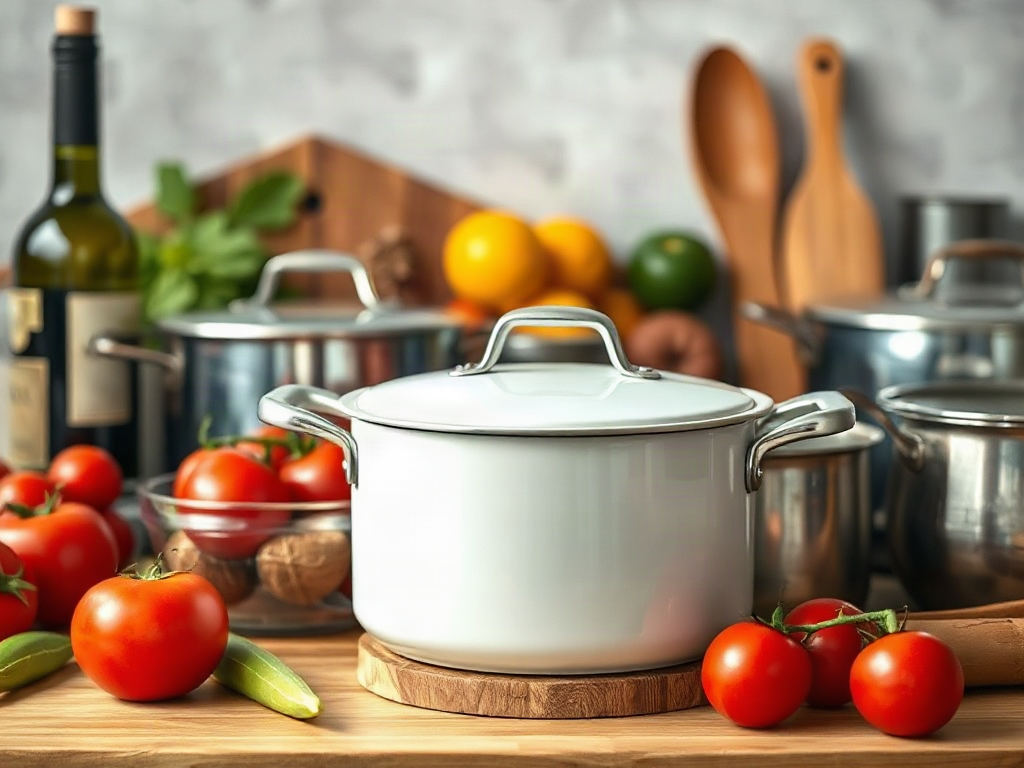
Cookware for acidic foods should be nonreactive, undamaged, and suited to the recipe’s cooking time; stainless steel, enamel-coated cast iron, glass, and fully ceramic vessels are generally practical choices for tomato, citrus, vinegar, and wine-based dishes. Uncoated aluminum, copper, and bare cast iron can react with acids, especially during long simmering, causing metallic flavors, discoloration, seasoning loss, or surface damage. Use a sound lining, avoid extended storage in the pan, and replace cookware when its coating is chipped or deeply worn. Acidic ingredients are usually manageable when exposure is brief, but slow sauces and braises demand more careful material selection.
Why Acidic Foods React With Some Cookware
Acidic foods contain acids such as citric acid in lemons and tomatoes, acetic acid in vinegar, and organic acids in wine and many fruits. When these ingredients contact a reactive metal, a small amount of the surface may interact with the food. The result can be a metallic taste, gray or dark discoloration, or changes to the pan’s finish. The effect depends on the cookware material, the acidity and salt content of the food, the temperature, and how long the food remains in contact with the surface.
Brief contact is usually less demanding than a long simmer. Tossing tomatoes in an aluminum skillet for a few minutes is not the same situation as reducing tomato sauce in that skillet for an hour. Heat can accelerate surface reactions, while salt and concentrated liquids increase the exposure of the pan to the food. Scratches, worn seasoning, and damaged coatings can expose underlying material and make an otherwise familiar pan less suitable.
Some suggestions to consider!
Now retrieving an image set.
Amazon Basics Non-Stick Kitchen Cookware 8-Piece Set, Non-Induction, Includes Pots and Pans, Black
$63.99 (as of October 14, 2026 19:08 GMT +00:00 - More infoProduct prices and availability are accurate as of the date/time indicated and are subject to change. Any price and availability information displayed on [relevant Amazon Site(s), as applicable] at the time of purchase will apply to the purchase of this product.)
Now retrieving an image set.
Caraway 12-Piece Non-Stick Ceramic Cookware Set | Pots, Pans, Lids and Kitchen Storage, PFAS and PFOA Free, Oven Safe Pan Set and Compatible with All Stovetops, Cream
$445.00 (as of October 14, 2026 19:08 GMT +00:00 - More infoProduct prices and availability are accurate as of the date/time indicated and are subject to change. Any price and availability information displayed on [relevant Amazon Site(s), as applicable] at the time of purchase will apply to the purchase of this product.)
Now retrieving an image set.
CAROTE 15pcs Tri-Ply Stainless Steel Cookware Set with Detachable Handle | Pots and Pans Set, Non-Toxic, Induction Compatible, Dishwasher& Oven Safe, Easy Storage, for Kitchen/Camping/RV Cooking
$59.99 (as of October 14, 2026 19:08 GMT +00:00 - More infoProduct prices and availability are accurate as of the date/time indicated and are subject to change. Any price and availability information displayed on [relevant Amazon Site(s), as applicable] at the time of purchase will apply to the purchase of this product.)A common misconception is that every acidic ingredient immediately makes a pan unsafe. The more useful question is whether the vessel is designed to keep reactive material away from the food. A lined copper pan, for example, behaves differently from bare copper; enameled cast iron behaves differently from uncoated cast iron. Read the construction rather than judging the pan by its exterior color or weight.
For a dish such as lemon chicken cooked quickly, a sound stainless-steel skillet may be a sensible choice. For a long tomato ragù, a nonreactive pot reduces the chance of off-flavors and avoids repeatedly exposing a vulnerable surface. Readers comparing options can also review what to know about cookware for acidic foods when planning a mixed cookware collection.
Materials That Work Best for Tomato, Citrus, and Wine
Stainless steel is a versatile default for acidic cooking because its cooking surface is generally nonreactive and tolerates high heat, deglazing, and repeated washing. It is especially useful for tomato sauces, pan sauces containing wine, and dishes finished with lemon. Stainless steel can develop discoloration or heat marks, but those cosmetic changes do not mean the pan has become reactive. A quality stainless interior still requires sensible heat control and enough fat or liquid to limit sticking.
Enameled cast iron combines a heat-retaining body with a glass-like enamel surface. The enamel separates acidic food from the iron, making the vessel suitable for chili, braises, fruit compotes, and long-simmered sauces. Its tradeoff is vulnerability to impact and sudden temperature changes. A chip on the interior is more than a cosmetic defect because it may expose the metal beneath. Avoid banging utensils against the rim and follow the manufacturer’s instructions for heating and cleaning.
Glass and fully ceramic cookware are also nonreactive choices for suitable stovetop or oven applications. Their limitations are practical: not every ceramic dish is intended for direct burner heat, and glass can crack if exposed to abrupt temperature changes. Confirm the intended use before moving a dish from a refrigerator to a hot burner or placing a cold liquid into a heated vessel.
Coated cookware can be useful for acidic dishes when the coating is intact and the pan is used within its stated temperature limits. The coating, rather than the underlying metal, provides the barrier. A deep scratch, blister, peeling area, or exposed base changes the decision. Bare copper and uncoated aluminum are poor choices for prolonged acidic cooking, while bare cast iron may lose seasoning and take on flavor or color from acidic foods. That does not make every short acidic use disastrous, but it makes the material less forgiving.
- Best general-purpose choice: stainless steel with a sound interior.
- Best for long, gentle cooking: intact enameled cast iron or another nonreactive pot.
- Use with extra caution: damaged coatings, bare aluminum, bare copper, and poorly seasoned cast iron.
Choosing a Pan for Short Cooking Versus Long Simmering
Cooking duration should guide the material decision as much as the ingredient list. A quick deglaze with white wine creates limited contact time, so a sound stainless skillet is often practical. A tomato soup that simmers for forty minutes, a vinegar-based braise, or a fruit filling held in a hot pan places greater demands on the cooking surface. Longer exposure gives a reactive metal more opportunity to affect flavor, appearance, or the condition of its finish.
Consider concentration as well as acidity. A watery sauce may be less aggressive than the same sauce after reduction, when the liquid becomes more concentrated. Stirring does not remove the underlying exposure; it only changes how the food moves across the surface. A wide stainless sauté pan may work well for reducing a wine sauce because it provides even evaporation without introducing a reactive cooking surface.
The pan’s condition can outweigh its material category. A pristine, intact lining is more useful than a theoretically suitable pan with deep scratches or chips. Check the cooking surface under good light. Look for exposed metal, bubbling, flaking, rough patches, or seasoning that has become thin and uneven. If the interior is damaged, choose another vessel rather than trying to protect it with extra oil or a layer of parchment.
Budget and cooking habits also matter. Someone who makes tomato sauce weekly may benefit from one durable stainless or enameled pot instead of buying a complete specialty set. A cook who prepares acidic foods only as a finishing step may need no replacement at all. The alternative viewpoint—that any nonstick or cast-iron pan must be avoided—overstates the issue. Intact, properly used cookware can handle many recipes; the meaningful distinction is prolonged exposure, surface condition, and manufacturer guidance.
When unsure, transfer the finished food to a separate storage container soon after cooking. Leaving tomato sauce, citrus marinade, or wine-rich gravy in the pan overnight extends contact time and can encourage staining, flavor changes, or deterioration of a vulnerable surface.
Mistakes That Damage Cookware or Change Flavor
The most preventable mistake is treating cookware labels as interchangeable. “Metal,” “ceramic,” and “cast iron” describe broad groups rather than the exact food-contact surface. A ceramic-coated pan may have a different care limit from a fully ceramic baking dish, and cast iron with enamel has different acidic-food behavior from bare cast iron. Product instructions provide the controlling details for temperature, utensils, cleaning, and stovetop compatibility.
High heat is another frequent source of trouble. Acid does not need extreme heat to cook effectively, and overheating an empty pan can damage coatings, create stubborn discoloration, or cause food to scorch into a concentrated layer. For tomato or citrus dishes, moderate heat and adequate liquid are usually more useful than aggressive boiling. If a sauce is catching at the bottom, lowering the burner and loosening the fond with an appropriate liquid is preferable to scraping forcefully with a metal tool.
Do not use abrasive cleaning as a routine response to discoloration. A soft sponge, warm water, and a cleaner approved for the material may remove residue without adding scratches. Stainless steel can tolerate more vigorous cleaning than a nonstick surface, but even stainless benefits from avoiding unnecessary abrasion. Bare cast iron needs prompt drying and appropriate re-seasoning when acidic cooking has dulled or stripped its surface.
Another weak assumption is that a metallic taste always proves dangerous leaching. Flavor, staining, and surface wear are warning signs that the pairing is poor, but they do not by themselves establish a health conclusion. If cookware is badly corroded, peeling, chipped, or inconsistent with its instructions, stop using it for food and consult the manufacturer about replacement. People with specific health concerns should seek advice from a qualified professional rather than infer safety from appearance alone.
Use separate utensils when a coating is present, avoid storing leftovers in the cooking vessel, and inspect pans after cleaning. Those habits address the mechanisms that matter: less abrasion, less prolonged contact, and fewer opportunities for a damaged barrier to enter service unnoticed.
A Practical Acidic-Food Cookware Checklist
Before cooking an acidic recipe, match the pan to the exposure rather than to the ingredient name alone. Tomato, vinegar, citrus, wine, tamarind, and many fruit preparations can all be handled successfully when the surface is appropriate and the cooking process is controlled. A short checklist makes the decision faster.
- Identify the contact surface. Determine whether food touches stainless steel, enamel, glass, ceramic, a coating, bare aluminum, copper, or seasoned iron.
- Estimate exposure. Separate a quick sauté or deglaze from a long simmer, reduction, braise, or overnight storage.
- Inspect the interior. Reject pans with chips, peeling, deep scratches, corrosion, or badly depleted seasoning for demanding acidic recipes.
- Control the process. Use moderate heat, avoid heating an empty coated vessel, and prevent concentrated sauce from scorching onto the base.
- Clean and store correctly. Follow material-specific care instructions and move leftovers into a suitable container.
Suppose you are choosing between a bare cast-iron Dutch oven and an enameled one for a tomato braise. The bare vessel may work for some cooks with strong seasoning and short exposure, but the enamel version removes the seasoning concern and is easier to dedicate to acidic recipes. If the choice is between a scratched nonstick saucepan and a sound stainless pot, the stainless option is the more dependable choice even if the nonstick pan once performed well.
Signs that the approach is working include clean flavor, an unchanged cooking surface, and residue that releases with ordinary cleaning. Persistent metallic notes, unusual darkening, flaking, rust, or a coating that changes texture signal that the pan, heat level, or storage practice needs attention. For more cookware decisions, what to know about cookware for acidic foods is most useful when applied to the actual recipe, duration, and condition of the vessel rather than used as a blanket rule.
For material-specific limits and care instructions, consult the manufacturer’s documentation for the exact pan. University extension cooking resources, recognized culinary organizations, and consumer-safety publications can provide additional context, but cookware construction and condition remain the first details to verify.
Frequently Asked Questions
Is stainless steel suitable for tomato sauce?
Yes. Sound stainless steel is a practical choice for tomato sauce, including longer simmering, because its cooking surface is generally nonreactive. Avoid overheating and clean residue promptly.
Can acidic foods be cooked in cast iron?
Enamel-coated cast iron is well suited to acidic foods. Bare cast iron may be acceptable for brief cooking, but prolonged tomato, vinegar, or wine exposure can weaken seasoning and affect flavor.
Why can aluminum change the taste of acidic food?
Uncoated aluminum is reactive, so acids, salt, heat, and long contact may interact with the surface. A metallic taste or discoloration is more likely during extended cooking or reduction.
Should acidic leftovers stay in the pan?
Move them to an appropriate storage container soon after cooking. Overnight contact can increase staining, flavor changes, and wear on reactive or coated surfaces.
Is a scratched coated pan safe for acidic recipes?
A scratched or peeling coating should not be treated as intact. Follow the manufacturer’s replacement guidance and use an undamaged stainless, enamel, glass, or suitable ceramic vessel instead.
Conclusion
Successful acidic-food cooking depends on the food-contact surface, the length of exposure, and the condition of the pan. Stainless steel and intact enamel are dependable choices for tomato sauces, citrus dishes, wine reductions, and vinegar-based meals, while glass and suitable ceramic vessels can work within their heating limits. Reactive materials such as bare aluminum and copper deserve caution, and bare cast iron is less forgiving during long acidic cooking because seasoning can deteriorate. Inspect the interior before use, moderate the heat, avoid storing leftovers in the cooking vessel, and replace cookware with serious coating damage or corrosion. A single durable, nonreactive pot may solve more real kitchen problems than a large collection of mismatched pans.