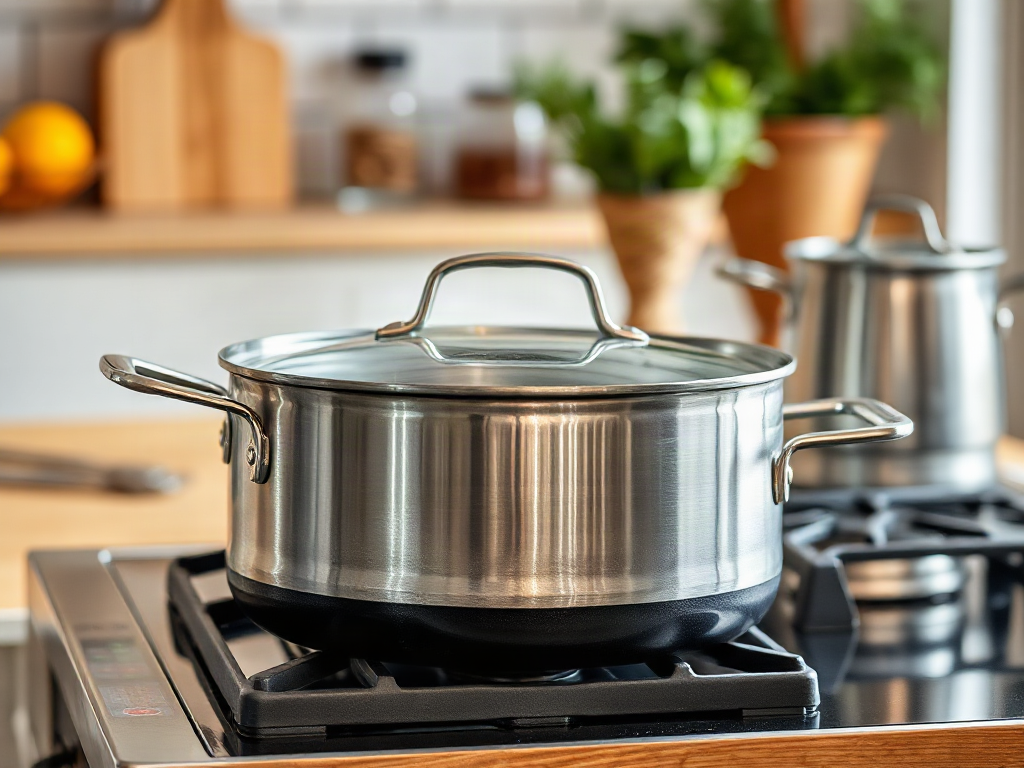
The benefits of using heavy-bottomed cookware include steadier heat, fewer hot spots, better browning, and more forgiving simmering because a thick base spreads and stores energy more evenly. That thermal mass helps sauces reduce without sudden scorching, lets meat sear more consistently, and keeps temperatures from dropping as sharply when chilled ingredients are added. Heavy construction can also reduce warping and extend useful service life when the pan is handled correctly. The tradeoffs are extra weight, slower preheating, higher cost, and a need to match the pan to the burner and lifting comfort. Use moderate preheating and avoid oversized burners to gain control without creating unnecessary stress on the cookware.
Why a Thick Base Changes Heat Behavior
Heavy-bottomed cookware responds differently from thin pans because its base contains more material to absorb, distribute, and retain thermal energy. A thin metal base can become very hot directly above a burner while areas between burner contacts remain cooler. A thicker base spreads that energy across a wider surface, reducing abrupt temperature differences where food touches the pan.
The result is not simply “more heat.” It is more stable heat. Once preheated, a heavy base is less likely to lose its temperature immediately when onions, cold stock, or refrigerated meat enters the pan. That stability gives the cook a wider margin between gentle cooking and scorching. It also makes temperature adjustments more gradual, which is useful when moving from a boil to a controlled simmer.
Some suggestions to consider!
Now retrieving an image set.
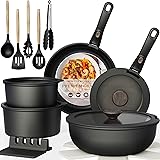
Astercook 21 Pcs Pots and Pans Set Non Stick, Ceramic Cookware Set Detachable Handle, RV Kitchen Cooking Set Removable Handles, Oven Safe, Induction Ready, Stackable, Black, Fathers Day Gift for Men
$59.99 (as of October 14, 2026 19:08 GMT +00:00 - More infoProduct prices and availability are accurate as of the date/time indicated and are subject to change. Any price and availability information displayed on [relevant Amazon Site(s), as applicable] at the time of purchase will apply to the purchase of this product.)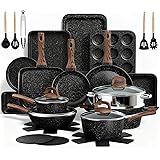
Now retrieving an image set.
Pots and Pans Set Non Stick, 31 Piece Kitchen Induction Cookware & Bakeware Set, Nonstick Kitchen Cooking Pans Set with Frying Pans Set Grill Pan Saucepan Baking Sheet & Utensils, PFOA Free
$113.99 (as of October 14, 2026 19:08 GMT +00:00 - More infoProduct prices and availability are accurate as of the date/time indicated and are subject to change. Any price and availability information displayed on [relevant Amazon Site(s), as applicable] at the time of purchase will apply to the purchase of this product.)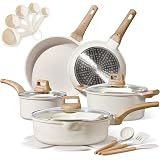
Now retrieving an image set.
CAROTE 20pcs Pots and Pans Set, Nonstick Cookware Sets | Induction Cooking, Ultra Durable, Easy to Clean, Even Heating, All-Stovetop Compatible, PFOA-Free Kitchen Set
$69.99 (as of October 14, 2026 19:08 GMT +00:00 - More infoProduct prices and availability are accurate as of the date/time indicated and are subject to change. Any price and availability information displayed on [relevant Amazon Site(s), as applicable] at the time of purchase will apply to the purchase of this product.)Thermal mass has limits. A heavy pan may take longer to preheat and may remain hot after the burner is lowered. A cook who treats it like a lightweight skillet can overshoot the target temperature, burn oil, or continue cooking a delicate sauce after the pan leaves the burner. The useful habit is to preheat at a moderate setting, add food when the surface is ready, and reduce the burner earlier than you would with a thin pan.
Base design matters as much as weight. Look for a flat, substantial cooking surface rather than assuming that any heavy vessel will perform evenly. A pan with a thick disk bonded beneath a thinner sidewall may distribute heat well at the base, while the walls can still respond quickly. Fully clad construction spreads heat up the sides as well, which may be helpful for reductions but can make the entire vessel hotter to handle.
Readers comparing options through the benefits of using heavy-bottomed cookware should judge thermal behavior alongside capacity and burner size. Extra mass is valuable when the cooking task involves sustained heat, but it is not a substitute for an appropriate flame, a flat base, or attentive temperature control.
Cooking Results That Benefit Most
Heavy-bottomed pans are especially useful for foods that punish uneven heating. Caramel, custards, risotto, polenta, oatmeal, rice, and thick tomato sauces can develop scorched patches when a thin base creates localized hot zones. A heavier surface distributes energy more gradually, allowing the food near the base to cook at a pace closer to the food around it.
Consider a pot of milk-based sauce. In a lightweight saucepan, the layer touching the hottest area can form a stuck film before the rest of the liquid thickens. A dense base does not remove the need to stir, but it can make the temperature rise less abrupt and give stirring a better chance to redistribute heat. The same principle helps with long-simmered beans or braises, where a stable low setting is preferable to repeated bursts of high heat.
Searing is another strong use case, although pan shape and surface area still matter. When several pieces of chicken or vegetables are added, their moisture draws energy from the cooking surface. A heavy skillet usually recovers more steadily, so the food has a better chance of browning rather than steaming. Crowding can defeat that advantage; even an excellent pan cannot maintain a dry searing surface when too much food is packed together.
Heavy cookware also suits batch cooking. A Dutch oven or thick sauté pan can hold a more consistent temperature while browning mushrooms, reducing a stew, or frying aromatics in successive additions. The limitation is maneuverability: tossing vegetables by wrist may be uncomfortable, and lifting a full pot can be hazardous. In those situations, a lighter pan with a well-designed base may be the more practical choice.
- Choose dense construction for reductions, searing, candy work, and long simmering.
- Use a responsive lighter pan for quick sautéing, frequent tossing, or fast temperature changes.
- Leave room around ingredients so the pan’s heat retention can support browning rather than trap steam.
The best results come from matching the pan’s thermal behavior to the recipe. A heavy base supports control; it does not replace stirring, spacing, proper burner adjustment, or attention to cooking time.
Tradeoffs, Materials, and Daily Handling
Weight is the most obvious cost of heavy-bottomed cookware, but the practical effect depends on the vessel. A dense saucepan may feel manageable when empty and awkward once filled with soup. A large cast-iron skillet can hold heat exceptionally well yet require more effort to lift, clean, and store. Before buying, consider whether the pan will be moved between burner, counter, sink, and oven, rather than evaluating weight only as a sign of quality.
Material changes the way that weight is experienced. Cast iron stores substantial heat and works well for searing, but it reacts slowly when the burner changes. Stainless steel with a thick aluminum or copper core can combine a durable cooking surface with more responsive distribution. Clad pans may heat the sidewalls, while a heavy encapsulated base concentrates much of the thermal advantage beneath the food. None of these designs is automatically best for every recipe.
Construction quality also affects durability. A substantial base can resist some forms of flexing better than very thin cookware, but sudden temperature changes can still stress metal. Pouring cold water into a blazing-hot pan, placing hot cookware on a wet stone surface, or heating an empty vessel aggressively may contribute to distortion or surface damage. Manufacturer care instructions should take priority over generalized maintenance habits.
Another weak assumption is that heavier always means more even. A thick pan with a base that is too small for the burner can still heat unevenly, while a large burner can push intense heat beyond the intended cooking zone. Induction users should check that the magnetic base is flat and fully compatible; gas users should keep flames beneath the base rather than climbing the sides.
Cleaning requires restraint. Stubborn residue is easier to loosen after soaking or simmering water in the pan than by attacking the surface with harsh abrasion. Seasoned cast iron needs different care from stainless steel, and coated cookware should not be treated like bare metal. The pan’s weight may support long service, but only if its surface, handles, and base are maintained according to their material and finish.
How to Choose and Use One Well
Start with the recipes you cook most often, not with a target weight. Someone who regularly makes soups, pan sauces, rice, braises, and seared proteins will probably notice the value of a stable base sooner than someone who mainly cooks eggs or quickly reheats small portions. Capacity should follow the task: a narrow, heavy saucepan can control a small sauce, while a broad skillet gives proteins enough contact area to brown.
Inspect the base for flatness, clean bonding, and a cooking diameter that matches the burner. A pan that rocks on the stovetop is a poor choice regardless of its mass. Check handle attachment and clearance as well, because a dense vessel needs a secure grip and enough room to lift without touching a hot wall or adjacent burner.
Use this practical selection sequence:
- Identify whether you need heat retention, fast responsiveness, or a balance of both.
- Match the base diameter to the burner and the usual quantity of food.
- Check empty and filled weight, including whether the handle remains comfortable.
- Confirm compatibility with your cooktop, oven use, cleaning method, and storage space.
- Test technique with moderate preheating rather than immediately using maximum power.
Signs the setup is working include even browning across the base, a simmer that does not surge violently, and sauces that reduce without a single repeatedly scorched spot. Signs of mismatch include slow recovery caused by an overloaded pan, excessive residual cooking after heat reduction, or a handle that is difficult to control when the vessel is full.
Use the burner as a partner to the cookware. Preheat gradually, add an appropriate amount of fat when needed, and lower the setting before the food reaches the final temperature. For delicate preparations, move the pan to a cool burner or transfer the contents when the cooking stage is complete. That approach preserves the control a heavy base offers without allowing stored heat to become a liability.
For a broader comparison of construction choices, the discussion of the benefits of using heavy-bottomed cookware is most useful when paired with your own burner layout, lifting comfort, and recipe habits. A well-matched medium-weight pan is often more useful than an oversized, exceptionally heavy one that stays in the cabinet.
Common Mistakes That Reduce the Advantage
The most common mistake is turning the burner too high to compensate for a slow preheat. Heavy cookware stores energy, so maximum power can create a hot surface before the rest of the vessel feels ready. Food may then stick or brown too quickly. Moderate heat, a short pause for the pan to stabilize, and earlier burner reductions produce more predictable results.
Another mistake is assuming that heat retention guarantees nonstick cooking. Stainless steel still benefits from a properly heated surface, suitable fat, and patience before food is moved. Cast iron still needs an appropriate cooking surface and care. If a steak tears when lifted, the issue may be insufficient browning time, excess surface moisture, or an unsuitable temperature—not a failure of heavy-bottomed construction.
Readers can also overvalue durability while ignoring ergonomics. A pot that is difficult to pour safely or a skillet that cannot be lifted comfortably is not a practical improvement. Choose the heaviest construction you can control confidently, especially if the vessel will be used by more than one person or stored on a high shelf.
In summary, do not judge performance from one rushed recipe. Test a pan with a simple sauté, a simmered sauce, and a batch of browned vegetables. Those tasks reveal whether the base heats evenly, recovers after ingredients are added, and responds predictably when the burner changes. The goal is controlled cooking, not weight for its own sake.
For material-specific care, cooktop compatibility, and temperature limits, consult the cookware maker’s official instructions and reputable university extension or consumer-safety publications. Those sources are more useful than judging a pan solely by marketing claims about thickness or professional performance.
Frequently Asked Questions
Does heavy-bottomed cookware prevent food from burning?
No. Its thicker base may reduce localized hot spots and slow temperature swings, but high heat, unattended cooking, crowded food, or inadequate stirring can still cause scorching.
Is heavy-bottomed cookware better for induction stovetops?
It can work very well when the base is flat, magnetic, and sized correctly for the induction zone. Check the manufacturer’s compatibility information rather than relying on weight alone.
What foods benefit most from a heavy base?
Thick sauces, caramel, rice, polenta, custards, braises, soups, and foods that need steady browning often benefit most from stable heat and better recovery after ingredients are added.
Does a heavy pan use more energy?
It may take more energy and time to preheat, but its heat retention can support lower settings during sustained cooking. Actual use depends on pan size, recipe, burner, and technique.
How should heavy-bottomed cookware be preheated?
Use moderate heat and allow the surface to stabilize before adding food. Reduce the burner earlier than usual because the pan may continue releasing stored heat after the setting changes.
Conclusion
A substantial base earns its place in the kitchen when stable temperature matters more than instant responsiveness. It can make searing more consistent, protect delicate sauces from abrupt hot spots, and keep simmering foods steadier after ingredients are added. Those benefits depend on a flat, well-made pan that suits the burner, recipe, and user’s lifting ability. Prioritize base-to-burner fit, manageable filled weight, compatible materials, and moderate preheating before paying extra for maximum thickness. Test the vessel on a sauce, a sauté, and a browned batch of vegetables; the cooking surface should heat predictably and recover without creating isolated scorched areas. Used with that discipline, heavy-bottomed cookware offers practical control rather than merely adding weight to the cupboard.