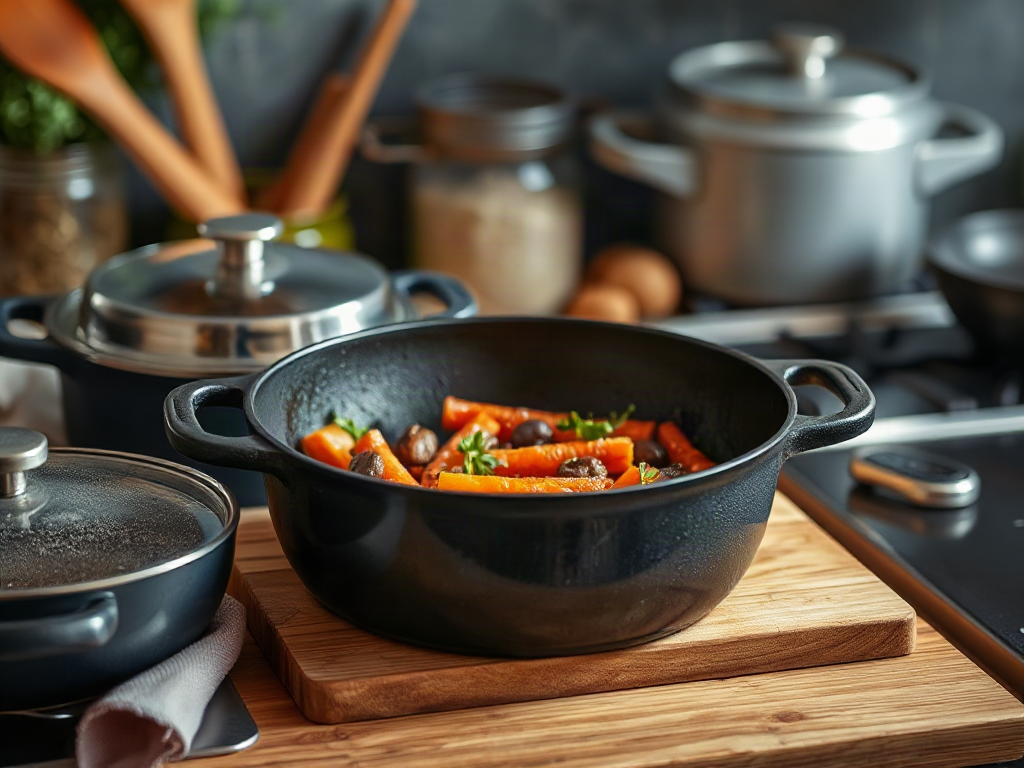
Choose cookware that combines substantial thermal mass with a close-fitting lid, a thick base, and a material suited to your cooking method. Cast iron and enameled cast iron retain heat especially well, while thick-clad stainless steel offers a more responsive balance; thin aluminum heats quickly but loses temperature sooner when cold food is added. Match the vessel size to the batch so ingredients are not crowded, preheat gradually, and use a burner that fits the base. A heavy pan is not automatically the best choice: it may take longer to heat, feel cumbersome, and require more careful handling around glass cooktops.
How Heat Retention Works in Cookware
Heat retention describes how well a vessel resists temperature loss after it has been heated. The effect comes mainly from thermal mass: a thick, heavy pan stores more energy than a thin one and releases it gradually when cooler ingredients are added. Material also matters because different metals absorb and transfer energy at different rates. A pan that heats rapidly is not necessarily the same pan that stays hot during a long sear.
That distinction matters when cooking steak, pancakes, roasted vegetables, or a large batch of stew. Adding refrigerated food to a lightweight skillet can pull the surface temperature down quickly, causing meat to release moisture instead of browning. A heavier vessel recovers more slowly than a thin pan at first, but its stored energy can maintain steadier contact heat. For braising, the same property helps the contents remain gently heated when the burner is turned down.
Some suggestions to consider!
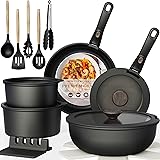
Now retrieving an image set.
Astercook 21 Pcs Pots and Pans Set Non Stick, Ceramic Cookware Set Detachable Handle, RV Kitchen Cooking Set Removable Handles, Oven Safe, Induction Ready, Stackable, Black, Fathers Day Gift for Men
$59.99 (as of October 22, 2026 19:19 GMT +00:00 - More infoProduct prices and availability are accurate as of the date/time indicated and are subject to change. Any price and availability information displayed on [relevant Amazon Site(s), as applicable] at the time of purchase will apply to the purchase of this product.)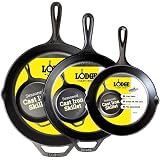
Now retrieving an image set.
Lodge Pre-Seasoned Cast Iron Skillet 3-Piece Set: 8, 10.25 & 12 inch | Non-Toxic & Naturally Non-Stick Cast Iron Pan, Compatible with Oven, Stove, Grill & Campfire, Made in USA
$64.90 (as of October 22, 2026 19:19 GMT +00:00 - More infoProduct prices and availability are accurate as of the date/time indicated and are subject to change. Any price and availability information displayed on [relevant Amazon Site(s), as applicable] at the time of purchase will apply to the purchase of this product.)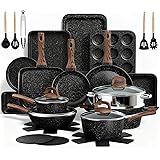
Now retrieving an image set.
Pots and Pans Set Non Stick, 31 Piece Kitchen Induction Cookware & Bakeware Set, Nonstick Kitchen Cooking Pans Set with Frying Pans Set Grill Pan Saucepan Baking Sheet & Utensils, PFOA Free
$139.99 (as of October 22, 2026 19:19 GMT +00:00 - More infoProduct prices and availability are accurate as of the date/time indicated and are subject to change. Any price and availability information displayed on [relevant Amazon Site(s), as applicable] at the time of purchase will apply to the purchase of this product.)Heat retention is not the same as even heating. Cast iron may hold heat effectively yet develop temperature differences if it is heated too quickly or on a burner smaller than its base. A thin aluminum pan may spread heat rapidly and evenly but cool more noticeably when a cold sauce or several vegetables enter the vessel. The practical choice depends on whether the recipe rewards stability, speed, responsiveness, or a compromise between them.
Pan size changes the result as well. A large, heavy skillet filled with a small portion may take longer to preheat and can encourage excess evaporation, while a crowded small pan loses heat because ingredients steam against one another. A useful approach is to choose a vessel that leaves enough room for food to contact the cooking surface without creating a wide unused area that wastes burner energy. Readers comparing options in how to choose cookware that enhances heat retention should judge the whole system rather than relying on weight alone.
Materials and Construction That Hold Temperature
Cast iron is the clearest choice when maximum thermal stability is the priority. Its thick body stores substantial heat and performs well for searing, frying, baking, and stovetop-to-oven recipes. Enameled cast iron offers similar mass with a coated cooking surface that does not require seasoning. The tradeoffs are considerable weight, slower preheating, and a greater need to avoid sudden temperature changes that may stress enamel or cause sticking through rushed preheating.
Stainless steel cookware varies widely. A thin stainless pan generally has modest heat storage and may develop hot spots. A multi-layer or clad design with an aluminum or copper core transfers heat more effectively while retaining more energy than a very light pan. It will usually respond faster than cast iron, which is useful when reducing a sauce or adjusting a burner. The label alone is not enough; inspect the base thickness, construction description, and whether the cooking surface is supported by a substantial core.
Aluminum is valued for fast heating and relatively low weight. Thick-gauge aluminum can retain a practical amount of heat, but it normally cools faster than cast iron when a large quantity of cold food is introduced. Hard-anodized versions may provide a durable surface, though coating and handle specifications still need checking. Copper responds exceptionally quickly and distributes heat well, but a copper vessel may require a stainless lining and can cost more without being the most convenient choice for high-mass cooking.
Carbon steel occupies a middle ground. It is lighter than cast iron, develops a seasoned surface, and can become a strong searing tool after adequate preheating. Its thinner walls generally do not hold heat as long as a thick cast-iron skillet, so it suits cooks who want more responsiveness. Ceramic cookware deserves careful scrutiny because “ceramic” may describe a coating rather than a thick ceramic body. A ceramic-coated aluminum pan should not be assumed to have the heat storage of a solid, heavy vessel.
Construction often matters more than the material name. Look for a thick base that sits flat, sturdy walls, a lid that fits closely, and handles that make a heavy vessel controllable. A light pan with an impressive material label can perform worse for heat retention than a plainly described, thick-bodied alternative.
Matching Vessel Design to the Cooking Task
The best heat-retaining cookware depends on the temperature pattern your food needs. A cast-iron skillet is well suited to steak, cornbread, and shallow frying because the broad surface benefits from stored heat. A Dutch oven is more useful for chili, beans, and braises because its thick walls, heavy base, and lid reduce temperature swings during long cooking. A sauté pan with a substantial base may be preferable for vegetables or pan sauces when quick burner adjustments matter.
Lids influence retention by limiting heat and moisture loss. A tight lid is valuable for rice, stews, and braises, but it can work against crisping or browning by trapping steam. An uncovered skillet should have enough mass to withstand repeated additions without collapsing in temperature. For a family-size stew, a heavy Dutch oven may maintain a steadier simmer than a thin stockpot, but it also takes longer to heat and may be awkward to move when full.
Shape affects usable heat. A wide base creates more contact with the burner and gives ingredients room for browning. Tall, narrow cookware reduces exposed surface area and may be more practical for soups or boiling. A rounded bottom can be useful for some techniques but may not sit securely on a flat electric or induction surface. Check that the base matches the cooktop: an oversized vessel on a small burner can heat unevenly, while an undersized pan may waste heat around the edges.
Consider the ingredients rather than choosing the heaviest object available. A cast-iron pan can be excellent for a small batch of chicken thighs, but its slow response may be inconvenient for delicate fish or a pan sauce that needs immediate temperature control. Thick-clad stainless steel often provides a more adaptable everyday option. Nonstick cookware is convenient for eggs and fragile foods, yet many lightweight versions are designed for responsiveness rather than prolonged heat storage.
A common mistake is confusing a hot handle or scorching surface with successful retention. A pan can become very hot in one location while remaining cooler elsewhere. Test the cooking result: a stable sear should develop without dramatic temperature collapse, and a simmer should continue gently after the burner is reduced. If food burns before the center cooks, the issue may be burner-to-base mismatch or poor distribution rather than insufficient weight.
A Practical Buying and Testing Checklist
Begin with the recipes that most often disappoint. If the problem is weak browning after adding meat, prioritize a heavy skillet with a broad, thick base. If long braises fluctuate between boiling and barely warm, consider a thick-walled covered vessel. If sauces scorch during adjustments, a fully clad stainless pan may be more suitable than a very heavy iron one. The desired cookware should solve a recurring cooking problem, not simply maximize mass.
Use product specifications and physical inspection together. A useful shortlist should answer these questions:
- Is the base thick enough to store heat without obvious warping?
- Does the vessel sit flat and match the burner or induction zone?
- Is the lid close-fitting, and is it useful for the recipes you cook?
- Can you safely lift the pan when it contains food?
- Are the oven, broiler, and cooktop limits clearly stated by the manufacturer?
- Will the surface and maintenance requirements fit your routine?
Weight should be assessed in context. A heavier pan can improve recovery when cold ingredients enter, but it may discourage frequent use if it is difficult to wash or store. A smaller cast-iron skillet may outperform a much larger one for two servings because the food covers the heated surface appropriately. Conversely, a large family meal may need a wide, thick-bottomed vessel rather than a compact pan that encourages crowding.
Preheating technique can reveal whether a purchase meets its promise. Warm heavy cookware gradually instead of placing it over maximum heat immediately. Add a small amount of oil when the pan is ready for the recipe, then observe whether ingredients brown steadily or release a large amount of liquid. For a simmer test, bring a covered liquid to temperature, lower the burner, and note whether the vessel maintains gentle bubbling without repeated high adjustments. These observations are more useful than a vague claim that cookware “holds heat.”
Maintenance affects long-term performance. A warped base may lose contact with a smooth cooktop, and a damaged coating can change how food contacts the surface. Avoid thermal shock with heavy iron or enamel by allowing the vessel to cool before exposing it to cold water. Follow the maker’s care instructions, especially for seasoned surfaces and coated interiors. The most effective cookware selection combines heat storage with a form you will actually use correctly.
Common Heat-Retention Mistakes and Better Priorities
Buying the heaviest cookware available is the most common misjudgment. Mass helps resist cooling, but it cannot compensate for overcrowding, an undersized burner, or poor preheating. A thick pan filled beyond its practical capacity may still produce pale meat and watery vegetables because steam prevents surface browning. Leave room between pieces, cook in batches when needed, and select a base that fits the heat source.
Another weak assumption is that one material serves every task equally well. Cast iron may excel at searing but feel unnecessarily slow for delicate foods. Aluminum may provide fast control but require more attention when a cold load enters. Clad stainless steel can be a versatile compromise, though it may demand better heat management than a naturally nonstick surface. Prioritize the cooking behavior you need most often, then accept the limitations that come with it.
Ignoring the lid is also costly for covered dishes. A loose lid allows heat and moisture to escape, forcing a higher burner setting and increasing the chance of uneven reduction. Yet a lid used during browning can soften a crust by trapping steam. Treat the lid as a task-specific tool rather than a permanent performance upgrade.
For most kitchens, a sensible setup pairs one high-mass vessel with one more responsive pan. A Dutch oven or cast-iron skillet can handle searing and slow cooking, while a thick clad sauté pan covers sauces, vegetables, and meals requiring quick temperature changes. That combination often offers more practical range than several nearly identical heavy pans. When comparing options, consider storage, lifting comfort, cleaning, cooktop compatibility, and the foods you prepare repeatedly; those constraints determine whether the theoretical heat retention becomes a real advantage.
For additional guidance, consult manufacturer documentation for cookware construction, temperature limits, compatible cooktops, and care instructions. University extension cooking resources and recognized culinary organizations can also provide technique-specific advice on preheating, searing, braising, and using different vessel materials.
Frequently Asked Questions
Which cookware material retains heat the longest?
Thick cast iron and enameled cast iron generally retain heat longer than lightweight aluminum or thin stainless steel because they contain more thermal mass. Their slower response is the tradeoff.
Is heavier cookware always better for heat retention?
No. Weight helps, but base thickness, burner fit, pan size, lid fit, and food crowding also determine whether temperature remains stable during cooking.
Does stainless steel cookware hold heat well?
Thick-clad stainless steel can retain and distribute heat effectively, especially when it has an aluminum or copper core. Thin stainless cookware is usually less stable and more prone to hot spots.
What cookware is best for searing?
A broad, heavy cast-iron or carbon-steel skillet is often effective for searing. Preheat gradually, avoid crowding, and use a burner that heats the base adequately.
Can cookware retain too much heat?
Yes. Very heavy cookware can continue heating food after the burner is reduced, making delicate sauces or fish harder to control. Choose a more responsive pan when rapid adjustments matter.
Conclusion
Choose heat-retaining cookware by matching thermal mass and construction to the foods you cook most often. Cast iron and enameled cast iron suit searing and slow, covered cooking, while thick-clad stainless steel offers faster control for everyday sautéing and sauces. A broad, flat base, close-fitting lid, appropriate size, and cooktop compatibility matter as much as the material label. Before buying, consider whether you can comfortably lift, clean, and store the vessel; an excellent pan that stays unused provides no practical benefit. Start with one recurring problem, such as weak browning or unstable braising, and select the smallest vessel that solves it without crowding. Gradual preheating and sensible loading will then allow the cookware’s stored heat to work as intended.