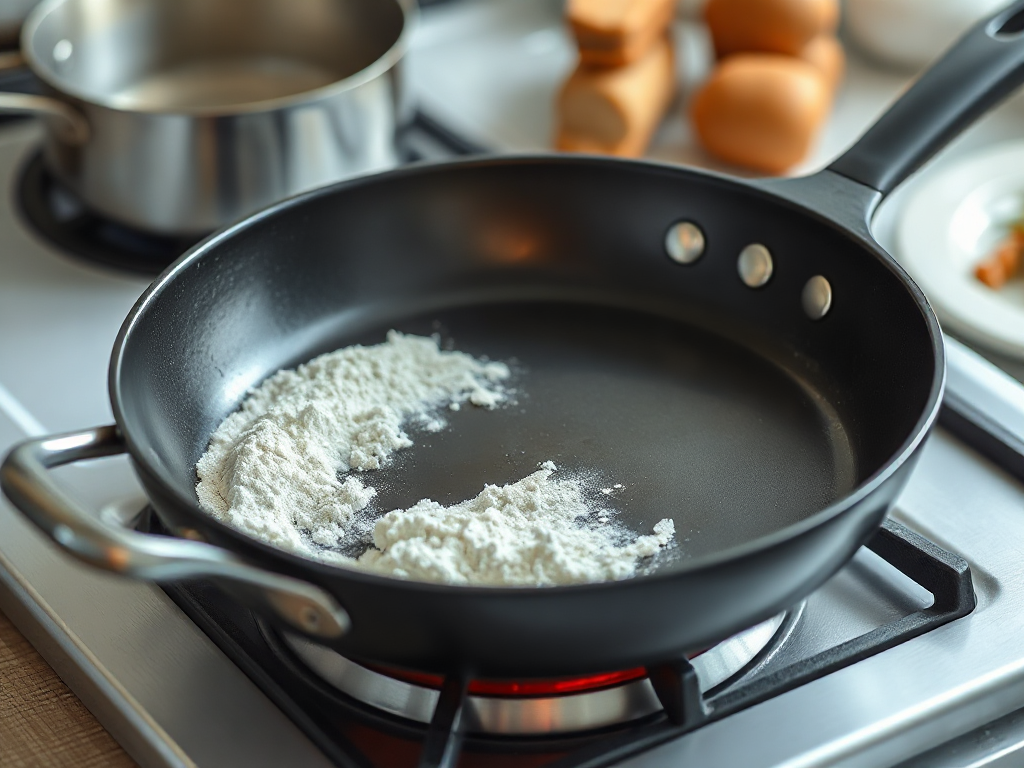
The best practices for storing cookware safely are to clean and dry every piece, separate surfaces with soft protectors, support heavy vessels on stable shelves, and keep handles and lids from creating hazards. Moisture trapped under stacked pans can lead to corrosion, odors, or coating damage, while careless nesting may scratch enamel, stainless steel, or nonstick finishes. Store frequently used items where they can be lifted out without scraping neighboring pieces, reserve lower shelves for heavy Dutch ovens and cast iron, and secure lids separately or with their matching pans. Inspect racks, drawers, and wall mounts regularly for looseness, overcrowding, and sharp contact points.
Prepare Cookware Before Putting It Away
Safe storage begins before a pan reaches the cabinet. Food residue, grease, and concealed moisture create problems when cookware sits unused, so wash each item according to its manufacturer’s care instructions and dry it completely. Pay attention to rivets, rolled rims, detachable handles, and the area beneath a lid knob, where water can remain after towel drying.
A pan that feels dry on the cooking surface may still hold moisture around its base or handle joint. Leaving it uncovered on a drying rack for a short period can be more reliable than immediately nesting it with another piece. This matters especially for cast iron and carbon steel, which may develop rust when moisture remains on the surface, and for stainless steel, where trapped dampness can leave spotting or stale odors.
Some suggestions to consider!


SENSARTE Nonstick Ceramic Cookware Set, 13-pcs Non-toxic Pots and Pans Set | Healthy Kitchen Cooking Set with Stay-Cool Handles, Silicone Tools and Pot Protectors, PFAS Free
$65.95 (as of September 3, 2026 18:33 GMT +00:00 - More infoProduct prices and availability are accurate as of the date/time indicated and are subject to change. Any price and availability information displayed on [relevant Amazon Site(s), as applicable] at the time of purchase will apply to the purchase of this product.)
Now retrieving an image set.
Chef Power Ceramic Nonstick Pots and Pans Set 19 Piece with Detachable Handle, Induction Dishwasher Oven Safe Cookware Set, RV Kitchen Set Removable Handle (Light Purple)
$39.99 (as of September 3, 2026 18:33 GMT +00:00 - More infoProduct prices and availability are accurate as of the date/time indicated and are subject to change. Any price and availability information displayed on [relevant Amazon Site(s), as applicable] at the time of purchase will apply to the purchase of this product.)
Now retrieving an image set.
CAROTE 16pcs Pots and Pans Set, Nonstick Cookware Sets | Titanium Reinforced Coating, Scratch-Resistant, Easy to Clean, Even Heating, Induction Compatible, with Frying Pans Set
$89.99 (as of September 3, 2026 18:33 GMT +00:00 - More infoProduct prices and availability are accurate as of the date/time indicated and are subject to change. Any price and availability information displayed on [relevant Amazon Site(s), as applicable] at the time of purchase will apply to the purchase of this product.)Do not store cookware while it is still warm. Heat can soften protective pads, raise condensation inside a cabinet, or transfer heat to adjacent items and shelving. Once the piece has cooled, check for damage before putting it away. A loose handle, chipped enamel edge, warped base, or flaking coating deserves attention rather than being hidden in a stack.
A useful pre-storage check is simple:
- Remove food particles and oily film.
- Dry the interior, exterior, handles, and lids.
- Confirm that the item is cool and stable.
- Separate damaged cookware for repair, replacement, or disposal.
The common mistake is treating storage as a substitute for maintenance. A crowded cabinet can conceal corrosion or coating wear until the next use. Clean, dry pieces also slide against one another less unpredictably, making them easier to remove without dropping a heavy pot.
Match Storage Methods to Pan Materials
Different cookware surfaces need different levels of protection. Nonstick pans should not be nested bare because the rim or underside of another pan may scratch the coating. Place a soft, clean separator between them, or store them upright with enough space that the cooking surfaces do not touch. Avoid using abrasive or dirty cloths as padding; grit can cause the very damage the separator is meant to prevent.
Cast iron and carbon steel are more tolerant of contact but are vulnerable to moisture. Store them in a dry area with room for air circulation, and avoid sealing a damp piece in a tight container. A thin layer of the oil used for seasoning may be appropriate when recommended by the manufacturer or care instructions, but excess oil can become sticky and attract dust. Heavy cast-iron cookware also belongs on a strong, low shelf rather than a high cabinet where lifting it down creates a drop risk.
Enamel-coated pots need protection at their rims and edges. Chipped enamel can expose the underlying metal, while repeated impact between a lid and pot may enlarge a small chip. Stainless steel is generally durable, but stacking it carelessly can produce scratches and make pieces difficult to separate. Copper cookware may require special attention to its lining and finish; follow the maker’s instructions instead of assuming that a generic rack or divider is suitable.
Material-specific storage does not mean every piece needs a separate cabinet. It means the contact points and environmental conditions should fit the surface. For example, a divider that works for stainless-steel saucepans may be too rough for coated frying pans. The best practices for storing cookware safely prioritize surface protection, dryness, weight distribution, and easy access together.
A weak assumption is that a durable pan cannot be harmed by storage. Even when the metal remains usable, scratched coatings, chipped enamel, bent rims, or damaged handles can shorten service life and complicate cleaning. Choose the least protective method only for pieces whose construction and condition genuinely allow it.
Prevent Scratches, Falls, and Overloading
Most storage damage comes from contact and movement rather than from the cabinet itself. When pans are forced into an overfilled stack, users tend to drag the top item across the one below it. That motion can scratch finishes, catch a handle, or cause several pieces to shift at once. A stack should allow the upper pan to be lifted vertically without hitting a shelf, door, or neighboring handle.
Use felt, silicone, cork, or a manufacturer-approved separator between nesting pieces. The material should be clean, dry, and large enough to protect the areas that touch. A separator that covers only the center of a pan may leave rims exposed, while a thick pad can make a stack unstable. Replace pads that become greasy, compressed, or torn.
Vertical storage is often easier for frying pans and shallow skillets because each item can be removed independently. A sturdy rack or divider must be rated for the cookware’s weight and anchored so it cannot tip forward. Horizontal stacking may use less cabinet height, but it becomes a poor choice when heavy pieces sit on delicate coatings or when the stack is too tall to handle safely.
Weight belongs low and close to the cabinet’s strongest support. A large Dutch oven placed on an upper shelf is harder to control than the same item stored below waist height. Check that shelves do not bow and that pull-out drawers close smoothly under load. Never rely on a flimsy tension rack for unusually heavy cookware unless its instructions clearly support that use.
Prioritize the storage change that removes the greatest hazard first:
- Move heavy pots away from high shelves.
- Separate coated or enamelled surfaces.
- Remove unstable racks and overcrowded stacks.
- Keep handles from projecting into walkways or catching on doors.
The comparison between maximum capacity and safe access favors the latter. Using every available inch may seem efficient, but a cabinet that requires force, twisting, or balancing a pot above shoulder height is not functioning well. Reduce the stack, relocate seldom-used pieces, or add a properly supported storage solution.
Organize Lids, Handles, and Frequently Used Pieces
Lids need their own storage logic because their shapes waste space and their knobs can interfere with stacking. If a lid fits securely inside its matching pot without pressing against the cooking surface, that arrangement may work. Otherwise, store lids vertically in a rack or shallow compartment, with the handles facing consistently so one lid can be removed without pulling the others forward.
Keeping a lid on an inverted pot can protect the interior from dust, but it also reduces ventilation if either piece is damp. It may be better to place the lid upside down on the pot only after both parts are fully dry. Glass lids deserve extra clearance because edge impacts and pressure from adjacent cookware can cause cracking. Do not wedge them beneath heavy pans or store them where a cabinet door can strike them.
Handles should point into the cabinet rather than outward. Protruding handles can catch clothing, obstruct a drawer, or prevent a door from closing completely. Long detachable handles should be removed when the manufacturer permits it and stored so they cannot fall onto coated surfaces. For a compact kitchen, a wall-mounted rail or hanging system can work well for sturdy pieces, provided it is securely installed and the hooks match the handle openings.
Group cookware by frequency and task, not just by size. A saucepan used daily should be reachable without unloading a stockpot and three skillets. Less-used roasting pans can occupy a higher or deeper location, but only if they can be retrieved without destabilizing nearby items. This arrangement reduces repeated scraping and makes it easier to notice when something has been returned wet or out of place.
For more ideas on arranging a limited kitchen, connect this advice with the best practices for storing cookware safely rather than copying a storage display that does not fit your cabinet dimensions. The common failure is choosing an attractive rack that creates a new obstruction. Measure the opening, account for door swing and drawer clearance, and test removal with the heaviest item before committing to the setup.
Inspect and Reset the Storage Area
Cookware storage should be checked periodically because cabinets change under repeated loading. Look for shelf sag, loose screws, cracked dividers, chipped cabinet surfaces, and pads that have shifted. A rack that was stable when empty may lean after several heavy pans are added. Test each pull-out drawer slowly and stop if its movement feels rough, uneven, or unusually heavy.
Humidity also affects the result. Cabinets beside a dishwasher, sink, or range may receive more warmth and moisture than other locations. That does not automatically make them unsuitable, but it raises the value of ventilation and complete drying. If a pan repeatedly develops spots or a musty smell in one cabinet, move it temporarily and compare conditions rather than repeatedly polishing the symptom.
Reset the arrangement when your cooking habits change. A storage system designed around a full cookware set may become unsafe after adding a braiser, wok, or specialty pan. Remove duplicates and pieces that are damaged beyond sensible repair. Keeping fewer items with clear spacing often protects the cookware you actually use better than preserving every piece in a crowded stack.
Signs that the system is working include easy one-handed removal, dry surfaces, no scraping sounds, stable shelves, and lids that do not slide or rattle. Warning signs include forced lifting, recurring rust, scratched interiors, doors that strain, or cookware placed temporarily on the floor or counter because the cabinet is too difficult to use. Those signals point to a layout problem, not user failure.
When reviewing the setup, ask whether each item is protected from impact, supported by an appropriate surface, and reachable without a risky lift. A modest reorganization can solve more than an expensive accessory, while a properly anchored divider or drawer insert may be worthwhile when the existing cabinet cannot provide safe separation. Keep the arrangement visible and repeatable so every piece has a logical place after washing.
Frequently Asked Questions
Should cookware be stored with the lids on?
Only when both pieces are completely dry and the lid sits securely without stressing the rim or coating. Otherwise, store lids separately for ventilation and easier access.
Is it safe to stack nonstick pans?
Stacking can be acceptable with clean, soft separators between every pan. Bare metal-to-coating contact and dragging pieces in or out are the main risks.
Where should heavy cast-iron cookware go?
Use a strong, low shelf or a drawer designed for its weight. Low placement reduces the chance of losing control while lifting and limits stress on upper shelving.
How can cookware be stored in a small kitchen?
Use vertical dividers for pans, a dedicated lid rack, and separators for nesting pieces. Store daily-use items at the front and relocate rarely used cookware to deeper spaces.
What indicates that cookware storage is unsafe?
Recurring scratches, rust, unstable stacks, bowed shelves, protruding handles, difficult drawer movement, and forced lifting all show that the arrangement needs adjustment.
Further Reading
Authoritative Sources
- Academy of Nutrition and Dietetics
eatright.orgProfessional nutrition guidance, healthy eating resources, and practical dietitian-reviewed advice.
- U.S. Department of Agriculture
usda.govOfficial food, nutrition, agriculture, and consumer guidance from the USDA.
- NIH Office of Dietary Supplements
ods.od.nih.govResearch-based fact sheets on nutrients, supplements, dietary intake, and safety considerations.
- International Society of Sports Nutrition
sportsnutritionsociety.orgEvidence-informed sports nutrition resources and position stands for active people and athletes.
Conclusion
Good cookware storage protects both the surfaces and the people using the kitchen. Clean and dry each piece before shelving it, separate finishes that can scratch, keep heavy vessels low, and give lids and handles a stable place of their own. The best arrangement is not necessarily the one that holds the most items; it is the one that lets you remove cookware without dragging, twisting, or balancing it. Recheck shelves, racks, and dividers after adding new pieces, and treat recurring rust, impact marks, or awkward retrieval as evidence that the layout needs changing. A short reset using the best practices for storing cookware safely can preserve useful cookware longer while making everyday kitchen movements safer.