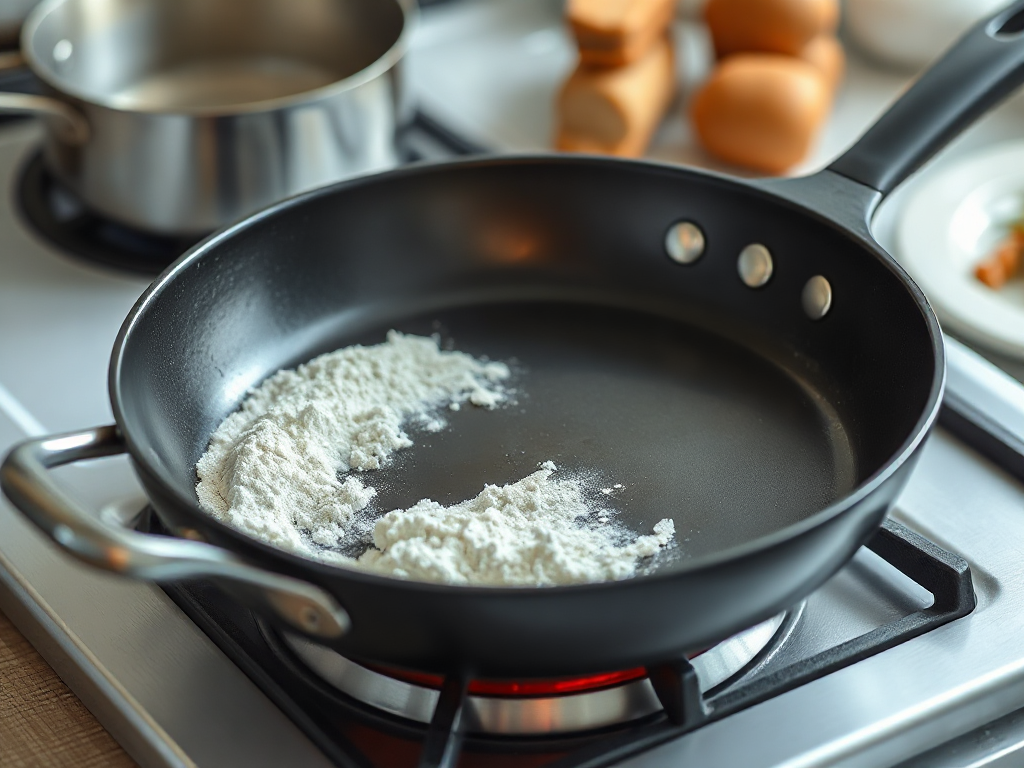
Evaluating the heat distribution of cookware means checking how evenly a pan spreads and retains burner energy across its cooking surface, using tests such as water movement, flour browning, and food color. Pan thickness, base construction, material conductivity, burner size, and preheating time all affect the result. A reliable assessment compares the center with the edges rather than judging a pan from one successful meal. Uneven browning, scorched patches, delayed edge cooking, and rapid temperature loss after adding food indicate weak distribution or a poor burner-to-pan match. Repeat the test at the intended heat level before deciding whether the pan suits searing, sautéing, simmering, or delicate foods.
What Heat Distribution Reveals About a Pan
Heat distribution describes how evenly cookware transfers energy from the burner into its base and then across the cooking surface. A well-distributed pan does not make every point exactly the same temperature, but it limits sharp contrasts between the center, sides, and rim. That distinction matters because ingredients respond to surface temperature, not the setting printed on the stovetop.
A burner sends concentrated energy into a particular footprint. If the pan base spreads that energy efficiently, the heated area expands beyond the flame or element pattern. If the base is thin, warped, or poorly matched to the burner, the center may become aggressively hot while the perimeter remains comparatively cool. A steak can brown in the middle while its outer edge steams; onions may soften near the handle before they color over the burner.
Some suggestions to consider!
Now retrieving an image set.
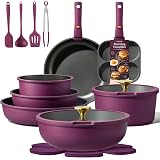
CAROTE 21pcs Pots and Pans Set Non Stick, Detachable Handle Cookware Sets | Ultra Nonstick, Space Saving, Dishwasher & Oven Safe, Non-Toxic Kitchen/Apartment/Camping/RV/ Traveling, Purple
$99.97 (as of September 3, 2026 18:33 GMT +00:00 - More infoProduct prices and availability are accurate as of the date/time indicated and are subject to change. Any price and availability information displayed on [relevant Amazon Site(s), as applicable] at the time of purchase will apply to the purchase of this product.)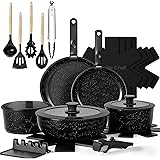
Now retrieving an image set.
Umite Chef 21Pcs Pots and Pans Set Non Stick, Nonstick Ceramic Cookware Sets Detachable Handle, Non Toxic Healthy Induction Cookware, Kitchen Cooking Set, with Frying Pans Set, Dishwasher/Oven Safe
$55.99 (as of September 3, 2026 18:33 GMT +00:00 - More infoProduct prices and availability are accurate as of the date/time indicated and are subject to change. Any price and availability information displayed on [relevant Amazon Site(s), as applicable] at the time of purchase will apply to the purchase of this product.)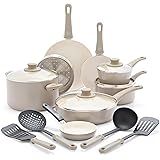
Now retrieving an image set.
GreenLife 16 Piece Ceramic Nonstick Pots & Pans Cookware Set, Taupe | PFAS-Free Nonstick Coating, Stockpot, Frying Pans, Saucepans, Sauté Pan, Stay-Cool Handles, Dishwasher & Oven Safe up to 350F
$62.99 (as of September 3, 2026 18:33 GMT +00:00 - More infoProduct prices and availability are accurate as of the date/time indicated and are subject to change. Any price and availability information displayed on [relevant Amazon Site(s), as applicable] at the time of purchase will apply to the purchase of this product.)Material alone does not predict the result. Copper and aluminum generally move heat quickly, while cast iron stores substantial energy but responds more slowly. Stainless steel by itself spreads heat less effectively, which is why many stainless pans use an aluminum or copper core. A thick, bonded base may outperform a thinner pan made from a more conductive material because construction determines how much usable metal sits between the burner and food.
Distribution should also be separated from heat retention. A heavy pan may lose less temperature when cold food is added, yet still contain a hot central zone if its base does not spread energy well. Conversely, a responsive pan may equalize rapidly but cool noticeably after a large batch enters. Testing both traits gives a more useful picture than relying on weight, appearance, or a material label.
Connect these observations with broader evaluating the heat distribution of cookware decisions: the best result depends on the food, burner, pan size, and cooking temperature used together.
Reliable Home Tests for Hot Spots
A practical test should reveal temperature differences across the base without damaging the pan or relying on guesswork. Begin with a clean, dry pan on the burner you normally use. Heat it gradually at a medium setting, because maximum heat can exaggerate differences and may stress nonstick coatings or empty cookware. The goal is not to create the highest temperature possible; it is to observe how the pan behaves under a realistic cooking load.
Water and flour tests
A small amount of water provides a quick visual check. Add droplets across the center, midway area, and near the edge. Faster evaporation or more vigorous movement in one region indicates a temperature difference, although water behavior is affected by surface cleanliness and the pan’s finish. Avoid treating a single droplet pattern as a laboratory measurement.
For a clearer map, dust a very thin, even layer of flour over the base and watch it change color. The first tan or brown patches identify hotter areas; a uniform color change suggests more even heating. Remove the flour before it smokes, and do not use this test on a coated pan if the manufacturer advises against dry preheating. Flour can also obscure small differences when the layer is too thick, so use just enough to cover the surface.
Cooking food is the most relevant test. Spread several pieces of sliced bread, tortilla, pancake batter, or diced onion across the pan without crowding them. Record which pieces brown first and whether the edge pieces lag behind. Bread offers a simple visual comparison, while onions reveal how uneven heating affects moisture release and browning. A pan that browns one side of every piece may have a localized hot zone, or the burner itself may be heating unevenly.
A repeatable comparison
Use the same burner, pan position, preheating time, ingredient quantity, and heat setting when comparing two pans. Test the center, four quadrants, and the edge area, then rotate the pan and repeat if the stovetop permits. If the hot region rotates with the pan, the cookware is likely responsible. If it stays fixed over the burner, the burner pattern or grate may be the larger influence.
Common mistakes include judging a cold pan, adding oil before the surface is stable, or testing a warped pan on a burner much smaller than its base. A useful result comes from repeated observations, not one dramatic scorch mark. For more detailed criteria, see evaluating the heat distribution of cookware alongside the manufacturer’s use instructions.
How Construction and Burner Fit Change Results
Cookware construction determines how quickly heat moves laterally and how long the pan remains usable after food is added. A thick aluminum or copper layer can distribute energy across the base efficiently, while a thick cast-iron body can provide strong heat retention but needs more time to preheat. Multi-layer stainless construction attempts to combine a durable cooking surface with a more conductive internal layer.
The base footprint is just as important as the material. A small burner under a wide skillet may create a hot circle in the middle even when the pan is well made. A large burner under a small saucepan can overheat the outer base and make temperature control difficult. On electric and induction cooktops, the heating element or magnetic field may be circular, segmented, or smaller than the advertised pan diameter. A flat base that closely matches the active zone usually produces more predictable results than an oversized vessel on a narrow element.
Induction adds another variable: magnetic coupling may be strongest over only part of the base, depending on the cooktop and pan design. A pan can be induction-compatible yet still show uneven performance if its magnetic layer does not cover the full cooking area. Glass-top electric burners may cycle on and off, so a pan with high thermal mass can smooth those changes while a thin pan may show them more sharply.
Warping creates a mechanical and thermal problem. A bulged base may make poor contact with a smooth cooktop, while a pan that rocks can develop inconsistent contact as it heats. Thermal shock, repeated high-heat empty preheating, and placing hot cookware on a cold wet surface can contribute to distortion. Check that the base sits flat when cool and reassess it after heating.
Construction involves tradeoffs rather than a single winner. A responsive aluminum pan may be easier to adjust for eggs, but a heavy stainless or cast-iron pan may hold a searing temperature better when several cold pieces are added. Nonstick cookware often benefits from moderate heat and careful preheating, whereas a heavy uncoated skillet may be chosen for high-temperature browning. Match the pan to the task instead of assuming even distribution alone determines quality.
Interpreting Cooking Evidence and Choosing a Pan
Cooking results should be judged against the job the pan is expected to perform. Even heating is valuable for pancakes, crepes, fish fillets, sauces, and sautéed vegetables because pronounced hot spots can produce burnt centers and undercooked edges. For searing, a pan also needs adequate heat retention; excellent lateral spreading cannot compensate for a base that cools sharply when food is added.
Look for patterns across several uses. If only the first pancake browns unevenly, the issue may be preheating or batter temperature. If every pancake is dark in the center and pale around the perimeter, distribution or burner fit is more likely. If a skillet performs well when half full but struggles with a crowded batch, the limitation may be thermal recovery rather than an intrinsic hot spot.
A compact assessment can follow this order:
- Check the base: confirm that it is flat, intact, and appropriate for the cooktop.
- Map the surface: use water, flour where suitable, or evenly spaced food pieces.
- Test recovery: add a normal portion and observe how quickly cooking resumes.
- Compare tasks: assess both delicate food and high-heat food if the pan is intended for both.
- Separate variables: repeat the test on another burner before blaming the cookware.
Do not mistake dark exterior discoloration for poor distribution, and do not interpret a heavy handle or thick walls as proof of a uniform cooking surface. The base is the primary heat-transfer route, while wall thickness mainly affects side heating and retention. A pan may still be useful despite a modest center bias if it is used for simmering or small portions, but that same bias is inconvenient for broad griddling or delicate sugar work.
When buying, prioritize a construction description that explains the base or internal layers, a flat profile, a diameter suited to the burner, and clear care limits. Independent testing with your own stovetop is more meaningful than a material claim made without thickness or construction details. Keep notes about preheat time, food quantity, and browning pattern so your judgment reflects repeatable performance rather than first impressions. That practical approach makes evaluating the heat distribution of cookware useful for an actual purchase or replacement decision.
Frequently Asked Questions
What is the simplest way to check for hot spots?
Heat the pan gradually and place evenly spaced food pieces across the base. Uneven browning that repeats in the same location is a useful sign of a hot spot.
Does heavier cookware always distribute heat better?
No. Weight often improves heat retention, but lateral distribution depends on the material, base design, thickness, and burner match.
Why does the middle of my skillet get hotter than the edges?
The burner may be smaller than the pan, or the base may spread heat slowly. A thin or poorly bonded base can make the center contrast more pronounced.
Can a pan be tested safely on an induction cooktop?
Yes, if the cookware is compatible and the test follows its care instructions. Use moderate power, avoid prolonged empty heating, and remember that the induction zone may not cover the entire base.
Should uneven browning automatically mean I should replace the pan?
Not automatically. First test another burner, reduce crowding, verify the base is flat, and adjust preheating. Replacement becomes more reasonable when the pattern is persistent, the base is warped, or the result conflicts with the pan’s intended use.
Further Reading
Authoritative Sources
- Academy of Nutrition and Dietetics
eatright.orgProfessional nutrition guidance, healthy eating resources, and practical dietitian-reviewed advice.
- U.S. Department of Agriculture
usda.govOfficial food, nutrition, agriculture, and consumer guidance from the USDA.
- NIH Office of Dietary Supplements
ods.od.nih.govResearch-based fact sheets on nutrients, supplements, dietary intake, and safety considerations.
- International Society of Sports Nutrition
sportsnutritionsociety.orgEvidence-informed sports nutrition resources and position stands for active people and athletes.
Conclusion
Good cookware does not need to produce a perfectly identical temperature at every point, but it should avoid severe differences that repeatedly burn the center and leave the edges pale. Evaluate the base on the burner you actually use, allow realistic preheating, and compare results with both a simple surface test and normal food. Separate heat spreading from heat retention, because a pan can excel at one while needing more time or lower portions for the other. Construction, flatness, burner coverage, and cooking load deserve more attention than material labels alone. After testing, choose cookware according to its intended tasks: responsive pans for quick adjustments, heat-holding pans for searing, and stable moderate-temperature options for delicate foods.