Assess cookware durability over time by tracking surface wear, shape stability, handle security, and cooking performance under the pan’s recommended care conditions. Check for coating scratches, exposed metal, wobbling, loose fittings, corrosion, uneven heating, and changes in food release rather than judging age alone. Compare the piece with its original condition, review whether high heat or abrasive cleaning caused the decline, and test it during ordinary cooking. Stainless steel and cast iron may remain usable despite cosmetic changes, while damaged nonstick coatings or unstable handles deserve earlier replacement.
What Durability Means in Everyday Use
Cookware durability is the ability of a pan or pot to remain structurally sound, functional, and suitable for its intended cooking tasks as use accumulates. It is not the same as looking new. A seasoned cast-iron skillet may develop a darker, uneven finish while continuing to cook well, whereas a pan that looks attractive may have a loose handle or a base that no longer sits flat.
The most useful assessment separates structural durability from surface durability and performance durability. Structural durability covers the body, rim, rivets, screws, lid fit, and handle attachment. Surface durability concerns enamel, seasoning, nonstick layers, or polished metal. Performance durability asks whether the vessel still heats predictably, releases food as expected for its design, and cleans without increasingly aggressive treatment.
Some suggestions to consider!
Now retrieving an image set.
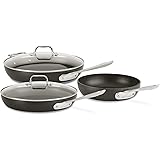
All-Clad HA1 Hard Anodized Nonstick Fry Pan Set – 5-Piece Cookware, 8", 10", 12" Skillets with Lid, Induction Compatible, Oven Safe to 500°F, Lid Safe to 350°F, Black
$199.99 (as of August 30, 2026 18:30 GMT +00:00 - More infoProduct prices and availability are accurate as of the date/time indicated and are subject to change. Any price and availability information displayed on [relevant Amazon Site(s), as applicable] at the time of purchase will apply to the purchase of this product.)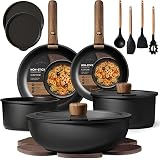


CAROTE 19pcs Pots and Pans Set Non Stick, Detachable Handle Cookware, Black | Induction Compatible, Dishwasher & Oven Safe, Space Saving, for Camping/RV/Traveling, Kitchen Cooking Set
$59.99 (as of August 30, 2026 18:30 GMT +00:00 - More infoProduct prices and availability are accurate as of the date/time indicated and are subject to change. Any price and availability information displayed on [relevant Amazon Site(s), as applicable] at the time of purchase will apply to the purchase of this product.)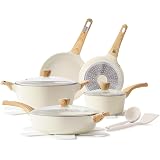
Now retrieving an image set.
SENSARTE Ceramic Cookware Sets, Pots and Pans Set Non stick, 14 Piece Induction Cookware, Non toxic Healthy Non Stick Kitchen Cooking Set, with Frying Pans Set, PFAS PTFE PFOA PFOS Free
$74.99 (as of August 30, 2026 18:30 GMT +00:00 - More infoProduct prices and availability are accurate as of the date/time indicated and are subject to change. Any price and availability information displayed on [relevant Amazon Site(s), as applicable] at the time of purchase will apply to the purchase of this product.)Usage history changes the meaning of visible wear. A stainless-steel saucepan used gently for simmering may show little functional decline after years, while a thin aluminum pan repeatedly heated empty may warp much sooner. High burner settings, sudden temperature changes, metal utensils, dishwasher cycles, stacking, and abrasive powders all add different forms of stress. The durability assessment process should therefore consider both the present condition and the routine that produced it.
A sensible baseline is to photograph new or lightly used pieces, note the manufacturer’s care limits, and record the tasks each item performs. Compare a frequently used sauté pan with a rarely used stockpot rather than applying one age rule to every item. Aesthetic discoloration may be harmless; a rocking base, spreading crack, or failing coating is more consequential.
Inspecting Materials, Coatings, and Construction
Material-specific inspection reveals more than a general search for scratches. Stainless steel should be checked for warping, deep gouges, separated layers, and corrosion around fasteners. Minor rainbow discoloration or stuck-on residue usually affects appearance rather than structural life. Aluminum can develop dents and a distorted base, especially when heated rapidly or cooled under cold water. A dented exterior is not automatically dangerous, but a base that no longer contacts the burner evenly can make cooking less predictable.
Nonstick cookware requires closer attention to its coating because its main benefit depends on an intact cooking surface. Light dulling may reflect normal use, but flaking, bubbling, peeling, or broad areas where the substrate is visible indicate that the pan has lost its intended surface. Do not try to restore a damaged coating with abrasive scrubbing. A replacement is generally more sensible when food begins sticking across a large area or fragments are visibly separating.
Cast iron and carbon steel need a different standard. Small areas of seasoning loss can often be cleaned, dried, lightly oiled, and reseasoned. Orange rust is a maintenance issue when it is superficial, but deep pitting, a cracked body, or a warped base is a more serious limitation. Enameled pieces should be examined for chips on the cooking surface, cracks that spread from the rim, and exposed metal around damaged areas. A tiny exterior chip is not equivalent to a crack crossing the interior.
Construction details often predict failure earlier than the main body. Hold the pan by its handle and gently check for movement; any looseness should be addressed before the joint worsens. Inspect rivets for corrosion or separation, examine welded joins for cracks, and place the item on a flat surface to detect rocking. A multi-layer base may distribute heat well, but it can still become compromised if the body warps or layers separate at the rim. Claims about premium materials matter less than how the actual piece has held up in use.
Use this compact inspection sequence every few months:
- Place the vessel on a flat counter and check for wobble.
- Run a clean finger around the rim and handle attachment for sharp edges or movement.
- Inspect the cooking surface under bright light for cracks, pits, peeling, or exposed substrate.
- Check lids, knobs, and fittings separately rather than assuming the main body represents the whole product.
- Compare the condition with the care instructions and the original cooking behavior.
Testing Changes in Cooking Performance
Performance tests show whether wear has changed the way cookware behaves. Begin with a familiar task instead of an extreme challenge. Heat a pan at the same setting used for ordinary sautéing, add a small amount of oil, and observe whether heating appears even. A pan that browns food in one narrow zone while leaving the rest pale may have developed a warped base or uneven thermal response. A single uneven meal is not proof of failure, so repeat the observation with a comparable ingredient and burner.
Food release is another useful signal, but it must be interpreted according to the material. Stainless steel is not designed to release eggs like a new nonstick surface; sticking can result from insufficient preheating, inadequate fat, or attempting to turn food too early. Conversely, widespread sticking on a once-effective coated pan may indicate surface deterioration. Test the same simple food under similar heat and oil conditions before concluding that the material has failed.
Temperature response also matters. A heavy pan may take longer to heat but hold heat more steadily, while a thin pan may respond quickly and lose heat when cold food is added. Neither behavior alone proves durability. Compare current results with the pan’s earlier behavior: longer preheating, scorching at familiar settings, or delayed recovery can signal a changed base or an altered cooking routine. A thermometer can make this comparison more useful, but ordinary repeated observations are still valuable.
Cleaning effort provides a practical performance measure. If normal hand washing removes residue, the surface is functioning within its design. If food requires prolonged soaking, scraping, or harsh powders after every use, the pan may be deteriorating or being used outside its strengths. A stainless pan can often tolerate more vigorous cleaning than a coated pan, while cast iron rewards prompt drying and light oiling rather than extended soaking.
Keep a brief log for heavily used items: date, meal, burner setting, sticking pattern, cleaning method, and any new physical defect. This prevents two common mistakes: replacing a sound pan because of removable discoloration and continuing to use a compromised pan because it still completes one easy recipe. The same comparison approach works especially well when deciding whether a favorite skillet is aging normally or losing its core function.
Separating Repairable Wear From Replacement Signs
Repair is appropriate when the problem is limited, understood, and compatible with the material. Tightening a handle fastener, replacing a manufacturer-approved knob, removing surface residue, or restoring seasoning can extend useful life. These fixes address a discrete cause. They do not reverse a split body, a badly warped base, a cracked interior enamel surface, or a failing nonstick layer.
Prioritize safety and stability over appearance. A pan with exterior stains and a firm handle may remain dependable; one with an attractive surface but a handle that shifts under the weight of food is not a good candidate for continued routine use. Replace or retire cookware when you find a crack, persistent sharp edge, exposed damaged coating, severe wobble, loose attachment that cannot be secured, or corrosion that has compromised the body. Manufacturer instructions should control where repairability or surface damage is uncertain.
Cooking habits can explain premature decline. Empty preheating, high heat used for delicate coatings, thermal shock, nesting without protection, and unsuitable utensils impose avoidable stress. Changing those habits may preserve a replacement, but it cannot restore a surface that has already peeled or a base that has permanently distorted. The best long-term decision may be to assign different materials to different jobs: use stainless steel for searing and acidic sauces, a sound coated pan for delicate foods, and well-maintained cast iron for tasks that benefit from retained heat.
Replacement timing should reflect risk, frequency, and cost rather than a universal lifespan. A rarely used pot with cosmetic marks can wait for replacement, while a daily pan with a failing handle deserves prompt attention because it is repeatedly lifted while hot. Before buying, identify the failure that ended the previous item’s service. If warping was the problem, prioritize a stable base and compatible burner size; if surface damage was the problem, prioritize care limits you can realistically follow. This turns long-term cookware evaluation into a purchasing lesson instead of a cycle of repeated disappointment.
For product-specific limits, consult the manufacturer’s care and warranty documentation. Guidance from recognized consumer-safety organizations and university food or materials programs can also help distinguish routine staining, seasoning changes, and structural damage, but the cookware maker’s instructions should take priority for its particular coating or construction.
Frequently Asked Questions
How often should cookware be inspected?
Check frequently used pieces every few months and inspect them immediately after a drop, overheating event, or sudden change in cooking behavior.
Does discoloration mean a pan is no longer durable?
Usually not. Staining or rainbow color on stainless steel is often cosmetic, but discoloration accompanied by warping, cracking, peeling, or poor performance deserves closer attention.
Can scratched nonstick cookware be repaired?
Scratched or peeling nonstick coatings generally cannot be restored reliably at home. Follow the manufacturer’s guidance and consider replacement when the cooking surface is broadly damaged.
What is the quickest way to detect warping?
Place the clean pan on a flat counter and gently press opposite sides. Rocking or a visible gap beneath the base suggests distortion that may affect burner contact.
Is cast-iron rust always a reason to discard it?
Superficial rust can often be removed and followed by reseasoning. Deep pitting, cracks, or a permanently warped body are stronger reasons to retire the piece.
Further Reading
Authoritative Sources
- Academy of Nutrition and Dietetics
eatright.orgProfessional nutrition guidance, healthy eating resources, and practical dietitian-reviewed advice.
- U.S. Department of Agriculture
usda.govOfficial food, nutrition, agriculture, and consumer guidance from the USDA.
- NIH Office of Dietary Supplements
ods.od.nih.govResearch-based fact sheets on nutrients, supplements, dietary intake, and safety considerations.
- International Society of Sports Nutrition
sportsnutritionsociety.orgEvidence-informed sports nutrition resources and position stands for active people and athletes.
Conclusion
Reliable durability assessment combines physical inspection with repeated cooking observations. Check the base, rim, fittings, handles, lid, and cooking surface, then compare heating, food release, and cleaning effort with the item’s earlier behavior. Interpret wear according to material: stainless steel staining is different from nonstick peeling, and cast-iron seasoning loss is different from a crack. Repair isolated, manageable problems, but do not treat unstable hardware, severe warping, deep structural damage, or a failing coated surface as cosmetic. Record what caused the decline and use that lesson when selecting the next piece. A cookware routine that matches each material’s limits usually extends service life more effectively than simply buying the heaviest or most expensive option.