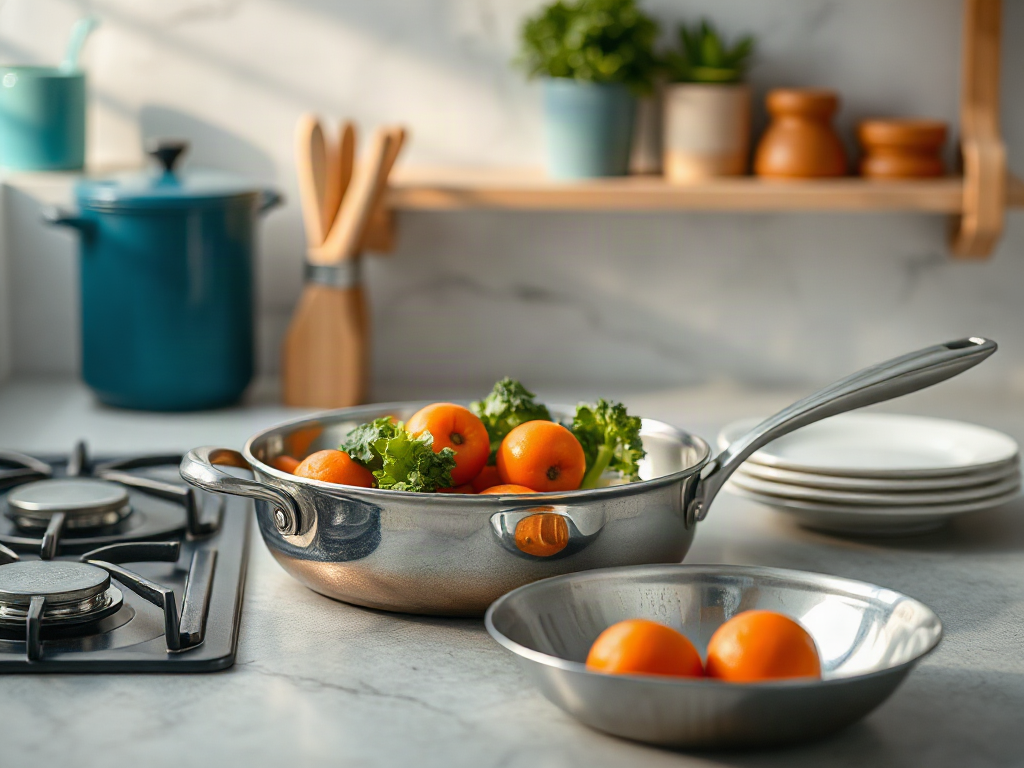
To find cookware that reduces cooking time, prioritize a flat base that fully contacts the burner, a responsive or conductive core, a snug lid, and a diameter suited to both the heating element and food quantity. Aluminum-core stainless steel heats more evenly than thin single-layer steel, while cast iron retains heat well but usually preheats slowly. Wide pans speed evaporation and browning; deeper covered vessels conserve steam for grains, vegetables, and braises. Judge each piece by the meal it must handle, because excessive size, heavy construction, warped bases, and poorly fitting lids can lengthen cooking instead of shortening it.
What Features Make Cookware Faster?
Fast cookware transfers energy into food efficiently and distributes that energy across the cooking surface without severe hot or cold zones. The most useful buying clues are base construction, contact with the burner, wall thickness, weight, and lid fit. A pan marketed as “quick heating” may still perform poorly if its base is warped or much larger than the active heating element.
Some suggestions to consider!
Now retrieving an image set.
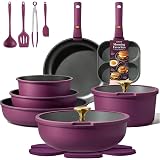
CAROTE 21pcs Pots and Pans Set Non Stick, Detachable Handle Cookware Sets | Ultra Nonstick, Space Saving, Dishwasher & Oven Safe, Non-Toxic Kitchen/Apartment/Camping/RV/ Traveling, Purple
$99.96 (as of October 21, 2026 19:18 GMT +00:00 - More infoProduct prices and availability are accurate as of the date/time indicated and are subject to change. Any price and availability information displayed on [relevant Amazon Site(s), as applicable] at the time of purchase will apply to the purchase of this product.)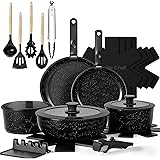
Now retrieving an image set.
Umite Chef 21Pcs Pots and Pans Set Non Stick, Nonstick Ceramic Cookware Sets Detachable Handle, Non Toxic Healthy Induction Cookware, Kitchen Cooking Set, with Frying Pans Set, Dishwasher/Oven Safe
$57.99 (as of October 21, 2026 19:18 GMT +00:00 - More infoProduct prices and availability are accurate as of the date/time indicated and are subject to change. Any price and availability information displayed on [relevant Amazon Site(s), as applicable] at the time of purchase will apply to the purchase of this product.)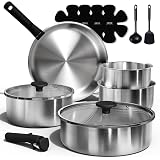
Now retrieving an image set.
CAROTE 15pcs Tri-Ply Stainless Steel Cookware Set with Detachable Handle | Pots and Pans Set, Non-Toxic, Induction Compatible, Dishwasher& Oven Safe, Easy Storage, for Kitchen/Camping/RV Cooking
$59.99 (as of October 21, 2026 19:18 GMT +00:00 - More infoProduct prices and availability are accurate as of the date/time indicated and are subject to change. Any price and availability information displayed on [relevant Amazon Site(s), as applicable] at the time of purchase will apply to the purchase of this product.)Start by inspecting the bottom. A flat base places more of the pan near a smooth-top electric or induction surface and sits steadily over gas grates. Rocking, spinning, or visible bowing indicates uneven contact. This matters especially on induction and glass-ceramic cooktops, where a distorted base can leave parts of the cooking surface cooler. Gas flames are more forgiving of minor irregularities, but heat spilling around an undersized pan wastes energy and overheats the handle area.
The construction should spread heat beyond the exact shape of the burner. Aluminum and copper are highly responsive cookware materials, but each is commonly enclosed by another metal for durability or food compatibility. A stainless steel pan with a substantial aluminum core can warm more evenly than a thin, single-layer stainless steel pan. Fully clad construction extends the conductive layer up the sides, which is useful for sauces and shallow braises; a thick bonded base may be sufficient for boiling water or cooking grains.
More mass is not automatically faster. A heavy skillet stores substantial heat, so its temperature drops less when chilled food is added. That can shorten recovery time when searing several pieces of meat or browning mushrooms. The same skillet may take longer to preheat than a medium-weight aluminum-core pan used for eggs. Buyers should therefore distinguish fast initial heating from fast recovery after food is added.
A secure lid is another functional time saver. It reduces the loss of hot air, moisture, and steam, helping water reach and maintain a simmer with less burner input. Check that the lid sits evenly without a wide gap. A small steam vent is normal on some designs, but a visibly loose lid will not conserve heat as effectively. For uncovered frying, lid quality matters less than surface area and heat response.
A common mistake is choosing the thickest or heaviest piece on the assumption that it must cook fastest. Prioritize evenness, burner compatibility, and the behavior needed for the meal. Medium-weight, conductive cookware is usually more practical for quick weekday sautéing; higher-mass pieces earn their place when heat retention and batch recovery matter more than preheating speed.
Which Material Fits Your Cooking?
No cookware material is fastest for every task. Material affects how quickly the vessel responds when the burner setting changes, how evenly it spreads energy, and how much heat it holds after food enters the pan. The useful comparison is not a universal ranking but a match between construction and the foods cooked most often.
| Construction | Heating behavior | Useful applications | Main tradeoff |
|---|---|---|---|
| Aluminum or hard-anodized aluminum | Heats quickly and responds readily | Eggs, vegetables, pancakes, quick sauces | Quality and base flatness vary |
| Stainless steel with an aluminum core | Balances spreading, response, and durability | Sautéing, boiling, sauces, general use | Thin budget versions may develop hot spots |
| Cast iron | Slow to preheat but stores substantial heat | Searing, frying, oven finishing | Weight and preheat time |
| Carbon steel | More responsive than thick cast iron | High-heat frying, stir-frying, searing | Requires seasoning and drying |
| Copper-lined or copper-core cookware | Responds rapidly to burner adjustments | Temperature-sensitive sauces and reductions | Cost and care requirements |
For a cook who frequently prepares omelets, sautéed greens, or a single chicken breast, responsive aluminum-based construction can reduce waiting between temperature changes. A pan that heats promptly and cools when the setting is lowered makes it easier to move from browning to gentle cooking without removing the food. Nonstick coatings may further shorten the practical process for delicate foods by reducing sticking and cleanup, although the coating itself does not make the underlying metal more conductive.
Cast iron demonstrates why “fast cookware” needs context. An empty cast-iron skillet may require patience before cooking begins, but its stored energy can provide strong browning after a steak is added. For one fried egg, that preheat burden is inefficient. For multiple portions cooked in succession, the stable temperature may reduce recovery delays between batches. Carbon steel offers a middle ground, with lower mass in many designs and enough heat retention for high-temperature work.
Induction users must add magnetic compatibility to the decision. A pan can contain highly conductive aluminum yet fail to work on induction unless it has a suitable magnetic layer. Product labeling can confirm compatibility, and a household magnet that adheres firmly to the base is a useful preliminary check. Magnet attraction confirms that the pan may interact with induction; it does not prove that the base is thick, flat, or evenly engineered.
A weak assumption is that a premium material label guarantees rapid results. Construction details matter more than a metal name printed on packaging. Examine whether the conductive layer covers only a small disc, spans the full base, or continues up the walls. Match that design to actual use: broad base coverage suits frying, while sidewall conduction becomes more relevant for sauces and dishes heated throughout the vessel.
How Do Size, Shape, and Lids Affect Cooking Time?
Pan geometry can change cooking time as much as material does. Diameter controls food contact and evaporation, depth affects moisture retention, and total capacity determines whether ingredients brown or steam. Choosing the smallest vessel that holds the food without crowding often limits unnecessary preheating, but going too small creates its own delay.
Consider sliced mushrooms placed in a narrow saucepan. They release moisture, crowd together, and simmer in their own liquid before browning. A broad skillet exposes more food directly to the hot surface and gives vapor room to escape, producing browning sooner. The opposite principle applies to rice: a correctly sized saucepan with a snug lid retains steam and maintains a stable environment better than an oversized, uncovered sauté pan.
Match the base diameter to the burner or induction zone rather than judging by the rim alone. Sloped skillets may have a much smaller cooking surface than their advertised top diameter suggests. If the base extends far beyond an electric element, the outer area can remain cooler. If a small pan sits over a large gas flame, heat may travel around the vessel rather than into its base. A close size match improves transfer and reduces uneven cooking.
Capacity should reflect the portion normally prepared. An oversized stockpot takes longer to heat because the vessel itself has more mass, and its extra surface can lose more heat. A pot that is too small may boil over or force dense ingredients into a crowded layer. For pasta, allow enough room for water and movement; for a quick sauce, use a smaller vessel that does not spend time warming unused metal.
Shape also controls whether moisture leaves or stays. Select a wide, shallow vessel for tasks driven by evaporation, including reducing a tomato sauce, concentrating pan juices, or crisping vegetables. Choose a deeper covered pot when steam and contained moisture do the work, as with grains, beans that have already been soaked or cooked, and covered vegetable preparations. Pressure cookers go further by cooking in a sealed, pressurized environment, making them relevant for foods that otherwise require prolonged moist heat. They are not a universal substitute for browning or uncovered reduction.
Do not mistake a glass lid for an inherently faster lid. Glass lets the cook check progress without lifting it, which can preserve heat, but weight, rim design, and fit determine containment. Metal lids are lighter in some lines and may tolerate handling well. Whichever type you choose, verify that it belongs securely to the pan and does not teeter when the vessel is level.
A Practical Checklist for Testing Cookware Before Buying
A useful cookware evaluation begins with the cooktop and a short list of recurring meals, not with a large matching set. Identify whether the kitchen uses gas, exposed electric coils, a smooth electric surface, or induction. Then name the tasks that create the most delay: waiting for a skillet to preheat, bringing soup to a simmer, browning food in batches, or reducing excess liquid. That diagnosis points to the construction and shape worth paying for.
When handling a pan in a store, place it on a flat shelf and press gently near opposite edges. It should remain stable rather than rock. Look across the base for obvious bowing, inspect how completely a bonded disc covers the bottom, and check that the handle permits controlled lifting. A heavy vessel that feels difficult when empty may become impractical when filled, encouraging slower or less safe transfers between burner, sink, and oven.
Use this compact buying sequence:
- Confirm cooktop compatibility. Check the manufacturer’s stated uses, including induction and oven limits where relevant.
- Compare the actual base to the burner. Measure the flat cooking area, not only the rim-to-rim diameter.
- Inspect conductive construction. Look for a clearly described aluminum or copper layer rather than relying on vague claims about even heating.
- Test stability and lid fit. Reject a new pan that rocks or a lid that leaves a conspicuous uneven gap.
- Choose for the recurring meal. Favor a broad skillet for browning, a covered saucepan for grains, or retained mass for repeated searing.
At home, evaluate performance with familiar food rather than trying to assign a laboratory-style score. Notice whether oil flows sharply to one side, whether onions brown in one patch while remaining pale elsewhere, and how quickly the pan recovers after food is added. A vessel is working well when heat reaches the usable surface evenly enough that food can remain in place instead of requiring constant rotation.
Signs of failure include persistent central scorching, a perimeter that never browns, unusually long recovery after modest portions are added, or steam escaping around most of a closed lid. Technique can mimic cookware problems: adding wet food, overcrowding, using a burner smaller than the base, or repeatedly lifting the lid will slow cooking even with a well-built pan. Test those variables before replacing the vessel.
Avoid purchasing a full set solely to obtain one fast skillet or saucepan. Sets often include duplicate sizes or large pieces that do not match the cooktop. Buying one task-specific pan first allows its responsiveness, balance, and capacity to be tested during normal meals. If it consistently removes a known bottleneck, matching pieces can be added later with much less guesswork.
Frequently Asked Questions
Does heavier cookware cook food faster?
Not during every stage. Heavy cookware generally takes longer to preheat but loses less temperature when cold food is added, which can reduce recovery time during searing or batch cooking.
Is stainless steel fast-heating cookware?
Stainless steel alone is not especially conductive. Stainless cookware becomes more responsive and even when it includes a substantial aluminum or copper core across the base or throughout the body.
Will a lid shorten cooking time?
A well-fitting lid often speeds boiling, steaming, simmering, and grain cookery by retaining heat and moisture. Leave it off when the goal is rapid evaporation, reduction, or crisp browning.
What pan shape is best for quick browning?
A broad skillet or sauté pan with enough flat surface to hold food in a single uncrowded layer promotes direct contact and lets released moisture escape more readily.
How can I tell whether a pan will work on induction?
Check the manufacturer’s induction label and confirm that a magnet adheres firmly to the base. Also inspect base flatness, since magnetic compatibility alone does not ensure even heating.
Conclusion
Choose cookware by identifying where time is actually lost in your kitchen. Slow preheating favors a responsive, moderately weighted pan; weak browning may call for a wider surface or better heat spreading; delayed covered cooking points toward a correctly sized pot with a tighter lid. Cooktop compatibility and a flat base come before brand, finish, or the number of pieces in a set.
Before buying, measure the active burner and the pan’s true base, inspect the layered construction, and handle the vessel at a realistic filled weight. Start with the pan used for the most frequent time-sensitive meal rather than replacing everything at once. After purchase, watch for even browning, prompt recovery, controlled evaporation, and stable simmering. Those observations reveal whether the cookware is removing a bottleneck or whether burner size, overcrowding, moisture, or technique remains the source of delay.