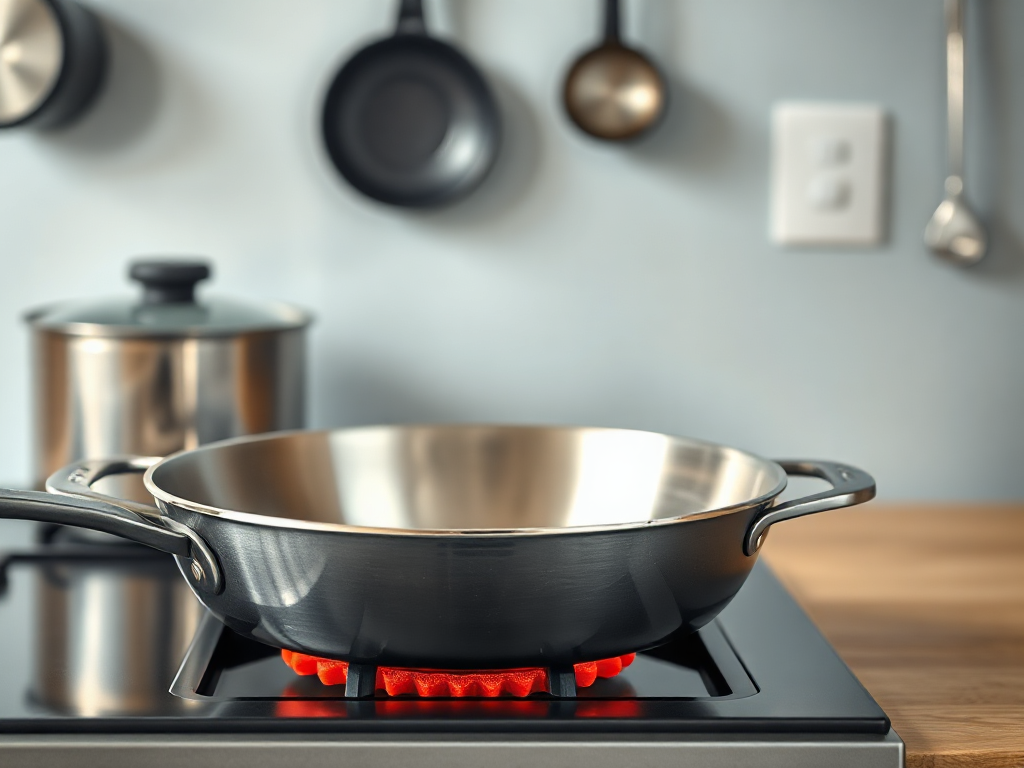
The impact of cookware design on cooking speed comes from how quickly a pan transfers heat, spreads it across the base, and responds when ingredients are added. Aluminum and copper-based construction usually heats rapidly, while thick cast iron takes longer to preheat but retains heat well for searing. A broad, flat base can cook more food evenly, whereas an oversized pan on a small burner wastes heating time. Lid fit, wall height, pan weight, and the match between cookware and burner also affect evaporation and recovery after ingredients go in. For faster results, choose a pan with an appropriately sized base, efficient conductive layers, and a lid that limits unnecessary heat loss.
Which Design Features Control Cooking Speed
Cookware design affects speed by controlling the movement of energy from the burner into the pan and then into the ingredients. The most influential details are the cooking surface, conductive material, base thickness, pan diameter, wall shape, and lid fit. A pan that reaches temperature quickly is not automatically the fastest choice in every situation; it must also maintain useful heat after cold food or liquid is added.
Heat transfer begins at the burner interface. A flat base makes broad contact with a smooth glass or induction surface, while a warped or uneven base leaves gaps that slow transfer and create irregular hot zones. On a gas range, the base should sit above the flame without allowing flames to climb far up the sides. Excess flame mostly heats the room and the pan exterior rather than accelerating the center of the meal.
Some suggestions to consider!
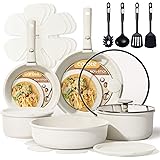


CAROTE 19pcs Pots and Pans Set Non Stick, Detachable Handle Cookware, White | Induction Compatible, Dishwasher & Oven Safe, Kitchen Organization, Cooking Set for Camping/RV/Traveling, House Warming Gift
$54.99 (as of October 23, 2026 19:19 GMT +00:00 - More infoProduct prices and availability are accurate as of the date/time indicated and are subject to change. Any price and availability information displayed on [relevant Amazon Site(s), as applicable] at the time of purchase will apply to the purchase of this product.)
Now retrieving an image set.
CAROTE Pots and Pans Set Nonstick Cookware Sets 21 Pieces Black | Titanium Reinforced Coating, Scratch-Resistant, Easy to Clean, Even Heating, Induction Compatible, with Frying Pans Set
$89.99 (as of October 23, 2026 19:19 GMT +00:00 - More infoProduct prices and availability are accurate as of the date/time indicated and are subject to change. Any price and availability information displayed on [relevant Amazon Site(s), as applicable] at the time of purchase will apply to the purchase of this product.)
Now retrieving an image set.
Anymark 16PCS Pots and Pans Set Non Stick Cookware (white, 16pieces) | Beautiful Great Value Food Cooks Evenly Cleans Easily With Frying Pan
$59.98 (as of October 23, 2026 19:19 GMT +00:00 - More infoProduct prices and availability are accurate as of the date/time indicated and are subject to change. Any price and availability information displayed on [relevant Amazon Site(s), as applicable] at the time of purchase will apply to the purchase of this product.)Surface area changes the cooking task itself. A wide skillet lets moisture escape from vegetables, mushrooms, or ground meat instead of crowding ingredients into a steaming layer. A narrower, taller saucepan is more efficient for heating soup or boiling a small quantity of liquid because less surface is exposed to evaporation. Choosing a shape for the food often matters more than buying the heaviest pan available.
A common mistake is judging speed by preheating alone. A thin pan may become hot quickly but lose that heat as soon as chilled ingredients enter. A well-designed pan balances responsiveness with enough thermal stability for the intended task. The best choice for a quick omelet may differ from the best choice for a batch of browned chicken thighs. For broader cookware selection criteria, see the impact of cookware design on cooking speed.
Materials, Thickness, and Heat Recovery
Material determines how readily heat travels through the base, while thickness determines how much energy the pan stores. Aluminum generally responds quickly because it conducts heat efficiently and has relatively low mass. Copper responds even faster, although copper cookware is often lined with another material and can be expensive to maintain. Stainless steel is durable and useful, but a stainless-only base may heat less evenly than a pan with an aluminum or copper core.
Multi-layer construction addresses this tradeoff. A stainless cooking surface can provide durability and browning control while an aluminum or copper layer distributes energy beneath it. The quality of that construction depends on where the conductive layer reaches. A pan with a fully clad body can behave differently from one with a conductive disk only under the base, especially when cooking sauces or foods along the side walls.
Heavy cast iron and thick carbon steel store substantial heat. They typically require more time to preheat, but their temperature drops less abruptly when a steak, a large portion of potatoes, or several pieces of dough are added. That stability can shorten the total cooking process when browning is the bottleneck. The same mass becomes a disadvantage when a cook needs rapid changes from high heat to gentle simmering.
Thickness also influences recovery after liquids are added. A thin saucepan may boil water rapidly when empty but recover slowly after a large amount of cold pasta water or stock is introduced. A thicker base may take longer initially yet regain a simmer more consistently. Avoid assuming that a heavier pan is always faster; compare preheat time, recovery, and the food’s required heat level.
Nonstick coatings introduce another consideration. They are convenient for eggs and delicate fish because food releases easily, reducing handling time, but many manufacturers advise moderate heat rather than extreme burner settings. High heat used to compensate for a slow pan can damage the coating or produce poor results. Use a responsive, appropriately sized pan instead of treating maximum burner output as a shortcut.
Shape, Surface Area, and Burner Fit
Pan geometry determines how much food can contact the hot surface and how efficiently moisture leaves it. A broad skillet is usually quicker for sautéing because ingredients can remain in a single layer. If vegetables overlap deeply, their released water has fewer paths to evaporate, so the food softens before it browns. A curved sauté pan may be easier to stir, but its flat base can be smaller than the advertised rim diameter.
Diameter should match both the recipe and the burner. A 12-inch skillet on a small burner may have a hot center and cool edges, forcing the cook to wait for peripheral ingredients. A smaller skillet on a large burner can overheat the center while leaving limited room for food. Measure the usable flat base rather than relying only on the top opening, particularly when comparing cookware with sloped sides.
For boiling, a wide pot can expose more water to the air and may lose heat through evaporation, while a narrower pot can conserve energy for a tall volume. For reductions, the opposite may be useful: a wider surface promotes evaporation and can reduce a sauce faster. Speed is therefore task-specific. Faster evaporation is desirable for a pan sauce but wasteful when trying to bring a large quantity of water to a stable simmer.
Induction ranges add a design constraint: the magnetic base must cover the active heating area sufficiently and remain flat. A pan that is technically induction-compatible may still perform poorly if its magnetic disk is small or uneven. On gas, base thickness and flame control dominate; on electric glass, flat contact and thermal lag matter more. Match cookware to the heating system before comparing brands or finishes.
Overcrowding is a frequent failure mode that people blame on cookware material. Even an excellent skillet cannot brown a large pile of wet ingredients quickly. Divide the batch, pre-dry ingredients when appropriate, or use a larger base. The result should show active sizzling without a deep pool of liquid forming around the food.
Lids, Handles, and Everyday Cooking Decisions
A lid changes cooking speed by controlling heat loss, steam, and evaporation. A close-fitting lid is useful when the goal is to bring rice, grains, braises, or a covered simmer to temperature while retaining moisture. A loose lid may allow enough steam to escape for certain vegetables, but it also lengthens heating time and can produce uneven softening. Transparent lids can reduce unnecessary lifting, since each lift releases accumulated heat.
Lids are not universally faster. Leaving a lid on a wide skillet while trying to brown mushrooms traps steam and delays surface drying. Removing it may extend the time before the pan feels hot, but it can shorten the total process by allowing moisture to escape. Decide whether the recipe needs heat retention or evaporation before reaching for the lid.
Handles affect speed indirectly through workflow. A long, balanced handle makes it easier to toss or reposition a pan without interrupting cooking, while an awkwardly heavy design may encourage frequent lifting. Every lift breaks burner contact and can cause a temperature drop. Helper handles are valuable on large pans, but they also reduce usable space and may complicate storage or oven placement.
Wall height creates another compromise. Tall sides hold liquid and reduce splatter, making a pot suitable for simmering, but they can restrict evaporation and make it harder to spread food into a browning layer. Low-sided skillets expose more surface and support quick sautéing. A cook preparing a fast stir-fry should favor a broad heated zone and easy utensil access; someone making stew needs containment and steady retention.
Do not confuse a polished appearance with fast performance. Decorative finishes, oversized handles, and thick decorative walls can add mass without improving the path between burner and food. Check the base construction, flatness, usable cooking area, lid seal, and compatibility with the range. Those details predict daily speed more reliably than color or exterior styling.
A Practical Way to Choose Faster Cookware
The fastest useful cookware is the piece that suits the heat source, food quantity, and required cooking mechanism. Start by identifying the slowest part of the meal. If water takes too long to reach a boil, prioritize a well-fitting lid, an efficient base, and a pot sized to the volume. If vegetables remain pale and watery, prioritize a wider surface and smaller batches. If meat cools the pan after being added, prioritize thermal stability and avoid overcrowding.
Use this short selection check before buying or replacing a pan:
- Check the base: look for a flat, stable contact area and conductive construction suited to the range.
- Match the diameter: choose a usable base that aligns with the burner and the typical quantity of food.
- Compare response with retention: select lighter, conductive cookware for rapid adjustments and heavier cookware for high-heat searing or large cold additions.
- Inspect the lid and walls: retain steam for covered cooking, or choose open geometry when evaporation and browning matter.
- Consider handling: balanced handles and manageable weight reduce interruptions that waste heat.
A simple home comparison can reveal whether design is limiting speed. Heat the same measured amount of water in two similarly sized pots, using the same burner setting and starting temperature. Then compare how quickly each returns to a simmer after adding a consistent amount of room-temperature liquid. For skillets, cook equal portions of the same ingredient and observe whether the edges brown, whether liquid accumulates, and how quickly the pan recovers after each batch.
Control the variables before drawing conclusions. Burner output, starting temperature, food quantity, lid position, and pan cleanliness can overwhelm material differences. A pan that seems slow may be sitting on an undersized burner, while a pan that seems powerful may simply be receiving a smaller batch. Keep notes on the tasks that matter most rather than chasing a single universal winner.
Readers comparing construction, base design, and cooking use cases can also consult the impact of cookware design on cooking speed alongside their own range specifications. The practical target is not the shortest empty-pan preheat; it is dependable progress from preheating to browning, boiling, simmering, or serving.
For additional context, consult cookware manufacturer documentation for burner compatibility, care limits, and construction details, along with university food-science or culinary education resources that explain heat transfer and moisture loss. These sources are most useful when paired with a controlled comparison in your own kitchen.
Frequently Asked Questions
Does a heavier pan cook food faster?
Not always. Heavy cookware takes longer to preheat but may recover heat better after cold food is added, making it useful for searing and large batches.
Which pan shape is fastest for sautéing vegetables?
A broad skillet or sauté pan with a large flat base usually works fastest because it spreads ingredients out and allows moisture to evaporate.
Does using a lid always reduce cooking time?
No. A lid speeds covered simmering and boiling by limiting heat loss, but it can slow browning by trapping steam.
Why does my pan heat unevenly?
The base may be too small for the burner, warped, or made without enough conductive material. Burner settings and overcrowding can create similar symptoms.
Is aluminum cookware faster than stainless steel?
Aluminum generally responds and conducts heat quickly, while stainless steel cookware with an aluminum or copper core can combine responsiveness with durability and even distribution.
Conclusion
Cookware speed depends on the route heat takes, the amount of energy the pan stores, and whether its shape suits the food. Prioritize a flat base that matches the burner, conductive layers that distribute energy, a diameter that prevents crowding, and a lid that fits the cooking method. Choose responsive cookware when rapid adjustment matters; choose heavier cookware when recovery and searing matter more than quick preheating. Test performance with the foods you cook most often, watching for edge browning, steady simmer recovery, and unwanted moisture buildup. Those observations are more useful than judging a pan by weight, finish, or marketing language alone. A well-matched design can shorten cooking delays without requiring excessive heat or compromising control.