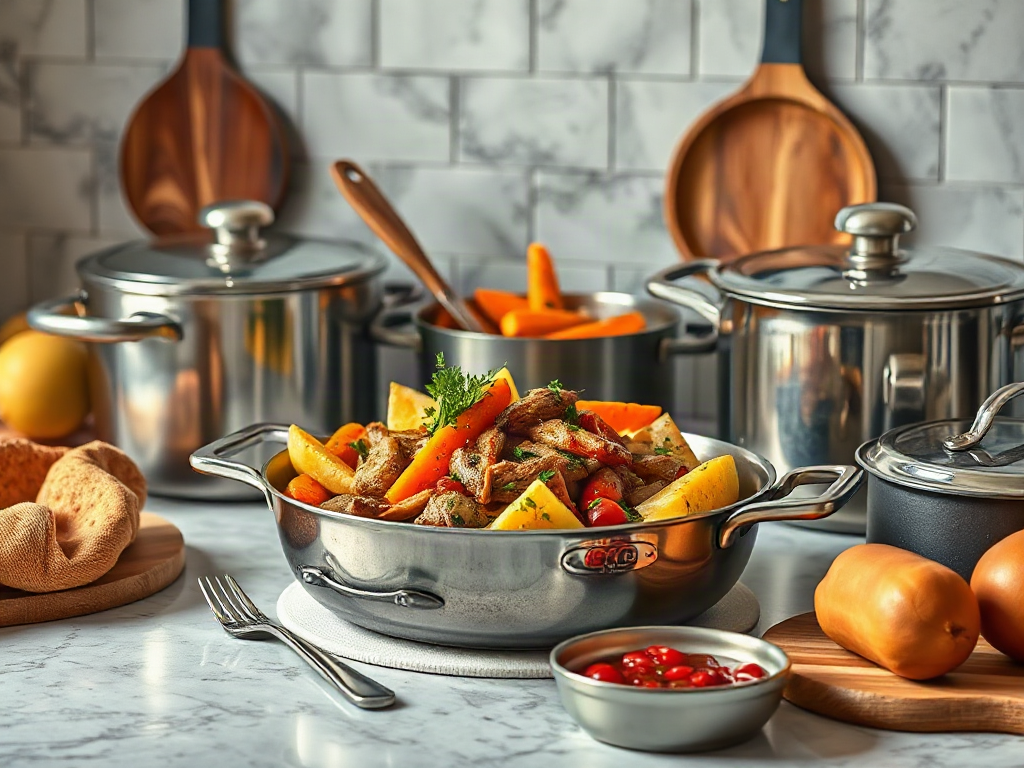
Choose cookware for entertaining by matching each vessel to the menu, guest count, burner space, and serving plan rather than buying the largest available set. Prioritize wide pans for browning, heavy pots for stable heat, fitted lids for holding food, and handles that remain manageable when the cookware is full. Select oven-safe pieces when dishes must move off crowded burners, and confirm that every pan works with your cooktop. A dependable entertaining collection usually centers on a large skillet or sauté pan, a roomy Dutch oven or stockpot, and one smaller saucepan instead of several rarely used specialty pieces.
How Should Cookware Match the Menu and Guest Count?
The menu should determine the shape and number of vessels before guest count determines their capacity. A broad sauté pan is more useful for searing several chicken pieces than a tall pot with the same stated volume because its larger cooking surface allows moisture to escape. A deep Dutch oven suits braises, soups, and sauced dishes that need steady heat and can remain covered until service. Starting with cooking method prevents the common mistake of treating quart capacity as the only meaningful measurement.
Some suggestions to consider!
Now retrieving an image set.
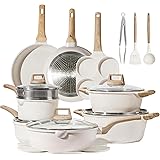
CAROTE 21pcs Pots and Pans Set, Nonstick Cookware Sets, with Egg Pan | Induction Kitchen Cooking Set, Durable, Easy Food Release, Fast & Even Heating, with Frying Pan
$123.48 (as of November 21, 2026 19:43 GMT +00:00 - More infoProduct prices and availability are accurate as of the date/time indicated and are subject to change. Any price and availability information displayed on [relevant Amazon Site(s), as applicable] at the time of purchase will apply to the purchase of this product.)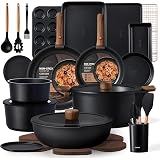
Now retrieving an image set.
CAROTE 31pcs Pots and Pans Set Non Stick, Detachable Handle Cookware Set | Bakeware Set, Induction Compatible, Dishwasher & Oven Safe, Kitchen Organization, Cooking Set for Camping/RV/Traveling/Gifts
$132.99 (as of November 21, 2026 19:43 GMT +00:00 - More infoProduct prices and availability are accurate as of the date/time indicated and are subject to change. Any price and availability information displayed on [relevant Amazon Site(s), as applicable] at the time of purchase will apply to the purchase of this product.)


CAROTE 21pcs Pots and Pans Set Non Stick, Detachable Handle Cookware, Black | Induction Compatible, Dishwasher & Oven Safe, Kitchen Organization, Cooking Set for Camping/RV/Traveling, House Warming Gift
$56.97 (as of November 21, 2026 19:43 GMT +00:00 - More infoProduct prices and availability are accurate as of the date/time indicated and are subject to change. Any price and availability information displayed on [relevant Amazon Site(s), as applicable] at the time of purchase will apply to the purchase of this product.)Guest count still matters, but bigger cookware does not automatically produce better results. An oversized skillet placed on a modest burner may develop a hot center and cool perimeter, leaving some food browned and other portions steaming. Crowding creates a similar problem: ingredients release moisture faster than the pan can evaporate it. When a recipe requires browning, two controlled batches in a responsive pan can outperform one overloaded batch in a larger vessel. For a stew, chili, or pasta sauce, extra depth is usually less troublesome because the food is intended to cook together in liquid.
Map the menu by active cooking tasks and holding tasks. A holiday meal might need a sauté pan for vegetables, a saucepan for gravy, and a Dutch oven for a braised main course. If the main dish can stay warm in the oven, the freed burner can handle a last-minute sauce. By contrast, a menu containing several foods that all require crisping just before service creates a capacity problem no single pot can fix. Adjusting the menu—perhaps replacing one fried side with a roasted dish—may be more effective than purchasing another pan.
Serving style changes the decision as well. Buffet food benefits from cookware with fitted lids and enough thermal mass to resist rapid cooling. Plated courses favor pans that offer precise control and easy pouring because food moves directly from cooking to assembly. Cookware used on the table should be stable on a trivet, presentable enough for the setting, and easy for guests to serve from without reaching over a long handle.
Before shopping, write down each dish, its cooking method, the appliance it occupies, and whether it can be made ahead. Signs that the plan works include available burner space, room to stir without spilling, and at least one way to keep finished food warm. Warning signs include several last-minute dishes assigned to one burner, a pan wider than the cooktop’s heating zone, or a full pot too heavy to move safely.
Which Cookware Materials Work Well for Entertaining?
Cookware material affects temperature control, browning, weight, cleaning, and how comfortably food can wait for guests. No single material leads in every category. The useful choice is the one whose heating behavior fits the dish and whose handling demands fit the cook. Entertaining makes these tradeoffs more visible because pans are often fuller, timing is less forgiving, and cleanup happens after a long meal.
Fully clad stainless steel is a flexible option for sautéing, sauces, and acidic foods. Its conductive core spreads heat more evenly than thin, single-layer steel, while the stainless cooking surface tolerates browning and deglazing. Food may stick if the pan is insufficiently preheated or ingredients are moved before they release, so it rewards basic heat control. It is often preferable to bare cast iron for tomato-heavy sauces because stainless steel does not require seasoned-surface care.
Enameled cast iron holds heat well and moves comfortably from oven to table for braises, beans, and stews. That same mass becomes a drawback when a large vessel is filled with food. A pot that feels manageable when empty can become awkward at serving time, especially if its loop handles are small. Traditional cast iron is effective for searing and oven roasting, but it heats and cools slowly and needs appropriate drying and maintenance. Neither type is ideal when the host expects to lift or pour repeatedly.
Nonstick cookware is useful for delicate foods such as eggs, crêpes, or fish, particularly when those items are cooked shortly before serving. It is less compelling as the foundation of an entertaining collection because high heat, metal utensils, and rough stacking can shorten the coating’s useful life. A single moderate-size nonstick skillet generally offers more value than a full matching set. Follow the manufacturer’s limits for heat, oven use, and utensils because coatings and handles vary by product.
For most mixed menus, combining materials is more practical than insisting on uniformity. A stainless sauté pan can brown meat and build a pan sauce, an enameled pot can hold a braise, and a nonstick skillet can handle brunch eggs. The frequent buying error is choosing pieces for a coordinated appearance while ignoring weight, burner fit, and heat response. Test an empty pan with one hand, then remember that food and liquid will increase the load substantially. If lifting already feels strained, a lighter material or two smaller batches is the safer operational choice.
How Do You Evaluate Capacity, Handles, and Lids?
Usable capacity is the space left after allowing room to stir, simmer, and transport food without overflow. A vessel filled to its nominal capacity is rarely pleasant to cook in. Soups need headroom above the liquid, pasta requires enough water and movement to avoid clumping, and sautéed foods need exposed surface rather than depth alone. Compare interior diameter and wall shape alongside the volume printed on the box.
Straight-sided sauté pans provide more working area than skillets with strongly sloped sides of the same rim diameter. Sloped skillets, however, make tossing food and sliding portions onto plates easier. A wide, lower pot encourages evaporation and sauce reduction; a narrower, taller pot limits evaporation and fits a large liquid volume onto a smaller burner footprint. These differences explain why two vessels carrying similar capacity labels may perform differently during a dinner party.
Handles deserve a realistic test rather than a quick glance. Long handles provide leverage but can collide with neighboring pans or extend beyond a compact cooktop. Helper handles make a large skillet easier to move with two hands. Wide loop handles should leave space for a folded towel or oven mitt, particularly when the vessel will be transferred from oven to table. Riveted handles are common and secure, although food residue can collect around the interior rivets. Welded interiors are smoother to clean, but construction quality still matters.
Lids turn cookware into useful holding equipment. A close-fitting lid limits evaporation and protects food while the host finishes another dish. Glass allows visual checking but adds weight and can become obscured by condensation. Metal is lighter and less visually informative. More important than the material is whether the knob remains usable with an oven mitt and whether the entire lid is rated for the intended oven temperature.
Use a short hands-on check before committing to a piece:
- Confirm cooktop contact: The base should sit flat, and induction users should verify magnetic compatibility.
- Simulate a full load: Consider whether both hands can grip the pan securely when it contains hot food.
- Check appliance clearance: Measure the oven, storage cabinet, dishwasher, and crowded burner arrangement.
- Inspect the pouring path: Look for a rolled rim or spout when sauces and soups will be transferred frequently.
- Read component limits: Oven ratings may differ for the body, handle, lid, or knob.
A successful choice feels controlled rather than merely substantial. If a lid rattles excessively, a handle rotates, the base rocks, or the pan blocks adjacent burners, those faults become more disruptive when several dishes are underway. Return or replace a poorly fitting piece before an event rather than hoping careful handling will compensate.
Build a Practical Entertaining Cookware Plan
A compact group of complementary vessels is usually more capable than a large set containing several near-duplicates. Build around the meals actually served, then add capacity only where repeated bottlenecks appear. For many homes, the strongest foundation is a large skillet or sauté pan, a substantial covered pot, and a smaller saucepan. A second skillet or sheet pan can extend capacity without requiring every item to come from the same product line.
The large skillet handles searing, shallow frying, vegetable sides, and pan sauces. A sauté pan with a lid is especially versatile when food needs to brown first and finish gently afterward. The covered pot can manage soup, chili, braised meat, or a generous quantity of grains. The saucepan supports gravy, reductions, reheating, and smaller accompaniments. Choose dimensions that can operate together on the cooktop; three individually excellent pans are not a useful system if their handles and rims prevent simultaneous use.
Consider a dinner for eight built around braised chicken, polenta, and green vegetables. The braise can finish in a covered oven-safe pot and remain warm while the saucepan cooks polenta. A broad skillet handles the vegetables near serving time. This arrangement separates long, forgiving cooking from the one item that benefits from last-minute attention. Reversing the plan—putting the chicken in a shallow skillet that occupies the largest burner until service—would make the final minutes unnecessarily congested.
Budget should follow frequency of use rather than the prestige of the material. Spend more on the pan used for browning and sauce building if even heating and comfortable balance improve weekly cooking. A basic stockpot may be sufficient when it mainly boils pasta or holds broth, because fine temperature response matters less in those jobs. Specialty pieces such as fish poachers, oversized roasting pans, or dedicated paella pans make sense only when their dishes appear often enough to justify storage.
Run a rehearsal before hosting. Cook one representative dish, note whether the pan develops even color, and test how easily it moves from burner to oven or table. Check whether the lid traps enough moisture, whether the handles become inconvenient, and whether cleanup matches the available time. A workable setup leaves one burner or oven position flexible and gives finished food a planned holding location. If every heat source is occupied, pans cannot be lifted confidently, or the first dishes cool before the last are done, revise the sequence or menu before buying more cookware.
Avoid purchasing a boxed set solely because its piece count appears economical. Counts often include lids, small utensils, or multiple saucepans that do not solve entertaining constraints. Compare the cost and dimensions of the three or four vessels that address the menu directly. Mixing brands and materials can produce a more functional collection, provided each piece fits the cooktop, oven, storage area, and cleaning routine.
Frequently Asked Questions
What cookware pieces are most useful for entertaining?
A large covered skillet or sauté pan, a roomy Dutch oven or stockpot, and a medium saucepan cover many menus. Add a second skillet or roasting vessel only when your usual dishes create a clear capacity conflict.
Should entertaining cookware be purchased as a set?
Not necessarily. Open-stock pieces let you choose different materials and useful sizes without paying for duplicate saucepans or undersized vessels. A set is worthwhile only when most included pieces match your cooking habits.
Is stainless steel or cast iron better for dinner parties?
Stainless steel is generally lighter and more responsive for sautéing and sauces. Cast iron retains heat well for searing, braising, and table service, but large pieces become heavy when filled. The menu and lifting comfort should decide.
How large should a pot be for entertaining?
Choose enough room for the intended batch plus space to stir without splashing. Interior diameter, depth, burner size, and loaded weight matter more than a universal quart target because menus and serving portions differ.
Can cookware go directly from the oven to the table?
Yes, if every component is rated for the temperature and the vessel rests on a heat-safe trivet. Keep hot handles away from guests, use protective mitts, and avoid placing a very hot pan on a cold or delicate surface.
Conclusion
Effective entertaining cookware removes bottlenecks from the menu rather than simply increasing the number of pans in the cabinet. Identify which dishes need broad browning space, which can cook in a covered pot, and which require attention immediately before serving. Then check burner fit, oven compatibility, loaded weight, handle clearance, lid quality, and storage dimensions.
Prioritize a few complementary pieces that can cook and hold food reliably. Mix materials when their strengths suit different jobs, and spend according to how frequently each vessel will be used. Before the event, rehearse one representative meal and watch for uneven heating, crowded appliances, awkward lifting, or food cooling too soon. Those observations reveal whether the next improvement should be another pan, a different cooking sequence, or a simpler menu.