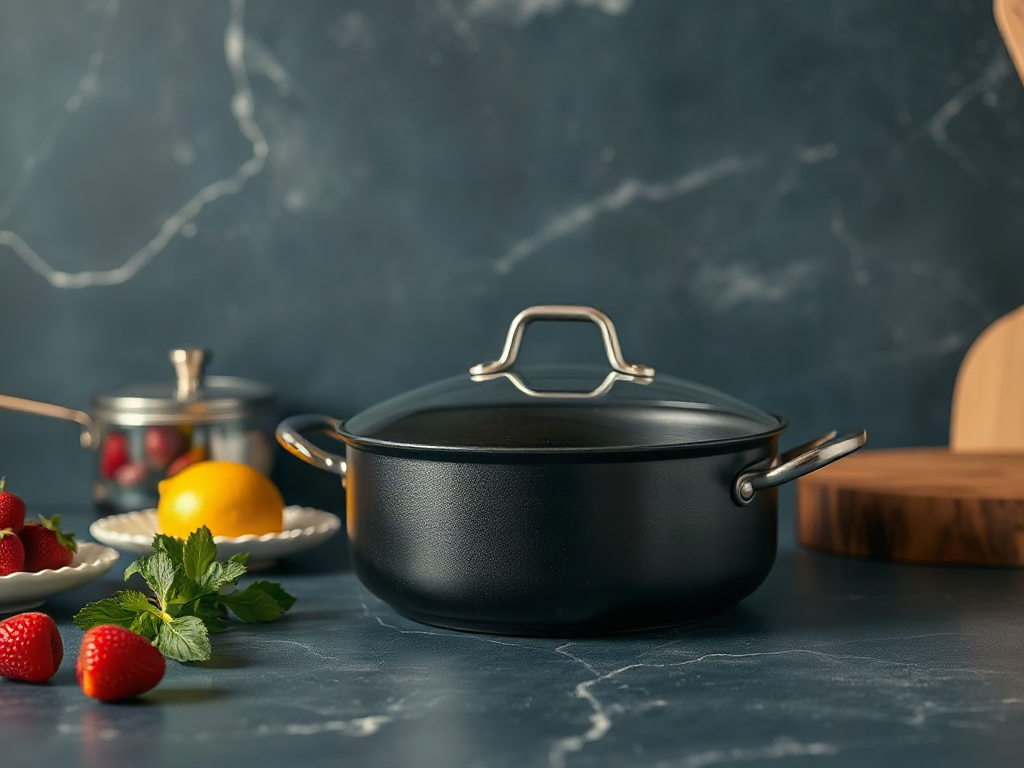
To find cookware that is easy to handle, test its filled weight, handle balance, grip security, and clearance from nearby burners before buying. A comfortable pan should remain controllable when loaded with food, resist tipping when empty, and let your wrist stay close to a neutral position while lifting or pouring. Check that side handles accommodate your fingers with oven mitts and that lids can be removed without awkward pinching. Match the vessel to your strength and cooking habits: a lightweight skillet may suit frequent tossing, while a heavier pot can work if two well-positioned helper handles make transport manageable.
What Makes Cookware Easy to Control?
Manageable cookware combines reasonable weight with stable balance, secure contact points, and dimensions suited to the person using it. Weight alone is a poor measure. A moderately heavy saucepan with a comfortable main handle and a useful helper handle may be easier to move than a lighter pan whose short, narrow grip forces the wrist to work harder.
Some suggestions to consider!
Now retrieving an image set.
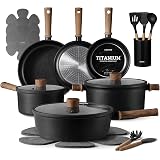
CAROTE Pots and Pans Set Nonstick Cookware Sets 21 Pieces Black | Titanium Reinforced Coating, Scratch-Resistant, Easy to Clean, Even Heating, Induction Compatible, with Frying Pans Set
$89.99 (as of November 16, 2026 19:40 GMT +00:00 - More infoProduct prices and availability are accurate as of the date/time indicated and are subject to change. Any price and availability information displayed on [relevant Amazon Site(s), as applicable] at the time of purchase will apply to the purchase of this product.)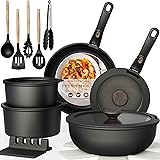
Now retrieving an image set.
Astercook 21 Pcs Pots and Pans Set Non Stick, Ceramic Cookware Set Detachable Handle, RV Kitchen Cooking Set Removable Handles, Oven Safe, Induction Ready, Stackable, Black, Fathers Day Gift for Men
$59.99 (as of November 16, 2026 19:40 GMT +00:00 - More infoProduct prices and availability are accurate as of the date/time indicated and are subject to change. Any price and availability information displayed on [relevant Amazon Site(s), as applicable] at the time of purchase will apply to the purchase of this product.)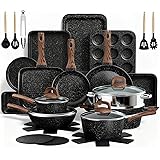
Now retrieving an image set.
Pots and Pans Set Non Stick, 31 Piece Kitchen Induction Cookware & Bakeware Set, Nonstick Kitchen Cooking Pans Set with Frying Pans Set Grill Pan Saucepan Baking Sheet & Utensils, PFOA Free
$113.99 (as of November 16, 2026 19:40 GMT +00:00 - More infoProduct prices and availability are accurate as of the date/time indicated and are subject to change. Any price and availability information displayed on [relevant Amazon Site(s), as applicable] at the time of purchase will apply to the purchase of this product.)Balance describes how the load is distributed around the grip. An empty frying pan should sit flat rather than tipping toward an oversized handle, but it should not feel excessively front-heavy when lifted. The balance changes after food, water, or oil enters the vessel. A three-quart saucepan that feels light on a display shelf can become difficult to pour when nearly full, particularly if the handle is slim or rotates in a damp hand.
Dimensions matter as much as mass. Wide sauté pans create leverage against the wrist because their contents sit farther from the hand. Tall stockpots keep weight closer to the body when carried by two side handles, yet their height may make draining difficult in a shallow sink. Large vessels also require more reach when they occupy a rear burner. Someone with limited reach may control a smaller pot on a front burner more safely than a lighter but taller vessel positioned farther away.
Ease of handling should cover the whole cooking cycle, not just lifting an empty pan. Consider taking the vessel from storage, placing it on the stove, stirring without unwanted movement, transferring it while hot, pouring or draining, and moving it to the sink. A pan that succeeds at only one stage can still become frustrating during daily use.
A common mistake is treating maximum lightness as the goal. Very light pans may slide when food is stirred, lose stability on some burner grates, or require one hand to hold the handle while the other mixes. Heavier construction can provide steadiness and more even-feeling movement, but added mass becomes a liability once the pan is full. The practical target is the lightest vessel that remains stable for its intended task, with handles that provide enough leverage to control the loaded weight.
How Should You Test Weight and Balance Before Buying?
A useful handling test simulates the pan when loaded rather than judging it empty. If a store permits careful handling, place a comparable packaged item inside the vessel or ask whether a display weight is available. At home, test a new pan with cool water before cooking, while keeping it eligible for return under the seller’s policy. Water quickly exposes whether the grip, leverage, and pouring motion remain comfortable under a realistic load.
Lift the cookware from counter height using the movement required in your kitchen. Keep your wrist straight, raise the vessel a few inches, hold briefly, and set it down with control. Straining fingers, a sharply bent wrist, or the need to swing the pan indicates that it may be too demanding when hot. Do not rely on a dramatic one-handed lift; ordinary control is more revealing than a brief strength test.
Next, rotate the vessel as if pouring soup or sauce. A pouring motion shifts the center of mass away from the hand, so a pan that feels acceptable when level may become difficult to stop once tilted. For larger saucepans and sauté pans, repeat the motion while using the helper handle. The second grip should let both arms share the load without forcing the hands too close to the hot body.
Use a short buying test in this order:
- Empty stability: Set the vessel on a flat surface and confirm that the handle does not pull it off balance.
- Loaded lift: Simulate a normal quantity of food and check whether you can raise and lower it smoothly.
- Controlled tilt: Rehearse pouring while keeping the wrist and forearm aligned.
- Two-hand transfer: Test the helper or side handles with the type of mitts you use.
- Kitchen fit: Confirm that the pan clears adjacent handles, cabinet fronts, and nearby burners.
Signs of a good match include smooth starts and stops, no twisting inside the hand, and enough control to place the cookware precisely. Warning signs include finger pressure concentrated on one narrow edge, a handle that rolls in the palm, or a load that can be lifted but not poured steadily. Buyers often assume they will “get used to” an awkward pan. Familiarity may improve technique, but it does not change poor leverage, inadequate grip space, or excessive loaded weight.
How Do You Evaluate Handles, Lids, and Grip?
Handles should give the hand enough surface area to steer the vessel without squeezing hard. Shape is personal: some cooks prefer rounded handles, while others gain better rotational control from a gently flattened underside. Extremely smooth cylindrical metal can turn in wet or oily hands, whereas sharp-edged or deeply sculpted grips may become uncomfortable under a heavy load. Test the shape with a relaxed hand rather than clenching it.
Length creates leverage and distance from heat, but longer is not automatically better. An extended skillet handle can improve control during sautéing, yet it may protrude beyond a compact stove, collide with another pan, or make the vessel difficult to store. A short saucepan handle saves space but brings the hand closer to steam and provides less leverage. Look for a length that permits a full grip while keeping the elbow in a comfortable position.
Handle clearance deserves a test with your actual potholder or oven mitt. Side loops that accept bare fingers may become unusable once insulated fabric adds bulk. There should be room to grasp the handle without brushing knuckles against the hot vessel or lid. For a Dutch oven or stockpot, compare how the side handles feel when both hands lift together. Small decorative tabs are less useful than loops that allow a secure, balanced hold.
Attachment affects confidence and maintenance. Riveted handles are common and easy to inspect, although food residue can collect around interior rivet heads. Welded attachments leave a smoother cooking surface, but the welds should appear even and solid. Removable handles can make storage easier, provided the locking mechanism engages positively and remains accessible when the pan is full. Regardless of construction, reject a display model with movement, gaps, or hardware that cannot be checked easily.
Lids add their own handling demands. A broad knob may be easier to grasp than a small round one, especially with a mitt. A long lid handle offers leverage but can become hot depending on its material and proximity to steam. Check whether the lid stays reasonably level when lifted; a heavy lid that tilts suddenly can release steam toward the hand. Glass provides visibility but usually adds weight, while metal is often lighter and less vulnerable to impact.
Do not assume a “stay-cool” description means a handle remains comfortable under every condition. Burner size, oven use, cooking duration, and adjacent flames can all raise handle temperature. Treat every handle as potentially hot until checked with appropriate protection. Comfortable geometry improves control, but it does not replace cautious handling around heat and steam.
Match Cookware to Your Cooking Tasks and Storage
The easiest cookware is sized for the task performed most often. A large skillet may offer generous cooking area, but it also places more food farther from the wrist and becomes harder to tip when transferring a meal. If most meals serve one or two people, a medium skillet may be more controllable and easier to wash. A larger pan still has value for crowded foods, provided its helper handle is genuinely usable.
Cooking technique changes the priority. A skillet used for tossing vegetables benefits from moderate weight, a long secure grip, and balanced movement. A braising pot does not need to move constantly, so additional mass may be acceptable if broad side handles simplify the trip between stove and oven. A saucepan used for pouring should have a stable main handle, a rim that releases liquid cleanly, and enough capacity that it does not need to be filled to the top.
Material influences both handling and cooking behavior. Aluminum-based construction can reduce weight, though the total mass depends on thickness, cladding, handles, and lid design. Cast iron retains substantial heat but can be demanding to lift, especially in larger diameters. Carbon steel may be lighter than similarly sized cast iron, yet larger pans can still feel front-heavy. Stainless steel cookware varies widely because fully clad walls, thick bases, and lid construction all alter weight. Compare complete pieces rather than choosing from material labels alone.
Storage is part of usability. A pot stored above shoulder height can be difficult to retrieve even if it handles well on the stove. Nested cookware saves cabinet space, but tightly stacked pieces may require lifting several pans to reach one. Long handles can block drawers, while large side handles reduce nesting efficiency. Before buying, measure the cabinet or drawer and identify whether the vessel must be lifted vertically, slid forward, or hung.
Kitchen layout can expose problems that a showroom test misses. On a narrow cooktop, several long handles may compete for safe positions. In a small sink, a broad sauté pan can be awkward to rotate and rinse. Induction users should also confirm that the base is compatible and sits steadily on the cooking zone; compatibility does not guarantee good balance or manageable weight.
Avoid buying an entire matching set before testing the shapes you will use most. Sets can be economical, but handle geometry that suits a small saucepan may become uncomfortable on the largest skillet. Start by evaluating the most frequently used vessel under a realistic load. If its grip, balance, cleaning, and storage work in your kitchen, use those observations to judge other sizes rather than assuming every piece in the line will feel the same.
Frequently Asked Questions
Is lightweight cookware always easier to handle?
No. Low weight reduces lifting effort, but a pan that slides, tips, or twists in the hand can be harder to control than a slightly heavier, better-balanced vessel.
How can I test cookware when shopping online?
Check the listed weight, dimensions, handle design, and return conditions. Compare those measurements with a pan you already own, then perform a cool-water handling test promptly after delivery.
Are two handles better than one?
Two usable handles are valuable on large or deep cookware because they distribute a loaded vessel between both arms. They help only when there is enough clearance for fingers and oven mitts.
Which cookware material is easiest to lift?
Material alone does not determine manageable weight. Diameter, wall thickness, base construction, lid, and handles all contribute, so compare the complete vessel in the size you need.
What should I do if a pan is comfortable empty but heavy when full?
Use a smaller batch, choose a vessel with a functional helper handle, or transfer food with a ladle rather than pouring. Replacing it may be sensible if routine use still requires straining.
Conclusion
Choose cookware by reproducing the movements your kitchen actually requires: retrieving it, stirring food, lifting a realistic load, pouring, and carrying it to the sink. Prioritize controlled balance over minimum weight, then inspect grip shape, handle clearance, attachment quality, and lid design. Account for oven mitts, burner spacing, cabinet access, and the amount of food normally cooked.
Test the most frequently used pan size before committing to a coordinated set. A cool-water trial can reveal wrist strain, unstable tilting, or inadequate helper handles before heat complicates the decision. Keep the piece when it moves smoothly, stays stable, and fits both the cooking task and storage space. If it demands clenching, swinging, or awkward two-handed improvisation, a smaller vessel or a different handle configuration is the better choice.