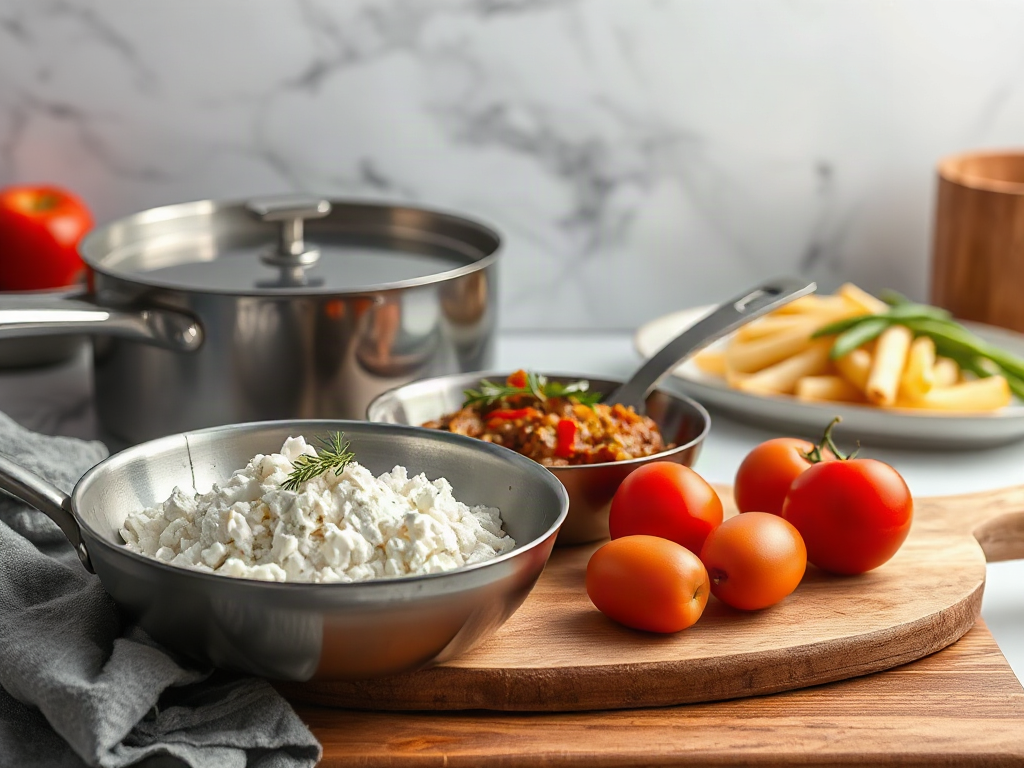
Cookware affects meal timing by controlling how quickly pans preheat, how evenly they transfer heat, how much food they hold, and how long finished dishes stay warm. A thin skillet may respond quickly but lose temperature when crowded, while a heavy pan may need a longer preheat yet maintain steadier browning. Pan diameter, burner compatibility, lids, and available oven space also determine whether several dishes can finish together. For coordinated serving, match each vessel to the food’s heat needs, account for preheating and recovery time, and assign forgiving dishes to heat-retentive cookware while reserving responsive pans for foods that require close control.
Why Does Pan Material Change the Cooking Clock?
Pan material changes both the time before cooking begins and the amount of attention food needs once it is in the pan. A thick cast-iron skillet generally warms more slowly than a thin aluminum pan, but it stores more heat. That stored energy can support steady searing and keep food warm after leaving the burner. The lighter pan reacts more quickly when the burner setting changes, which can be useful for eggs, delicate sauces, or vegetables that must stop cooking promptly.
Some suggestions to consider!
Now retrieving an image set.
HexClad 6pc Hybrid Nonstick Frying Pans Set with Lids, 8, 10 & 12" Pans | Stay-Cool Handles, Dishwasher and Oven Safe up to 900°F, Compatible with All Cooktops
$389.00 (as of September 26, 2026 18:56 GMT +00:00 - More infoProduct prices and availability are accurate as of the date/time indicated and are subject to change. Any price and availability information displayed on [relevant Amazon Site(s), as applicable] at the time of purchase will apply to the purchase of this product.)
Now retrieving an image set.
SODAY Pots and Pans Set Non Stick, 12Pcs Black Granite Induction Cookware | PFAS/PFOA/PFOS Free, Healthy Nonstick Kitchen Cookware Sets, Includes Fry Pans & Saucepans.
$59.99 (as of September 26, 2026 18:56 GMT +00:00 - More infoProduct prices and availability are accurate as of the date/time indicated and are subject to change. Any price and availability information displayed on [relevant Amazon Site(s), as applicable] at the time of purchase will apply to the purchase of this product.)
Now retrieving an image set.
SENSARTE Ceramic Cookware Sets, Pots and Pans Set Non stick, 14 Piece Induction Cookware, Non toxic Healthy Non Stick Kitchen Cooking Set, with Frying Pans Set, PFAS PTFE PFOA PFOS Free
$79.99 (as of September 26, 2026 18:56 GMT +00:00 - More infoProduct prices and availability are accurate as of the date/time indicated and are subject to change. Any price and availability information displayed on [relevant Amazon Site(s), as applicable] at the time of purchase will apply to the purchase of this product.)Preheating is only part of the calculation. A pan also has a recovery period after cool ingredients are added. Place several refrigerator-cold chicken pieces in a lightly built skillet and the surface temperature may fall sharply, delaying browning while released moisture accumulates. A heavier vessel may recover more steadily, although excessive food can overwhelm any pan. The visible warning signs are pale surfaces, pooling liquid, and a cooking time that keeps stretching beyond the recipe estimate.
Material construction matters more than a simple label. Stainless steel is often combined with an aluminum core because stainless cooking surfaces are relatively durable while aluminum spreads heat efficiently. Fully clad cookware may distribute heat along the sides more effectively than a vessel with only a conductive disk on its base. That distinction becomes noticeable in reductions, custards, and thick sauces, where hot spots can force repeated stirring or lower burner settings that lengthen the schedule.
Heat retention can either support or disrupt coordinated serving. Braised vegetables or a pan sauce may benefit from a heavy vessel that remains warm off heat. Fish fillets, butter-based sauces, and scrambled eggs can continue cooking in stored heat and pass their ideal texture before the other dishes arrive. Removing delicate food to a serving plate may be wiser than treating the pan as a holding vessel.
The common mistake is assuming that heavier cookware is automatically faster or better. It may shorten recovery after ingredients are added, but its longer warm-up can delay a quick meal. Choose responsiveness when frequent temperature changes matter; choose stored heat when a stable sear, simmer, or short holding period matters more. Test unfamiliar cookware by noting how long it takes to preheat at a moderate setting and how strongly it continues cooking after the burner is lowered.
How Do Pan Size and Capacity Affect Finish Times?
Usable surface area determines whether ingredients cook in one layer or compete for heat and evaporation space. A skillet that is too small turns a nominally quick sauté into a steaming stage followed by a delayed browning stage. The recipe’s stated time may assume that mushrooms, meat, or chopped vegetables have enough room for moisture to escape rather than collect around them.
Consider two batches of sliced mushrooms. Spread across a broad skillet, they release moisture over a large hot surface, allowing that liquid to evaporate while browning develops. Packed into a small saucepan, the same quantity creates a deeper layer and more trapped steam. The smaller vessel is not merely inconvenient; it changes the cooking process and makes the finish time less predictable. Dividing the food into two batches may produce better texture, but the meal plan must then include time for the second batch.
Excessively large cookware creates a different problem. A wide pan placed over a small burner can develop a hot center and cool perimeter. Ingredients near the edge lag behind, so the cook must rotate them or wait longer for uniform doneness. A large pot filled with a small amount of sauce also exposes more surface area, accelerating evaporation and increasing the risk that the sauce thickens before its accompanying dish is ready.
Depth and lid fit affect timing as well. A snug lid limits evaporation and helps a covered pot return to a simmer after ingredients are added. A tall, narrow saucepan reduces exposed area, making it suitable for holding or gently reducing smaller amounts. A shallow sauté pan promotes evaporation, which is useful when a watery sauce needs to concentrate but counterproductive when rice or a covered braise depends on retaining moisture.
Capacity should be judged by the food’s behavior, not only by whether it physically fits. Leave room to turn pieces, stir without spilling, and maintain contact with the heated surface. When choosing between one crowded batch and two uncrowded batches, compare the full schedule: two batches demand more active cooking, whereas crowding may create an uncertain steaming period and poorer browning. For a meal with several last-minute components, using a sufficiently broad pan is often the more predictable option.
Matching Cookware to Burners and Ovens
Cookware timing is constrained by the appliance supplying the heat. A pan that performs predictably on one stove may warm unevenly or slowly on another because burner diameter, power, cycling, and compatibility differ. Coordinating a meal therefore requires attention to the complete cooking station, not isolated recipe times.
Base-to-burner alignment is the first check. A small pan on a large gas flame can expose handles or sidewalls to excess heat, while a broad skillet over a small element may cook mainly in the center. Electric radiant elements retain heat after their controls are lowered, so moving a sensitive saucepan to a cool element can stop cooking more reliably than waiting for the active element to cool. Induction requires compatible magnetic cookware, and base quality still influences how evenly heat spreads beyond the induction zone.
Burner competition creates practical bottlenecks. Suppose dinner includes pasta, a skillet sauce, sautéed greens, and a pot of blanching water. The largest pot may occupy the strongest burner, while the skillet needs enough heat to recover after cool ingredients are added. If both tasks require the same burner at the same time, nominal recipe durations no longer describe the real schedule. Boiling water earlier, using a lid, or shifting a forgiving sauce to a smaller burner can remove that conflict.
Oven-safe cookware can simplify the sequence by moving a dish away from the stovetop. A skillet may begin on a burner and finish in the oven while another component takes its place. That option depends on the pan body, handle, lid, coating, and manufacturer-stated temperature limits; removable sleeves and unknown handle materials should not be assumed oven-safe. Heavy cookware also needs stable racks and careful handling when full.
A useful equipment check before starting is brief:
- Map the heat sources: assign the strongest and best-fitting burner to the least forgiving task.
- Confirm compatibility: check induction response and oven limits before food enters the pan.
- Identify a holding location: reserve a low burner, warm oven, or insulated serving vessel where suitable.
- Protect handle space: avoid arrangements that make pans difficult to lift or stir safely.
The failure sign is not simply slow cooking; it is repeated pan movement, uneven color, or one component waiting while another occupies the only suitable heat source. Reassigning cookware before prep begins is easier than correcting that bottleneck during the final minutes.
How to Build a Cookware-Based Meal Sequence
A reliable sequence starts by separating forgiving dishes from time-sensitive ones. Braises, soups, many grains, and sturdy roasted vegetables can often tolerate a short covered rest. Crisp fried food, seared fish, emulsified sauces, and quick-cooked greens usually have narrower serving windows. Cookware determines how broad or narrow those windows become because each vessel retains, releases, or distributes residual heat differently.
Work backward from serving time and include equipment events that recipes often leave implicit: pan preheating, water returning to a boil, temperature recovery after loading, batch changes, and resting. If a thick skillet needs an extended warm-up, begin heating it while ingredients are still being prepared, but do not leave an empty pan unattended or exceed the care guidance for its surface. If a nonstick pan is being used for a quick egg dish, it generally belongs later in the sequence because its advantage is controlled, responsive cooking rather than prolonged high-heat preheating.
For a dinner of roasted potatoes, pan-seared chicken, green beans, and a pan sauce, the potatoes can begin first in oven-safe bakeware. The chicken follows in a skillet with enough surface area to prevent crowding. After the chicken rests, the same skillet can produce the sauce from the browned residue, provided the residue is not burned. Green beans can cook near the end in a responsive saucepan or sauté pan. This sequence uses the chicken’s required rest as sauce-making time instead of treating it as a delay.
Shared cookware can reduce cleanup but may create dependency. Reusing the skillet for sauce is efficient only if the meat finishes on schedule and the fond remains usable. A separate saucepan offers more control when the sauce must be ready regardless of the searing result. The better choice depends on whether burner space, washing effort, or timing certainty is the tighter constraint.
Use this priority order when planning:
- Assign the least forgiving food to the most controllable vessel and suitable burner.
- Start long, stable processes before quick components.
- Schedule batches explicitly rather than pretending the whole quantity fits.
- Plan where each finished item will rest and whether residual heat will improve or damage it.
- Keep a small buffer for recovery, turning, draining, and transferring.
A sequence is working when pans recover predictably, surfaces brown rather than steam, and finished food waits only where holding does not harm texture. It is failing when burner settings are repeatedly raised to compensate for crowding, delicate food remains in a hot pan, or several components demand the same vessel at once. Adjust the equipment assignment before changing every recipe time.
Frequently Asked Questions
Does heavy cookware make food cook faster?
Not necessarily. Heavy cookware usually takes longer to preheat but may recover better after cool food is added and maintain steadier heat during searing or simmering.
Why does food take longer when a pan is crowded?
Crowding lowers the surface temperature and traps released moisture. Ingredients then steam until enough liquid evaporates, delaying browning and making the finish time less predictable.
Can cookware keep a finished dish warm?
Heat-retentive pots and pans can provide a short holding period, but residual heat may overcook eggs, fish, delicate vegetables, and sensitive sauces. Transfer those foods when necessary.
Should pan preheating be included in meal timing?
Yes. Treat preheating as part of the schedule, especially with thick cookware. Use moderate heat and follow the manufacturer’s care instructions rather than overheating an empty vessel.
Is one large pan better than cooking in batches?
A larger pan is useful only when the burner can heat its base adequately. If the pan extends far beyond the heat source, two uncrowded batches may cook more evenly.
Conclusion
Coordinated serving depends on matching each food to cookware that suits its heating pattern and its acceptable waiting time. Check usable surface area, base-to-burner fit, preheating behavior, temperature recovery, lid performance, and residual heat before relying on a recipe’s stated duration. Give stable dishes the early positions in the schedule and reserve responsive pans and suitable burners for delicate, last-minute work.
For the next multi-dish meal, map every pan to a burner or oven position before cooking. Note where crowding will force batches, decide which food can rest, and move sensitive items out of hot cookware promptly. If timing still slips, change one equipment variable at a time—pan size, burner assignment, batch load, or holding method—so the source of the delay becomes clear.